
Short answer
Fresh urine on a cover or upper layer can usually be removed, along with most of its odor. Old or large accidents that soaked the core are harder, and some never fully clear. What a bed tolerates depends on its material and its manufacturer's care rules. Sleep Sanitation pairs sparing enzyme treatment with low-moisture dry vapor and includes ordinary accidents in the standard price.
Key terms used on this page
- Urea and ammonia:
- Urea is the main nitrogen-carrying compound in urine. Bacteria that make the enzyme urease break it down into ammonia and carbon dioxide, which is why stale urine smells sharper than fresh urine. NASA's study of stored human urine found that bacterial action decomposed the urea and released large amounts of ammonia.
- Uric acid:
- A normal, minor component of urine. NASA's table of urine constituents lists its solubility in water as very low, far below that of urea. Many cleaning guides blame uric acid for odor that returns after cleaning; we haven't found a study measuring that inside a mattress, so we treat it as a plausible explanation, not a proven one.
- Enzyme cleaner:
- A cleaning product that uses enzymes to break down organic soils such as urine, sweat, vomit or blood. Several mattress makers mention them for urine stains, including Purple and Avocado. They are liquids, so how much is applied matters as much as what is applied. Sleep Sanitation uses enzyme treatment on urine and organic odor, sparingly.
- Dwell time (enzyme products):
- How long a cleaning product stays on a surface before it is removed or dried. Enzyme products need dwell time to work, and the label sets it. Longer dwell does not mean more liquid: on a mattress we keep the amount small so the foam underneath doesn't soak.
- Wicking (urine migration):
- Liquid moving through and along fabric and foam by capillary action, so the affected area below the surface is often wider than the visible stain. Quilting, fiber batting and open-cell foam all wick. It is why a spot can look small and still smell from a wider area.
- Saturated core:
- A mattress whose interior layers, not just the cover and quilting, were soaked by a large accident or several in one place. Surface treatment can't reach all of it. Some saturated cores improve with treatment and drying; some don't, and we say so before charging for work that won't help.
Most mattress accidents look smaller than they are. A cup of liquid on a bed doesn't stay where it landed: it moves down into the comfort layers and sideways along the fibers, and it starts changing within hours. What can be removed depends on three things: what the liquid was, how deep it went, and what the mattress is made of.
This guide covers all three. It quotes what mattress manufacturers say about accidents, word for word with links, and separates their guidance from ours. The articles in this hub go deeper on single questions.
Not affiliated with or endorsed by any manufacturer listed. Brand names are used only to identify products and their published care instructions.
What urine is, and why it changes
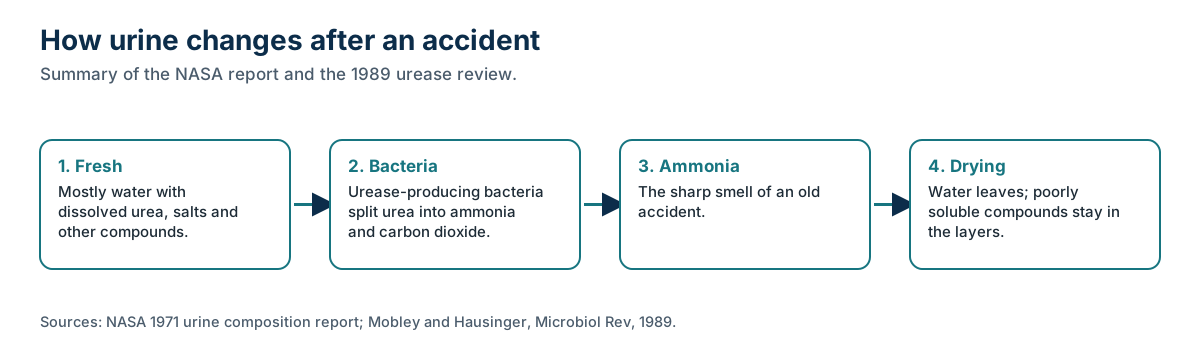
Fresh urine is mostly water carrying dissolved salts and organic compounds. In NASA's 1971 study of human urine, the largest single dissolved compound is urea. The same report's table lists far smaller amounts of uric acid, creatinine, ammonia and dozens of other compounds.
Two of those compounds explain most of what happens after an accident:
- Urea breaks down into ammonia. Bacteria that produce the enzyme urease split urea into ammonia and carbon dioxide, as a 1989 review in Microbiological Reviews puts it: "Microbial ureases hydrolyze urea to ammonia and carbon dioxide." NASA's researchers didn't report physical data for untreated urine, because bacterial action always developed within the first few days of their months-long measurements: "This bacterial action resulted in the decomposition of urea and the evolution of large amounts of ammonia." In a mattress, that is the sharp smell of an old accident.
- Uric acid barely dissolves in water. NASA's table gives its solubility as 0.00645 grams per 100 grams of water, against 119 grams for urea. Many cleaning guides blame uric acid for odor that comes back after cleaning. That's plausible given how little of it water can carry away, but we haven't found a study that measured it inside a mattress, so we don't present it as proven.
Pet urine adds its own chemistry. Cat urine carries felinine, an amino acid that breaks down into sulfur-containing odorants. A 2024 study in the Journal of Veterinary Medical Science names 3-mercapto-3-methyl-1-butanol as a major contributor to the "catty" smell, and notes that "levels of the sulfur-containing VOCs are higher in intact males than other sexes." The Carpet and Rug Institute's pet urine bulletin adds that "Urine content will change over the pet’s life because of the pet’s diet, medications, age, health, sex, and reproductive cycles."
The practical point: urine is not one substance, and an old accident isn't the same substance as a fresh one.
Where urine goes inside a mattress
A mattress is built in layers, and each layer handles liquid differently. Most beds have a quilted cover over fiber batting or foam, then comfort layers of memory foam, latex or polyfoam, then a support core of coils or dense foam.
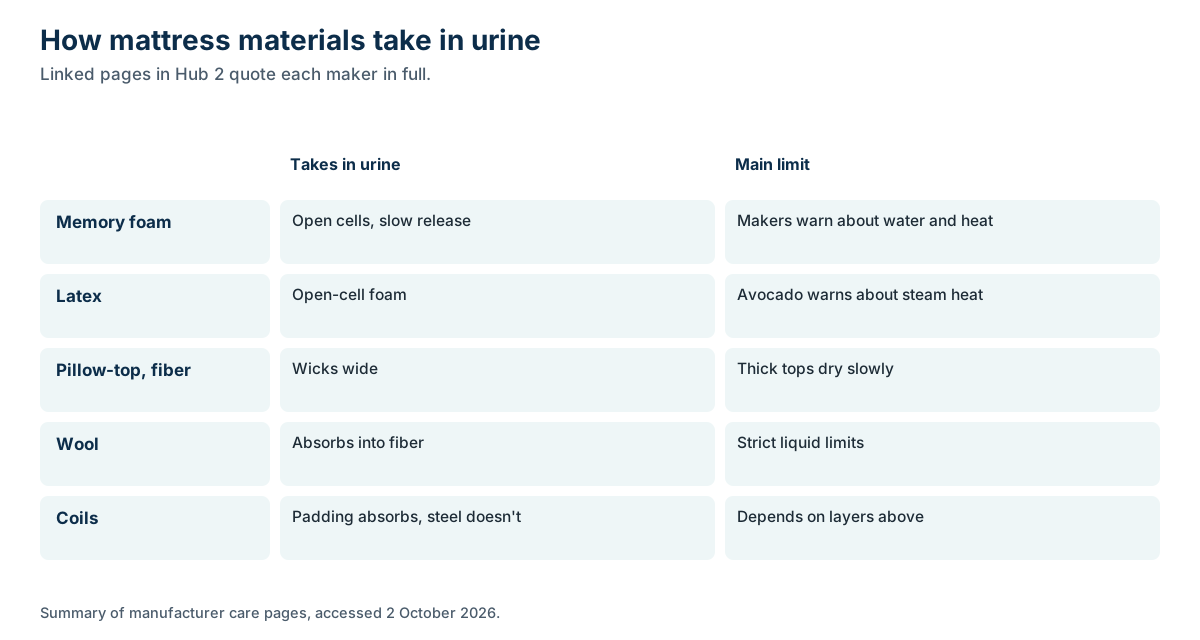
Liquid takes the easiest path. It soaks through the cover, spreads through quilting and fiber by wicking, and sinks into foam. Memory foam is an open-cell foam, so liquid that reaches it moves into the cells; Hub 1's memory foam article explains why it then dries slowly. Coils don't hold liquid, but the padding wrapped around them does.
The visible stain is usually the smallest part of the affected area. That is why a spot can look clean and still smell, and why the first thing we do on an accident job is find the edges of what got wet, not just the middle.
| Material | How it takes in urine | What limits treatment | More detail |
|---|---|---|---|
| Memory foam | Open cells take liquid in and release it slowly | Heat and water cautions from Tempur, Purple and others | Memory foam page |
| Latex | Open-cell foam that takes in liquid | Avocado warns steam heat can over-bake organic latex | Latex page |
| Pillow-top and fiber batting | Fibers wick liquid wide and hold it | Thick tops dry slowly | Pillow-top page |
| Wool and natural fills | Wool absorbs moisture into the fiber | Makers of wool beds set strict liquid limits | Wool page |
| Innerspring and hybrid | Coils don't hold liquid; padding and foam layers do | Depends on the comfort layers above the coils | Hybrid page |
| Air-chamber beds | Cover and foam tops absorb; chambers are sealed | Covers stay on; electronics stay dry | Sleep Number page |
The materials ranking in Hub 2 puts these in order of moisture sensitivity.
What manufacturers say about accidents
Mattress makers publish care instructions, and those come first. Here is what several of them say about spills, urine and odor, quoted in full from their current pages.
| Brand | What the care page says | Source |
|---|---|---|
| Tempur-Pedic (US) | "Because the mattress should never become wet, we can't promise that these steps will completely remove the stain or odor." | tempurpedic.com |
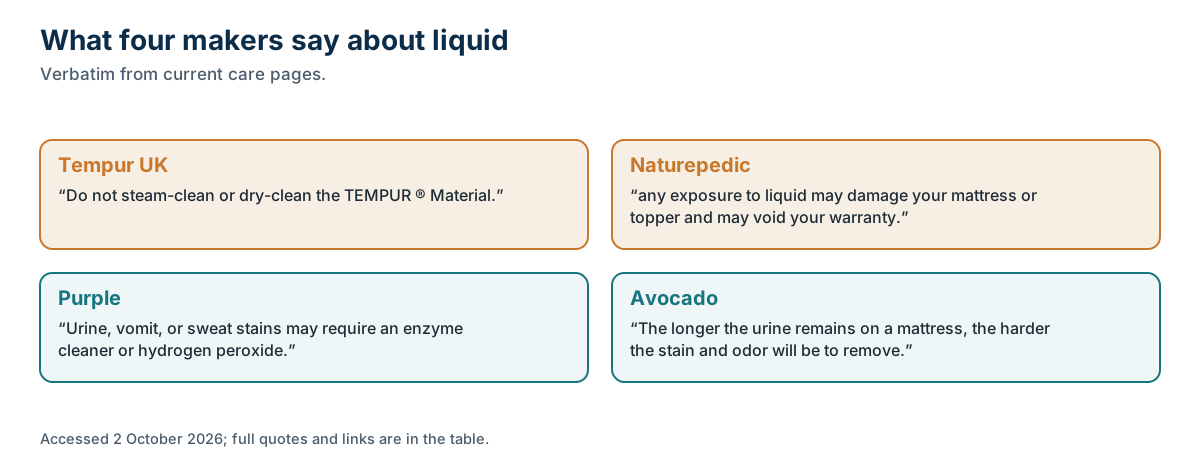
| Tempur (UK) | Stricter than the US page, and the one passage in this table that covers soaking, lasting harm to comfort and support, the guarantee and steam cleaning together: "There is a high risk that soaking with water or other cleaning fluids will cause irreversible damage, destroying the benefits of comfort and support which the TEMPUR ® Material provides. It will also invalidate your guarantee. Do not steam-clean or dry-clean the TEMPUR ® Material." | uk.tempur.com |
| Purple | "Urine, vomit, or sweat stains may require an enzyme cleaner or hydrogen peroxide." | purple.com |
| Avocado | "The longer the urine remains on a mattress, the harder the stain and odor will be to remove." | Avocado help center |
| Naturepedic | "Please note that any exposure to liquid may damage your mattress or topper and may void your warranty." | naturepedic.com |
| Nectar | "For spills and light accidents, we recommend spot cleaning the cover as soon as the spill or stain occurs with a damp cloth and mild detergent or hand soap, taking care not to let liquid reach the underlying foam layers." | nectarsleep.com |
| Casper | "Be careful not to saturate the mattress with too much water and/or detergent, as the foam in the mattress core will soak up water and detergent." | Casper care guide |
| Sleep Number | "CAUTION: Do not spray air freshener on the mattress." | Sleep Number support |
| Hästens | "But accidents do happen and a textile cleaner or furniture foam should be sufficient to clean any stains." | Hästens care PDF |
The quotes are verbatim. Read together, they agree on more than they disagree. Act fast. Keep liquid out of the core. Don't expect a promise that everything comes out. The full brand-by-brand picture, including which makers mention steam, is in the compatibility guide.
What can be removed, and what can't
Here is how we sort accidents when we look at a bed. These are general categories from our own work, not measured rates.
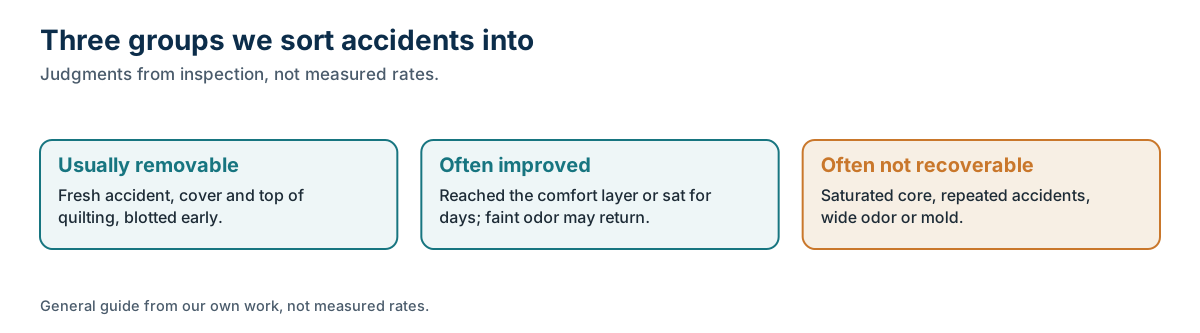
Usually removable. A fresh accident that stayed in the cover and the top of the quilting. Blotted early, kept from spreading, then treated, these often come out with no lasting smell. The same goes for most sweat staining, which builds up slowly at the surface.
Often improved, not always cleared. An accident that reached the first comfort layer, or an older one that sat for days. The smell usually drops a long way; a faint odor may return on humid days. Stains on light fabric may fade without disappearing, because urine can change fabric dyes. The CRI bulletin notes: "Some urine spots may be immediately noticeable, while others may take weeks or months for a reaction."
Often not recoverable. A saturated core, from a large accident or repeated accidents in one place. Odor from a wide area long after drying. Visible mold, or a musty smell that started after the accident. The CRI's line about cat urine applies broadly: "Unless the cat urine can be completely removed, complete odor removal is unlikely."
Sorting a bed into these groups takes a look and a smell test, not a lab. We do it before we start, and we tell you which group we think your bed is in.
Enzyme cleaners
An enzyme cleaner uses enzymes to break down organic soils such as urine, sweat and vomit. Purple's guide lists "Enzyme cleaner" among common mattress cleaning supplies, and Avocado's says "To remove urine from a mattress, you'll need a good enzymatic cleaner."
Two cautions come with them. The first is liquid. An enzyme product is applied wet, and every mattress maker that addresses liquid wants less of it in the bed, not more. The second is time. Enzymes need dwell time to work, and the product label sets it. Consumer guides often solve both problems by soaking the stain and leaving it, which on a foam mattress trades one problem for another.
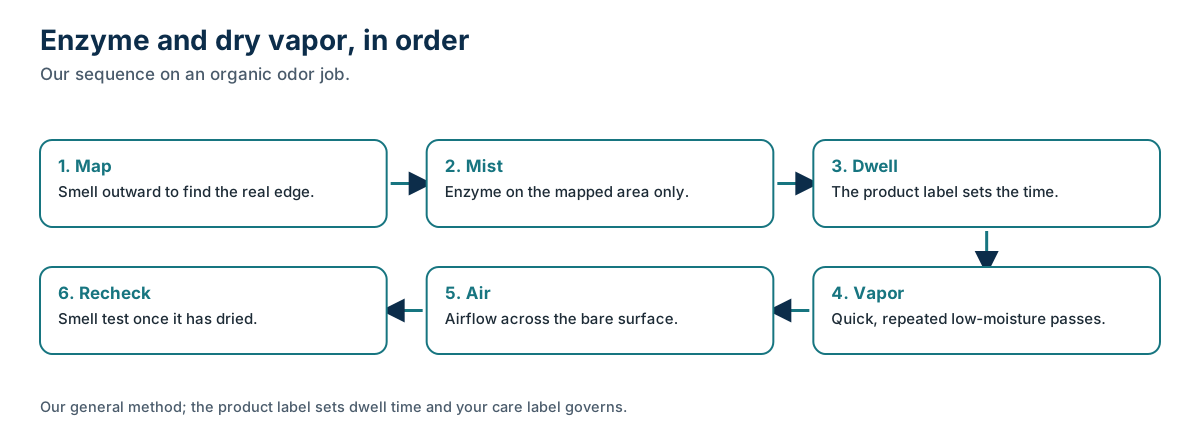
Sleep Sanitation uses enzyme treatment where there is urine or organic odor. We apply it sparingly to the affected area, give it its dwell time, and pair it with dry-vapor passes. We don't flood the area to reach the bottom of the stain. We'd rather treat in stages than push liquid into a core that will take days to dry. The enzyme articles cover this in detail.
Heat, moisture and dry vapor
Steam cleaning gets mixed advice on urine. Tempur and Purple advise against steam cleaning their mattresses. PetMD's carpet guide warns, "Don't use a steam cleaner, as the heat can set the stain." Those warnings deserve weight, and they are part of why we don't treat a urine job as a steam job.
Dry vapor is a different tool from a carpet steam cleaner or extractor; Hub 1's comparison explains the difference. Vapor Clean claims its Magnum XP produces vapor with "just 5-6% moisture" (maker's claim, not our measurement). Heat and moisture are separate variables. We use the heat at the surface, with steam output and pass speed set for the material, and keep the moisture low.
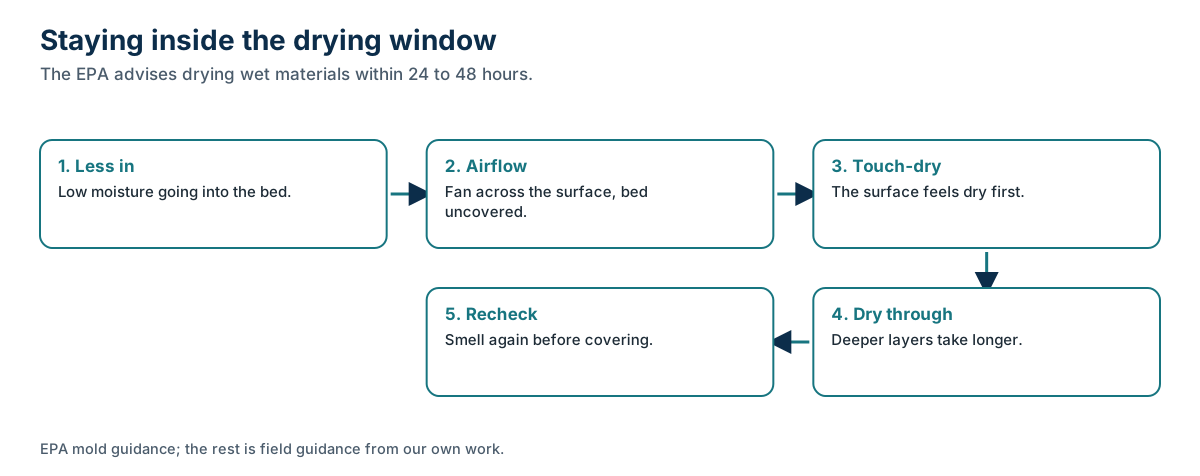
Drying matters as much as cleaning. The EPA's mold and moisture guide advises drying wet materials within 24 to 48 hours. A mattress soaked with cleaner can miss that window. Hub 1's drying article explains what affects drying time.
Sleep Sanitation's position
This section is our view, not any manufacturer's.
We treat ordinary urine accidents and pet odor as part of the standard price. Our method is dry-vapor heat from three Italian-made Vapor Clean machines, the Magnum XP, ProV 350 and Pro6 Duo, with steam output and pass speed matched to the mattress material. Where there is urine or organic odor, we pair it with enzyme treatment, applied sparingly. Organic cleaning methods are our default.
Severe, biohazard or extensive contamination gets a custom surcharge, quoted before we start. And we're honest about the limit: a heavily saturated core may not be fully recoverable. We'll tell you if we think yours is one, and we won't charge you for work we don't expect to help.
None of this is a manufacturer exemption. Several makers advise against steam cleaning, and some tie liquid damage to the warranty; Tempur's UK wording is quoted in full in the table above. On those beds we still use quick, repeated low-moisture dry-vapor passes, as Sleep Sanitation's own method and reasoning, not as a reading of anyone's label. Your care label and warranty terms govern your decision. Check your warranty terms, or ask the maker, before booking any cleaning. Booking details are on the accidents and illness cleanup page.
When replacement is the honest answer
Some manufacturers point to replacement. Saatva's cleaning guide says, "Replace your mattress if it sags, has an odor, or is over 10 years old." That is a general rule from a company that sells mattresses, and it's broader than we'd apply to a single treatable accident. But it is right that odor which survives proper treatment is a reason to replace a bed.
The articles on clean or replace and whether urine means replacing a mattress set out how we decide.
The first hours after an accident
What you do before anyone arrives matters more than any product:
- Strip the bed. Get sheets, protector and pad off and into the wash.
- Blot by pressing. Press dry towels firmly into the spot and change them as they soak. Tempur-Pedic's spill steps describe the same thing: "This may require pressing down on the material with the towel(s) to release the moisture."
- Don't add liquid. No pouring water, no soaking with cleaner.
- Move air. A fan across the surface helps. Leave the bed uncovered.
- Read your label. It may set rules on cleaners or covers.
- Call early. Old accidents are harder to treat than new ones.
Protection that actually works
The cheapest urine treatment is the one you never need. A few habits make most accidents into laundry instead of a mattress problem.
- A waterproof protector on every bed that a child, pet or anyone with incontinence uses. Choose one that covers the top and sides.
- A spare protector, so the bed is never bare while one is in the wash.
- A washable top layer for nightly accidents: a pad for a child, a blanket where a pet sleeps.
- Wash and fully dry protectors after every accident. A protector that holds urine can make a clean mattress smell.
- Check underneath after a big accident. If the protector failed, blot the mattress right away.
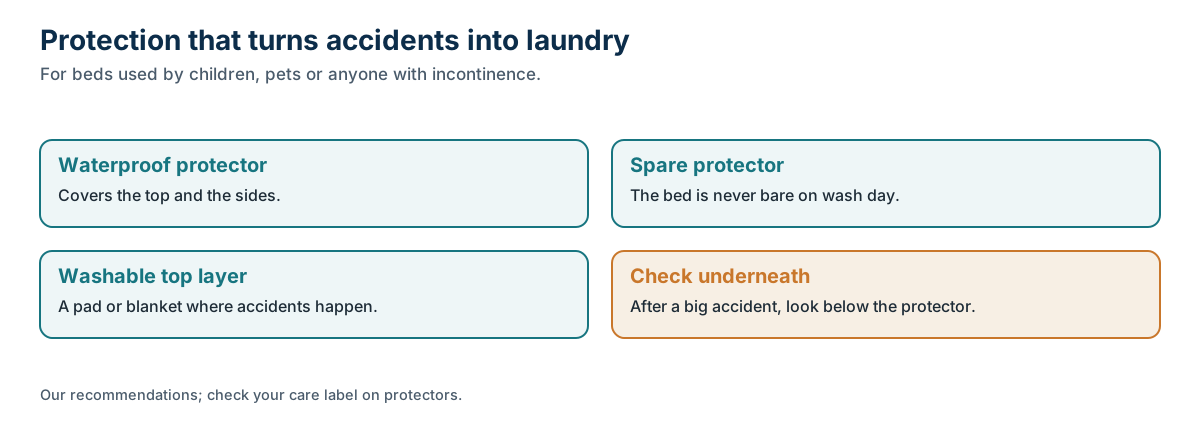
None of this replaces treating an accident that gets through, but it changes how often that happens.
Children and night-training
Children learning to stay dry at night may wet the bed more than once before they're done. When that happens, urine often reaches the bed hours before anyone notices, and a new accident can arrive before the last one has fully dried. A protector and a washable pad do most of the work. When something does get past them, the same rules apply: press, don't pour, and keep air moving. If you're worried about the bedwetting itself, that's a question for your child's doctor, not a cleaner.
Pets that sleep on the bed
A pet on the bed brings hair, dander and the occasional accident. A washable blanket where the pet sleeps catches most of it. If a pet that used to be reliable starts having accidents, tell your vet; it can be a sign of a health change. Cat urine and old dog urine each have their own article.
How we inspect an accident
Every accident visit starts the same way, before any product comes out.
- Smell in a grid. We work outward from the visible stain until the smell stops. That edge, not the stain's edge, sets the treatment area.
- Check the border and underside. Accidents near the edge often run down the side panel. Large ones can go right through to the foundation.
- Read the label. The care label, and the maker's care page if we can find it, sets limits on liquid, heat and cleaners.
- Ask what's been done. A stain that's been sprayed with fragrance or soaked with cleaner needs a different first step.
- Sort it. We tell you which of the three groups above we think the bed is in, and what we expect.
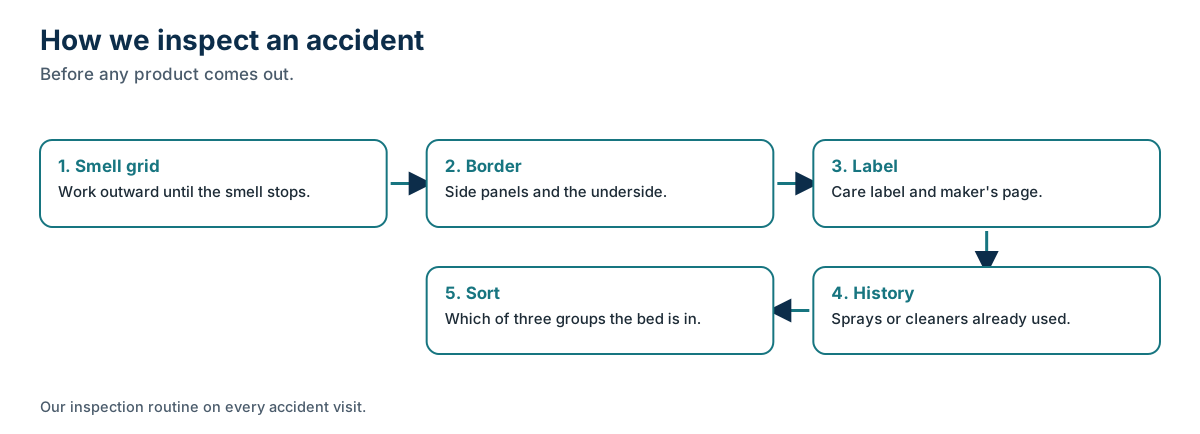
That inspection takes minutes and decides most of the outcome. It's also when we'd tell you a bed isn't worth treating.
Sweat, vomit and other organic stains
Urine isn't the only organic soil a mattress collects. Sweat builds up slowly across the sleeping area and shows as general yellowing and a stale smell. Vomit and other bodily fluids leave concentrated, localized stains. Purple's care guide groups several of these together: "Urine, vomit, or sweat stains may require an enzyme cleaner or hydrogen peroxide."
Our approach is the same for organic odor of any kind: sparing enzyme treatment where it's needed, then low-moisture dry vapor. Severe, biohazard or extensive contamination, such as blood or other bodily fluids, is quoted as a custom surcharge. The CDC defines cleaning, sanitizing and disinfecting as different steps, and we use those words in that sense. Odor treatment is cleaning; we make no disinfection claim.
Questions to ask any cleaner
Whoever you hire for a urine job, ask:
- How much liquid will go into the mattress?
- Will you rinse or extract, or work low-moisture?
- What changes on memory foam, latex or wool?
- How do you find the edges of the stain?
- How long until I can sleep on it?
- What happens if the smell comes back?
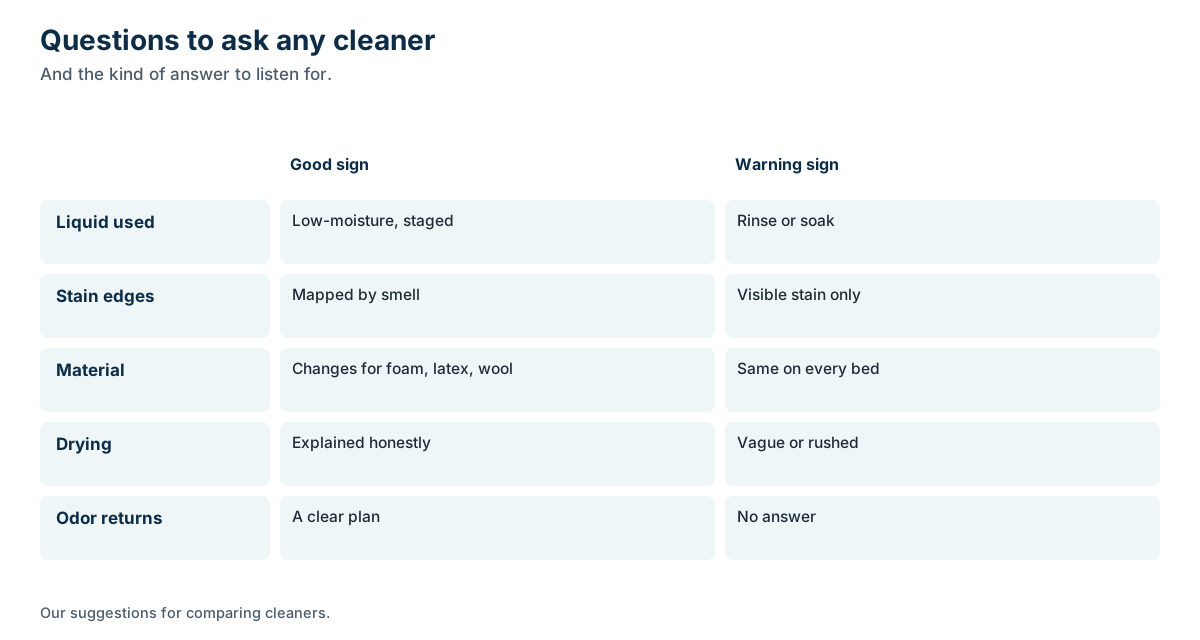
Clear answers to those tell you more about the result than any product name.
Where to go next
Each article in this hub answers one question in depth:
- A dog accident on a Tempur-Pedic: first steps and limits.
- Treating foam at home: urine in memory foam without soaking.
- What heat can do: dry vapor and urine odor.
- Old stains: old dog urine smell and odor that comes back.
- Enzymes: can they damage memory foam?
- Cats: why cat urine is different.
- Repeat accidents: how many treatments a bed can take.
- What soaking does: urine soaking into a mattress.
- How the work is done: professional treatment without flooding.
- Pets or people: pet urine vs human urine.
- Lingering smell: odor after the stain is gone.
- Premium beds: restoring an expensive mattress.
What we don't know
- Uric acid and odor return. It's a plausible explanation, but we haven't found a study measuring it inside mattresses.
- Removal rates. Nobody publishes how often mattress urine odor is fully removed. We don't either; our categories above are judgments, not statistics.
- Enzyme products on specific foams. Manufacturers rarely test named enzyme products on their foams, and none we read publishes such results.
- Your warranty. Terms vary by brand and model. Read yours.
Changelog
- 2 October 2026: First published. Manufacturer pages and the NASA, CRI, PetMD and journal sources accessed on this date.
Sources
- Composition and Concentrative Properties of Human Urine (NASA contractor report, July 1971) · NASA
- Microbial ureases: significance, regulation, and molecular characterization (Mobley and Hausinger, Microbiol Rev, 1989) · PubMed Central
- Reduction of urinary felinine in domestic cats with renal diseases leads to decreased catty odor (J Vet Med Sci, 3 Dec 2024) · PubMed Central
- Pet Urine and Carpet (technical bulletin, revised 27 July 2017, accessed 2026-10-02) · Carpet and Rug Institute
- Product care (US, accessed 2026-10-02) · Tempur-Pedic
- Caring for your TEMPUR (UK, updated 11 July 2023, accessed 2026-10-02) · Tempur UK
- How To Clean a Mattress in 9 Steps (last updated 16 Oct 2025, accessed 2026-10-02) · Purple
- How to Clean Your Natural Mattress Without Using Harsh Chemicals (25 June 2026, accessed 2026-10-02) · Avocado
- Product Care (accessed 2026-10-02) · Naturepedic
- Nectar Sleep FAQ (accessed 2026-10-02) · Nectar
- How to clean your mattress: a mattress care guide (accessed 2026-10-02) · Casper
- Cleaning Your Mattress (support, accessed 2026-10-02) · Sleep Number
- Care Instructions (PDF, accessed 2026-10-02) · Hästens
- How do I clean a Bear mattress? (updated 6 May 2026, accessed 2026-10-02) · Bear
- How to Clean Your Mattress in 5 Simple Steps (blog, accessed 2026-10-02) · Saatva
- How To Get Rid of Cat Pee Smell (accessed 2026-10-02) · PetMD
- A brief guide to mold, moisture and your home · US EPA
- Cleaning and disinfecting your school (definitions) · CDC
- Magnum XP-Vac product page (maker's claims, accessed 2026-10-02) · Vapor Clean
- ProV 350 product page ('Italian Made'; maker's claims, accessed 2026-10-02) · Vapor Clean
- Pro6 Duo product page ('Made in Italy'; maker's claims, accessed 2026-10-02) · Vapor Clean
Last reviewed October 2, 2026. Manufacturer specifications and care instructions change; check the current version for your exact model. This page is general information, not medical advice. How we source and check pages: editorial standards.