
Short answer
Based on what manufacturers publish, memory foam draws the strongest water warnings: Tempur-Pedic says its material 'should never become wet,' and Purple and Casper say foam absorbs liquid. Avocado says water 'is not harmful' to its organic latex, though heat is. Purple's general guide treats innerspring beds as the most tolerant. Pillow-tops, wool and gel foam have no OEM guidance. This is a grouping of published statements, not a lab ranking.
Key terms used on this page
- Memory foam (viscoelastic foam):
- An open-cell, slow-recovery polyurethane foam that softens with body heat and conforms to pressure. Because its cells are open, liquid can travel into it, and because it is dense and insulating, it is slow to dry.
- Latex foam (Dunlop and Talalay):
- A foam made from natural rubber, synthetic rubber or a blend. Dunlop and Talalay are the two common production methods. Latex is an open-cell foam, but manufacturers describe its tolerance for water differently from memory foam: Avocado says water is not harmful to its organic latex, while warning that steam's heat can over-bake it.
- Innerspring mattress:
- A mattress whose support core is a unit of steel coils, with comparatively thin comfort layers and a quilted top. The coil core is open to airflow, which is one reason general cleaning guides treat innerspring beds as more tolerant of moisture than solid-foam beds.
- Moisture load:
- The total amount of water a cleaning process puts into a mattress, whether from spray, steam condensate, shampoo or rinse. It is the main thing that decides how long a mattress takes to dry.
- Care instructions (manufacturer care guidance):
- What a manufacturer publishes about cleaning its product: a sewn-in label, a care web page, a help-center article or a brand blog post. They carry different weight. A sewn-in label or a product-care page speaks for a specific product; a blog post often gives general advice about many mattress types. On this hub we name the document type for every quote.
- Wool batting:
- A layer of wool fiber placed under the ticking, often in natural mattresses, for comfort and moisture management. Wool fiber takes up moisture from the air, which is why it matters how much water a cleaning method leaves behind.
Owners often know what their mattress is made of but not which brand rules apply. This page groups the common materials by how strongly manufacturers warn about water, using only what the seven care pages in this hub actually say. It is a grouping of published statements, not a laboratory ranking, and we mark the materials where no guidance exists.
Not affiliated with or endorsed by any manufacturer listed. Brand names are used only to identify products and their published care instructions.
How we grouped the materials
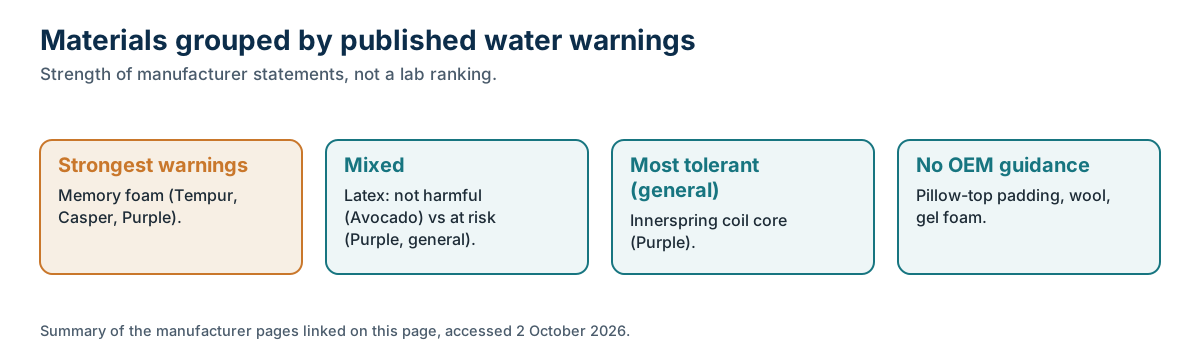
We read every water-related statement on the seven pages (accessed 2 October 2026) and asked two questions of each material: does a manufacturer tell owners to keep it dry, and does a manufacturer say water is acceptable? The answers fall into three groups, plus a fourth for materials no one addresses.
| Group | Materials | What the manufacturers say | Sources |
|---|---|---|---|
| Strongest warnings | Memory foam, including TEMPUR material | "should never become wet"; soaking risks "irreversible damage"; foam "will soak up water and detergent" | Tempur-Pedic, Tempur UK, Casper, Purple |
| Mixed | Latex | "Water is not harmful to organic latex" (Avocado) vs "the heat and water could damage its materials" (Purple, general) | Avocado, Purple |
| Most tolerant, per general guidance | Innerspring (coil core) | A carpet cleaner "can help clean an innerspring mattress"; "you can steam clean your innerspring or hybrid mattress" | Purple |
| No OEM guidance found | Pillow-top padding, wool layers, gel-infused foam | Not addressed on any of the seven pages | None found |
Covers sit across all groups. Sleep Number says "Sprays can soak the fabric and cause shrinking or stains," and Purple says a washed cover "will shrink."
Memory foam: the strongest warnings
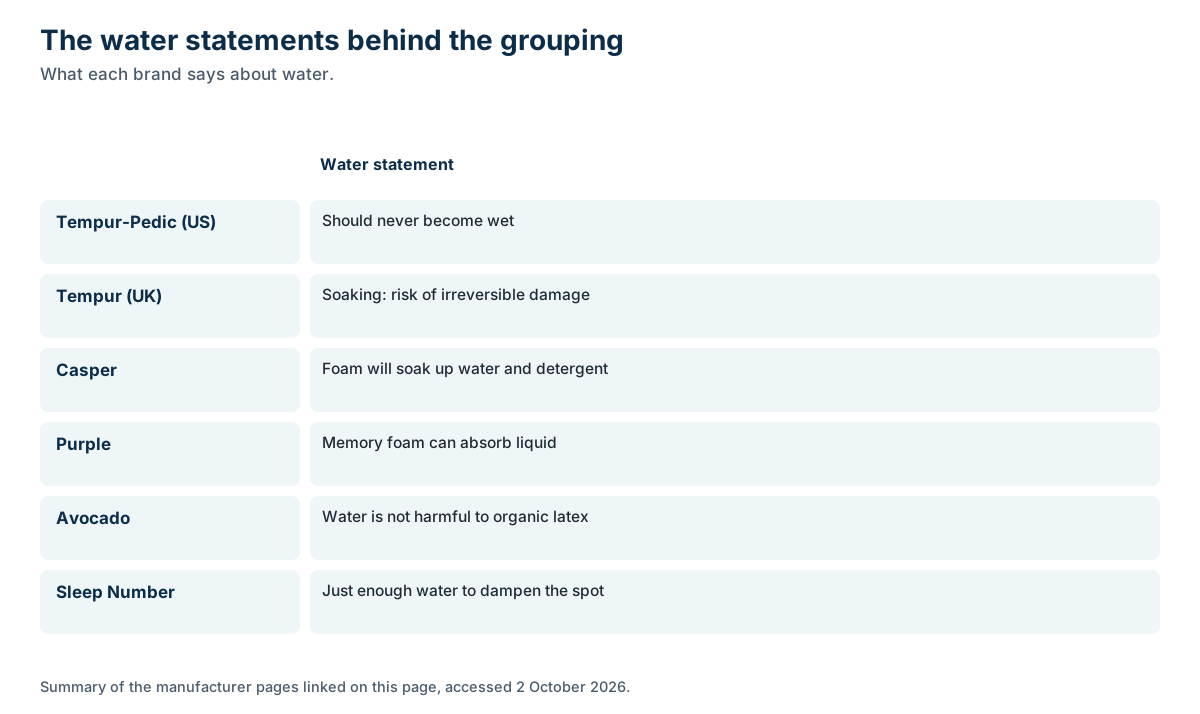
The foam warnings come from four brands and use the strongest language in any of the pages. Tempur-Pedic US: "TEMPUR® material should never become wet." Tempur UK: "There is a high risk that soaking with water or other cleaning fluids will cause irreversible damage." It adds: "It will also invalidate your guarantee." Casper: "the foam in the mattress core will soak up water and detergent." Purple: memory foam "can absorb liquid and be harder to dry."
Hub 1 explains why: open cells take water in, and dense, insulating foam lets it out slowly. See what happens when water penetrates memory foam. Our memory foam page and gel foam page cover the details.
Latex: mixed messages
The brands disagree. Avocado, writing about its own organic latex, says water isn't harmful and suggests "small amounts of cold water" for stains. Purple's general guide groups latex with foam and names water as a risk. We'd give more weight to the maker of the specific mattress, but we report both. Latex is also the clearest example of a material where heat, not water, is the main published concern; see the latex page.
Innerspring: the most tolerant, with a caveat
Purple's general guide is the only source that ranks constructions, and it treats innerspring beds as tolerant of a carpet cleaner and a household steamer while warning the same tools "could overly saturate a memory foam mattress." The caveat: the comfort layers on top of the coils may be foam, fiber or a pillow-top, and they hold water like any padding. See the innerspring and hybrid pages.
Where guidance runs out
Pillow-top padding, wool layers and gel-infused foam have no manufacturer guidance on these pages. We don't place them in a group by guesswork. For each, we apply the cautions of the nearest published material and label that inference as ours: see pillow-top, wool layers and gel foam.
Moisture is only half the picture
A material low on water sensitivity can still be heat-sensitive, as latex shows. Hub 1 explains why heat and moisture are separate variables and why the moisture load a method leaves behind is what decides drying time and odor risk.
Covers and fabrics
The ticking is a material too, and manufacturers warn about it separately. Sleep Number says "Do not use air-freshener sprays" because "Sprays can soak the fabric and cause shrinking or stains," and that "Washing or dry cleaning can make the cover shrink." Purple says a machine-washed cover "will shrink, voiding our return and warranty policies." Tempur-Pedic is the exception, with covers that "can be removed and washed" in cold water, but warns "Do not 'over-dry' the cover." So even a bed with a moisture-tolerant core can have a moisture-sensitive cover.
How to use this grouping
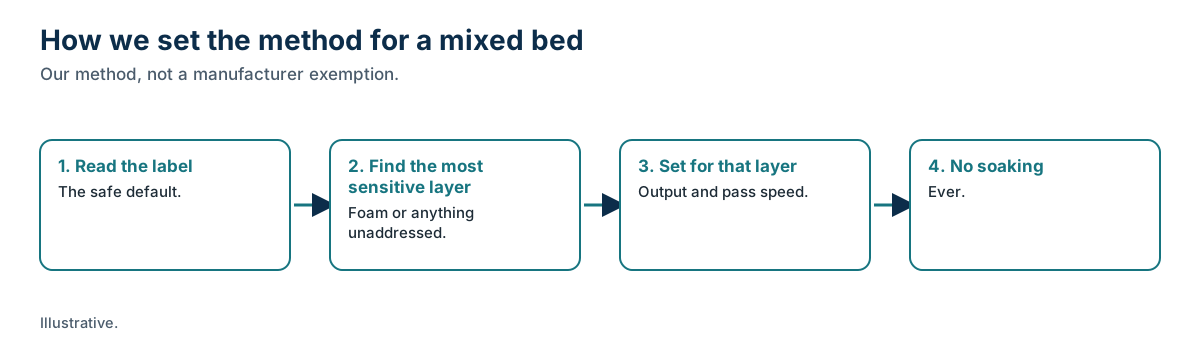
- Find the most sensitive material in your bed. A coil mattress with memory foam on top belongs with memory foam for cleaning purposes.
- Read that material's page in this hub for the quoted guidance.
- Check your brand's own page, which overrides general guidance.
- Treat unaddressed materials cautiously. No guidance isn't the same as no risk.
Common misreadings
"Most tolerant means safe to soak." Purple's general guide treats coils as more tolerant, but it still says to let the mattress "completely dry" before making the bed.
"Latex is in the middle, so it's moderately sensitive." Latex is in the middle because brands disagree, not because it sits halfway on a scale.
"This is a ranking from tests." It is a grouping of what manufacturers wrote.
A worked example: a mixed-material bed
Take a common modern mattress: pocketed coils, a gel memory foam comfort layer, a fiber quilted top and a knit cover. Which group does it belong to?
By its most sensitive layer, memory foam. The coils sit in the most tolerant group; the quilted fiber has no OEM guidance; but the gel foam layer falls under the strongest warnings, and liquid from the surface would reach it within a few inches. So for cleaning purposes, we'd treat this bed as a foam bed.
That reasoning matters for owners comparing quotes. A provider who calls this "an innerspring" and plans to extract it is planning for the coils. A provider who asks what is in the comfort layer is planning for the foam. The second question is the one to listen for, and it is the question we ask on every booking call before we decide how a technician should approach the bed.
What would change our grouping
New evidence would. If a manufacturer published test data on how its material handles water, or a care page that addressed one of the materials currently marked "No OEM guidance found," we would update the grouping and record the change in the changelog below. The same applies if a brand changes its wording, as care pages sometimes do between updates.
Sleep Sanitation's approach
This section is our view, not any manufacturer's.
Your label is the safe default. Our position is that we can sanitize any mattress or topper. We use Vapor Clean dry-vapor equipment (we run the Magnum XP, ProV 350 and Pro6 Duo and match the machine to the job), and our technician sets the steam output and pass speed for the most sensitive material in the bed: foam and anything with no published guidance get the most cautious treatment. That is our method and reasoning, not an exemption from any manufacturer. Check your warranty terms before booking, and contact the manufacturer if unsure. This is not legal advice.
Where this fits
The full brand table and material matrix are in the compatibility guide; the hub overview lists every page. If foam is the most sensitive layer in your bed, our Tempur-Pedic service page explains how we handle a foam mattress, and our process describes a visit.
Related guidance and background
Public guidance and reference sources behind this page:
- Clean, sanitize, disinfect. The CDC defines the three words differently: cleaning removes dirt and germs, sanitizing lowers germs to a safer level, and disinfecting kills germs, usually with a registered chemical used as labeled. We use "sanitize" in that sense and make no disinfection claim.
- Drying. The EPA's mold and moisture guide advises drying wet materials within 24 to 48 hours, and says that in most cases mold won't grow if you do. That is the public-health reason behind every manufacturer's drying instruction.
What we don't know
- Measured moisture tolerance. We found no independent study comparing mattress materials.
- Materials with no guidance. Pillow-tops, wool and gel foam remain unaddressed on the pages we checked.
- Blends and treatments. Mixed-material layers and treated fibers may behave differently.
- How long each material takes to dry. Not published.
Changelog
- 2 October 2026: First published. All seven manufacturer care pages accessed on this date.
Sources
- Product care (US, accessed 2026-10-02) · Tempur-Pedic
- Caring for your TEMPUR (UK, updated 11 July 2023, accessed 2026-10-02) · Tempur UK
- How To Clean a Mattress in 9 Steps (last updated 16 Oct 2025, accessed 2026-10-02) · Purple
- How to Clean Your Natural Mattress Without Using Harsh Chemicals (25 June 2026, accessed 2026-10-02) · Avocado
- How to clean your mattress: a mattress care guide (accessed 2026-10-02) · Casper
- Cleaning Your Mattress (support, accessed 2026-10-02) · Sleep Number
- Magnum XP-Vac product page (maker's claims, accessed 2026-10-02) · Vapor Clean
- Cleaning and disinfecting your school (definitions) · CDC
- A brief guide to mold, moisture and your home · US EPA
Last reviewed October 2, 2026. Manufacturer specifications and care instructions change; check the current version for your exact model. This page is general information, not medical advice. How we source and check pages: editorial standards.