
Short answer
Often, yes, if the accident is treated early and without soaking. Price doesn't make a mattress more forgiving: many premium beds use memory foam, latex, wool or natural fills that are among the most moisture-sensitive materials, and their makers publish strict care rules. A fresh accident in the top layers is usually treatable. A soaked core may not be fully recoverable, whatever the bed cost.
Key terms used on this page
- Care instructions (manufacturer care guidance):
- What a manufacturer publishes about cleaning its product: a sewn-in label, a care web page, a help-center article or a brand blog post. They carry different weight. A sewn-in label or a product-care page speaks for a specific product; a blog post often gives general advice about many mattress types. On this hub we name the document type for every quote.
- Warranty exclusion:
- A condition a manufacturer says its warranty does not cover. Purple, for example, says 'damage from the sun is excluded from warranty coverage,' and Tempur UK says soaking 'will also invalidate your guarantee.' Only the manufacturer can decide a claim.
- Latex foam (Dunlop and Talalay):
- A foam made from natural rubber, synthetic rubber or a blend. Dunlop and Talalay are the two common production methods. Latex is an open-cell foam, but manufacturers describe its tolerance for water differently from memory foam: Avocado says water is not harmful to its organic latex, while warning that steam's heat can over-bake it.
- Wool batting:
- A layer of wool fiber placed under the ticking, often in natural mattresses, for comfort and moisture management. Wool fiber takes up moisture from the air, which is why it matters how much water a cleaning method leaves behind.
- Enzyme cleaner:
- A cleaning product that uses enzymes to break down organic soils such as urine, sweat, vomit or blood. Several mattress makers mention them for urine stains, including Purple and Avocado. They are liquids, so how much is applied matters as much as what is applied. Sleep Sanitation uses enzyme treatment on urine and organic odor, sparingly.
- Saturated core:
- A mattress whose interior layers, not just the cover and quilting, were soaked by a large accident or several in one place. Surface treatment can't reach all of it. Some saturated cores improve with treatment and drying; some don't, and we say so before charging for work that won't help.
When a pet has an accident on a mattress that cost several thousand dollars, the question isn't just "can it be cleaned?" It's "can it be cleaned without making things worse?" That's a fair worry, because many premium beds are built from the materials that are hardest to clean.
Not affiliated with or endorsed by any manufacturer listed. Brand names are used only to identify products and their published care instructions.
Price and fragility often go together
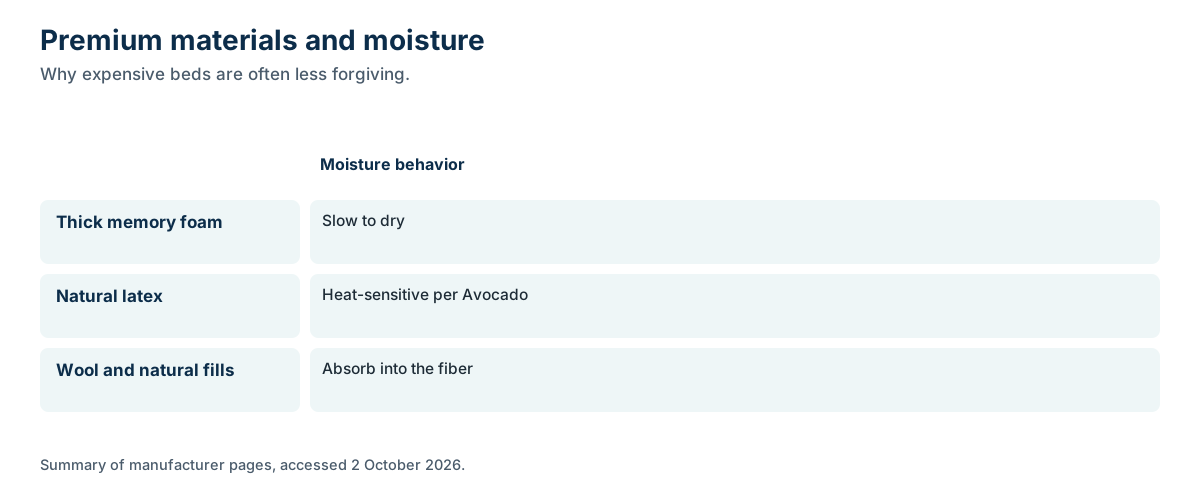
Expensive mattresses tend to use expensive materials: thick memory foam, natural or organic latex, wool, cotton, horsehair and other natural fills. Several of those are among the most moisture-sensitive materials in a mattress. Our materials ranking puts them in order.
Their makers' care pages reflect that. Here's what some of them say, in full, from their current pages.
What premium makers say
Tempur-Pedic. The US page says "TEMPUR® material should never become wet." The UK page is the most detailed of any maker we checked: "There is a high risk that soaking with water or other cleaning fluids will cause irreversible damage, destroying the benefits of comfort and support which the TEMPUR ® Material provides. It will also invalidate your guarantee. Do not steam-clean or dry-clean the TEMPUR ® Material." On a bed that cost several thousand dollars, the guarantee sentence is usually the one owners ask about first. That is a question for Tempur rather than for us, so keep the receipt and registration handy if you plan to call. Our Tempur-Pedic guide has the full set.
Hästens. Its care booklet is relaxed about accidents: "But accidents do happen and a textile cleaner or furniture foam should be sufficient to clean any stains." See our Hästens page.
Avocado. It recommends enzyme cleaners for urine, and warns about heat: "Steam cleaners are not recommended because their excessive heat can over-bake the organic latex." See our Avocado page.
Naturepedic. Strict about liquid: "Please note that any exposure to liquid may damage your mattress or topper and may void your warranty."
Saatva. Its general rule: "Replace your mattress if it sags, has an odor, or is over 10 years old." See our Saatva page.
None of these makers mentions dry vapor. Their rules are the starting point for anything we do.
What restoration can and can't do
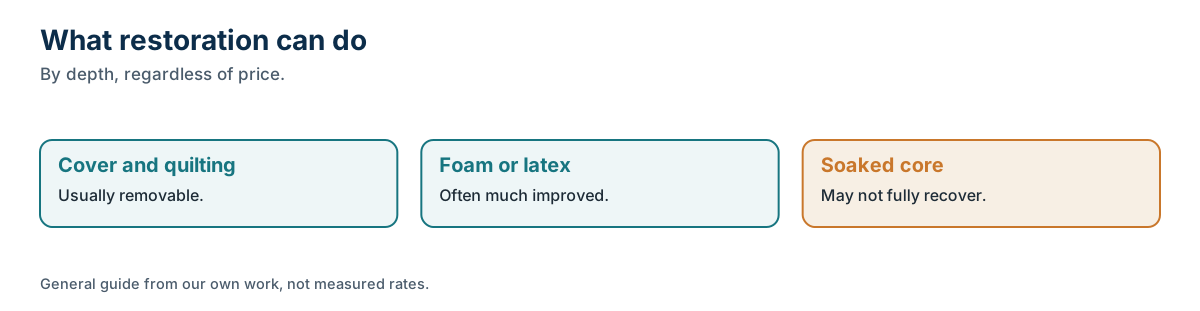
On a premium bed, as on any bed, depth decides the outcome.
- Accident caught in the cover and quilting: usually removable. Many luxury beds have thick, removable or quilted covers that catch a lot.
- Into the comfort layer of foam or latex: often much improved. Latex and memory foam hold moisture, so the treatment must stay light.
- Into wool or natural fills: wool absorbs moisture into the fiber, and thick natural layers dry slowly. Our wool page explains the limits.
- Soaked through to the core: a saturated core may not be fully recoverable, regardless of the price.
Restoration here means cleaning, not sanitizing; Hub 2 gives the CDC's definitions.
Before you do anything
For a high-value bed, a few minutes of caution pays off.
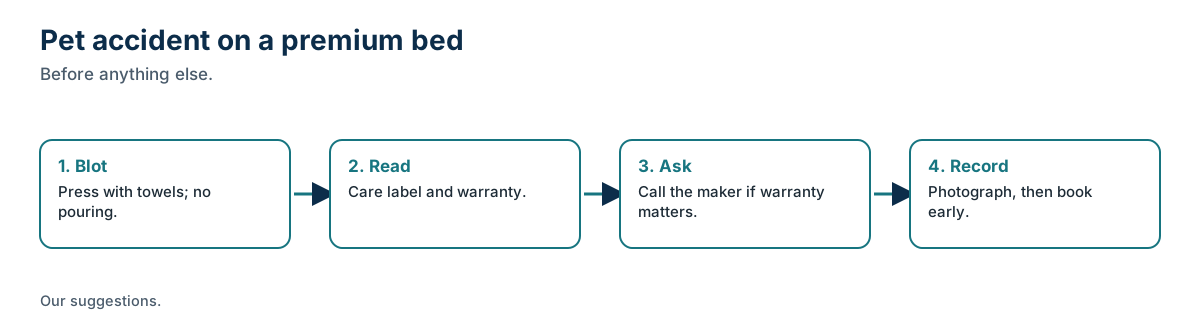
- Blot by pressing with dry towels. Don't pour anything.
- Read the care label and warranty. Some premium makers are explicit about liquid.
- Call the maker if the warranty matters to you. Ask what it says about stains.
- Photograph the stain before treatment, for your own records.
- Book early. Fresh urine is far easier than old.
How we treat premium beds
This is our professional method, not a manufacturer's guidance, and it isn't an exemption from any maker's rules. Check your warranty before booking.
We start by reading the care label and any manufacturer instructions you have, and we tell you what they say. Our approach on premium beds is quick, repeated low-moisture dry-vapor passes; that is Sleep Sanitation's own method and reasoning, not a reading of any maker's label. Your care label and warranty terms govern your own decision, so check your warranty, or contact the manufacturer, before any steam or vapor cleaning.
For premium beds we pair a light enzyme application with dry vapor, keeping the product to the mapped area so the foam or natural fill below stays dry, and giving it full dwell time first. Organic methods are our default, which matters to owners who chose an organic bed for that reason.
We use three Italian-made Vapor Clean machines, the Magnum XP, ProV 350 and Pro6 Duo. On latex and memory foam we keep steam output low and passes quick, because heat and moisture are separate variables and we want neither to build up. The latex compatibility page explains why latex makers are cautious about heat.
Drying is part of the treatment. The EPA's mold guide advises drying wet materials within 24 to 48 hours. How long a mattress should take to dry explains what affects that on thick beds.
The cost question
Pet accidents on premium beds are priced like any other: ordinary ones fall under our standard price, and severe, biohazard or extensive contamination is quoted first. On a bed worth thousands, a first treatment is almost always worth trying.
What we won't do is take money for work we don't expect to help. If the core is soaked or the accidents have repeated for months, we'll tell you, and you can decide with the full picture. More on our accident cleanup service.
Protecting the investment
A premium mattress deserves a premium protector: waterproof, breathable, covering top and sides. Purple's cleaning guide makes the same point, recommending a waterproof protector against spills and stains. Wash the protector as directed and keep a spare.
If the pet sleeps on the bed, a washable throw where it lies is cheap insurance for an expensive mattress.
Natural and organic beds
Owners of organic mattresses are often wary of any cleaning product at all, and with reason: they chose the bed partly for what it doesn't contain. Organic cleaning methods are our default for exactly that kind of customer. In practice, that means heat, vacuuming and enzyme treatment applied sparingly, rather than heavy chemistry. We don't name products, but we're glad to talk through what we use before we start.
Naturepedic's accident advice for its own beds is worth knowing too: it suggests hydrogen peroxide or rubbing alcohol on the soiled area, followed by full drying. That's the maker's advice for its own beds, and our Naturepedic page quotes the rest of it.
Adjustable bases and smart beds
Many premium beds sit on adjustable bases or include electronics. Liquid near motors, wiring or air chambers is a separate risk from liquid in the foam. Our Sleep Number page and the adjustable mattress definition cover what makers say. Purple, for one, tells owners not to steam clean adjustable mattresses, along with memory foam and latex.
Documentation helps
For a bed this valuable, keep a simple record: photos of the stain before treatment, the date, what was used, and what we found. If you ever need to talk to the manufacturer about the bed, a clear history helps.
Questions worth asking the maker
If you call the manufacturer, a few specific questions get more useful answers than "can I clean it?" Ask whether the cover is meant to come off, what the warranty says about stains, whether any cleaning method would affect coverage, and what they'd recommend for a pet accident specifically. Write down the answer and the date, and share it with us when you book. Your care label and warranty terms govern your decision, and our method is never an exemption from them.
The mattress urine guide lists each maker's quote in one table. Does urine mean replacing your mattress? and my dog peed on my Tempur-Pedic cover related decisions.
Timing a visit around your schedule
A premium bed is often the main bed in the house, so plan for drying. Book a morning visit, keep the room ventilated through the day, and have a spare place to sleep in case a thick natural-fill bed needs longer. Drying time varies, and thick wool and latex layers can take longer.
What we don't know
- How a specific premium maker would view our method under its warranty. None we read addresses dry vapor.
- How a specific enzyme product behaves on natural latex or wool. Makers don't publish it.
- How deep your accident went until it's checked.
Changelog
- 2 October 2026: First published. Sources accessed on this date.
Sources
- Care Instructions (PDF, accessed 2026-10-02) · Hästens
- Product care (US, accessed 2026-10-02) · Tempur-Pedic
- Caring for your TEMPUR (UK, updated 11 July 2023, accessed 2026-10-02) · Tempur UK
- How to Clean Your Natural Mattress Without Using Harsh Chemicals (25 June 2026, accessed 2026-10-02) · Avocado
- Product Care (accessed 2026-10-02) · Naturepedic
- How to Clean Your Mattress in 5 Simple Steps (blog, accessed 2026-10-02) · Saatva
- How To Clean a Mattress in 9 Steps (last updated 16 Oct 2025, accessed 2026-10-02) · Purple
- Magnum XP-Vac product page (maker's claims, accessed 2026-10-02) · Vapor Clean
- ProV 350 product page ('Italian Made'; maker's claims, accessed 2026-10-02) · Vapor Clean
- Pro6 Duo product page ('Made in Italy'; maker's claims, accessed 2026-10-02) · Vapor Clean
- A brief guide to mold, moisture and your home · US EPA
Last reviewed October 2, 2026. Manufacturer specifications and care instructions change; check the current version for your exact model. This page is general information, not medical advice. How we source and check pages: editorial standards.