
Skip to content

Knowledge Center · Accidents & Odor

Mattress accidents: urine, pets, sweat and odor

This hub explains what happens when urine, a pet accident or heavy sweat gets into a mattress: where the liquid goes, why the smell can outlast the stain, what manufacturers say about cleaning it up, and where the limits are. It is written for people deciding between cleaning and replacing a bed.

Monday–Friday, 9am–6pm. Missed a call? We return calls and texts on Saturday and Sunday too.

Short answer

Most ordinary urine accidents can be treated, but how much odor comes out depends on how deep the liquid went and how long it sat. Surface layers and covers usually respond. A core that was soaked through may not fully recover. Sleep Sanitation treats ordinary accidents and pet odor as part of the standard price, pairing enzyme treatment with low-moisture dry vapor matched to the mattress material.

By Matthew Brunken · Updated October 2, 2026 · Last reviewed October 2, 2026 · Sources · Editorial standards

Urine accidents come with a lot of bad advice attached. Some guides tell you to pour on cleaner until the stain is soaked. Others say a mattress is ruined the moment urine touches it. Neither is right for most beds.

This hub works through the question the way we do on a job. First, what urine actually is and how it changes as it sits. Then where it goes inside each kind of mattress, what the manufacturer of that mattress says about cleaning it, and what heat, enzymes and drying can and can't do. Last, how to tell a bed that will recover from one that won't.

Not affiliated with or endorsed by any manufacturer listed. Brand names are used only to identify products and their published care instructions.
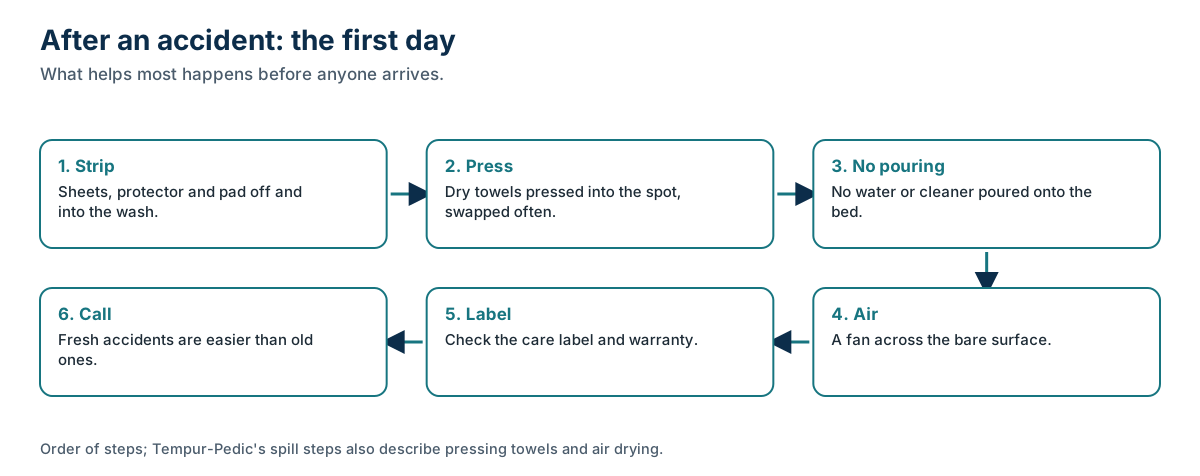
Six steps after a mattress urine accident, from stripping the bed to calling
The first-day steps, in order. Diagram: Sleep Sanitation (original, illustrative).

Why accidents need their own hub

Hub 1 explains cleaning methods and why moisture matters. Hub 2 quotes what each brand and material tolerates. Accidents bring both questions at once, with a deadline: liquid is already in the bed, and every hour it sits it spreads and changes.

Urine is mostly water, per NASA's 1971 composition report, but what makes it hard to clean isn't the water. Urea, the main nitrogen compound in urine, is broken down by common bacteria into ammonia, according to a 1989 review of microbial ureases. NASA saw the same thing when it studied stored human urine for spacecraft systems: bacterial action decomposed the urea and released large amounts of ammonia. That is why an old accident smells sharper than a fresh one, and why speed matters.

What this hub covers

The flagship guide is the place to start. It explains what can be removed, what can't, and the limits each material sets. The articles below it each answer one question people ask us, such as what to do when a dog has peed on a Tempur-Pedic, whether an enzyme cleaner can hurt memory foam, and why the smell came back after the bed dried.

Every article follows the same rules as the rest of the Knowledge Center. We quote manufacturers exactly and link the page. We separate what a source says from what we think. We don't invent numbers: where nobody has measured something, the article says so.
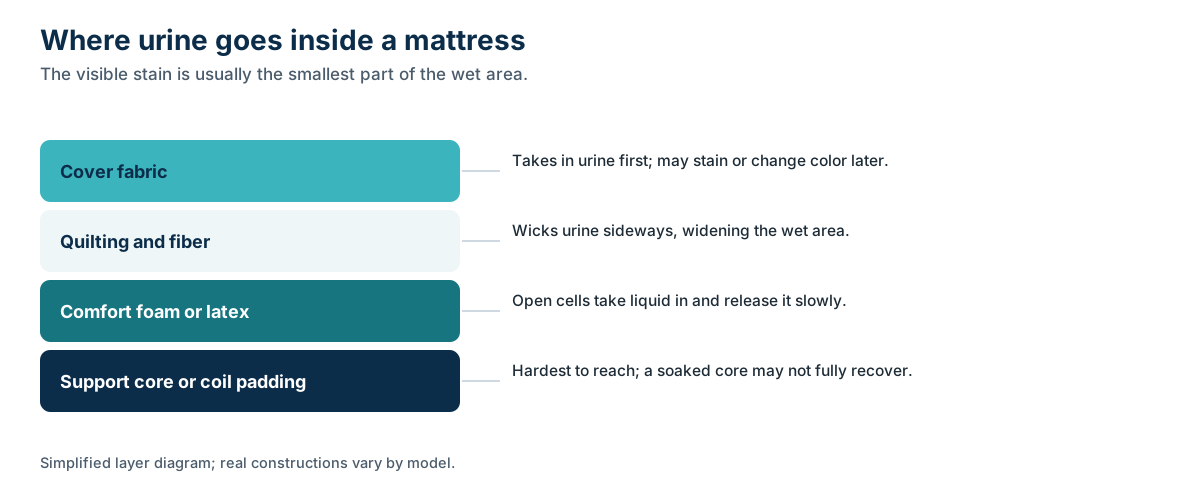
Layer diagram showing urine moving from mattress cover down to the core
Urine spreads sideways and sinks downward. Diagram: Sleep Sanitation (original, illustrative).

Sleep Sanitation's position

Most everyday accidents are treatable, and treating them costs nothing beyond the standard price. The tools are a light enzyme application wherever urine or organic odor is present, given time to work, followed by heat from our Magnum XP, ProV 350 and Pro6 Duo at settings chosen for each material. By default we clean with organic methods.

Two limits come with that position. Severe, biohazard or extensive contamination is a custom surcharge, quoted before we start. And a core that was soaked through may not come all the way back. We would rather tell you that at the door than after the visit.

Some makers are explicit about steam and liquid, and the articles below quote them rather than summarize them. Tempur's UK care page says: "There is a high risk that soaking with water or other cleaning fluids will cause irreversible damage, destroying the benefits of comfort and support which the TEMPUR ® Material provides. It will also invalidate your guarantee. Do not steam-clean or dry-clean the TEMPUR ® Material." Purple also advises against steam cleaning memory foam, latex and adjustable mattresses, while drawing a line at innerspring and hybrid beds, which its guide says can be steam cleaned.

Sleep Sanitation does clean these beds, using quick, repeated low-moisture dry-vapor passes. That is our own method and our own reasoning, not a manufacturer exemption or a reading of anyone's label. Your care label and warranty terms govern your decision. Check your warranty, or ask the manufacturer, before any steam or vapor cleaning.

Urine treatment is cleaning, not disinfection; the CDC's clean, sanitize and disinfect distinction explains the difference.
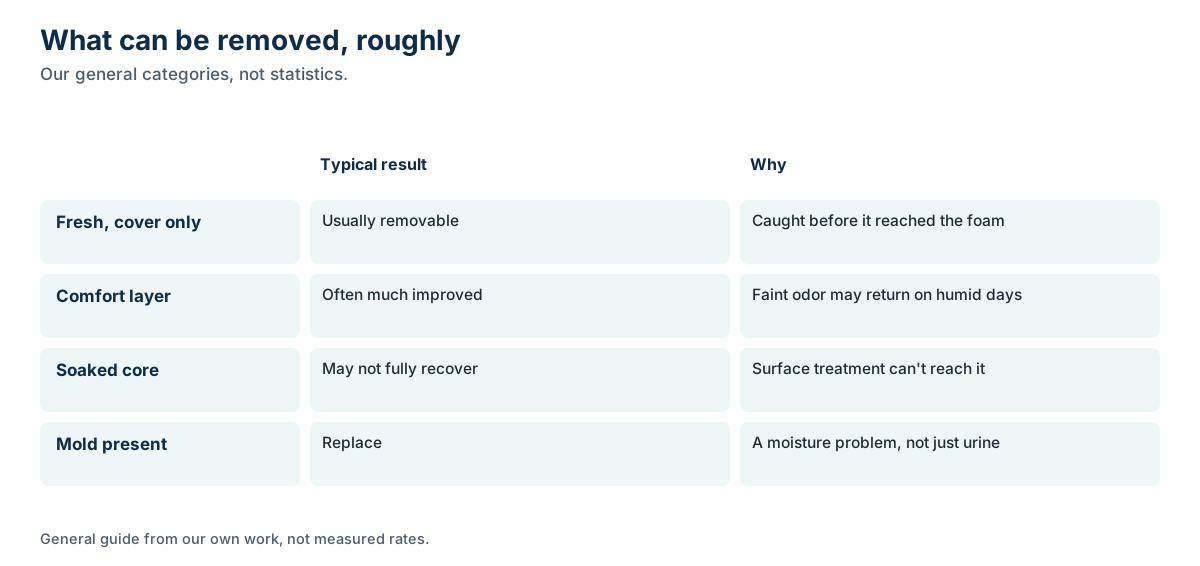
Grid of mattress urine scenarios and how treatable each one usually is
Depth decides most outcomes. Diagram: Sleep Sanitation (original, illustrative).

How to use this hub

For service details, see accidents and illness cleanup or pricing.

Start here

The flagship guide covers what urine is, where it goes in each material, what manufacturers say, and when a bed can't be recovered.

After an accident

What to do in the first hours, by material and by brand.

Odor

Why the smell can outlast the stain, and what heat and enzymes can and can't do about it.

Enzymes

What enzyme products are, what mattress makers say about them, and how they are paired with dry vapor.

Clean or replace

How to judge whether a bed is worth treating, and how many treatments make sense.

Defined terms

The vocabulary of mattress cleaning methods

Every article in this Knowledge Center uses these words the same way. Each term has its own link, so you can point anyone (or any search engine) straight to the definition.

Urea and ammonia
Urea is the main nitrogen-carrying compound in urine. Bacteria that make the enzyme urease break it down into ammonia and carbon dioxide, which is why stale urine smells sharper than fresh urine. NASA's study of stored human urine found that bacterial action decomposed the urea and released large amounts of ammonia.Sources: Microbial ureases (Microbiol Rev, 1989); Composition and Concentrative Properties of Human Urine (1971)
Uric acid
A normal, minor component of urine. NASA's table of urine constituents lists its solubility in water as very low, far below that of urea. Many cleaning guides blame uric acid for odor that returns after cleaning; we haven't found a study measuring that inside a mattress, so we treat it as a plausible explanation, not a proven one.Source: Composition and Concentrative Properties of Human Urine (1971)
Enzyme cleaner
A cleaning product that uses enzymes to break down organic soils such as urine, sweat, vomit or blood. Several mattress makers mention them for urine stains, including Purple and Avocado. They are liquids, so how much is applied matters as much as what is applied. Sleep Sanitation uses enzyme treatment on urine and organic odor, sparingly.Sources: How To Clean a Mattress in 9 Steps; How to Clean Your Natural Mattress
Dwell time (enzyme products)
How long a cleaning product stays on a surface before it is removed or dried. Enzyme products need dwell time to work, and the label sets it. Longer dwell does not mean more liquid: on a mattress we keep the amount small so the foam underneath doesn't soak.
Wicking (urine migration)
Liquid moving through and along fabric and foam by capillary action, so the affected area below the surface is often wider than the visible stain. Quilting, fiber batting and open-cell foam all wick. It is why a spot can look small and still smell from a wider area.
Saturated core
A mattress whose interior layers, not just the cover and quilting, were soaked by a large accident or several in one place. Surface treatment can't reach all of it. Some saturated cores improve with treatment and drying; some don't, and we say so before charging for work that won't help.
Odor rebound
A urine smell that fades after cleaning and comes back later, often on humid days or when the bed is slept on again. The Carpet and Rug Institute notes that urine odor 'may reappear' in high humidity. It usually means residue remains deeper than the treatment reached.Source: Pet Urine and Carpet (technical bulletin)
Organic cleaning methods
Sleep Sanitation's default approach: heat from low-moisture dry vapor, physical removal with vacuuming, and enzyme treatment where urine or organic odor is present. 'Organic' here describes the method, not a certification.
Urease
An enzyme made by many bacteria that splits urea into ammonia and carbon dioxide. It is the reason a fresh urine stain turns into an ammonia smell as it sits.Source: Microbial ureases (Microbiol Rev, 1989)
Ammonia odor
The sharp smell of stale urine. It comes from bacteria breaking down urea after the accident, so it tends to grow over the first days rather than being strongest at the start.Source: Composition and Concentrative Properties of Human Urine (1971)
Felinine
A sulfur-containing amino acid in cat urine. A 2024 veterinary study describes it as the precursor of the sulfur odorants behind the catty smell, and reports higher levels of those compounds in intact males.Source: Urinary felinine and catty odor (J Vet Med Sci, 2024)
Odor masking
Covering a smell with fragrance instead of removing its source. The Carpet and Rug Institute warns that some odor products may simply mask the odor, which can reappear in high humidity.Source: Pet Urine and Carpet (technical bulletin)
Mold drying window
The EPA advises drying wet materials within 24 to 48 hours to prevent mold growth. A mattress soaked during cleaning can miss that window, which is one reason we keep liquid low.Source: A brief guide to mold, moisture and your home
Surface-dry vs dry through
A cover can feel dry while the layers under it are still damp. Hub 1 defines dry to the touch; after a urine accident, dry through is the standard that matters for odor and mold.
Cover and quilting
The fabric top of a mattress and the stitched fiber or thin foam just beneath it. This is where urine lands first and where it spreads sideways before reaching the foam.
Comfort layer
The foam, latex or fiber layer between the quilting and the support core. Urine that reaches it is harder to treat than urine that stayed in the cover.
Waterproof protector
A removable, washable cover with a waterproof layer that sits under the sheet. It turns most accidents into laundry and keeps urine out of the mattress itself.
Rinse-and-extract cleaning
Spraying water or solution into fabric and vacuuming it back out, the way carpets are cleaned. On a thick mattress, some of that water stays behind and can spread a urine stain wider.
Dwell vs soak
Dwell means giving a product its contact time on the stain. Soak means adding enough liquid to wet the layers below. Enzyme products need the first, not the second.
Stain mapping
Finding the edges of the affected area by smell and touch before treating, because wicking carries urine past the visible mark. In our method, treatment follows the map, not the stain.
Severe, biohazard or extensive contamination
Accidents beyond ordinary urine and pet odor, such as blood or other bodily fluids, or contamination across much of the bed. Sleep Sanitation quotes these as a custom surcharge before work starts.
Cleaning vs sanitizing
The CDC treats cleaning, sanitizing and disinfecting as different steps. Urine and odor treatment is cleaning. Hub 2's sanitize definition explains how we use that word, and we make no disinfection claim.Source: Cleaning and disinfecting your school (definitions)

Frequently asked questions

Is urine treatment included in Sleep Sanitation's price?+

Yes. You pay the normal mattress cleaning price for an everyday accident or pet smell. Only severe, biohazard or extensive contamination carries an extra charge, and you'll know it before we begin.

Do you use enzyme cleaners?+

Yes, where there is urine or organic odor. We pair enzyme treatment with dry-vapor passes, give it the dwell time it needs, and apply it sparingly so the foam doesn't soak.

Can every urine-soaked mattress be saved?+

No. Covers, quilting and upper layers usually respond. A core that was soaked through, or soaked repeatedly, may not fully recover, and we tell you that before work starts.

Why does the smell come back after the mattress dries?+

Usually because residue remains below what the cleaning reached. Humidity and body heat can make it noticeable again. The odor guide in this hub explains it in detail.

What should I do in the first hour after an accident?+

Strip the bedding, blot with towels by pressing rather than rubbing, don't pour water or cleaner on the bed, and let air move across it. Then check your care label.

Do manufacturers allow steam on urine stains?+

Several advise against steam cleaning, including Tempur and Purple. Our dry-vapor method is our own decision, not a manufacturer exemption, so check your warranty terms first.

Ready for a cleaner bed?

Call or text to book. Tell us how many mattresses and your town, and we'll confirm a time and your price.

Fall 2026 promotion: first mattress $199 (regular $249). Additional cleaning scheduled within 7 days of your first service is also $199.

Monday–Friday, 9am–6pm. Missed a call? We return calls and texts on Saturday and Sunday too.

Call Text Book