
Short answer
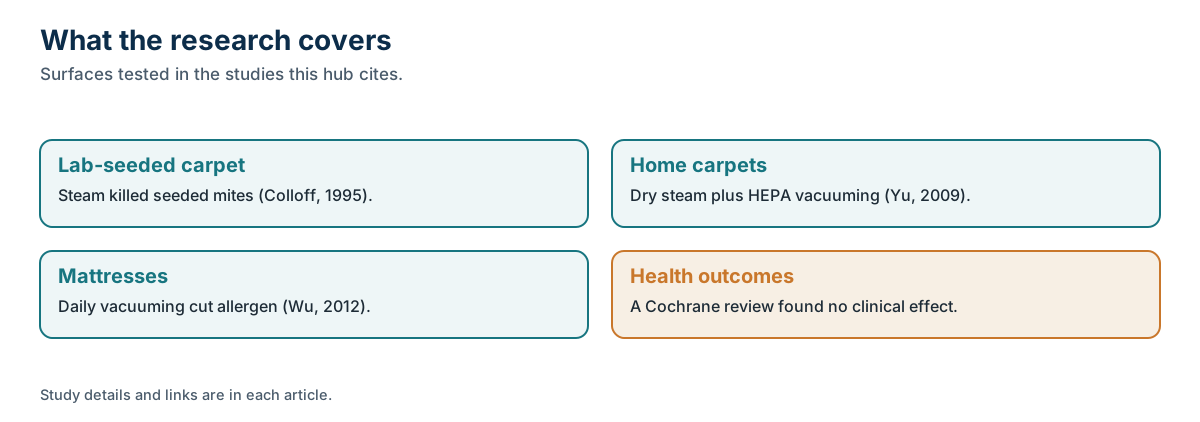
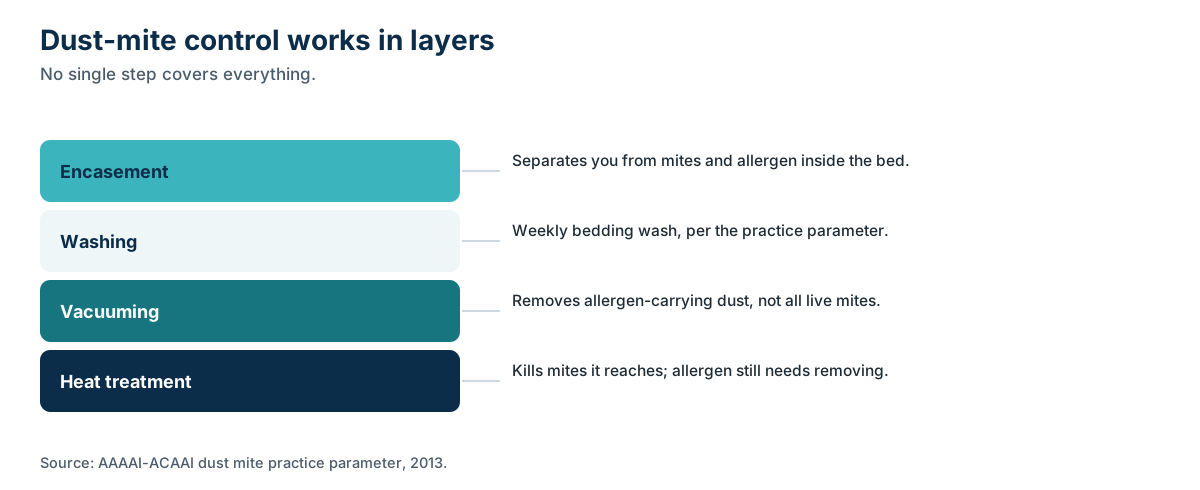
This hub separates three jobs. Heat can kill the mites it reaches, as steam tests on carpet and mattresses found. Vacuuming lifts allergen-carrying dust, though not every live mite. Encasements hold in what the bed contains. None of these is a medical treatment: allergist guidance says controlled trials haven't been done to show clinical benefit from heat-based measures, so we describe cleaning results.
By Matthew Brunken · Updated October 3, 2026 · Last reviewed October 3, 2026 · Sources · Editorial standards
Dust mites bring a lot of people to mattress cleaning, often with questions about allergies. The research is more interesting than a simple promise, and more modest. Heat kills mites. Vacuuming removes the allergen they leave. Encasements keep it contained. None of it is a medical treatment.
This hub is general information about cleaning, not medical advice. For allergy or asthma questions, talk to your doctor or an allergist.
Why dust mites need their own hub
The first three hubs cover how cleaning methods work, what each mattress material tolerates and what urine and odor do inside a bed. Dust mites raise a different question. The worry isn't a stain or a smell; it's an allergen you can't see, made by animals you can't see, in a bed that looks clean.
That makes it easy to sell and hard to check. So this hub does one thing above all: for every study it cites, it says what was measured. Was it live mites or allergen? Was the surface a mattress, a carpet or a lab sample? How many homes, and at what time point? Results don't transfer automatically from one of those to another.
What this hub covers
The flagship guide brings the evidence together. The articles answer single questions: whether steam kills dust mites in mattresses, whether vacuuming removes mite allergen, the difference between killing mites and removing allergen, and why mattress sanitation doesn't cure allergies.
What the evidence says, in brief
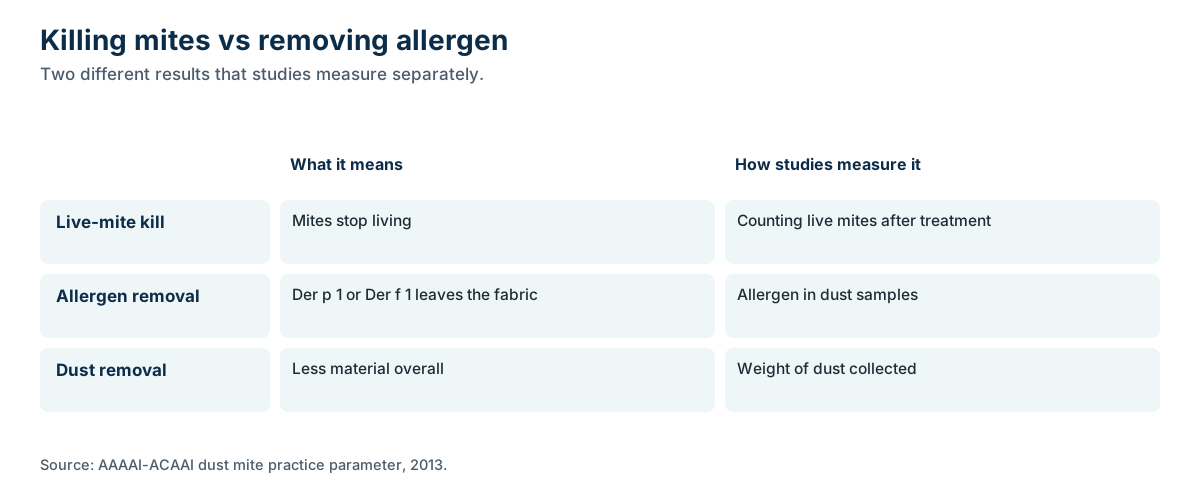
The main source behind this hub is the 2013 dust mite practice parameter from the American Academy of Allergy, Asthma and Immunology and the American College of Allergy, Asthma and Immunology. It's long and careful, and it separates what kills mites from what removes their allergen. On vacuuming, it says: "Regular, thorough vacuuming can help remove dust mite allergens, although it is not capable of removing live mites."
On heat, it's equally careful. Physical measures such as heating "theoretically should be effective; however, controlled trials have not been performed to demonstrate clinical benefit when they are used." That sentence sets the tone for everything here. The steam studies above recorded mites dying and allergen dropping. None of them established anyone's health improving because of it, and we don't claim that.
Sleep Sanitation's position
This section is our view.
For readers deciding whether a visit fits into an allergy plan, here is everything a visit includes and nothing more. First comes an inspection of the mattress materials, which decides how much steam the bed gets and how slowly each pass moves. Then dry vapor goes over the seams, tufts, ridges and edges, where dust and shed skin flakes collect. Three Italian-made Vapor Clean machines do the work: the Magnum XP, which has a built-in vac, the ProV 350 and the Pro6 Duo. Organic cleaning methods are our default. All of this is part of the standard price; severe or biohazard contamination is quoted as a custom surcharge before we start.
What we claim is environmental: heat reaching mites at the surface and in the folds of a mattress. Vacuuming removes loose dust, as the studies above describe. What we don't claim is medical. We don't say a cleaning prevents, treats or cures allergies or asthma, and we don't say a bed is mite-free afterwards. NIEHS puts it plainly: "No matter how clean a home is, dust mites cannot be completely eliminated."
Some mattress makers restrict steam on their beds. Your care label and warranty terms govern your decision, so check your warranty before booking any steam or vapor cleaning; Hub 2's compatibility guide quotes each maker.
Cleaning is not sanitizing in the CDC's sense either; Hub 2 explains the CDC's cleaning and sanitizing terms, and we make no disinfection claim.
How to use this hub
If you want the evidence in one place, start with the flagship. If you're deciding whether to book a cleaning or buy an encasing, read whether sanitation can replace an encasement. If you're not sure the problem is mites at all, dust mites vs bed bugs comes first.
Questions about a visit: call (402) 512-5658.