
Short answer
There's no published standard; it depends on how much water went in, the materials, and the room's airflow and humidity. As field guidance from our own jobs (not a published measurement), a mattress treated with low-moisture dry-vapor steam is usually dry to the touch the same day in a ventilated room. Wetter methods take longer; Purple says a saturated foam mattress would take days. The hard limit is the EPA's guidance to dry wet materials within 24 to 48 hours.
Key terms used on this page
- Dry to the touch vs dry through:
- Dry to the touch means the surface fabric feels dry. Dry through means the moisture inside the comfort layers has also left. A mattress can feel dry on top while still holding water underneath.
- Moisture load:
- The total amount of water a cleaning process puts into a mattress, whether from spray, steam condensate, shampoo or rinse. It is the main thing that decides how long a mattress takes to dry.
- Residual moisture:
- Water left in a material right after cleaning, before drying. For carpet, the Carpet and Rug Institute's test for its deep-cleaning extractor seal allows up to 8 ounces per square yard. We have not found an equivalent published test for mattresses.
- Memory foam (viscoelastic foam):
- An open-cell, slow-recovery polyurethane foam that softens with body heat and conforms to pressure. Because its cells are open, liquid can travel into it, and because it is dense and insulating, it is slow to dry.
- Wicking:
- Moisture moving through a material as it dries, carrying dissolved soil or stain with it. When the moisture evaporates at the surface, the stain can reappear on a fabric that looked clean.
- Encasement:
- A zippered, tightly woven cover that surrounds a mattress or pillow and blocks mite allergen from passing through. Allergy guidelines recommend encasements as one of the better-supported dust mite measures.
There's no published industry standard for how long a mattress should take to dry, and the honest answer is that it depends on how much water went in, what the mattress is made of, and the room's airflow and humidity. As field guidance from our own jobs (not a published measurement), a mattress treated with low-moisture dry-vapor steam is usually dry to the touch the same day in a ventilated room. Wetter methods take longer, and Purple says a saturated foam mattress would take days. Whatever the method, the outer limit is the EPA's guidance to dry wet materials within 24 to 48 hours to prevent mold.
Drying time is where cleaning methods show their real differences, and where marketing claims get vaguest. Below are the factors that decide it, the few published figures (mostly from carpet standards and mattress makers), and how to tell when a mattress is really dry. Moisture by method is compared in the flagship guide, and terms like dry to the touch are defined in the Cleaning Methods hub.
Dry to the touch vs dry through
Any drying time needs a definition first. Dry to the touch means the surface fabric feels dry. Dry through means the comfort layers underneath have also released their moisture. The ticking dries first because it's in contact with room air. Water that reached the foam has to travel back up through it to leave.
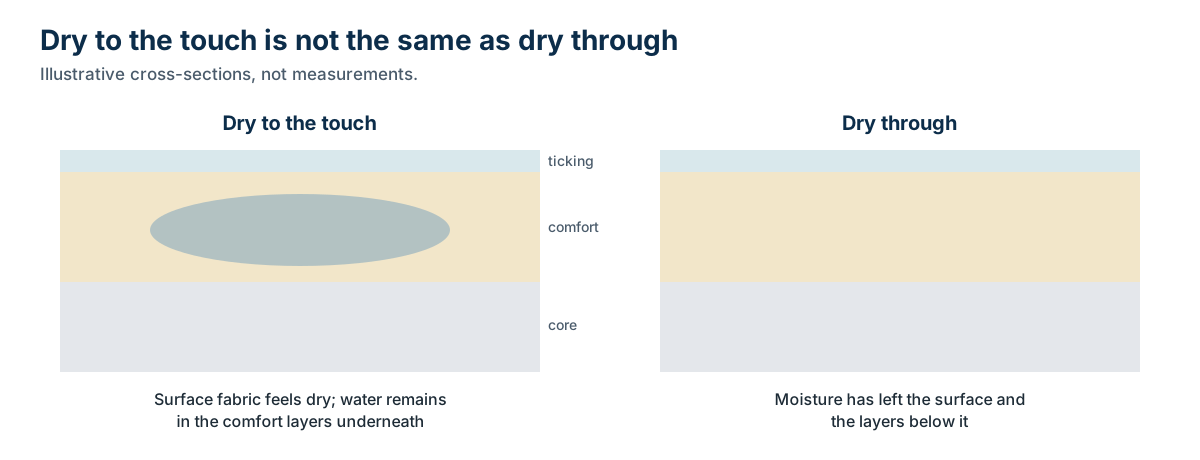
So two companies can quote very different times for similar work just by measuring different things. When someone gives you a drying time, ask which one they mean.
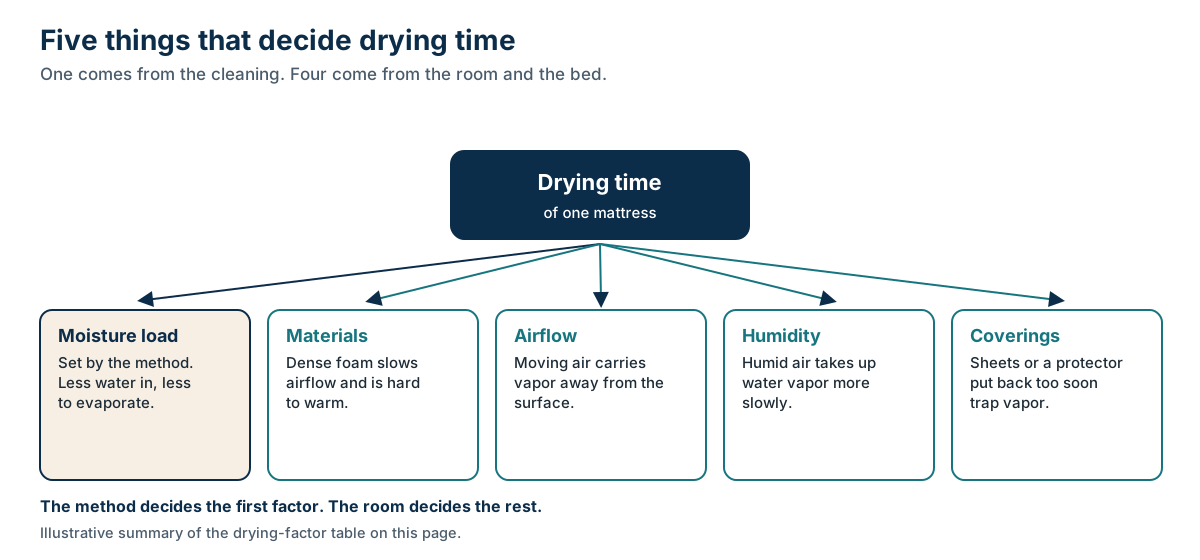
What decides drying time
| Factor | Why it matters | Faster when | Slower when |
|---|---|---|---|
| Moisture load | More water means more to evaporate | Little water goes in and stays near the surface | Water reaches the comfort layers |
| Materials | Dense foam slows airflow and is hard to warm | Innerspring, hybrid, breathable natural fibers | Thick or dense memory foam |
| Airflow | Moving air carries water vapor away from the surface | Fan, open door, ceiling fan | Closed room, bed against a wall |
| Humidity | Humid air absorbs water vapor more slowly | Air conditioning or a dehumidifier running | Humid summer days, basements |
| Coverings | Anything on top traps vapor | Mattress left bare | Protector, sheets or encasement put back too soon |
The first factor is decided by the cleaning method. The rest are decided by the room, which is why even the same company can see different drying times in different homes.
What published sources say
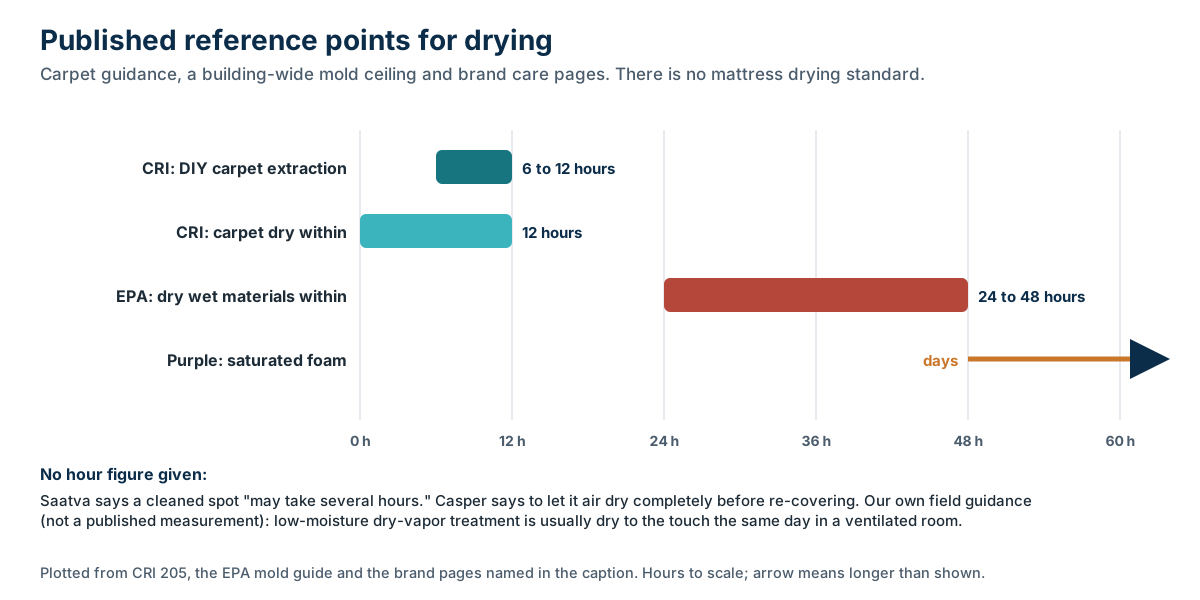
There are no mattress drying-time standards we can find, but several sources give useful reference points:
- EPA (all wet materials). The EPA's mold guide says to dry wet materials within 24 to 48 hours; if you do, in most cases mold won't grow. This is the ceiling, not the goal.
- Carpet and Rug Institute (carpet). CRI's residential standard says DIY extraction typically takes 6 to 12 hours to dry and that carpet should be dry within 12 hours. Carpet is thinner and better ventilated than a mattress.
- Saatva (spot cleaning). A cleaned spot "may take several hours" to dry completely, per Saatva's stain guide.
- Purple (saturated foam). A saturated dense-foam mattress would take days to dry.
- Casper (spot cleaning). Allow the treated area to air dry completely before putting sheets and bedding back on, per Casper's care guide.
Sleep Sanitation's own reference point is field guidance from our jobs, not a published measurement: a mattress treated with low-moisture dry-vapor steam is usually dry to the touch the same day in a ventilated room. Dense or very thick mattresses can take longer, and we'll tell you what to expect for yours before we leave.
Why there's no standard
Drying time is hard to standardize because it depends on so many things outside the cleaner's control, and because, unlike carpet, mattresses haven't had a measured residual-moisture test. For carpet, CRI's Test Method 118 measures how much water an extractor leaves per square yard. We haven't found any equivalent measurement for mattresses, for any method. Without knowing how much water stays in, a drying time is an estimate.
How to speed drying safely
- Move air across the surface. A box fan or ceiling fan, and an open door, are the most effective tools. Tempur-Pedic's own spill guidance is to blot and then use a fan.
- Lower the humidity. Run air conditioning or a dehumidifier. The AAAAI/ACAAI dust mite guideline recommends keeping indoor humidity at 35% to 50% for mite control anyway.
- Leave it uncovered. Keep sheets, protectors and encasements off until it's dry through.
- Skip direct heat. Hair dryers and space heaters pointed at foam dry the surface faster than the inside and can damage some materials.
- Give it room. Pull the bed a few inches from the wall if you can.
How to check that it's really dry
- Press firmly into the surface with your palm in several places, especially where the most work was done. A cool, damp feeling under pressure means moisture is still in the comfort layers.
- Look at the fabric edges for water rings or tide lines, a sign of wicking.
- Smell it. A musty smell means moisture has stayed too long.
- If you have a moisture meter, compare a cleaned area with an untreated one, such as the side panel.
If it isn't dry within 24 to 48 hours, keep drying it, don't cover it, and contact whoever cleaned it.
Questions to ask before the appointment
Drying is easier to plan for than to fix. Before any professional cleaning, it's worth asking:
- Does your drying estimate mean dry to the touch or dry through?
- How much water does your method put in, and how do you control it?
- What should I do with the room afterward: fan, door, air conditioning?
- Is there anything about my mattress (brand, foam type, thickness) that changes the estimate?
- What should I do if it still feels damp tomorrow?
A provider who can answer these clearly is usually one who has thought about moisture. If you're booking with us, we'll go over them at the visit and tell you what to expect for your mattress before we leave.
How method changes the picture
The single biggest lever on drying time is the method's moisture load. A low-moisture method keeps water near the surface, where it can leave quickly. A wet method puts water deeper, where it can't. See why moisture matters when cleaning a mattress, how much moisture does dry-vapor steam use? and what happens when water penetrates memory foam?
If you want the bed back in use the same evening, a morning appointment gives it the most airing time. Book on the schedule page; rates are on pricing.
What we don't know
- Measured mattress drying times. We haven't found published, measured drying times for any mattress cleaning method, including ours. Our same-day guidance is based on field experience.
- Residual moisture by method. We haven't found measurements of how much water any method leaves inside a mattress.
- Material-by-material data. We haven't found comparative drying data for memory foam, latex, innerspring and natural-fiber mattresses.
Sources
- A brief guide to mold, moisture and your home · US EPA
- CRI 205 Residential Carpet Cleaning Standard · Carpet and Rug Institute
- Can you use a carpet cleaner on a mattress? · Purple
- How to clean a mattress · Purple
- How to get any stain out of a mattress · Saatva
- How to clean your mattress · Casper
- Product care · Tempur-Pedic
- Dust mite practice parameter (Portnoy et al., 2013) · AAAAI-ACAAI
- CRI Test Method 118 (extractor residual moisture) · Carpet and Rug Institute
Last reviewed October 2, 2026. Manufacturer specifications and care instructions change; check the current version for your exact model. This page is general information, not medical advice. How we source and check pages: editorial standards.