
Short answer
No manufacturer we checked says whether wool layers can be steam cleaned. The closest guidance, Avocado's, says steam cleaners are not recommended for its mattresses, which have wool, cotton and latex under the fabric; no page we checked gives wool its own water, heat or chemical rule, and none mentions dry-vapor steam. Follow your label as the safe default; our method is our own, not a manufacturer exemption, so check your warranty terms.
Key terms used on this page
- Wool batting:
- A layer of wool fiber placed under the ticking, often in natural mattresses, for comfort and moisture management. Wool fiber takes up moisture from the air, which is why it matters how much water a cleaning method leaves behind.
- Latex foam (Dunlop and Talalay):
- A foam made from natural rubber, synthetic rubber or a blend. Dunlop and Talalay are the two common production methods. Latex is an open-cell foam, but manufacturers describe its tolerance for water differently from memory foam: Avocado says water is not harmful to its organic latex, while warning that steam's heat can over-bake it.
- Moisture load:
- The total amount of water a cleaning process puts into a mattress, whether from spray, steam condensate, shampoo or rinse. It is the main thing that decides how long a mattress takes to dry.
- Dry-vapor steam:
- Steam made in a sealed, pressurized boiler and released through a hose and nozzle as hot vapor with a low liquid-water content. In the vendor specifications we reviewed, professional units are rated from 80 psi (Ladybug 2350) to 150 psi (Daimer), with stated boiler temperatures from about 345°F (Optima) to 360°F (Daimer); these are maker claims. Daimer describes its steam as about 5% water or less and Vapor Clean claims 'just 5-6% moisture'; that is a vendor claim, not an independent standard.
- Pass speed:
- How fast the steam tool moves across the fabric. A faster pass gives the fabric less time under the tool, so less heat and less condensed water reach any one spot. Purple's general guide makes the same point for home steamers: move 'without leaving it in one spot for too long.'
- Care instructions (manufacturer care guidance):
- What a manufacturer publishes about cleaning its product: a sewn-in label, a care web page, a help-center article or a brand blog post. They carry different weight. A sewn-in label or a product-care page speaks for a specific product; a blog post often gives general advice about many mattress types. On this hub we name the document type for every quote.
Wool appears in many natural mattresses as a batting layer directly under the ticking. It is there for comfort and moisture management, and it is the first padding any cleaning method reaches. Manufacturer guidance about it, though, is thin. This page reports what we found, marks the gaps, and keeps our own reasoning separate.
Not affiliated with or endorsed by any manufacturer listed. Brand names are used only to identify products and their published care instructions.
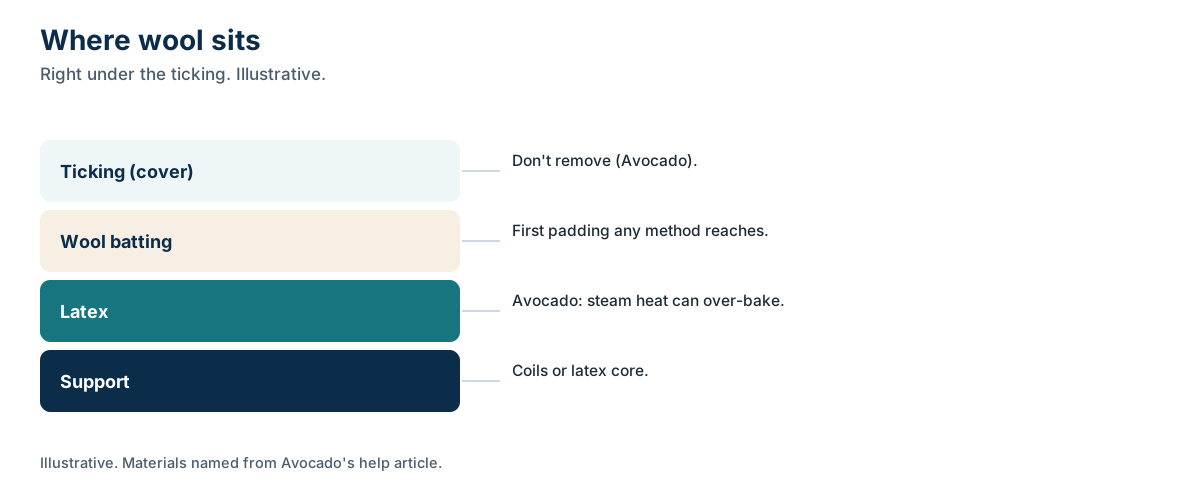
What manufacturers say about wool
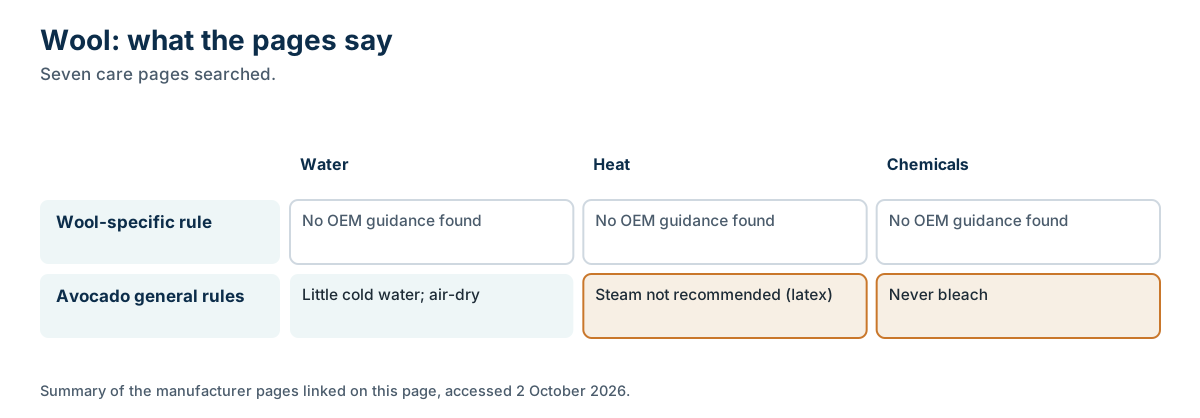
Only one of the seven care pages we checked mentions wool. Avocado's help article (25 June 2026, accessed 2 October 2026) says baking soda "actually draws dirt, moisture, and odors out of the fabric surface and the materials beneath (wool, cotton, and latex)."
The same article's general rules apply to its wool-containing mattresses:
- "Steam cleaners are not recommended because their excessive heat can over-bake the organic latex."
- "Water is not harmful to organic latex, but strong solvents are not recommended."
- "And never use bleach."
- "Allow any residual dampness to air-dry completely."
- "Do not attempt to remove the mattress ticking to access the internal materials or support unit."
Notice what that steam statement is about: latex. Avocado doesn't say anything about steam and wool directly.
Wool-specific guidance: No OEM guidance found for water, heat or chemicals on any of the seven pages. None mentions dry-vapor steam.
What applies by inference
This section is our reasoning, not a manufacturer's statement.
Wool fiber takes up moisture from the air, which is part of why it is used in bedding. That cuts two ways for cleaning. A layer that takes up moisture is also a layer that holds it, and wool sits right under the surface, so it is where water from any cleaning method would collect first. Hub 1's why moisture matters explains the general principle, and its drying-time article explains why surface-dry isn't the same as dry.
Wool is also commonly paired with latex in natural mattresses, and Avocado lists them together. So for most wool-layer mattresses, Avocado's latex guidance, no steam cleaners, little cold water, no bleach, no solvents, is the most relevant published rule.
| Variable | What we'd apply to a wool-layer mattress | Basis |
|---|---|---|
| Water | Very little; blot; air-dry completely | Avocado's general rules (source) |
| Heat | Treat as latex if latex is present | Avocado's steam statement (source) |
| Chemicals | No bleach, no strong solvents | Avocado (source) |
| Cover | Don't remove the ticking | Avocado (source) |
Why wool is different from foam
Foam holds water in a block of connected cells. Wool holds it in fibers near the surface, in a comparatively thin layer. We found no manufacturer data comparing how either one dries, so we don't rank them by number. Our moisture-sensitivity page explains how we group materials and why that grouping is a judgment, not a measurement.
Sleep Sanitation's approach to wool layers
This section is our view, not any manufacturer's.
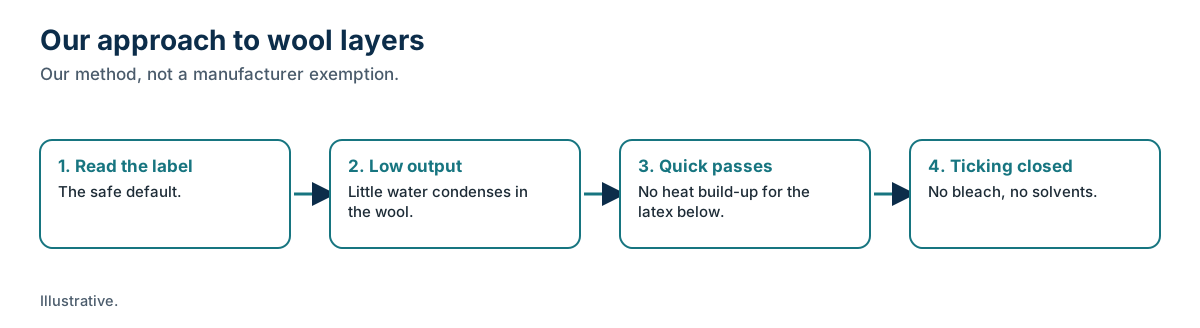
Your label is the safe default. Our position is that we can sanitize any mattress or topper, including natural mattresses with wool. We use Vapor Clean dry-vapor equipment (we run the Magnum XP, ProV 350 and Pro6 Duo and match the machine to the job). Because wool is the first padding under the ticking, and latex is often beneath it, our technician keeps the steam output low and the pass speed quick, so little water condenses in the wool and heat doesn't build. We don't open the ticking, and we use no bleach or solvents.
That is our method and reasoning, not an exemption from any manufacturer. Check your warranty terms before booking and contact the manufacturer if you're unsure. This is not legal advice.
Freshening a wool-layer mattress the natural way
Avocado's routine is built for its natural mattresses, wool included. Its freshening method is baking soda: "Strip the bed down and sprinkle a layer of baking soda over the entire mattress." The article explains why it suits these materials: baking soda "actually draws dirt, moisture, and odors out of the fabric surface and the materials beneath (wool, cotton, and latex)." Afterward, vacuum it up, and Avocado notes "not all filters are able to suck up small particles," so check your vacuum.
It also suggests airing and sunlight: "If needed, you can put your mattress outdoors, ideally in indirect sunlight," and "Sunlight is also a great natural stain remover and sterilizer." For a wool layer that takes up moisture, airing in dry conditions is consistent with the rest of the guidance.
Questions to ask a provider about wool
- How much water will reach the wool? It is the first padding under the ticking. An extractor puts far more water there than dry vapor.
- How do you limit heat for the latex beneath? Most wool-layer mattresses have latex under the wool.
- What cleaners will you use? Avocado rules out bleach and strong solvents.
- Will you open the ticking? Avocado says not to.
Common misreadings
"Wool manages moisture, so cleaning moisture doesn't matter." Wool that takes up moisture also holds it until it dries.
"Avocado's steam warning is about wool." It is about latex. No page we checked addresses wool and steam directly.
"Natural means more delicate in every way." Not necessarily. Avocado says water isn't harmful to its latex, a more relaxed position than the foam brands take. The cautions are specific: heat, bleach and solvents.
Organic and treated wool
Natural mattresses often advertise organic wool, and some wool in bedding is treated. We found no manufacturer guidance on whether treatment changes how wool should be cleaned. We apply the same low-water, low-heat approach to all wool layers.
A worked example: a natural mattress with a wool layer
Suppose you have a natural mattress with organic cotton ticking, a wool layer and a latex core, and a pet has had an accident on it. Here is how we'd reason through it.
First, act fast. Avocado's advice for urine starts immediately: "Strip the bedding off the mattress immediately, then blot the urine with towels." It then recommends an enzyme cleaner, because "This is the only thing that will break down odor-causing uric acid."
Second, the materials. The wool is directly under the ticking, so it is what the liquid reached first. The latex beneath tolerates water, by Avocado's account, but not steam's heat.
Third, drying. Avocado says to sprinkle baking soda, "turn on the fans and open the windows, and let the mattress air-dry overnight."
Fourth, the warranty. Check it before booking anything.
If you book us after the spill is dealt with, our technician would keep output low so little water condenses in the wool, and passes quick so heat doesn't build in the latex. That is our method and reasoning, not an exemption from any manufacturer.
Why wool deserves its own page
Wool is easy to overlook because it rarely appears in a mattress's name. But in natural mattresses it is often the first padding under the cover, which makes it the layer that decides how a mattress handles surface moisture from spills, sweat or cleaning. Giving it a page lets us be precise about the one thing we can say, that no manufacturer we checked addresses it, without burying that gap inside the latex page.
Where this fits
See latex and the Avocado page, plus pillow-tops, which may also contain wool. The compatibility guide and hub overview have the full picture. To compare methods, read how we're different.
Related guidance and background
How other manufacturers word the same issue, for comparison:
- Sleep Number. "Use only a little water—just enough to lightly dampen the spot" (Sleep Number).
Public guidance and reference sources behind this page:
- Clean, sanitize, disinfect. The CDC defines the three words differently: cleaning removes dirt and germs, sanitizing lowers germs to a safer level, and disinfecting kills germs, usually with a registered chemical used as labeled. We use "sanitize" in that sense and make no disinfection claim.
- Drying. The EPA's mold and moisture guide advises drying wet materials within 24 to 48 hours, and says that in most cases mold won't grow if you do. That is the public-health reason behind every manufacturer's drying instruction.
What we don't know
- Any OEM rule for wool layers. None found.
- How much moisture wool holds after cleaning. We found no measurement.
- Wool treatments. Some wool is treated for fire resistance or washability; we found no manufacturer guidance on how that affects cleaning.
- Warranty treatment. Only the manufacturer can decide.
Changelog
- 2 October 2026: First published. Avocado's article and the other six care pages searched on this date.
Sources
- How to Clean Your Natural Mattress Without Using Harsh Chemicals (25 June 2026, accessed 2026-10-02) · Avocado
- How To Clean a Mattress in 9 Steps (last updated 16 Oct 2025, accessed 2026-10-02) · Purple
- Magnum XP-Vac product page (maker's claims, accessed 2026-10-02) · Vapor Clean
- Cleaning Your Mattress (support, accessed 2026-10-02) · Sleep Number
- Cleaning and disinfecting your school (definitions) · CDC
- A brief guide to mold, moisture and your home · US EPA
Last reviewed October 2, 2026. Manufacturer specifications and care instructions change; check the current version for your exact model. This page is general information, not medical advice. How we source and check pages: editorial standards.