
Short answer
A mattress protector keeps spills, sweat and fluids out of the mattress and helps you meet the stain terms in most warranties. Choose a breathable waterproof or organic protector, wash it per its care label, and replace it when it leaks or peels. It doesn't clean the mattress underneath: bed mite allergen builds up over time, so pair the protector with sanitation about twice a year.
By Matthew Brunken · Updated October 15, 2026 · Last reviewed October 15, 2026 · Sources · Editorial standards
Weekly
Bedding wash
The allergist practice parameter advises washing bedding weekly to decrease bed mite numbers and allergen levels.
More
Allergen build-up
Older mattresses are likely to have more bed mites and higher accumulated allergen concentrations.
24–48 h
Drying window
The EPA says to dry water-damaged areas and items within 24 to 48 hours to prevent mold growth.
100%
Mite mortality
High-temperature steam (96°C) killed 100% of bed mites in treated mattresses and carpet in an Ohio State study.
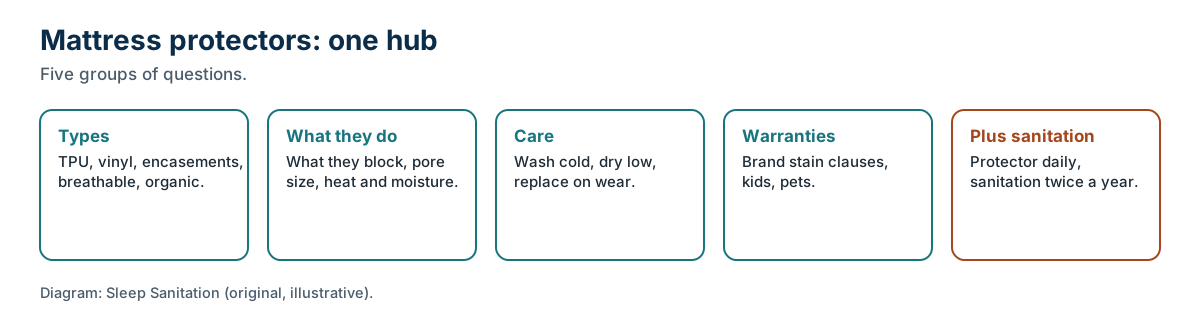
A good protector is the cheapest way to keep a mattress clean, dry and within its warranty. This hub covers every type, how to care for one, what brands say, and how it fits with mattress sanitation. Start with the complete guide to mattress protectors.
General information about mattress care, not medical advice. For allergy or asthma questions, talk with your doctor.
Types
TPU vs vinyl vs polyurethane covers the TPU membrane most modern protectors use. Encasement vs fitted protector vs pad is the buying guide; our earlier comparison, protectors and encasings: what they do, goes deeper on function. Then breathable and cooling and organic protectors, which we recommend as a category.
What they do
What a protector blocks and what it doesn't, mite-allergen encasings and pore size, heat and sweat and moisture and mildew. For where sweat goes on an unprotected bed, see sweat stains and yellowing; for the fabric underneath, ticking and cover fabrics.
Care
How to wash, how to dry without ruining it and when to replace. For how often, see how often to wash sheets, pillowcases and protectors and our blog post on washing your protector.
Warranties and households
What brands say about stains and protectors, quoted from Purple, Saatva, Avocado, Beautyrest and Naturepedic, with each brand's cleaning guidance in our compatibility hub and how wet extraction can void a warranty. Then kids and bedwetting, pets on the bed and, for older adults, incontinence: protect, clean, replace.
Protector plus sanitation
Why a protector doesn't replace mattress sanitation explains the mechanism; is sanitation worth it with a protector? covers the decision. The protector plus sanitation routine puts it together with twice-a-year sanitation. Related: does washing sheets clean the mattress?, can sanitation replace an encasement? and is the odor in the cover or the foam?.
Sleep Sanitation's position
This section is our view. Sleep Sanitation serves Omaha, Lincoln and surrounding towns. Every visit includes dry vapor steam, HEPA vacuuming, UV-C light treatment, the built-in bed mite sensor on our JIGOO UV-C mattress vacuum and a moisture check before we leave. We take your protector off at the start of the visit, so you don't need to strip it first; wash it yourself per its care label while we work or afterward. The first mattress is $249. Call or text (402) 512-5658, or email info@sleepsanitation.com. Office hours are Monday to Friday, 9 to 6, and we return calls and texts on weekends.
Changelog
- 15 October 2026: First published. Sources accessed on this date.