
Short answer
Lift as much as you can with pressure and dry towels, then treat with small amounts of cleaner in stages instead of one heavy soak. Memory foam is open-cell, so liquid sinks in and dries slowly. Purple, Nectar and Casper all warn about liquid reaching the foam. The goal is to remove urine while adding as little new moisture as possible.
Key terms used on this page
- Memory foam (viscoelastic foam):
- An open-cell, slow-recovery polyurethane foam that softens with body heat and conforms to pressure. Because its cells are open, liquid can travel into it, and because it is dense and insulating, it is slow to dry.
- Wicking:
- Moisture moving through a material as it dries, carrying dissolved soil or stain with it. When the moisture evaporates at the surface, the stain can reappear on a fabric that looked clean.
- Enzyme cleaner:
- A cleaning product that uses enzymes to break down organic soils such as urine, sweat, vomit or blood. Several mattress makers mention them for urine stains, including Purple and Avocado. They are liquids, so how much is applied matters as much as what is applied. Sleep Sanitation uses enzyme treatment on urine and organic odor, sparingly.
- Dwell time (enzyme products):
- How long a cleaning product stays on a surface before it is removed or dried. Enzyme products need dwell time to work, and the label sets it. Longer dwell does not mean more liquid: on a mattress we keep the amount small so the foam underneath doesn't soak.
- Residual moisture:
- Water left in a material right after cleaning, before drying. For carpet, the Carpet and Rug Institute's test for its deep-cleaning extractor seal allows up to 8 ounces per square yard. We have not found an equivalent published test for mattresses.
- Moisture load:
- The total amount of water a cleaning process puts into a mattress, whether from spray, steam condensate, shampoo or rinse. It is the main thing that decides how long a mattress takes to dry.
Most urine-removal advice was written for carpet and upholstery, where you can flush liquid through and pull it back out. Memory foam doesn't work that way. It behaves more like a sponge with very small pores: liquid goes in easily and comes out slowly. Anything that adds a lot of water makes the problem bigger.
Not affiliated with or endorsed by any manufacturer listed. Brand names are used only to identify products and their published care instructions.
Why memory foam holds urine
Memory foam is a viscoelastic polyurethane foam with an open-cell structure. The cells connect, which is part of how the foam breathes and slowly recovers its shape. It's also why liquid moves into it instead of sitting on top.
Once urine is in the foam, two things work against you. Air reaches the inside of the foam slowly, so it dries slowly. And while it stays damp, bacteria break down the urea in it into ammonia. NASA researchers studying urine noted that "This bacterial action resulted in the decomposition of urea and the evolution of large amounts of ammonia" (NASA, 1971). In a mattress, that ammonia is the smell.
Our Hub 1 article on water in memory foam explains the drying side in more depth.
What foam makers say
Foam-mattress companies agree on one point: keep liquid out of the foam.
- Nectar tells owners to spot clean the cover with a damp cloth and mild soap, and to stop liquid reaching the foam layers below.
- Casper warns that its core foam will soak up water and detergent if the bed is saturated.
- Purple: "Urine, vomit, or sweat stains may require an enzyme cleaner or hydrogen peroxide."
- Tempur-Pedic: "TEMPUR® material should never become wet."
Purple and Tempur-Pedic both warn against steam cleaning memory foam too. Our memory foam compatibility page collects the full quotes, and the Nectar and Casper pages cover those brands one by one.
Step one: lift, don't add
The most effective thing you can do costs nothing. Get out as much urine as you can before any cleaner touches it.
- Strip the bed and remove a zip-off cover if the accident is still in the fabric.
- Fold a dry towel thick and press it into the spot with your full weight.
- Hold for a few seconds, lift, and move to a dry part of the towel.
- Keep going until a fresh towel comes up barely damp.
Pressure works because foam is springy. When you press, liquid moves up into the towel; when you release, the foam pulls air back in. Rubbing does the opposite: it spreads urine sideways and roughs up the cover.
Step two: treat in small rounds
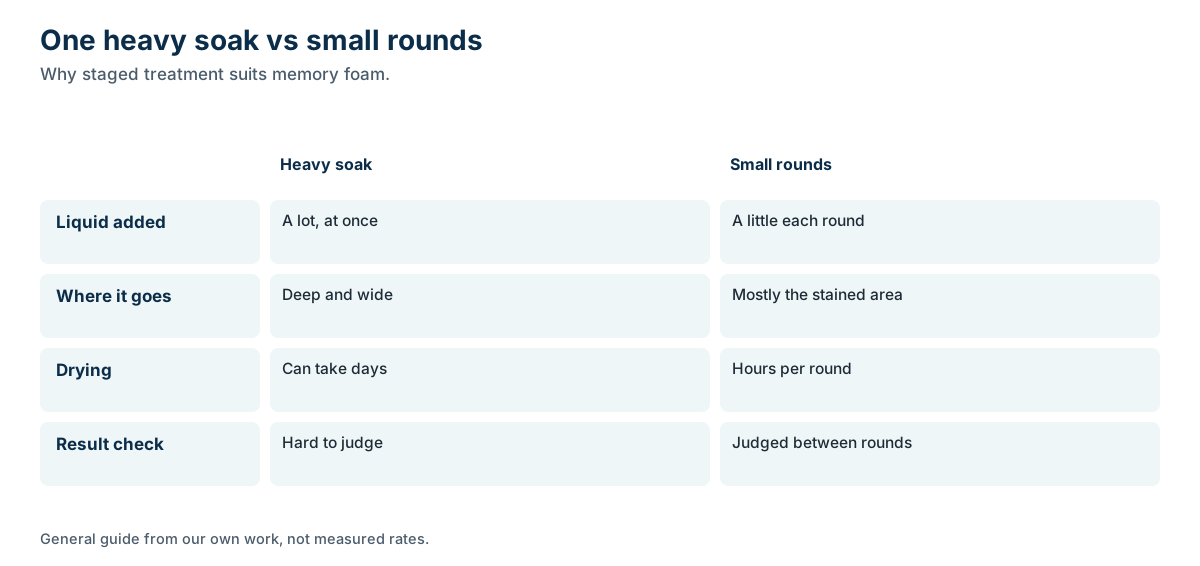
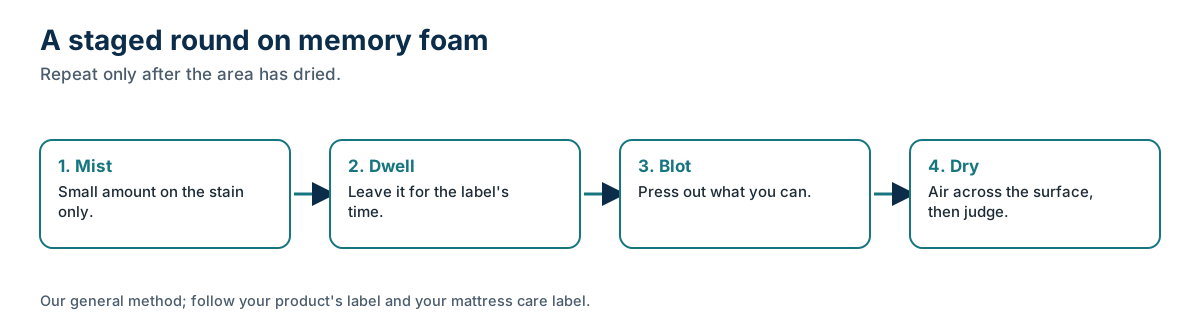
Treat the area that's left in rounds, not all at once. Mist a small amount of cleaner on the stain. Leave it for the time the label gives. Blot it up. Let the area dry. Then judge whether it needs another round.
This takes longer than one heavy soak, but each round adds only a little liquid, and the foam never gets wet deep down. A heavy soak goes where the urine went, plus further, and leaves a much bigger damp area behind.
If you're using an enzyme cleaner, the dwell time matters. Enzymes need time in contact with the soil to work. That's a reason to keep the area slightly damp for the label's time, not a reason to pour more on.
None of these rounds sanitizes the foam. The CDC's cleaning and sanitizing terms explain why that word means something stricter than what a home round does.
Step three: dry with air, not heat
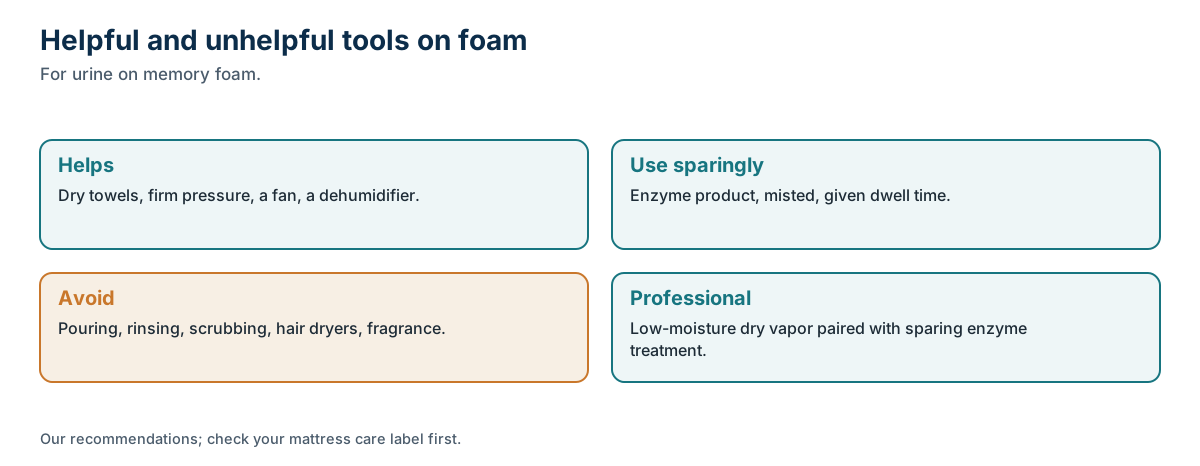
Move air across the surface with a fan, and leave the bed uncovered. Open a window if it's dry outside, or run a dehumidifier. Don't aim a hair dryer at the spot; concentrated heat on memory foam is exactly what several manufacturers warn against.
The EPA's mold guidance says to dry wet materials within 24 to 48 hours. On foam, the less you added in step two, the easier that is. Our drying-time article explains what speeds and slows drying.
Common mistakes
- Vinegar soaks. A splash of diluted vinegar is common advice. A soak of it is still a soak.
- Covering the spot. Putting a sheet or protector back on before the foam is dry traps moisture.
- Fragrance sprays. They hide odor briefly. They don't remove urine.
- Scrubbing with a brush. It drives urine into the foam and can tear the cover.
- Waiting a week. Older urine is harder to treat than fresh urine, as Avocado's help center notes on its own beds.
How we do it
This is our professional method, not any manufacturer's guidance.
Our version is the same staged idea with better tools: a small enzyme application on the stained foam, its dwell time respected, then dry-vapor passes from a Magnum XP, ProV 350 or Pro6 Duo with output turned down for foam. Organic methods are our default, and the pairing article walks through every step.
Dry vapor isn't wet steam or extraction. Hub 1's moisture comparison explains the difference, and heat and moisture are separate variables covers why we can use heat without soaking the foam.
Urine on memory foam is covered by the standard price unless the contamination is severe or repeated.
When staged cleaning isn't enough
If the urine reached deep into the foam and sat for days, staged treatment may reduce the odor without fully clearing it. A saturated core in memory foam may not be fully recoverable. The clean or replace article covers how to decide.
The mattress urine guide covers every material in one place. For foam specifically, whether enzyme cleaner can damage memory foam answers the most common worry about home rounds, and a smell after the stain is gone helps if odor lingers once the foam looks clean.
A note on toppers
A memory foam topper is easier than a mattress in one way: you can take it outside to dry in moving air. It's harder in another: it's thin, so urine often goes right through it. If the topper caught the accident, check the mattress under it too.
How to tell the foam is dry
Dry to the touch on top isn't the same as dry inside. Foam can feel dry at the cover while the layer an inch down is still damp. A few simple checks help:
- The paper towel test. Press a dry paper towel hard into the center of the old stain for half a minute. Any damp mark means there's still moisture below.
- The smell test. Damp urine smells stronger than dry urine. If the spot smells sharper the morning after you slept on it, it isn't dry yet.
- The weight test. On a topper you can lift, a wet area feels noticeably heavier and cooler than the rest.
Don't put sheets or a protector back on until all three pass. If the area is still damp after two days of moving air, it's worth calling someone before mold becomes part of the problem. Our article on whether dry vapor is actually dry explains the difference between surface dryness and moisture deeper down.
What we don't know
- How deep the urine went in your bed until it's checked.
- Whether a specific enzyme product affects a specific foam. Makers rarely publish this.
- Your warranty terms on liquid damage. Read them before booking.
Changelog
- 2 October 2026: First published. Sources accessed on this date.
Sources
- How To Clean a Mattress in 9 Steps (last updated 16 Oct 2025, accessed 2026-10-02) · Purple
- Nectar Sleep FAQ (accessed 2026-10-02) · Nectar
- How to clean your mattress: a mattress care guide (accessed 2026-10-02) · Casper
- Product care (US, accessed 2026-10-02) · Tempur-Pedic
- How to Clean Your Natural Mattress Without Using Harsh Chemicals (25 June 2026, accessed 2026-10-02) · Avocado
- Composition and Concentrative Properties of Human Urine (NASA contractor report, July 1971) · NASA
- Microbial ureases: significance, regulation, and molecular characterization (Mobley and Hausinger, Microbiol Rev, 1989) · PubMed Central
- A brief guide to mold, moisture and your home · US EPA
- Magnum XP-Vac product page (maker's claims, accessed 2026-10-02) · Vapor Clean
- ProV 350 product page ('Italian Made'; maker's claims, accessed 2026-10-02) · Vapor Clean
- Pro6 Duo product page ('Made in Italy'; maker's claims, accessed 2026-10-02) · Vapor Clean
Last reviewed October 2, 2026. Manufacturer specifications and care instructions change; check the current version for your exact model. This page is general information, not medical advice. How we source and check pages: editorial standards.