
Short answer
There's no published limit, and we won't invent one. What limits repeat treatment is what each round adds: some moisture, some handling of the fabric, and time for the bed to dry. Light, low-moisture rounds spaced to dry fully can be repeated far more often than heavy soaks. When the same spot keeps needing treatment, the urine is building up faster than cleaning removes it.
Key terms used on this page
- Moisture load:
- The total amount of water a cleaning process puts into a mattress, whether from spray, steam condensate, shampoo or rinse. It is the main thing that decides how long a mattress takes to dry.
- Residual moisture:
- Water left in a material right after cleaning, before drying. For carpet, the Carpet and Rug Institute's test for its deep-cleaning extractor seal allows up to 8 ounces per square yard. We have not found an equivalent published test for mattresses.
- Detergent residue:
- Cleaning chemistry left behind in the fabric after cleaning. The Carpet and Rug Institute says residue from over-concentrated solution contributes to rapid re-soiling, which is why extraction cleaners are told to rinse.
- Dwell time (enzyme products):
- How long a cleaning product stays on a surface before it is removed or dried. Enzyme products need dwell time to work, and the label sets it. Longer dwell does not mean more liquid: on a mattress we keep the amount small so the foam underneath doesn't soak.
- Odor rebound:
- A urine smell that fades after cleaning and comes back later, often on humid days or when the bed is slept on again. The Carpet and Rug Institute notes that urine odor 'may reappear' in high humidity. It usually means residue remains deeper than the treatment reached.
- Saturated core:
- A mattress whose interior layers, not just the cover and quilting, were soaked by a large accident or several in one place. Surface treatment can't reach all of it. Some saturated cores improve with treatment and drying; some don't, and we say so before charging for work that won't help.
Families with young children, older pets or someone dealing with incontinence often ask this. They're not dealing with one accident; they're dealing with a pattern. Is there a point where cleaning a mattress again does more harm than good?
Not affiliated with or endorsed by any manufacturer listed. Brand names are used only to identify products and their published care instructions.
No published number
We looked. No mattress maker we've read gives a maximum number of cleanings, and we haven't found a study that measures one. Anyone who tells you "three times" or "five times" is making it up. So are we, if we gave you a figure, so we won't.
What we can tell you is what each treatment adds, and how to keep that small.
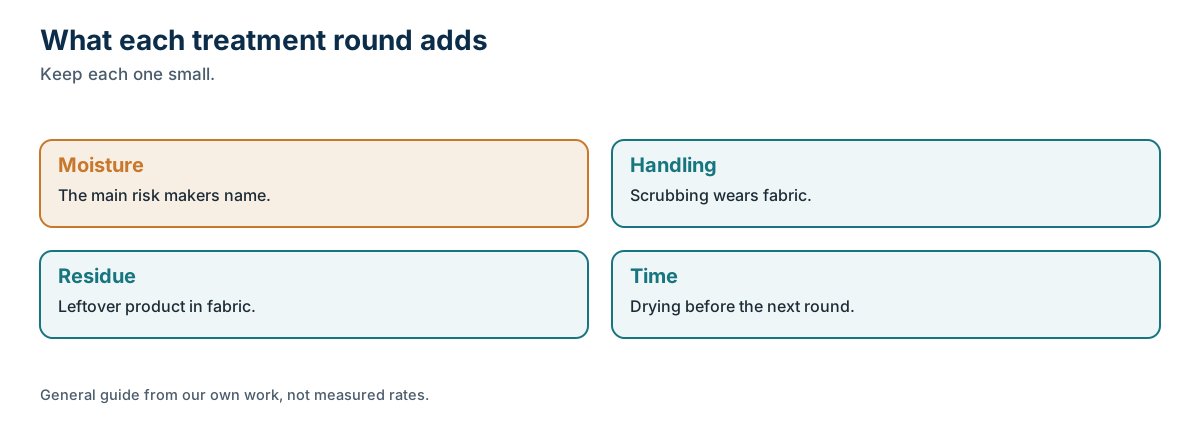
What each round adds
Moisture. Every wet-cleaning step puts some liquid into the bed. Mattress makers treat that as the main risk. Tempur-Pedic's care page says "TEMPUR® material should never become wet." Casper's guide says a saturated bed's core foam will take up water and detergent. The more often a bed is soaked, the more often it spends days drying.
Handling. Scrubbing, brushing and rubbing all wear on cover fabric. Bear's help article lists among things to avoid "Using harsh chemicals or bleach." Repeated strong products on the same spot can wear or discolor a cover.
Residue. Cleaners that aren't fully removed stay in the fabric. The Carpet and Rug Institute links detergent residue from over-concentrated solution to rapid re-soiling. Hub 1's article on whether professional cleaning needs detergent explains why we avoid detergent on routine work.
Time. Each round needs drying before the next. On foam, a heavy round can take days.
Repeating a round doesn't turn cleaning into sanitizing; Hub 2 gives the CDC's definitions.
Light rounds can be repeated far more often
The key difference is between a heavy soak and a light, targeted round. A soak adds a lot of liquid to a wide area. A light round adds a little to the mapped stain only. Five light rounds spread over months can add less moisture in total than one bad soak.
Small amounts are the core of our approach: a light enzyme application with its dwell time, then dry vapor at low output on foam from a Magnum XP, ProV 350 or Pro6 Duo. Vapor Clean says the Magnum XP's vapor has "just 5-6% moisture," its claim and not our measurement. Organic methods are our default, and how much moisture dry vapor uses puts that figure in context.
How to space treatments
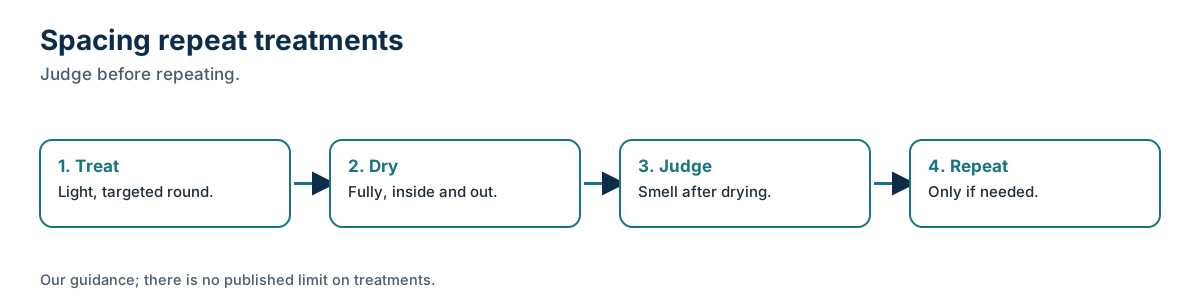
- Wait until it's fully dry. Dry to the touch isn't enough on a thick bed. Press a paper towel into the center of the old spot; it should come up dry.
- Judge the result first. If you treat again before the bed has dried, you can't tell whether the first round worked.
- Watch the humidity. A muggy week slows drying. A dehumidifier helps.
- Keep notes. If the same spot needs treating every few weeks, that's a signal.
The EPA's mold guide advises drying wet materials within 24 to 48 hours. If a treatment round takes longer than that to dry, it was too heavy.
Material changes the picture
Some beds tolerate repeat treatment better than others.
- Innerspring and hybrid beds have less absorbent material overall, so they dry faster.
- Memory foam and gel foam hold moisture longer. Our cooling gel foam page covers what gel-foam makers say.
- Pillow-tops and thick fiber layers wick urine wide and dry slowly. The pillow-top page explains why.
- Air-chamber beds have a cover and foam layers over sealed chambers. Sleep Number's support page warns: "CAUTION: Do not spray air freshener on the mattress." Our Sleep Number page lists its other rules.
However many rounds a material can take, your care label and warranty terms govern. Check your warranty before scheduling repeat treatments.
When to stop treating and replace
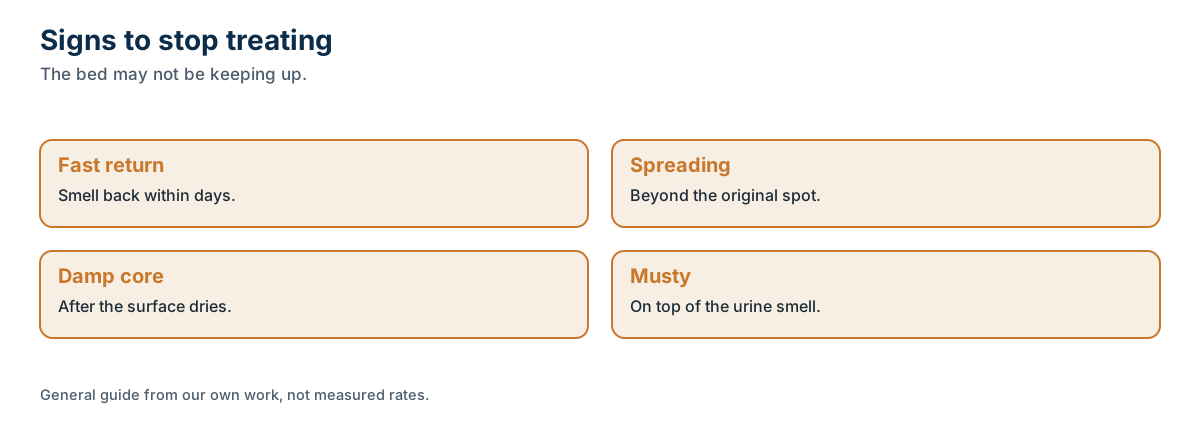
If the same spot needs treating again and again, the urine is arriving faster than cleaning can remove it. Over time it builds up deeper in the layers. Signs it's time to stop:
- the smell returns within days after each treatment;
- the odor spreads beyond the original spot;
- the core feels damp even after the surface dries;
- a musty smell joins the urine smell.
The CRI's pet urine bulletin is candid about limits: "Because of these variations, some urine stains may not be removable." A saturated core may not be fully recoverable, and we'll tell you if we think yours has reached that point.
Protect instead of treating
For ongoing accidents, prevention beats any number of treatments.
- A waterproof protector that covers the top and sides.
- A second protector, so one is always on the bed while the other washes.
- A washable pad on top for nightly accidents.
- For a pet, a washable blanket where it sleeps.
With those in place, the mattress itself may only need occasional professional treatment.
Pricing for repeat accidents
Ordinary urine and pet odor are part of our standard price. Severe, biohazard or extensive contamination is a custom surcharge, and you'll know the price before we start. Our accident cleanup page has more.
A realistic schedule for ongoing accidents
For a household where accidents are part of life for now, this is the pattern we suggest:
- Daily or nightly: a waterproof protector and a washable top pad take the accidents. Wash and fully dry them.
- When something gets past the protector: blot right away with pressure, keep liquid out, and move air across the spot.
- Every few months, or after a bad night: a professional low-moisture treatment of the mattress itself.
- Each visit: we tell you what we found and whether the bed is keeping up.
That pattern keeps the number of wet treatments low, which is what really protects the mattress. The question shifts from "how many times can it be treated?" to "how rarely does it need to be?"
Signs a bed is holding up well
- The smell clears after each treatment and stays gone between them.
- The treated area dries to the touch without lingering dampness.
- The cover fabric looks and feels the same as the rest of the bed.
- No musty smell develops, even in humid weather.
If all four hold, there's no sign the bed has reached any limit.
Hand-built and natural beds
Beds with thick natural fills tend to dry slowly, which makes spacing treatments even more important. Our wool page covers what makers of wool beds say about liquid.
The main guide to mattress urine explains what each treatment involves. Clean or replace and pet urine vs human urine help decide what happens after several rounds.
Keep a simple log
Note the date of each accident and each treatment, and whether the smell returned. After a few months, the log tells you whether the bed is keeping up, and it helps anyone treating the bed plan the next visit.
What professionals add on repeat visits
On a repeat visit, the most useful thing we bring isn't more product. It's a comparison: the same map, the same smell test, and an honest view of whether the bed is better, the same or worse than last time.
What we don't know
- Whether there's a real ceiling on treatments for any given mattress. No one has measured it.
- How repeated enzyme use affects specific foams over years. Makers don't publish it.
- How your warranty treats repeated cleaning. Check it.
Changelog
- 2 October 2026: First published. Sources accessed on this date.
Sources
- Product care (US, accessed 2026-10-02) · Tempur-Pedic
- How to clean your mattress: a mattress care guide (accessed 2026-10-02) · Casper
- How do I clean a Bear mattress? (updated 6 May 2026, accessed 2026-10-02) · Bear
- Cleaning Your Mattress (support, accessed 2026-10-02) · Sleep Number
- Pet Urine and Carpet (technical bulletin, revised 27 July 2017, accessed 2026-10-02) · Carpet and Rug Institute
- A brief guide to mold, moisture and your home · US EPA
- Magnum XP-Vac product page (maker's claims, accessed 2026-10-02) · Vapor Clean
- ProV 350 product page ('Italian Made'; maker's claims, accessed 2026-10-02) · Vapor Clean
- Pro6 Duo product page ('Made in Italy'; maker's claims, accessed 2026-10-02) · Vapor Clean
Last reviewed October 2, 2026. Manufacturer specifications and care instructions change; check the current version for your exact model. This page is general information, not medical advice. How we source and check pages: editorial standards.