
Short answer
No study sets an interval for cleaning a mattress, so any fixed schedule, including ours, is a rule of thumb. The evidence-backed interval is for bedding: allergy guidance says wash it weekly. For the mattress, clean after accidents, heavy sweating or a move, vacuum the surface when you change the protector, and schedule a deeper cleaning once or twice a year if that suits your home.
Key terms used on this page
- Care interval:
- How often a care step is repeated, such as weekly bedding washes. For mattresses, we found no study that sets a cleaning interval; the weekly bedding interval comes from graded allergy guidance.
- Event-based cleaning:
- Cleaning a mattress because something happened to it, such as an accident, heavy sweating or a move, rather than because a date arrived. A mattress-industry care page advises blotting any damp spot promptly and never soaking the mattress.
- Bedding wash cycle:
- The routine of laundering sheets and pillowcases. An allergy practice parameter recommends weekly washing and says high water temperature isn't needed to cut allergen.
- Mattress protector:
- A removable cover that goes between the mattress and the sheets. Purple says protectors 'go between the mattress and sheets to keep dirt and other stains off your mattress.' Tempur-Pedic recommends its own protector over conventional pads.
- Allergen seasonality:
- The yearly rise and fall of mite allergen indoors. The practice parameter describes levels rising in humid summer, staying elevated through winter and falling in late winter and spring.
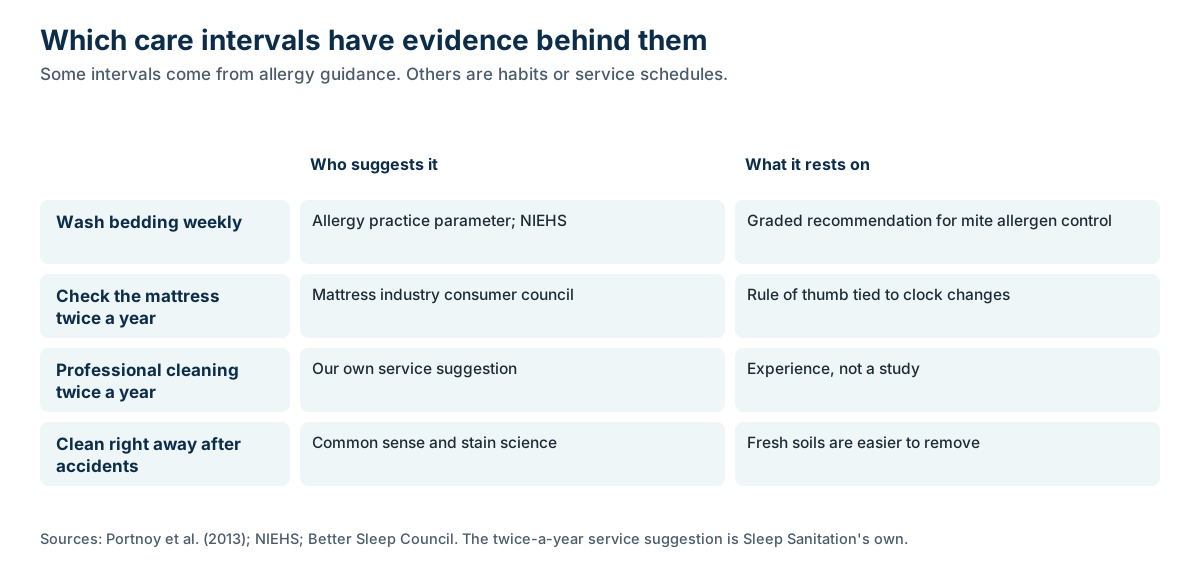
We found no study that sets an interval for cleaning a mattress. Not every six months, not once a year. What research and allergy guidance do set is a weekly interval for washing bedding. For the mattress itself, the honest answer is to clean it when something happens to it, vacuum the surface as part of routine bedding changes, and book a deeper cleaning on whatever rhythm suits your household. We suggest once or twice a year, and we say clearly that this is our rule of thumb, not a research finding.
General information about mattress care and allergens, not medical advice.
Is there a research-based interval?
No. We looked for trials or field studies that compared cleaning a mattress at different intervals and measured anything useful, such as allergen levels, odor, staining or how long the mattress lasted. We didn't find any. That is not unusual for household care: nobody funds a two-year trial of how often to vacuum a bed.
What does exist is an allergy practice parameter, published in 2013 by American allergy societies, that grades its recommendations by strength of evidence. It advises patients "that bedding should be washed weekly" and gives that a strong recommendation based on B-level evidence. It also covers encasings, humidity and vacuuming. It does not give an interval for cleaning a mattress. The NIEHS consumer page on mites says the same thing about bedding, once a week, and likewise sets no mattress schedule.
So when you see advice to clean a mattress every six months, or every three months, you are looking at a habit, a marketing calendar or a service schedule. Some of those are sensible. None is a measured answer.
Where the twice-a-year idea comes from
The most common rhythm, twice a year, has a plain origin. A mattress-industry consumer council suggests evaluating your mattress for comfort and support "twice a year when you adjust your clocks for seasonal time changes." That advice is about checking the bed, not cleaning it, but the clock-change cue is easy to remember and many cleaning services, including ours, have borrowed it.
Our own suggestion is a deeper cleaning once or twice a year for a bed that sees nightly use. We base that on what we see on mattresses, not on a study, and we'd rather tell you that than dress it up. A guest-room mattress used a few nights a year doesn't need the same rhythm as a bed shared with two people and a dog.
Events matter more than dates
What actually decides when a mattress needs cleaning is what has happened to it. A spill that soaked past the protector, a child's accident, a pet that sleeps on the bed, months of heavy night sweats, or a move during which the mattress was handled and wrapped all change the picture far more than the calendar does.
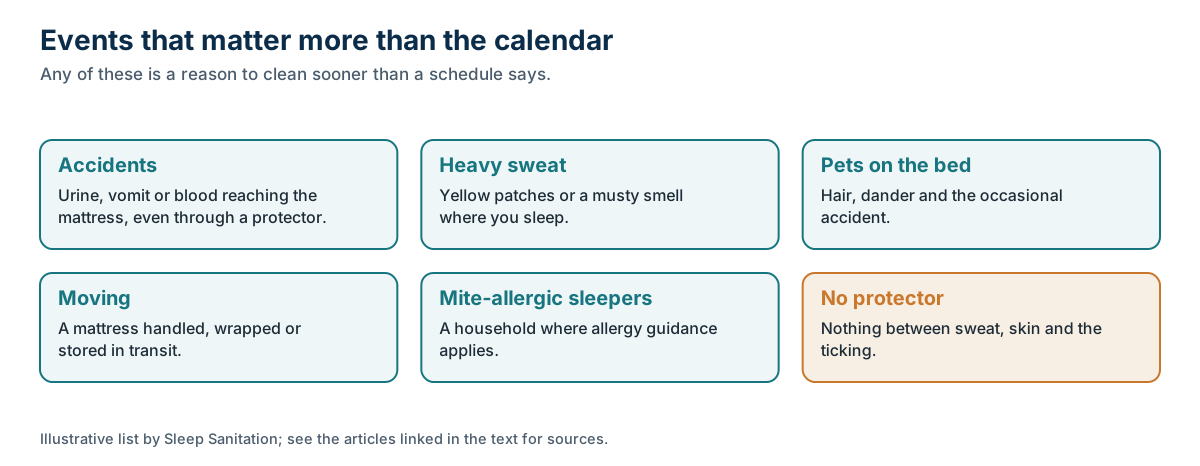
Timing matters most with liquids. Urine, vomit and blood spread through ticking and quilting by capillary action, and the longer they sit, the further they travel and the more they set. Our urine and accidents guide explains why prompt, low-moisture treatment works better than a scheduled visit weeks later. Body oils are slower, but they oxidize and yellow with age, which is why old yellowing resists cleaning more than fresh soil does.
What a sensible routine looks like
Think in layers, from your skin outward. The closer a layer is to you, the more often it needs attention, and the easier it is to wash.
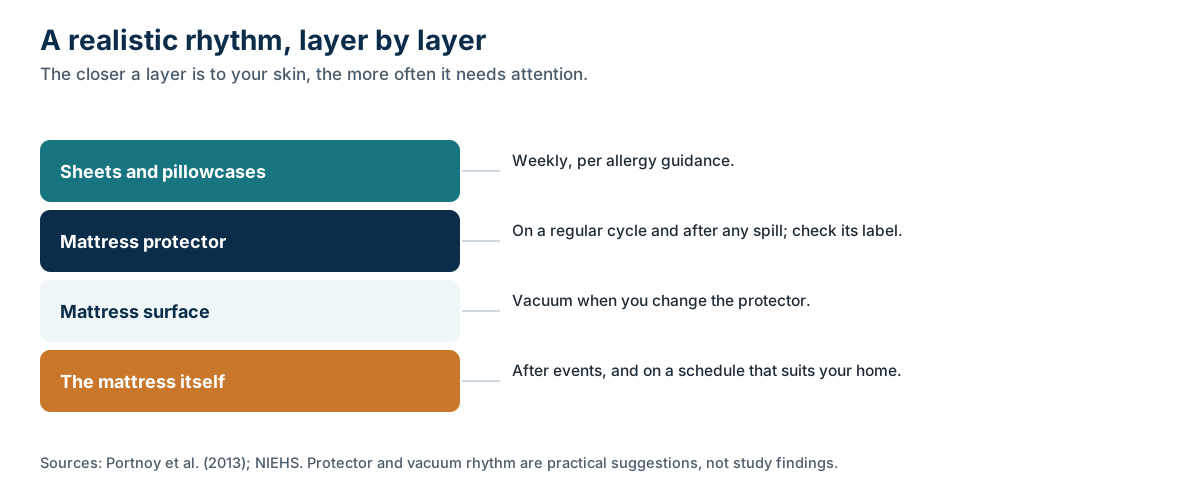
- Sheets and pillowcases: once a week. Of everything on this list, only the bedding interval appears in allergy guidance with a strength-of-recommendation grade attached. Temperatures, dryer cycles and pillows are covered in how often to wash sheets, pillowcases and protectors.
- Mattress protector: on a regular cycle and after any spill. No study sets an interval, so follow its label and your household's needs.
- Mattress surface: a slow pass with a vacuum when the protector comes off for washing. Our article on how often allergy sufferers should vacuum a mattress explains what vacuuming does and doesn't remove.
- The mattress itself: after events, plus a deeper cleaning on a rhythm that suits your home.
Add a seasonal check-in. Rotating the bed, looking for sagging and checking humidity fit naturally into the same visits, and our seasonal mattress care checklist lays them out.
Does the household change the answer?
Yes, and this is where fixed schedules fall short. A few factors push toward more frequent attention:
- Pets on the bed bring hair, dander and the occasional accident.
- Young children mean more accidents and spills.
- A mite-allergic sleeper makes bedding washes and humidity control more important. A national survey of US bedrooms found mite allergen levels varied with region and climate, so two homes with the same habits can differ.
- No protector leaves the ticking exposed to sweat and skin every night.
- Humid homes let mites thrive. In a Dayton, Ohio study, homes kept below 51% relative humidity ended up with allergen levels more than 10 times lower than humid homes after 17 months.
Others push the other way: a single sleeper, a well-fitted protector washed regularly, dry indoor air and no pets.
Can cleaning too often cause harm?
Frequency by itself isn't the problem. Wetness is. A mattress that is soaked or shampooed repeatedly takes on water and detergent that foam releases slowly, and residue left behind can attract soil. Vacuuming and low-moisture methods can be repeated without that risk. If a method leaves the bed damp to the touch for long, it shouldn't be repeated often, whatever the schedule says. Our moisture hub explains why foam is slow to dry.
What about allergy symptoms?
We keep this careful. Cleaning a mattress reduces what's on and near its surface, including allergen-carrying dust. But reviews of mite control find that single measures rarely change symptoms on their own. A Cochrane review of rhinitis trials found that "trials to date have on the whole been small and of poor methodological quality," and a 2024 meta-analysis concluded that "partial bedroom control is not recommended" on its own. That's why allergy guidance pairs bedding washes with encasings and humidity control. If you have allergies, follow your allergist's plan; a cleaning is one piece of it, not a substitute. More in why mite control needs more than one step.
So how often?
Weekly for bedding. Promptly after anything reaches the mattress. A surface vacuum when the protector is off. And a deeper cleaning once or twice a year if your household is busy, less if it isn't. If someone gives you a precise interval and calls it the science, ask which study it came from. The rest of this hub checks other popular care rules the same way, from the 7-year replacement rule to leaving the bed unmade.
Sleep Sanitation's view
This section is our view. We suggest a deeper cleaning once or twice a year for a bed in nightly use, and right away after accidents. That's a rule of thumb from experience, not a research result, and we'd rather you choose a rhythm that fits your home than follow ours blindly. Our visits use dry vapor steam with little water, HEPA vacuuming and UV-C light, and every visit includes two checks: a moisture check after service and the built-in bed mite sensor on our UV-C vacuum. We serve Lincoln, Omaha and surrounding towns. See our process, or call or text (402) 512-5658.
What we don't know
- Whether any particular mattress cleaning interval changes allergen levels, odor or mattress life over time. We found no study comparing intervals.
- How much a well-fitted protector, washed regularly, extends the time between needed cleanings. Protector studies focus on allergen barriers, not soiling.
- How Nebraska homes compare with the Ohio homes in the humidity studies. We found no local survey.
Changelog
- 7 October 2026: First published. Sources accessed on this date.
Sources
- Environmental Assessment and Exposure Control of Dust Mites: A Practice Parameter (Portnoy et al., 2013) · PubMed Central
- Dust Mites and Cockroaches · National Institute of Environmental Health Sciences (NIH)
- Replacing a Mattress · Better Sleep Council (mattress industry consumer site)
- Caring for a Mattress · Better Sleep Council (mattress industry consumer site)
- House Dust Mite Avoidance Measures for Perennial Allergic Rhinitis (Cochrane Review) · PubMed Central
- House Dust Mite Allergen Avoidance Strategies for the Treatment of Allergic Asthma: A Hypothesis-Generating Meta-Analysis (van Boven et al., 2024) · PubMed Central
- Bedroom Allergen Exposures in US Households (Salo et al., 2018) · PubMed Central
- Reducing Relative Humidity Is a Practical Way to Control Dust Mites and Their Allergens in Homes in Temperate Climates (Arlian et al., 2001) · PubMed
Last reviewed October 7, 2026. Manufacturer specifications and care instructions change; check the current version for your exact model. This page is general information, not medical advice. How we source and check pages: editorial standards.