
Short answer
Water that gets into memory foam travels through its open cells and is held there, and because the foam is dense and insulating, it dries slowly, from hours for a damp spot to days for a saturated mattress, according to manufacturers. While it's wet, it can support mold if not dried within 24 to 48 hours, and Tempur UK warns there is 'a high risk that soaking with water or other cleaning fluids will cause irreversible damage.'
Key terms used on this page
- Memory foam (viscoelastic foam):
- An open-cell, slow-recovery polyurethane foam that softens with body heat and conforms to pressure. Because its cells are open, liquid can travel into it, and because it is dense and insulating, it is slow to dry.
- Mattress layers (ticking, comfort layers, support core):
- Ticking is the outer fabric cover. Comfort layers are the foams, latex, fiber or wool directly under it. The support core is the coil unit or base foam underneath. Most mattresses also include a fire barrier between the ticking and the comfort layers.
- Moisture load:
- The total amount of water a cleaning process puts into a mattress, whether from spray, steam condensate, shampoo or rinse. It is the main thing that decides how long a mattress takes to dry.
- Dry to the touch vs dry through:
- Dry to the touch means the surface fabric feels dry. Dry through means the moisture inside the comfort layers has also left. A mattress can feel dry on top while still holding water underneath.
- Detergent residue:
- Cleaning chemistry left behind in the fabric after cleaning. The Carpet and Rug Institute says residue from over-concentrated solution contributes to rapid re-soiling, which is why extraction cleaners are told to rinse.
- Wicking:
- Moisture moving through a material as it dries, carrying dissolved soil or stain with it. When the moisture evaporates at the surface, the stain can reappear on a fabric that looked clean.
Water that gets into memory foam travels through the foam's open cells and is held there. Because memory foam is dense and insulating, it dries slowly: manufacturers describe anything from several hours for a cleaned spot to days for a saturated mattress. While it stays wet, it can support mold if it isn't dried within the EPA's 24-to-48-hour window, and Tempur UK warns: "There is a high risk that soaking with water or other cleaning fluids will cause irreversible damage," adding, "It will also invalidate your guarantee." Any detergent that goes in with the water tends to stay in the foam.
Memory foam is the material most sensitive to water in a typical mattress, which is why it shapes so much of the Cleaning Methods hub. We start with how the foam's open cells take in water, then cover drying, mold and manufacturer rules, and end with what nobody has measured. Moisture by cleaning method is compared in the flagship guide.
What memory foam is
Memory foam, or viscoelastic foam, is a slow-recovery polyurethane foam. NASA's spinoff history describes the original as an open cell polymeric foam developed for aircraft seat padding, a "slow springback foam" that flows to match the body and returns to shape when the pressure is removed.
Tempur, the best-known memory foam brand, describes its material as having a viscoelastic open cell structure with temperature-sensitive properties that soften in response to body heat.
Two properties matter for cleaning:
- Open cells. The cells connect to each other, which is part of what lets the foam compress slowly. It also means liquid can move into the foam, rather than beading on top.
- Density and insulation. Memory foam is dense, which slows airflow through it, and polyurethane foam is a poor heat conductor, around 0.03 W/m·K according to Engineering ToolBox. Slow airflow and slow warming both slow evaporation.
In most mattresses, memory foam sits in the comfort layers just below the ticking and fire barrier (see mattress layers). That puts it right where liquid from a spill or a wet cleaning method goes first.
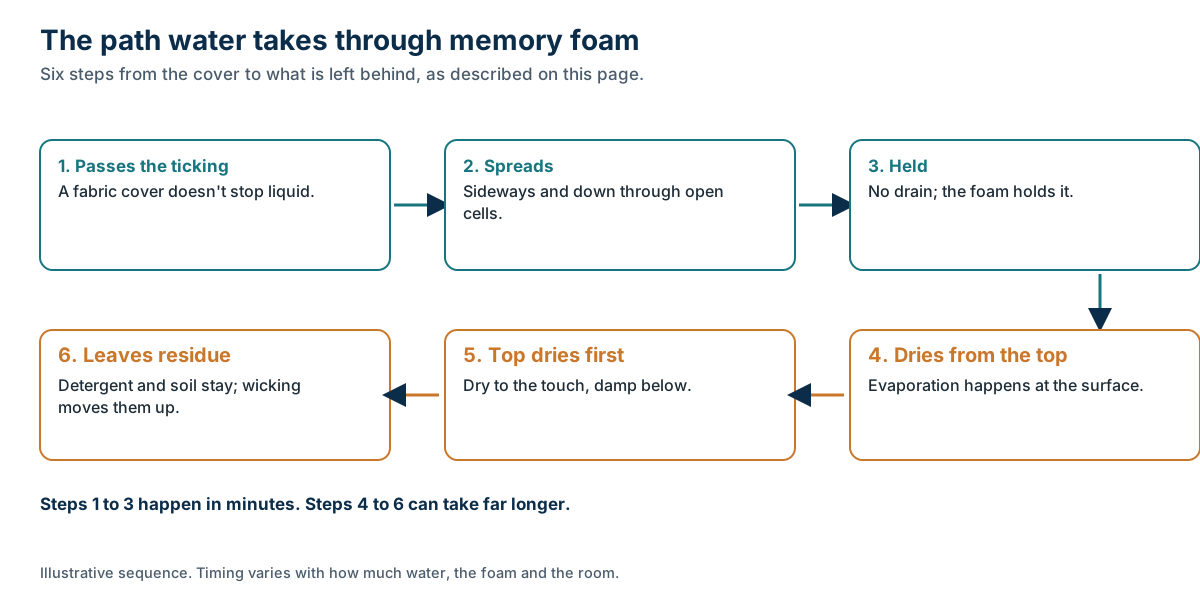
What happens, step by step
- Water passes the ticking. A standard mattress cover is fabric, so it doesn't stop liquid. Sleep Number, for example, warns that even air-freshener sprays can soak the fabric.
- It spreads into the foam. Through the open cells, water moves sideways and down from the point of contact. It doesn't stay as a neat spot.
- It's held there. The foam's structure holds water rather than letting it drain, and there's no drain at the bottom of a mattress anyway.
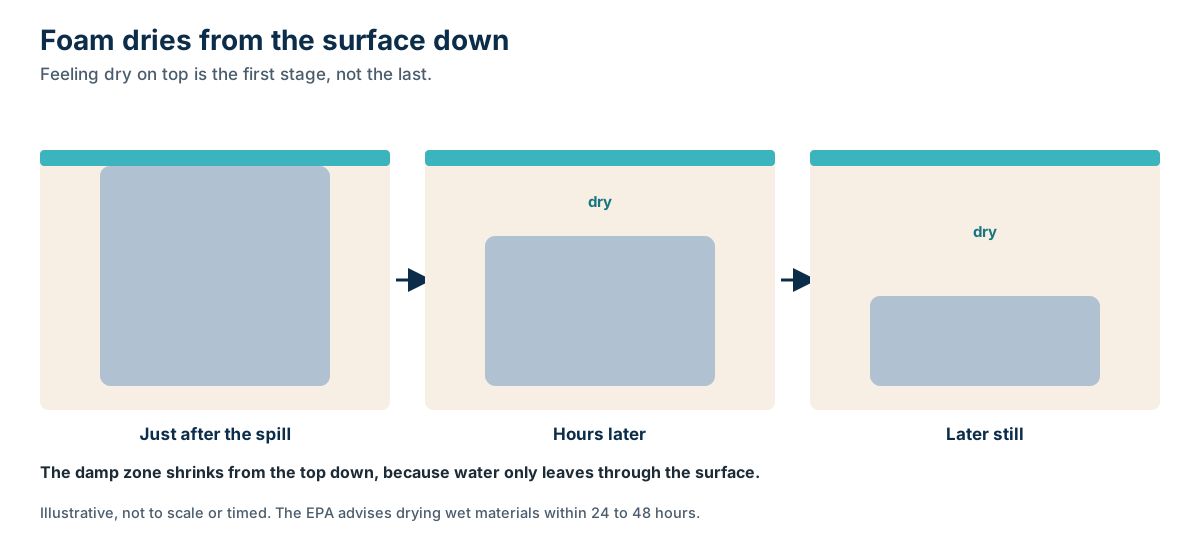
- It dries slowly, from the top. Evaporation happens mainly at the surface. Water deeper in has to move back up through dense foam to leave.
- The top dries first. The mattress can be dry to the touch while the foam beneath is still damp.
- What came in with the water stays. Detergent and dissolved soil are left behind as the water leaves, and can migrate toward the surface as it dries, which is the wicking effect.
What manufacturers say
| Manufacturer | What they say about water and foam | Source |
|---|---|---|
| Tempur (UK) | "Do not steam-clean or dry-clean the TEMPUR Material"; soaking carries "a high risk" that it "will cause irreversible damage" and "will also invalidate your guarantee" | Tempur UK |
| Tempur-Pedic (US) | TEMPUR material should never become wet; never wash it; blot spills and fan-dry | Tempur-Pedic |
| Purple | Memory foam "can absorb liquid and be harder to dry"; avoid a steam cleaner, "which can soak the memory foam"; a carpet cleaner could overly saturate it; a saturated dense-foam mattress would take days to dry | Purple, Purple |
| Casper | Don't saturate; the foam will soak up water and detergent | Casper |
| Saatva | Mattresses aren't designed to get wet, especially memory foam; a damp one can develop mold and mildew | Saatva |
The consistency is striking. Every brand treats water in foam as something to avoid, and the most specific guidance, Tempur's, is also the strictest.
Mold and odor
The EPA's mold guide says wet materials should be dried within 24 to 48 hours, and that if they are, in most cases mold won't grow. For a saturated foam mattress that Purple says could take days to dry, that window is a real concern. A musty smell is often the first sign that moisture has stayed too long.
Detergent trapped in foam
Water rarely goes into a mattress alone. Spot cleaners, shampoos and extraction solutions all carry chemistry, and Casper specifically warns that foam will soak up detergent along with water. On carpet, residue is rinsed out. Rinsing a foam mattress means adding more water. Detergent residue in foam can attract soil and is hard to remove, which is one reason we cover whether professional mattress cleaning needs detergent at all.
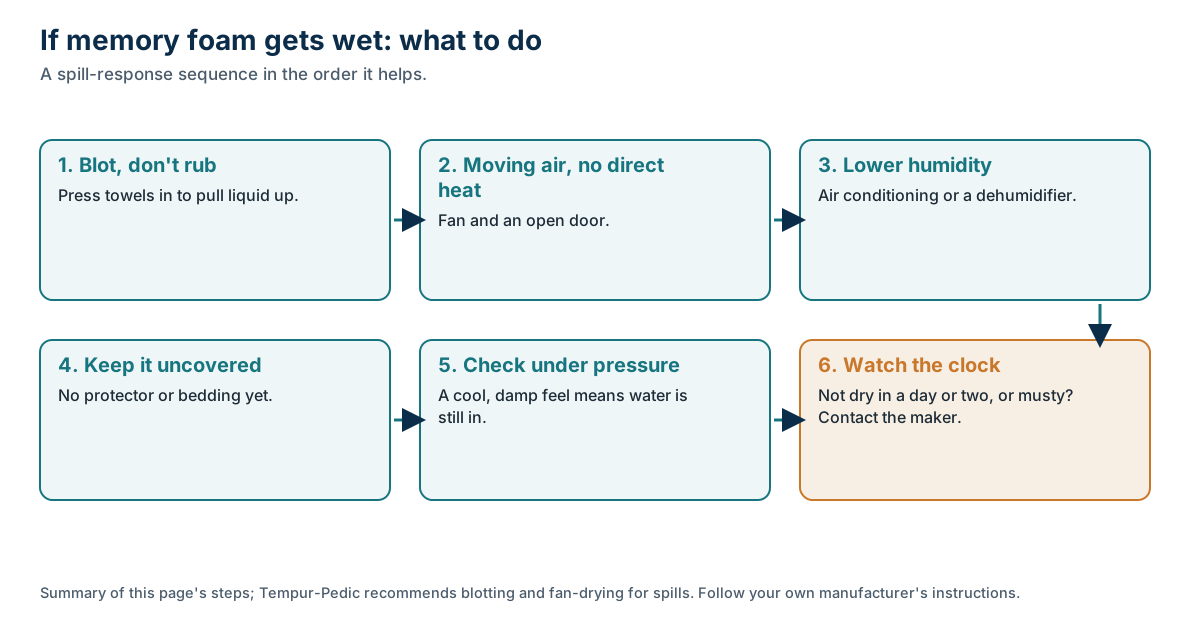
If your memory foam gets wet
- Blot, don't rub. Press towels into the area to pull up as much liquid as you can. Tempur-Pedic recommends blotting and fan-drying for spills.
- Use moving air, not direct heat. A fan across the surface and an open door help. Concentrated heat can damage some foams and dries only the top.
- Lower the room's humidity if you can, with air conditioning or a dehumidifier.
- Keep it uncovered until it's dry through. Don't put a protector or bedding back over a damp spot.
- Check under pressure. Press firmly into the area. A cool, damp feel means water is still in the foam.
- Watch the clock. If it isn't dry within a day or two, or you notice a musty smell, contact the manufacturer.
What this means for cleaning methods
The lesson for cleaning is simple: keep water out of the foam in the first place. That's why wet methods are a poor fit for foam mattresses, and why the moisture load of any method matters more on foam than on an innerspring. See why moisture matters when cleaning a mattress and dry-vapor steam vs carpet extraction for mattresses.
Foam brands that say "do not steam clean," and what we choose to do
Low moisture doesn't change what the manufacturers wrote. Tempur UK says "Do not steam-clean or dry-clean the TEMPUR Material." It warns "There is a high risk that soaking with water or other cleaning fluids will cause irreversible damage" and "It will also invalidate your guarantee." Purple says "you should not steam clean a memory foam, latex, or adjustable mattress since the heat and water could damage its materials," and, in the same guide, "Avoid steam cleaning a memory foam mattress, as this can leave it waterlogged." Neither makes an exception for dry-vapor equipment.
So the manufacturers' advice is plain: don't steam these mattresses, dry vapor included. Purple gives two reasons, heat and water, and Tempur-Pedic US adds: "Due to the temperature-sensitivity of the TEMPUR-material, adding high heat can hinder its ability to react to your body temperature and conform to your body shape." Sleep Sanitation does clean Tempur-Pedic and Purple mattresses. That is our own choice and our own reasoning, and it is not an exemption from either maker. Our reasoning is that both risks can be controlled: this page shows how water travels into open cells, dries slowly and can support mold, and the heat page shows that heat damage depends on how long a spot stays hot. So we control the moisture load and the dwell time: an Italian-made Vapor Clean dry-vapor system (Vapor Clean's product page claims "just 5-6% moisture," a maker claim, not a measurement of our equipment), quick repeated passes instead of one slow, wet pass, the tool kept moving so heat doesn't concentrate, and no soaking at any point.
Following the label is the safe default, and for these brands the label describes vacuuming and careful spot cleaning. Check your manufacturer's warranty terms before booking any cleaning, and tell us the brand and model when you book a visit so we can talk it through first.
What we don't know
- Measured drying times. We haven't found published drying times for memory foam after spills or cleaning; the figures above are manufacturer descriptions.
- Property changes. Tempur says soaking carries "a high risk" that it "will cause irreversible damage," but we haven't found published test data showing which properties change, or how much, after foam is wetted and dried.
- Differences between foams. Gel-infused, plant-based and high-density foams may behave differently with water. We haven't found comparative data.
Sources
- Foam cushioning (NASA spinoff) · NASA
- Caring for your TEMPUR mattress · Tempur UK
- Product care · Tempur-Pedic
- How to clean a mattress · Purple
- Can you use a carpet cleaner on a mattress? · Purple
- How to clean your mattress · Casper
- How to get any stain out of a mattress · Saatva
- A brief guide to mold, moisture and your home · US EPA
- Thermal conductivity of common materials · Engineering ToolBox
- Cleaning your mattress · Sleep Number
Last reviewed October 2, 2026. Manufacturer specifications and care instructions change; check the current version for your exact model. This page is general information, not medical advice. How we source and check pages: editorial standards.