
Short answer
Urine odor usually comes back because some urine is still in the mattress, below where cleaning reached. Moisture in the air, a sweaty night or a humid week can bring the smell back up. The Carpet and Rug Institute warns that masked odor 'may reappear' in high humidity. Finding how deep the urine went, and treating it there without soaking the bed, is the fix.
Key terms used on this page
- Odor rebound:
- A urine smell that fades after cleaning and comes back later, often on humid days or when the bed is slept on again. The Carpet and Rug Institute notes that urine odor 'may reappear' in high humidity. It usually means residue remains deeper than the treatment reached.
- Uric acid:
- A normal, minor component of urine. NASA's table of urine constituents lists its solubility in water as very low, far below that of urea. Many cleaning guides blame uric acid for odor that returns after cleaning; we haven't found a study measuring that inside a mattress, so we treat it as a plausible explanation, not a proven one.
- Urea and ammonia:
- Urea is the main nitrogen-carrying compound in urine. Bacteria that make the enzyme urease break it down into ammonia and carbon dioxide, which is why stale urine smells sharper than fresh urine. NASA's study of stored human urine found that bacterial action decomposed the urea and released large amounts of ammonia.
- Wicking (urine migration):
- Liquid moving through and along fabric and foam by capillary action, so the affected area below the surface is often wider than the visible stain. Quilting, fiber batting and open-cell foam all wick. It is why a spot can look small and still smell from a wider area.
- Residual moisture:
- Water left in a material right after cleaning, before drying. For carpet, the Carpet and Rug Institute's test for its deep-cleaning extractor seal allows up to 8 ounces per square yard. We have not found an equivalent published test for mattresses.
- Saturated core:
- A mattress whose interior layers, not just the cover and quilting, were soaked by a large accident or several in one place. Surface treatment can't reach all of it. Some saturated cores improve with treatment and drying; some don't, and we say so before charging for work that won't help.
It's one of the most frustrating parts of a urine accident. The bed gets cleaned, dries, and smells fine for a week. Then a warm, damp night comes along and the smell is back. That isn't bad luck. It's almost always a sign that something is still in the mattress.
Not affiliated with or endorsed by any manufacturer listed. Brand names are used only to identify products and their published care instructions.
Reason one: urine is still below the surface
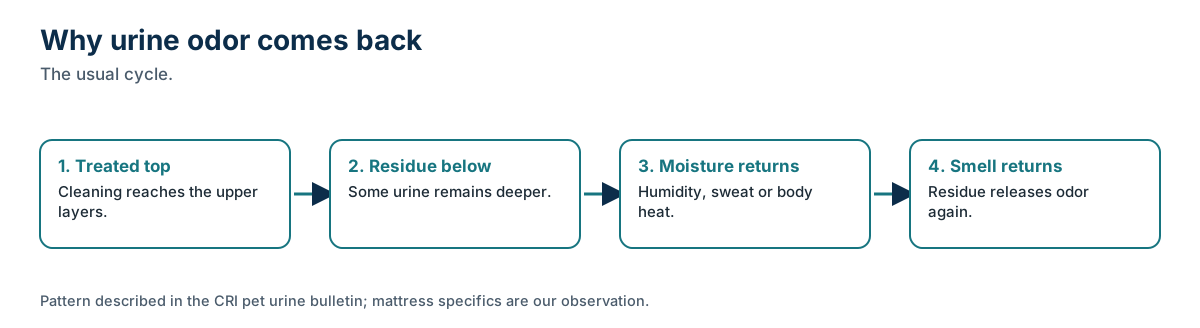
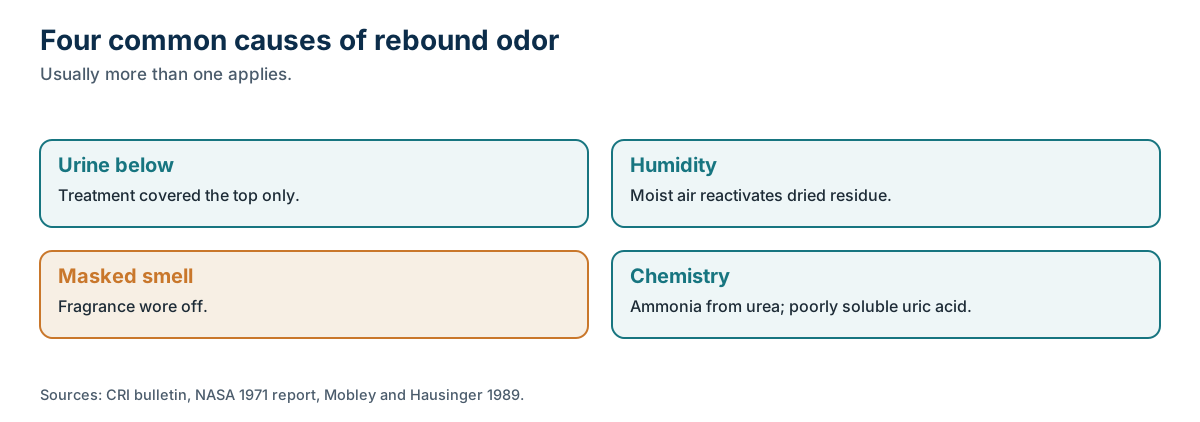
The commonest cause is simple. The cleaning treated the top of the stain, and urine remains lower down.
A mattress is several layers thick. Urine that passes the cover spreads sideways through fiber by wicking and sinks into foam. The visible stain shows where the liquid landed, not how far it travelled. If the treatment covered only the visible part, the rest stayed put.
When the bed is dry, that leftover urine is mostly dried residue and doesn't smell much. When moisture returns, it starts to smell again.
Reason two: humidity wakes it up
Moist air and body heat put a little water back into dried residue. That's enough for odor compounds to move again, and possibly for bacteria to keep breaking down what's left.
The Carpet and Rug Institute describes this pattern in its pet urine bulletin: "A number of products are available to combat odor, but some may simply mask the odor, and, in times of high humidity, the odor may reappear." It's written about carpet, but a mattress holds far more material for urine to hide in.
Reason three: the smell was covered, not removed
Fragrance, deodorizing powders and air fresheners work on your nose, not on the urine. When they wear off, the original smell is still there. On mattresses, sprays also add liquid. Sleep Number's support page is blunt: "CAUTION: Do not spray air freshener on the mattress." Our Sleep Number page covers its other care rules.
Reason four: the chemistry of what's left
Two compounds in urine get blamed for rebound odor.
Ammonia, from urea. This is the sharp part of the smell. Damp residue gives urease-producing bacteria another chance at whatever urea is left, as described in a 1989 review and in NASA's 1971 study of stored urine. Each humid spell can restart it.
Uric acid. NASA's table gives uric acid's solubility as 0.00645 grams per 100 grams of water, compared with 119 grams for urea. Something that dissolves that poorly won't rinse out easily. Many cleaning guides say leftover uric acid explains rebound odor. It's plausible, but we haven't found a study that measured it in a mattress, so we treat it as a likely factor rather than a proven cause.
For cats, add felinine. A 2024 veterinary study explains that felinine is the precursor of sulfur odorants behind the "catty" smell. Cat urine in a mattress covers that separately.
Breaking down that residue is cleaning work. Hub 2 sets out the CDC's difference between cleaning and sanitizing, and we keep to it.
How to tell which reason applies
Ask a few questions:
- Does it smell from one spot or a wide area? One spot suggests leftover urine in that place. A wide area suggests the core took in a lot.
- Is it worse after you sleep on it? Body heat and sweat add moisture, which points to residue in the upper layers.
- Did it smell perfumed after cleaning? If so, the first treatment may have masked the smell.
- Was the bed soaked during cleaning? A lot of rinse water can spread urine wider than the original accident.
What actually helps
Treat where the urine is, without adding a lot of liquid. That's the whole idea.
Rebound odor calls for treatment at the depth of the residue, not just the cover. Enzymes need dwell time, so we mist the mapped area, let the product work, and only then bring in dry vapor from a Magnum XP, ProV 350 or Pro6 Duo. Two light rounds beat one soak, and organic methods are our default. Dry vapor isn't carpet-style extraction, which rinses with water and can spread a stain wider.
Drying is part of the fix. The EPA's mold guidance advises drying wet materials within 24 to 48 hours. Residual moisture left in the core can itself bring odor back. Our drying article explains how to check.
Rebound odor from an ordinary accident is covered by the standard price; severe, biohazard or extensive contamination is quoted first.
Whatever helps on your bed, the care label and warranty terms govern what's allowed. Check your warranty before you book a second treatment, and keep any notes the maker gives you.
Material matters
Some materials hold onto rebound odor more than others. Memory foam dries slowly. Thick pillow-tops and fiber batting spread urine wide. Wool absorbs moisture into the fiber itself. Our materials ranking puts them in order, and the pillow-top page explains why thick tops are slow to dry.
When it keeps coming back
If the smell returns after proper treatment, more than once, from a wide area, the urine is probably deep in the core. A saturated core may not be fully recoverable. We'll say so if we think yours is one, and clean or replace covers how we decide.
A simple test after treatment
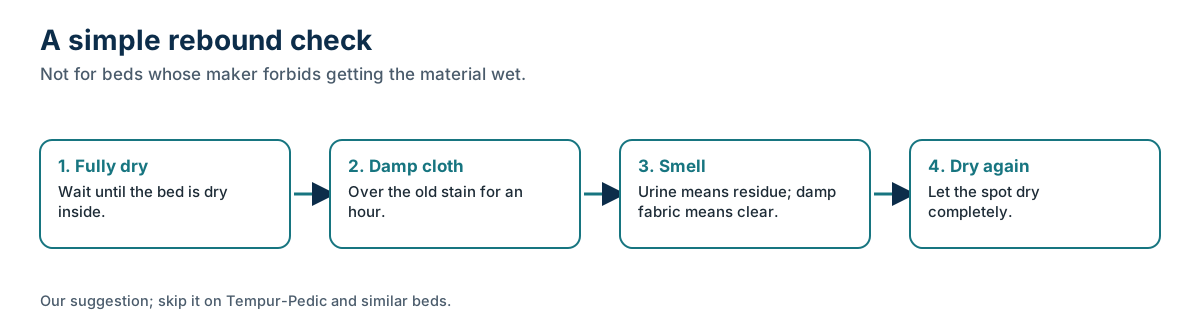
You can check whether a treatment really worked without waiting for summer. Once the bed has dried fully, put a slightly damp cloth over the old stain for an hour, then remove it and smell the spot. Moisture brings back odor from leftover residue quickly. If it smells of urine, something is still there; if it smells like damp fabric, the treatment probably reached it.
Do this once, not daily. Leave the spot to dry completely afterwards, and don't do it on a Tempur-Pedic or another bed whose maker says its material should never get wet. On those beds, a humid day will give you the same answer without adding water.
Preventing the next round
A waterproof protector stops most new accidents from reaching the layers where rebound starts. Wash it as the label directs, and dry it fully before it goes back on. If a pet or child has accidents often, a second protector means the bed never goes bare.
The main mattress urine guide has the wider picture, and why a mattress smells after the stain is gone helps if you can't find where the odor sits. What happens when urine soaks in shows why a deep accident is the usual cause of a smell that keeps returning.
The protector question
People sometimes blame the protector. A protector that wasn't washed after the accident can hold urine and smell of it, so wash it hot as its label allows and dry it fully. If the smell stays with the protector off, the source is in the mattress.
Seasonal patterns
Many people first notice rebound odor at the start of summer, or during a wet spring. That timing is itself a clue: it points to residue that's been there since an earlier accident.
Keep the room dry
Rebound odor is worst in damp rooms. A dehumidifier in a basement bedroom, or during a humid month, keeps leftover residue from waking up and helps a treated bed finish drying.
What we don't know
- Whether uric acid is the main driver of rebound odor in mattresses. It's widely claimed and plausible, but unproven in this setting as far as we can find.
- How often rebound happens after professional treatment. No one publishes reliable numbers.
- Exactly where the urine is in your bed until it's checked.
Changelog
- 2 October 2026: First published. Sources accessed on this date.
Sources
- Pet Urine and Carpet (technical bulletin, revised 27 July 2017, accessed 2026-10-02) · Carpet and Rug Institute
- Composition and Concentrative Properties of Human Urine (NASA contractor report, July 1971) · NASA
- Microbial ureases: significance, regulation, and molecular characterization (Mobley and Hausinger, Microbiol Rev, 1989) · PubMed Central
- Reduction of urinary felinine in domestic cats with renal diseases leads to decreased catty odor (J Vet Med Sci, 3 Dec 2024) · PubMed Central
- Cleaning Your Mattress (support, accessed 2026-10-02) · Sleep Number
- A brief guide to mold, moisture and your home · US EPA
- Magnum XP-Vac product page (maker's claims, accessed 2026-10-02) · Vapor Clean
- ProV 350 product page ('Italian Made'; maker's claims, accessed 2026-10-02) · Vapor Clean
- Pro6 Duo product page ('Made in Italy'; maker's claims, accessed 2026-10-02) · Vapor Clean
Last reviewed October 2, 2026. Manufacturer specifications and care instructions change; check the current version for your exact model. This page is general information, not medical advice. How we source and check pages: editorial standards.