
Short answer
Usually because the stain and the urine weren't in the same place. Cleaning can remove the visible mark from the cover while urine remains in the layers below, along the border, or in the foundation underneath. A musty smell can also mean moisture left from cleaning. Finding the source by smell, layer by layer, comes before any further treatment.
Key terms used on this page
- Wicking (urine migration):
- Liquid moving through and along fabric and foam by capillary action, so the affected area below the surface is often wider than the visible stain. Quilting, fiber batting and open-cell foam all wick. It is why a spot can look small and still smell from a wider area.
- Residual moisture:
- Water left in a material right after cleaning, before drying. For carpet, the Carpet and Rug Institute's test for its deep-cleaning extractor seal allows up to 8 ounces per square yard. We have not found an equivalent published test for mattresses.
- Odor rebound:
- A urine smell that fades after cleaning and comes back later, often on humid days or when the bed is slept on again. The Carpet and Rug Institute notes that urine odor 'may reappear' in high humidity. It usually means residue remains deeper than the treatment reached.
- Dry to the touch vs dry through:
- Dry to the touch means the surface fabric feels dry. Dry through means the moisture inside the comfort layers has also left. A mattress can feel dry on top while still holding water underneath.
- Enzyme cleaner:
- A cleaning product that uses enzymes to break down organic soils such as urine, sweat, vomit or blood. Several mattress makers mention them for urine stains, including Purple and Avocado. They are liquids, so how much is applied matters as much as what is applied. Sleep Sanitation uses enzyme treatment on urine and organic odor, sparingly.
- Saturated core:
- A mattress whose interior layers, not just the cover and quilting, were soaked by a large accident or several in one place. Surface treatment can't reach all of it. Some saturated cores improve with treatment and drying; some don't, and we say so before charging for work that won't help.
It's a strange experience. The yellow mark is gone, the cover looks clean, and yet the bed still smells like urine, especially at night. Nothing's wrong with your nose. The stain and the source of the smell are often in different places.
Not affiliated with or endorsed by any manufacturer listed. Brand names are used only to identify products and their published care instructions.
The stain is not the urine
A visible urine stain is a change in the fabric's color. It sits in the cover, where the urine first landed. The urine itself kept going: sideways through the quilting by wicking, down into foam, sometimes down the side of the bed.
Cleaning that targets the stain works on the cover. It can lift the color completely while urine remains an inch or two below. Once the cover's clean, the only clue left is the smell.
The CRI's pet urine bulletin also notes that staining doesn't always match urine: "Some urine spots may be immediately noticeable, while others may take weeks or months for a reaction." Color and contamination run on different clocks.
Where the smell is usually hiding
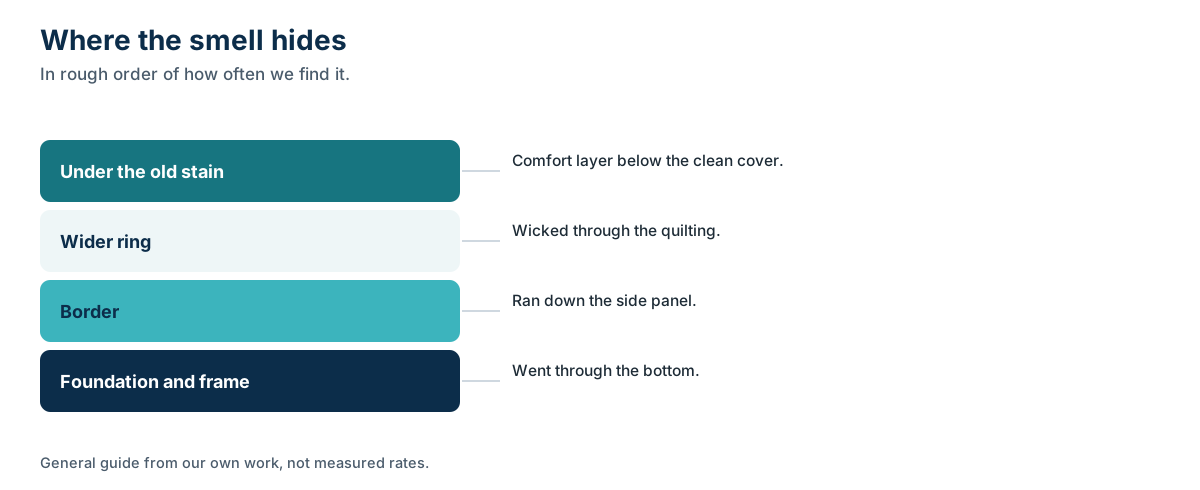
In rough order of how often we find it:
- Directly under the old stain, in the comfort layer.
- In a wider ring around it, where urine spread through quilting.
- Along the border, if the accident was near the edge.
- In the foundation or box spring, if urine went through the bottom of the mattress.
- In the bed frame, slats or carpet below.
- In the protector or pad, if it wasn't washed hot enough or long enough.
Finding and treating it is cleaning work; Hub 2 explains how the CDC separates cleaning from sanitizing.
How to track it down
You can do much of this yourself.
- Strip the bed completely, including the protector.
- Smell the old stain at close range, then in a grid outward from it.
- Smell the sides, especially on the edge nearest where the accident happened.
- Lift the mattress and smell the underside and the foundation.
- Check the floor under the bed.
The place where the smell is strongest is where treatment needs to go.
Urine smell or damp smell?
Not every smell after an accident is urine. They're different.
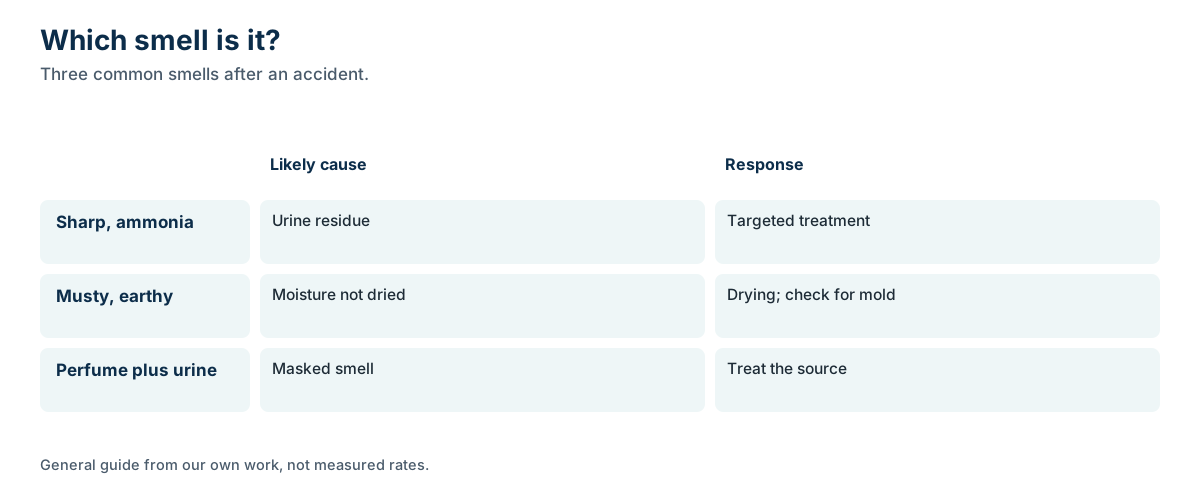
Urine smells sharp, like ammonia. That's urea breaking down. A microbiology review explains: "Microbial ureases hydrolyze urea to ammonia and carbon dioxide."
Damp smells musty or earthy. It often means the bed hasn't dried, sometimes because of the cleaning. A bed that's dry to the touch on top can still be wet inside. Our article on whether dry vapor is actually dry explains surface dryness, and the EPA's mold guide advises drying wet materials within 24 to 48 hours.
Perfume over urine smells like both. That usually means the first treatment used fragrance, which has worn off in places.
What to do once you've found it
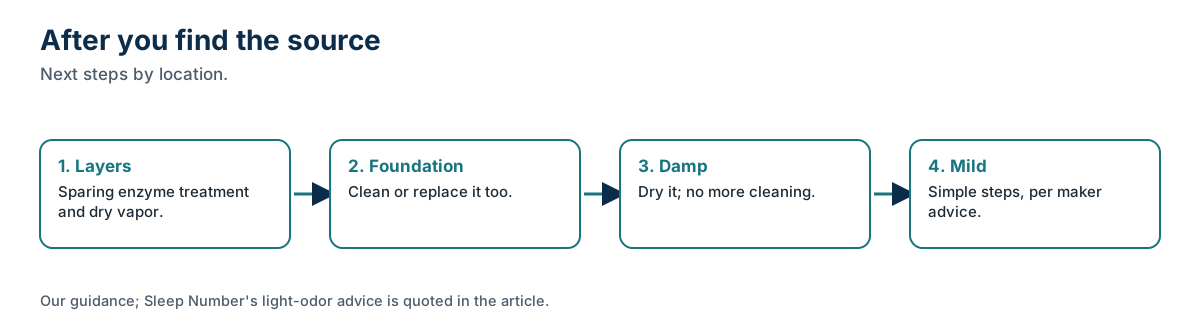
If it's in the layers below the stain, treat it there, without soaking. We mist enzyme product over the area the smell test found, often wider than the old mark, wait out its dwell time, then follow with dry vapor from a Magnum XP, ProV 350 or Pro6 Duo. Organic methods are our default. Heat and moisture are separate variables, which is how we work the surface without wetting the core.
If it's in the foundation, that needs cleaning or replacing too, or the mattress will pick the smell back up. A foundation is cheaper than a mattress.
If it's a damp smell, the answer is drying, not more cleaning. Move air, run a dehumidifier, leave the bed uncovered. If it's still musty after several days, check for mold.
If it's mild and general, a light odor may respond to simple steps. Sleep Number's support page suggests: "For light odors, place dryer sheets under the cover (non-smart beds) or under the mattress pad/fitted sheet (smart beds)." The same page warns: "CAUTION: Do not spray air freshener on the mattress." Our Sleep Number page has its other rules.
Our method is our own reasoning. Your care label and warranty terms govern what you can do, so check your warranty before booking, especially on a newer bed.
Natural-fill beds
Hand-built beds with natural fibers hold odor in their own way, because the fiber layers are thick. Hästens' care booklet points owners to a textile cleaner or furniture foam for stains, rather than anything wet. Our Hästens page and the wool page cover natural fills.
When the smell won't go
Some smells survive good treatment. If the odor comes from a wide area, the core was soaked, or the accidents repeated, the urine may be too deep. A saturated core may not be fully recoverable. Saatva's cleaning guide says: "Replace your mattress if it sags, has an odor, or is over 10 years old." We'd apply that more narrowly, but an odor that outlasts proper treatment is a fair reason to replace a bed.
Tempur-Pedic's care page is honest about the same thing for its own beds: "Because the mattress should never become wet, we can't promise that these steps will completely remove the stain or odor."
Price
Finding the source and treating an ordinary accident is part of our standard price. Severe, biohazard or extensive contamination is quoted first.
A quick self-check list
Before you book anyone, these answers will save time:
- Where exactly was the original stain, and how big was it?
- Was anything used on it, including fragrance sprays?
- Is the smell sharp (ammonia) or musty (damp)?
- Is it strongest on the top, the side or under the bed?
- Does it get worse after someone sleeps on the bed?
- Has the protector been washed since the accident?
Tell us the answers when you book. They often point straight at the source.
Why the smell is worse at night
Many people notice the smell most when they get into bed. That's not imagination. Body heat warms the surface and the layers just below it, and a sleeping person adds moisture through sweat. Both help odor compounds move from leftover residue into the air. During the day, with the bed cool and dry, the same residue smells faintly or not at all.
That pattern is useful. A smell that's clearly worse after sleeping on the bed suggests residue fairly near the surface, which is good news: it's within reach of treatment.
The complete urine and odor guide explains how we sort beds. Why urine odor comes back and what happens when urine soaks in explain where a hidden smell usually comes from. If you're weighing a new bed instead, does urine mean replacing it? sets out the signs.
The foundation and frame
If urine went right through, the foundation matters. A fabric-covered foundation or box spring absorbs it like a mattress does. A slatted wooden base can hold urine in the wood and in any fabric stretched over it. Check both, and clean or replace them if they smell, before deciding about the mattress itself. Our hybrid page describes the layers in coil beds where urine can collect.
Don't overlook the pillows
Pillows and toppers near the accident can hold urine too, and they sit right under your nose. Smell them separately. Washable ones go in the wash; foam ones need the same light treatment as the mattress.
What we don't know
- Where the odor is in your bed until it's been checked.
- Whether the residue left behind is mostly one compound or many. No mattress study we've found has measured it.
- How well dryer sheets work on beds other than Sleep Number's. That's Sleep Number's advice for its own beds.
Changelog
- 2 October 2026: First published. Sources accessed on this date.
Sources
- Cleaning Your Mattress (support, accessed 2026-10-02) · Sleep Number
- How to Clean Your Mattress in 5 Simple Steps (blog, accessed 2026-10-02) · Saatva
- Pet Urine and Carpet (technical bulletin, revised 27 July 2017, accessed 2026-10-02) · Carpet and Rug Institute
- Microbial ureases: significance, regulation, and molecular characterization (Mobley and Hausinger, Microbiol Rev, 1989) · PubMed Central
- Care Instructions (PDF, accessed 2026-10-02) · Hästens
- A brief guide to mold, moisture and your home · US EPA
- Product care (US, accessed 2026-10-02) · Tempur-Pedic
- Magnum XP-Vac product page (maker's claims, accessed 2026-10-02) · Vapor Clean
- ProV 350 product page ('Italian Made'; maker's claims, accessed 2026-10-02) · Vapor Clean
- Pro6 Duo product page ('Made in Italy'; maker's claims, accessed 2026-10-02) · Vapor Clean
Last reviewed October 2, 2026. Manufacturer specifications and care instructions change; check the current version for your exact model. This page is general information, not medical advice. How we source and check pages: editorial standards.