
Short answer
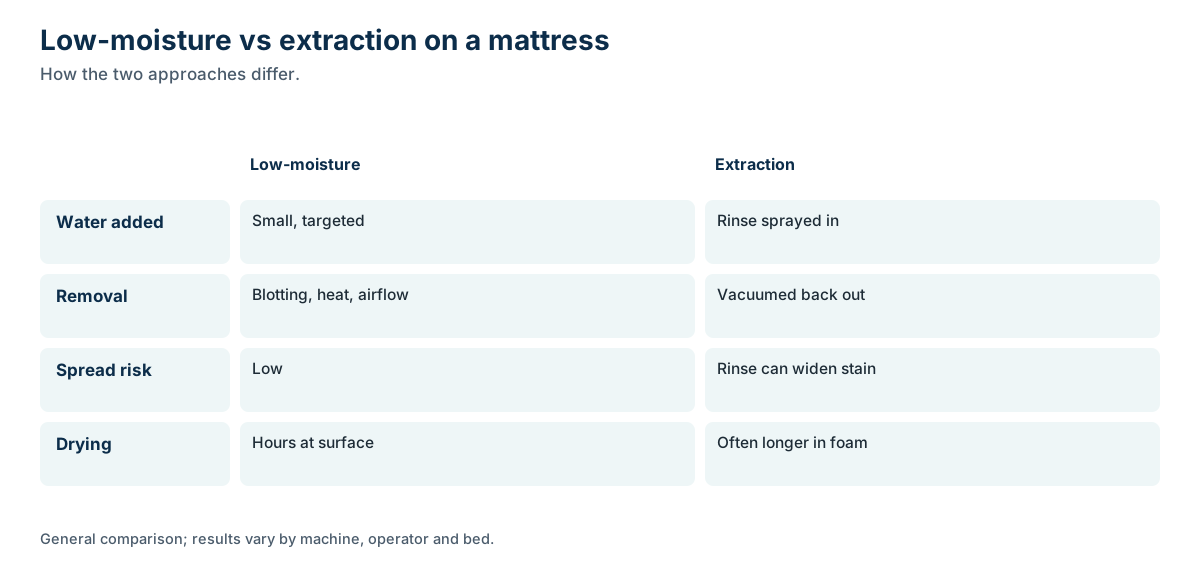
By treating in light, targeted rounds instead of one heavy rinse. A low-moisture approach maps the affected area, applies a small amount of enzyme product only there, gives it dwell time, and follows with dry-vapor heat and airflow. Extraction rinses with water and pulls it back, which can spread urine in a foam bed. Mattress makers' warnings about liquid are the reason the difference matters.
Key terms used on this page
- Low-moisture cleaning:
- A carpet-industry label for methods such as encapsulation, bonnet and dry-compound cleaning that use less water than extraction. It is not the same thing as dry-vapor steam, which is a heat-delivery method rather than a detergent method.
- Hot-water extraction (HWE):
- The carpet industry's most common professional method. The Carpet and Rug Institute defines an extractor as equipment that uses pressure, water or cleaning solution, and suction to remove soil. It is often marketed as 'steam cleaning' even though it sprays hot water rather than steam.
- Enzyme cleaner:
- A cleaning product that uses enzymes to break down organic soils such as urine, sweat, vomit or blood. Several mattress makers mention them for urine stains, including Purple and Avocado. They are liquids, so how much is applied matters as much as what is applied. Sleep Sanitation uses enzyme treatment on urine and organic odor, sparingly.
- Dwell time (enzyme products):
- How long a cleaning product stays on a surface before it is removed or dried. Enzyme products need dwell time to work, and the label sets it. Longer dwell does not mean more liquid: on a mattress we keep the amount small so the foam underneath doesn't soak.
- Moisture load:
- The total amount of water a cleaning process puts into a mattress, whether from spray, steam condensate, shampoo or rinse. It is the main thing that decides how long a mattress takes to dry.
- Drying window (EPA):
- The EPA's mold and moisture guide advises drying wet materials within 24 to 48 hours, and says that in most cases mold won't grow if you do. That is the public-health reason behind the drying instructions manufacturers give.
Ask two cleaning companies how they treat urine in a mattress and you may get opposite answers. One will rinse and extract, the way carpets are cleaned. The other will use as little liquid as possible. This page explains the second approach, the one we use, and why foam mattresses make the difference important.
Not affiliated with or endorsed by any manufacturer listed. Brand names are used only to identify products and their published care instructions.
Why "rinse it out" doesn't suit a mattress
On a carpet, rinsing is reasonable. The pile is shallow, there's a backing below, and an extractor can pull most of the water back out. A mattress is several inches of absorbent material with nowhere for water to drain.
Manufacturers write their care pages with that in mind. Casper's guide warns that its core foam soaks up water and detergent. Bear's help article lists, under things to avoid, "Using steam cleaners, as excess moisture may damage foam materials." Tempur-Pedic's care page: "TEMPUR® material should never become wet."
Dry vapor vs carpet extraction compares the two approaches in detail.
Step 1: map the affected area
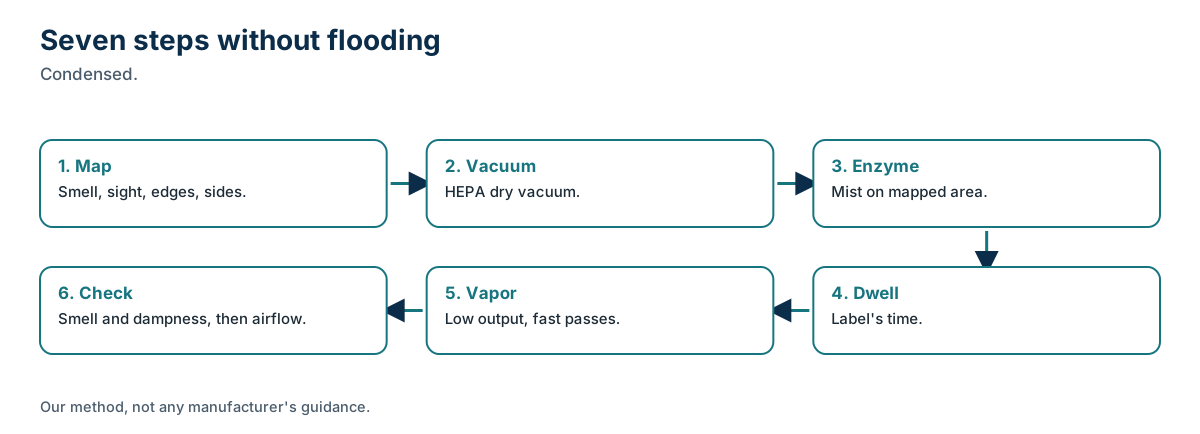
The first job isn't cleaning. It's finding out what got wet. We check:
- the visible stain and a wider circle around it, by smell;
- the cover fabric for rings and yellowing;
- the sides and border, where accidents near the edge run down;
- the cover's construction: whether it zips off, and what's under it.
The map sets the treatment area. Treating only the visible stain misses the edges; treating the whole bed adds liquid where it isn't needed.
Step 2: dry-vacuum
Hair, skin flakes and dust come off before any product goes on, so the treatment reaches the stain itself. A HEPA vacuum also keeps fine dust from going back into the room. HEPA vacuuming vs steam vs extraction explains where vacuuming fits.
Step 3: sparing enzyme treatment
This is where we pair enzyme treatment with the dry vapor that follows later. The product goes onto the mapped area alone, misted rather than poured, in the smallest amount that covers it. A deep stain gets two light rounds instead of one heavy one.
We don't name products, because the right one depends on the soil and on your mattress label. Organic cleaning methods are our default.
Step 4: dwell time
Enzymes need dwell time. We give the product the contact time its label calls for before doing anything else to that area. This is the part of the visit that looks like waiting. It's also the part that does much of the work on the urine itself.
Step 5: blot and lift
After dwell time we blot the area with clean, dry towels, pressing rather than rubbing. Anything that comes up into a towel is urine and product that won't need to dry inside the bed.
Step 6: dry-vapor passes
Next, low-moisture heat. We use Vapor Clean's Magnum XP, ProV 350 or Pro6 Duo. The maker says the Magnum XP produces vapor with "just 5-6% moisture"; that's Vapor Clean's claim, not our measurement. We set steam output and pass speed for the material, low and fast on foam and latex, and make several short passes with pauses rather than one long one. How much water this adds is covered in how much moisture dry vapor uses.
Step 7: airflow and checks
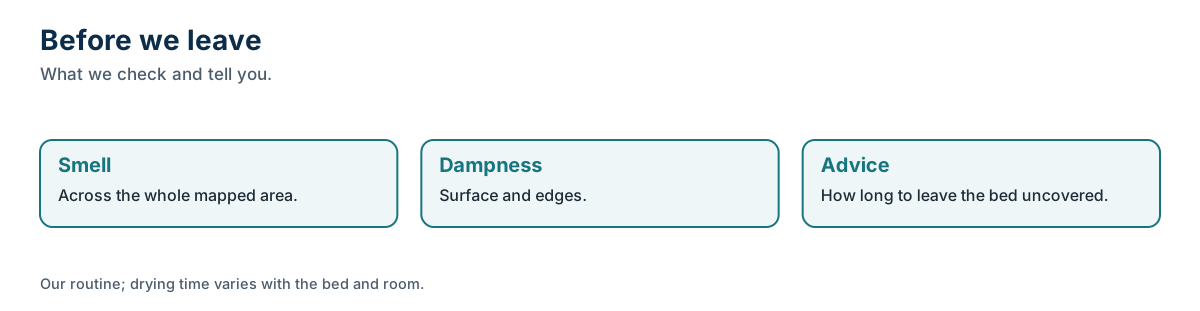
We move air across the surface, check the smell across the whole mapped area, and feel for dampness at the edges. If one zone still smells, it gets a second light round. Before we leave we tell you what we found, what we expect, and how long to leave the bed uncovered.
What we don't do
- Pour or spray cleaner until the foam is wet.
- Rinse and extract on a foam bed.
- Use fragrance to cover a smell. A cover-up smell fades, and the CRI bulletin warns the odor can return with humidity.
- Promise a result on a soaked core. A saturated core may not be fully recoverable.
Drying and the 48-hour window
The EPA's mold and moisture guide advises drying wet materials within 24 to 48 hours to prevent mold growth. Low-moisture treatment is built around that window: the less we add, the faster the bed gets back to dry. As field guidance from our own work, a surface that was only damp at the top is usually dry to the touch well before a soaked one. If you soaked the bed with water before we arrived, it'll take longer, and we'll tell you how much.
Clean, sanitize, disinfect
These words mean different things. The CDC defines them separately: cleaning removes dirt and germs, sanitizing lowers the number of germs on surfaces, and disinfecting kills germs, usually with a registered chemical used as labeled. Urine treatment is mainly cleaning, with odor as the goal. We make no disinfection claim, and the sanitize definition in Hub 2 explains how we use that word.
Price and booking
Ordinary urine and pet odor are covered by our standard price, and severe, biohazard or extensive contamination is quoted first. Booking is on the accident cleanup service page. None of this is a manufacturer exemption; check your warranty.
Why we don't treat the whole bed
It might seem thorough to treat the entire mattress after an accident. It isn't. Every square foot of treatment adds moisture, and the parts of the bed that never got wet don't need it. Mapping lets us put the enzyme product where the urine is and keep the rest of the bed dry. The rest of the surface gets dry vacuuming and, where you've booked a full cleaning, dry-vapor passes that add very little water.
What we ask before we arrive
- What happened, and roughly when.
- Whether anything was used on it already, and what.
- The make and model, if you know them, so we can check the care page.
- Whether the cover zips off.
- Whether there are pets or children who'll need to stay off the bed while it dries.
The answers shape the visit. A bed that's already been soaked with cleaner, for example, needs drying time before we add anything.
The manufacturer's label and our method
Some makers prohibit steam outright, and Tempur's wording is the most complete. Its UK care page says: "There is a high risk that soaking with water or other cleaning fluids will cause irreversible damage, destroying the benefits of comfort and support which the TEMPUR ® Material provides. It will also invalidate your guarantee. Do not steam-clean or dry-clean the TEMPUR ® Material." A booked professional visit is exactly when that warning should be on the table, which is why we show it to Tempur owners before the appointment rather than after, and why the technician asks to see the care label and any paperwork that came with the bed.
We do take Tempur-Pedic jobs. On those beds the technician works in quick, repeated low-moisture dry-vapor passes, keeping the head moving and the foam below dry. That choice rests on our own method and reasoning; it isn't a Tempur exemption, and we don't present it as a reading of Tempur's label. Your care label and warranty terms govern your own decision. Check your warranty, or contact Tempur-Pedic, before any steam or vapor cleaning. Our Tempur-Pedic guide collects every Tempur quote, and the memory foam page covers other foam makers.
The mattress urine and odor guide gives the background on why each step exists. Smell that outlasts the stain and enzyme and dry vapor together go deeper on steps 1 and 3.
How long the visit takes
Plan on a longer visit than a routine cleaning. Most of the extra time is dwell time and drying between rounds, not extra liquid. We'll give you a rough estimate when you book, based on what you tell us about the accident.
What we don't know
- How much moisture extraction leaves in any particular mattress. It varies by machine, operator and bed.
- How a given foam responds to a given enzyme product. Makers rarely publish this.
- Your warranty terms. Read them before any professional cleaning.
Changelog
- 2 October 2026: First published. Sources accessed on this date.
Sources
- How to clean your mattress: a mattress care guide (accessed 2026-10-02) · Casper
- Nectar Sleep FAQ (accessed 2026-10-02) · Nectar
- Product care (US, accessed 2026-10-02) · Tempur-Pedic
- Caring for your TEMPUR (UK, updated 11 July 2023, accessed 2026-10-02) · Tempur UK
- How do I clean a Bear mattress? (updated 6 May 2026, accessed 2026-10-02) · Bear
- Pet Urine and Carpet (technical bulletin, revised 27 July 2017, accessed 2026-10-02) · Carpet and Rug Institute
- A brief guide to mold, moisture and your home · US EPA
- Cleaning and disinfecting your school (definitions) · CDC
- Magnum XP-Vac product page (maker's claims, accessed 2026-10-02) · Vapor Clean
- ProV 350 product page ('Italian Made'; maker's claims, accessed 2026-10-02) · Vapor Clean
- Pro6 Duo product page ('Made in Italy'; maker's claims, accessed 2026-10-02) · Vapor Clean
Last reviewed October 2, 2026. Manufacturer specifications and care instructions change; check the current version for your exact model. This page is general information, not medical advice. How we source and check pages: editorial standards.