
Short answer
Clean it if the urine stayed in the cover or upper layers, the accident is recent, and there's no mold. Consider replacing it if the core was soaked, accidents repeated in one spot, odor comes from a wide area after proper treatment, or the bed was already near the end of its life. Saatva's guide says to replace a mattress that has an odor.
Key terms used on this page
- Saturated core:
- A mattress whose interior layers, not just the cover and quilting, were soaked by a large accident or several in one place. Surface treatment can't reach all of it. Some saturated cores improve with treatment and drying; some don't, and we say so before charging for work that won't help.
- Odor rebound:
- A urine smell that fades after cleaning and comes back later, often on humid days or when the bed is slept on again. The Carpet and Rug Institute notes that urine odor 'may reappear' in high humidity. It usually means residue remains deeper than the treatment reached.
- Wicking (urine migration):
- Liquid moving through and along fabric and foam by capillary action, so the affected area below the surface is often wider than the visible stain. Quilting, fiber batting and open-cell foam all wick. It is why a spot can look small and still smell from a wider area.
- Mattress protector:
- A removable cover that goes between the mattress and the sheets. Purple says protectors 'go between the mattress and sheets to keep dirt and other stains off your mattress.' Tempur-Pedic recommends its own protector over conventional pads.
- Warranty exclusion:
- A condition a manufacturer says its warranty does not cover. Purple, for example, says 'damage from the sun is excluded from warranty coverage,' and Tempur UK says soaking 'will also invalidate your guarantee.' Only the manufacturer can decide a claim.
- Care label:
- The care instructions sewn into a mattress, topper or cover. Tempur UK notes that 'A label stitched inside the cover will give you specific care instructions for the item you have purchased.' A care label outranks general web guidance.
After a bad accident, many people's first thought is that the mattress is ruined. Sometimes it is. Often it isn't. The decision comes down to a few questions you can mostly answer yourself, before anyone quotes a price.
Not affiliated with or endorsed by any manufacturer listed. Brand names are used only to identify products and their published care instructions.
The five questions
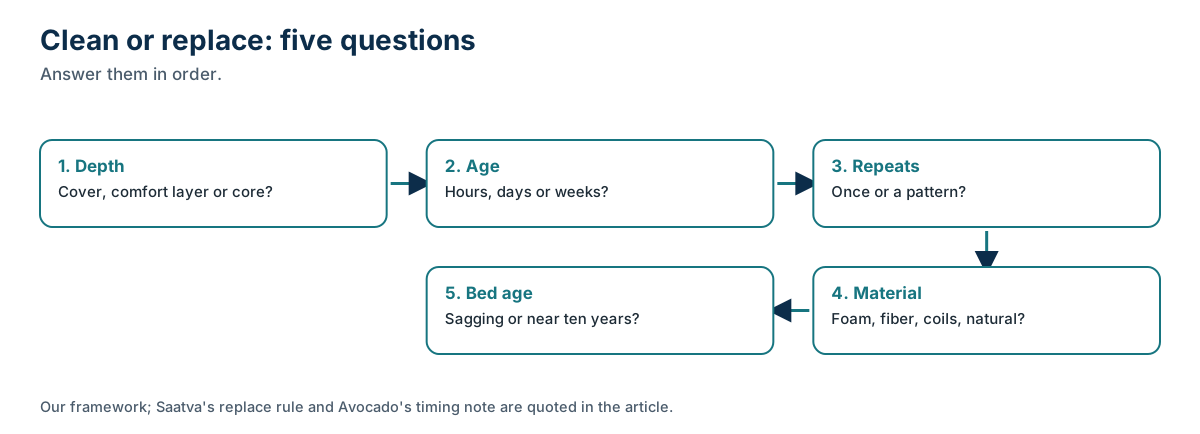
1. How deep did it go? This matters most. Urine that stayed in the cover and quilting is a cleaning job. Urine that went through the comfort layer into the support core is a different situation. Press a dry paper towel into the center of the stain: if it comes up wet after several minutes of blotting, the foam below is holding liquid.
2. How old is the stain? Fresh urine is easier. Avocado's help center puts it simply: "The longer the urine remains on a mattress, the harder the stain and odor will be to remove."
3. Is it one accident or many? One accident, even a big one, is often treatable. Repeated accidents in the same spot build up urine in the layers faster than any cleaning removes it.
4. What's the bed made of? Memory foam and thick pillow-tops hold liquid longer. Coils don't hold it, but the padding around them does. Our materials ranking and the innerspring page cover the differences.
5. How old is the mattress? Saatva's cleaning guide says: "Replace your mattress if it sags, has an odor, or is over 10 years old." That's a mattress seller's rule of thumb, broader than we'd apply to a single treatable accident. Still, a sagging, old bed is a poor candidate for any treatment.
When cleaning makes sense
- The accident is recent, or was blotted soon after.
- The urine stayed mostly in the cover and upper layers.
- It happened once, or rarely.
- The bed is in good shape otherwise.
- There's no mold or musty smell.
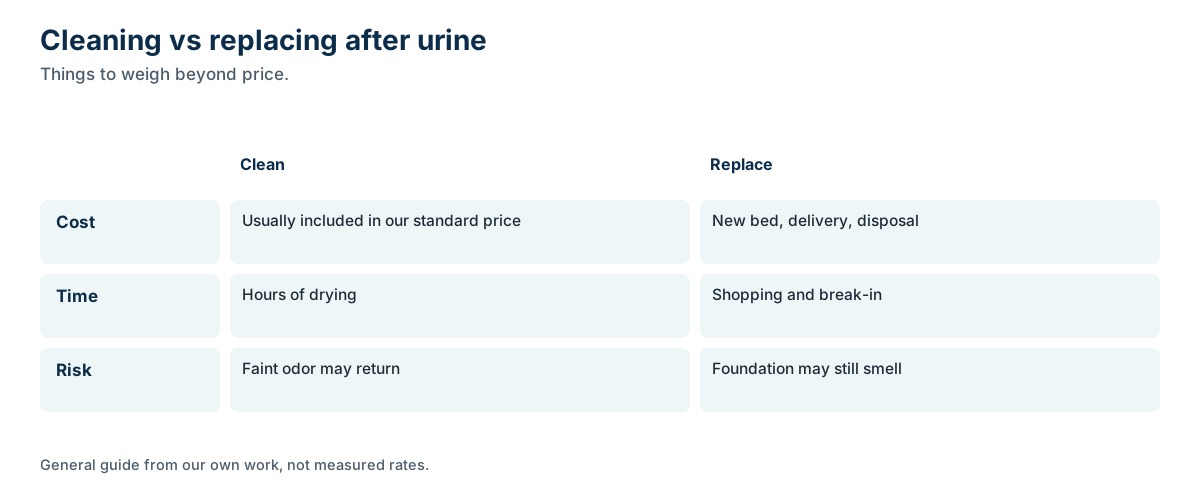
In that situation we'd expect to remove most or all of the smell. Ordinary accidents and pet odor are included in our standard price, which is worth weighing against the cost of a new mattress.
When replacement is the honest answer
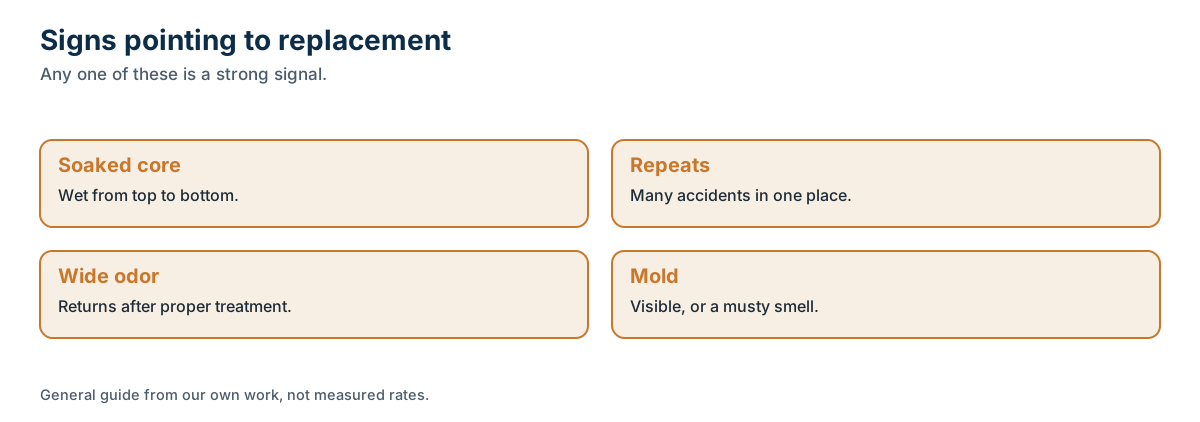
- The core was wet through, top to bottom.
- Accidents happened repeatedly in one area over weeks or months.
- The odor comes from a wide area and returns after proper treatment.
- There's visible mold, or a musty smell on top of the urine smell.
- The mattress was already sagging or near the end of its life.
We'll say so if we think your bed is in this group. A saturated core may not be fully recoverable, and we won't charge you to try something we don't expect to work.
On mold: the EPA's mold and moisture guide advises drying wet materials within 24 to 48 hours to prevent mold growth. A bed that stayed wet for days after an accident has missed that window, and mold changes the decision.
The in-between cases
Many beds land in the middle. The urine reached the comfort layer, the accident sat overnight, and the smell is noticeable but limited to one area. These usually improve a lot with treatment. A faint smell may return on humid days.
For these, we'd usually suggest treating once and judging the result after the bed has dried fully. If the smell returns strongly, that's useful information, and you haven't lost much by trying first.
What manufacturers' warranties say
This is the part we can't answer for you. Warranties are specific to brand and model. Some makers tie liquid to the warranty directly. Naturepedic's care page says: "Please note that any exposure to liquid may damage your mattress or topper and may void your warranty." Tempur-Pedic's care page says it can't promise its spill steps will fully remove a stain or odor.
Read your warranty before booking any cleaning, and check what it says about stains. Our Naturepedic and Tempur-Pedic pages quote those makers in full.
What our treatment involves
If you decide to clean, the visit centers on two things: a light enzyme application where the urine is, left for its dwell time, and low-moisture heat from a Magnum XP, ProV 350 or Pro6 Duo afterward. The foam isn't soaked to reach the bottom of a stain, and organic methods are our default. Enzyme treatment and dry vapor together explains the sequence.
The low-moisture part matters for the decision too. Heavy rinsing can spread urine wider than the accident itself. Why moisture matters and dry vapor vs carpet extraction explain why.
Severe, biohazard or extensive contamination gets a custom surcharge, quoted before any work starts. Booking details are on the accident cleanup service page.
We call that treatment cleaning. The CDC's terms for cleaning and sanitizing are summarized in Hub 2, and we hold our wording to them.
Protecting the next mattress
Whatever you decide, a waterproof protector is cheap insurance. Choose one that covers the top and sides, wash it as the label directs, and keep a second one so the bed is never bare while one dries. For a child still night-training or an older pet, a washable pad on top adds a second layer.
A worked example
Here's how the questions play out on a real kind of job, without names or numbers we can't back up.
A family calls about a queen hybrid, about five years old, after a child's accident two nights ago. They blotted it with towels in the morning. The smell is noticeable but limited to one area, and there's no history of accidents on this bed.
Against the five questions: depth is probably the comfort layer, not the core; the stain is two days old; it's one accident; hybrids have foam over coils; and the bed has years left. That's a clear cleaning case. We'd expect a large drop in odor, possibly a faint return on a humid night, and no reason to replace it.
Change one fact: the same bed, but it's the fourth accident in a month in the same spot, and the smell fills the room. Now we'd talk about replacement honestly before you spend anything.
Costs beyond the price tag
Replacing a mattress means delivery, disposal and a break-in period. Cleaning means some drying time. Neither choice is free, and neither is always right.
Don't forget what's under it
Before deciding, lift the mattress and smell the foundation or box spring. If urine went through the bottom of the mattress, the foundation is part of the decision too. Replacing only the mattress on a contaminated foundation can bring the smell straight back. Our hybrid compatibility page describes the layers that sit between coils and cover.
The urine and odor guide explains our three groups in full. Two companion articles go deeper: does urine mean you have to replace your mattress and what happens when urine soaks in.
Ask for an honest assessment
If you're unsure, ask for an assessment before treatment. A good cleaner will tell you which group your bed falls into and what to expect, and won't push a treatment that probably won't work.
What we don't know
- What your warranty says about urine. Read it.
- How deep the urine went in your bed until we've checked.
- How many beds in the "in-between" group fully recover. No one publishes reliable numbers, and we don't make them up.
Changelog
- 2 October 2026: First published. Sources accessed on this date.
Sources
- How to Clean Your Mattress in 5 Simple Steps (blog, accessed 2026-10-02) · Saatva
- Product Care (accessed 2026-10-02) · Naturepedic
- Product care (US, accessed 2026-10-02) · Tempur-Pedic
- How to Clean Your Natural Mattress Without Using Harsh Chemicals (25 June 2026, accessed 2026-10-02) · Avocado
- Pet Urine and Carpet (technical bulletin, revised 27 July 2017, accessed 2026-10-02) · Carpet and Rug Institute
- A brief guide to mold, moisture and your home · US EPA
- Magnum XP-Vac product page (maker's claims, accessed 2026-10-02) · Vapor Clean
- ProV 350 product page ('Italian Made'; maker's claims, accessed 2026-10-02) · Vapor Clean
- Pro6 Duo product page ('Made in Italy'; maker's claims, accessed 2026-10-02) · Vapor Clean
Last reviewed October 2, 2026. Manufacturer specifications and care instructions change; check the current version for your exact model. This page is general information, not medical advice. How we source and check pages: editorial standards.