
Short answer
Not completely. Dry-vapor steam carries much less liquid water than sprayed hot water or wet steam, but it still leaves some water on the surface, because steam heats things by condensing on them. The 'about 5% moisture' figure that makers quote describes the steam leaving the machine, not how damp the mattress gets. 'Low-moisture' is the more accurate description.
Key terms used on this page
- Steam quality (dryness fraction):
- The share of a steam mixture's mass that is vapor rather than suspended water droplets. Steam with a quality of 0.95 is 95% vapor and 5% liquid water by mass. This is the engineering idea behind the '5% moisture' claims in vapor-steam marketing.
- Wet steam:
- Steam that carries a noticeable amount of liquid water droplets, often from a cooling hose, spitting nozzle or condensate that wasn't purged. Wet steam puts more water on a surface and carries less heat per kilogram.
- Latent heat (condensation):
- The energy steam releases when it condenses back into water, about 2,257 kJ per kilogram at atmospheric pressure and somewhat less at higher boiler pressures (about 2,048 kJ/kg at 7 bar gauge). It is why steam heats a surface quickly, and why steam that heats a surface always leaves some condensed water behind.
- Dry-vapor steam:
- Steam made in a sealed, pressurized boiler and released through a hose and nozzle as hot vapor with a low liquid-water content. In the vendor specifications we reviewed, professional units are rated from 80 psi (Ladybug 2350) to 150 psi (Daimer), with stated boiler temperatures from about 345°F (Optima) to 360°F (Daimer); these are maker claims. Daimer describes its steam as about 5% water or less and Vapor Clean claims 'just 5-6% moisture'; that is a vendor claim, not an independent standard.
- Moisture load:
- The total amount of water a cleaning process puts into a mattress, whether from spray, steam condensate, shampoo or rinse. It is the main thing that decides how long a mattress takes to dry.
- Dry to the touch vs dry through:
- Dry to the touch means the surface fabric feels dry. Dry through means the moisture inside the comfort layers has also left. A mattress can feel dry on top while still holding water underneath.
No, not completely. Dry-vapor steam carries much less liquid water than sprayed hot water or wet steam, but it isn't water-free, and it can't be. Steam delivers heat by condensing on a cooler surface, so every pass leaves some water on the fabric. The "about 5% moisture" figure equipment makers quote describes the steam as it leaves the machine, not how damp the mattress ends up. "Low-moisture" is a more accurate description than "dry."
That might sound like a technicality, but it's the root of a lot of confusion in mattress cleaning marketing. Here we trace the 5% figure to its engineering source, show who publishes it, and explain what actually decides how much water a mattress takes on. The Cleaning Methods hub defines steam quality and wet steam, and the flagship comparison puts steam's moisture next to the other methods.
What "dry" refers to: steam quality
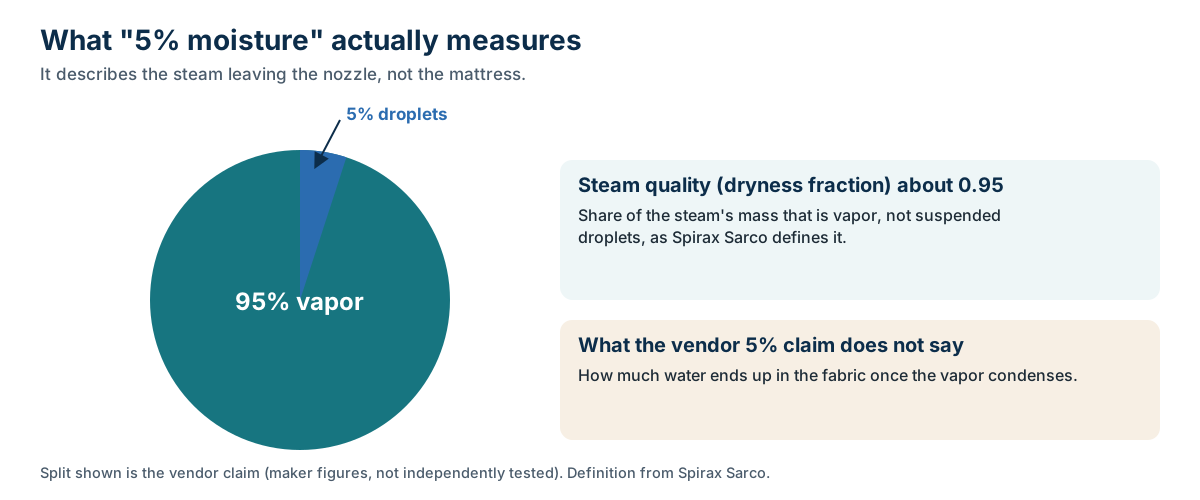
In engineering, steam is described by its steam quality, also called the dryness fraction. It's the share of a steam mixture's mass that is vapor rather than tiny suspended water droplets. Spirax Sarco, a steam-systems engineering firm, gives the standard example: steam with a dryness fraction of 0.95 is 95% vapor and 5% liquid water by mass. Steam with a dryness fraction of 1.0 is called dry saturated steam.
So when an equipment seller says its vapor is "5% moisture," it is describing steam quality, roughly 0.95. It is saying that, of the steam leaving the nozzle, about 5% by mass is already liquid droplets.
Where the 5% claim comes from
The figure appears across the dry-vapor industry:
| Who | What they claim | Source |
|---|---|---|
| Daimer | Dry vapor steam that contains "as little as 5% water" | Daimer steam cleaner FAQ |
| Vapor Clean | "Just 5-6% moisture" | Vapor Clean Magnum XP (with vac) product page |
| Advanced Vapor Technologies (Ladybug) | Only 5% of what comes out of the nozzle is moisture, with some other machines as high as 45% | Company claims as reported by Green Lodging News |
These are vendor claims. We have not found independent laboratory measurements of steam quality at the nozzle for these products, and we have not found a regulation or standard that defines "dry vapor" for cleaning equipment. It is reasonable that a high-pressure, well-insulated system produces relatively dry steam. It is not established that any specific machine delivers exactly 5%.
Why condensation means the surface always gets some water
The 5% figure only counts water that's already liquid in the steam. The other 95% is vapor, and vapor doesn't stay vapor when it hits something cooler than itself. It condenses.
That's not a flaw; it's the whole point. Steam carries most of its energy as latent heat, about 2,257 kJ per kilogram at atmospheric pressure according to steam tables, and it releases that energy only by condensing. A steam tool that left no water on the surface would also deliver almost no heat.
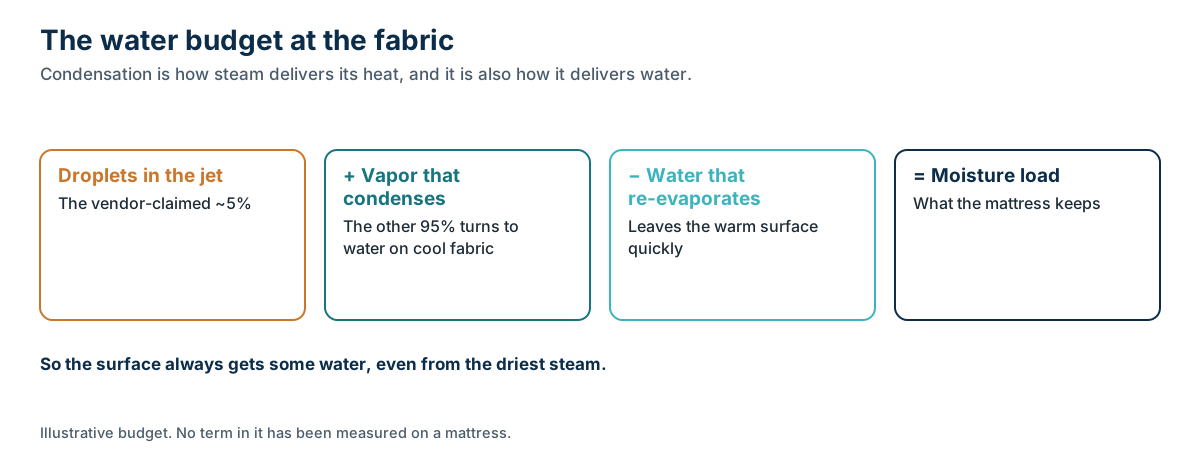
So the water that ends up on a mattress after a steam pass is:
- the liquid droplets already in the steam (the part the 5% claim describes), plus
- the vapor that condensed on the fabric while heating it, minus
- whatever evaporates again from the warm surface before it soaks in.
The second item is usually the bigger one, and no spec sheet reports it. That's why "dry steam" and "dry mattress" are different statements. The total that stays is the moisture load, and it's what decides drying time.
What makes steam wetter
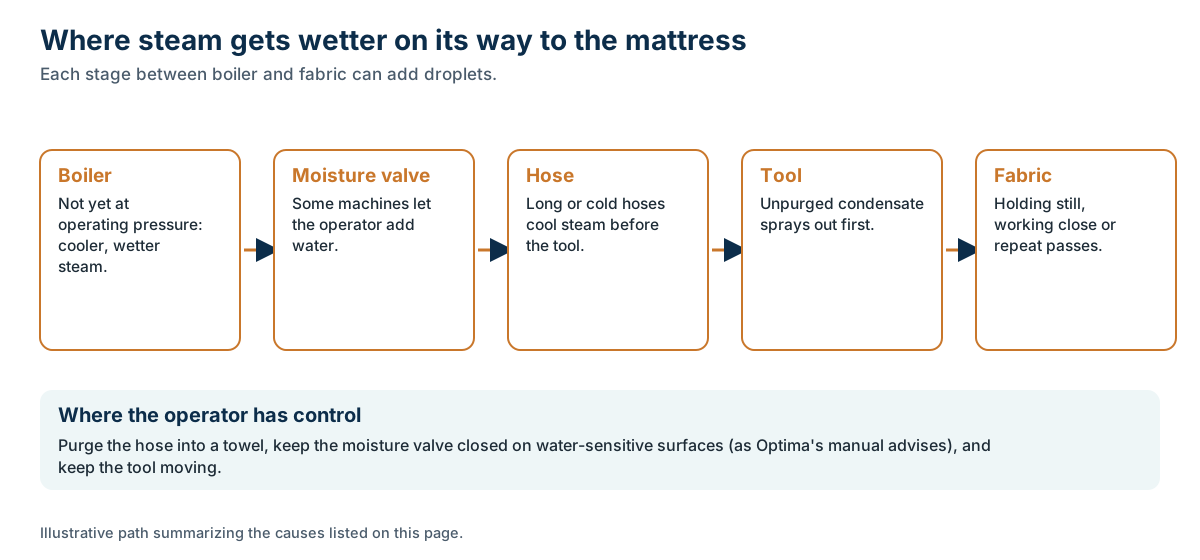
Wet steam carries more droplets and less heat. Common causes:
- Hose cooling. Steam loses heat along a long or cold hose and starts to condense before it reaches the tool.
- Unpurged condensate. Water that collected in the hose while the tool was idle sprays out on the next trigger pull. Operators usually purge it into a towel first.
- Low pressure or temperature. A boiler that hasn't reached its operating pressure, or a machine that runs at low pressure, makes cooler, wetter steam.
- Moisture settings. Some commercial machines let the operator add water. Optima's user manual describes a moisture control valve and tells users to keep it fully closed on water-sensitive surfaces to minimize surface moisture.
- Technique. Holding the nozzle still, working too close, or making many passes over the same area all increase how much condenses on the fabric.
Dry vs low-moisture vs wet, side by side
| Dry-vapor steam (well run) | Wet steam (garment steamer, poorly run machine) | Hot-water extraction | |
|---|---|---|---|
| What leaves the tool | Mostly vapor, with a small share of droplets (vendor-claimed about 5%) | Vapor plus a larger share of droplets | Liquid water and cleaning solution |
| How heat is delivered | Condensation on the fabric | Condensation plus hot droplets | Hot liquid |
| Where the water goes | Condensate on and near the surface | Surface and deeper, with droplets soaking in | Into the fabric; most is vacuumed back |
| Typical description | Low-moisture | Damp to wet | Wet, then extracted |
How to tell whether a treatment was really low-moisture
You can't see steam quality, but you can check the results. These are practical signs, not lab tests:
- Right after a pass, the fabric may feel warm and faintly damp, like a towel fresh from the dryer that has cooled for a minute. It should not feel cold and wet, and it should not leave water on your palm when you press down.
- Press firmly into the surface. Moisture that has travelled into the comfort layers often shows up as a cool, damp feeling under pressure even when the top feels dry.
- Look for water marks. Rings or tide lines as the mattress dries usually mean more water reached the fabric than was intended, and dissolved soil travelled with it as it evaporated (the effect called wicking).
- Notice the smell. A musty smell a day or two later is a warning that moisture stayed too long.
If you have any of these concerns after a cleaning, from any company, increase airflow with a fan, lower the room's humidity if you can, and keep bedding off until the mattress is dry through. The drying-time article covers what to expect.
What this means for a mattress
For a mattress, the honest phrase is low-moisture. A well-run dry-vapor process should leave the surface feeling at most slightly damp and warm, not soaked, and should keep water near the ticking rather than in the comfort layers. A mattress that is dry to the touch is a good sign but not proof that the layers underneath are dry.
That matters because the EPA's mold guidance says wet materials should be dried within 24 to 48 hours to prevent mold in most cases. Low moisture is how you stay well inside that window. The article on why moisture matters when cleaning a mattress covers this in more depth, and how much moisture does dry-vapor steam use? looks at the numbers that are actually published.
At Sleep Sanitation we describe our method as low-moisture dry vapor steam, not "dry," for exactly this reason. Our process page shows how passes and airflow are managed, and Omaha and Lincoln visits can be booked online.
What we don't know
- Independent steam-quality data. We have not found third-party tests that verify any vendor's "5% moisture" claim.
- Condensate on mattresses. We have not found published measurements of how much water condenses on mattress ticking during a dry-vapor pass.
- A definition. We have not found a regulation or industry standard that defines "dry steam" for cleaning equipment.
Sources
- What is steam? (steam tables and dryness fraction) · Spirax Sarco
- Saturated steam properties · Engineering ToolBox
- Steam cleaner FAQ · Daimer Industries
- Magnum XP (with vac) product page · Vapor Clean
- More on steam cleaning, this time with TANC technology · Green Lodging News
- Optima Steamer XDm/XEm user manual · SJE Corp / Optima Steamer
- A brief guide to mold, moisture and your home · US EPA
Last reviewed October 2, 2026. Manufacturer specifications and care instructions change; check the current version for your exact model. This page is general information, not medical advice. How we source and check pages: editorial standards.