
Short answer
Because hot water delivers heat and moisture together, deep in the mattress, and the moisture outlasts the heat. Water carries heat down through the layers as it soaks in, so foam, wool and glue lines meet warmth and wetness at once. The heat fades; the water doesn't. Dry heat from vapor mostly stays near the surface and leaves little water behind, so materials see heat briefly and moisture barely.
Key terms used on this page
- Ester hydrolysis:
- Splitting of ester bonds by water. A 2016 study of a polyester polyurethane film aged at 70 °C and controlled humidity ties its structural changes to hydrolysis of ester links, and cites earlier work naming ester hydrolysis as the main cause of molecular weight loss.
- Heat capacity:
- How much heat an object takes in or gives off per degree of temperature change. In OpenStax's explanation, a larger pan of the same metal has a proportionally larger heat capacity, because the amount of material counts as well as its type.
- Latent heat (condensation):
- The energy steam releases when it condenses back into water, about 2,257 kJ per kilogram at atmospheric pressure and somewhat less at higher boiler pressures (about 2,048 kJ/kg at 7 bar gauge). It is why steam heats a surface quickly, and why steam that heats a surface always leaves some condensed water behind.
- Heat softening:
- The temporary softening of viscoelastic foam as it warms. The PFA says heat, even body heat, can soften viscoelastic materials and, in extreme situations, affect the foam's ability to provide support. It gives an optimum range for memory action of 55°F to 85°F.
- Humid heat aging:
- Lasting change in foam after long exposure to heat and moisture together. Lapčík and colleagues held soft polyurethane foam bought at a hobby market at 45 or 80°C, at two humidity levels up to 80 percent, for up to 300 hours, and tied rising humidity to stiffness loss and more permanent deformation.
- Felting shrinkage:
- Irreversible shrinkage when wool fibers mat together under mechanical action in water. Woolwise says it keeps progressing with washing time until the fabric reaches a limiting density.
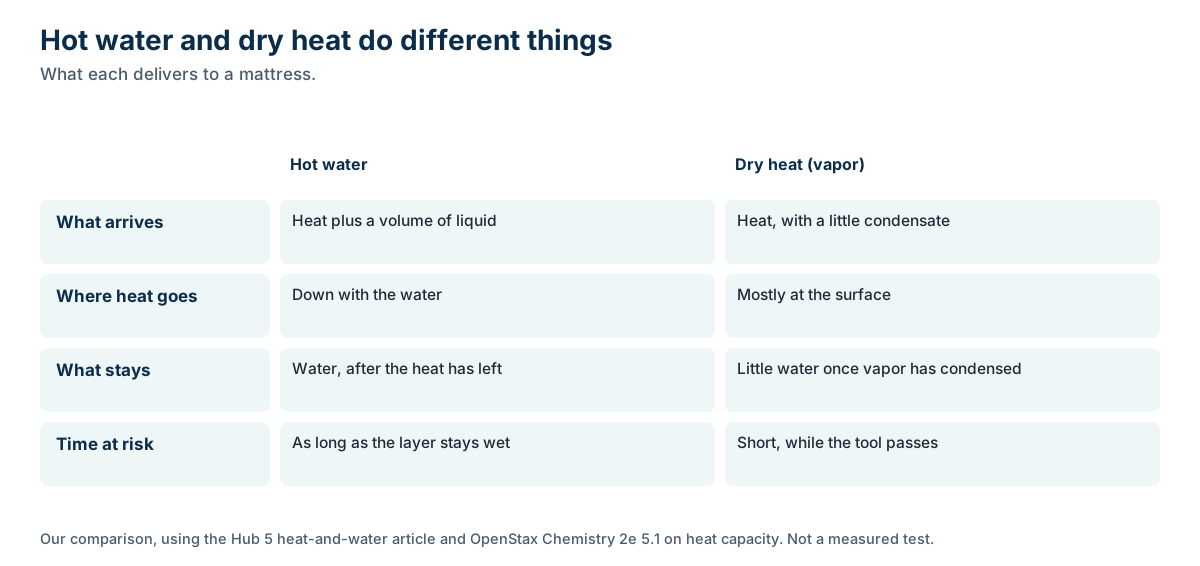
Hot water is harder on a mattress than dry heat because it delivers heat and moisture together, deep in the bed, and the moisture outlasts the heat. As it soaks in, water carries warmth down through the layers, so foam, wool and glue lines meet heat and wetness at once. The heat fades; the water stays. Dry heat from vapor mostly stays near the surface and leaves little water, so materials see heat briefly and moisture barely.
General information about mattress cleaning methods, not medical advice.
Isn't this the same as heat versus water?
No. Hub 5 already compares the two stresses on their own in heat versus water: which is harder on mattress materials, and we don't repeat it here. This article is about what happens when a method delivers both together, below the surface, in a mattress that can't drain. The pairing is the point.
How does hot water carry heat into a mattress?
By soaking in. Water holds a lot of heat for its mass. OpenStax's chemistry text says "Water has a relatively high specific heat (about 4.2 J/g °C for the liquid and 2.09 J/g °C for the solid); most metals have much lower specific heats," in its section on energy basics. Its table lists water vapor's specific heat at 1.864 J/g °C, less than half the liquid's.
Heat carried by liquid goes wherever the liquid goes. When hot solution passes the ticking and spreads by capillary action and gravity, as described in where water goes, it warms every layer it reaches. A 1977 carpet patent heats its solution "to at least between about 40° C. and about 60° C." On carpet, that heat stays in a thin pile. In a mattress, it travels into the comfort foam.
How does dry heat differ?
It arrives as vapor and gives up most of its heat by condensing at the surface it touches. Hub 1 explains this as latent heat, the energy released when steam turns back into water. The condensate is a small amount of liquid at the surface, not a volume of solution pushed into the layers. Heat delivered this way is concentrated where the tool passes and fades as the tool moves on.
That doesn't make vapor harmless; heat has limits, and Hub 5 covers what temperature mattress foam tolerates. The difference is exposure. With vapor, materials see a short burst of heat near the top. With hot water, deeper materials see warmth and then wetness that lingers long after the warmth is gone.
What does heat plus humidity do to polyurethane?
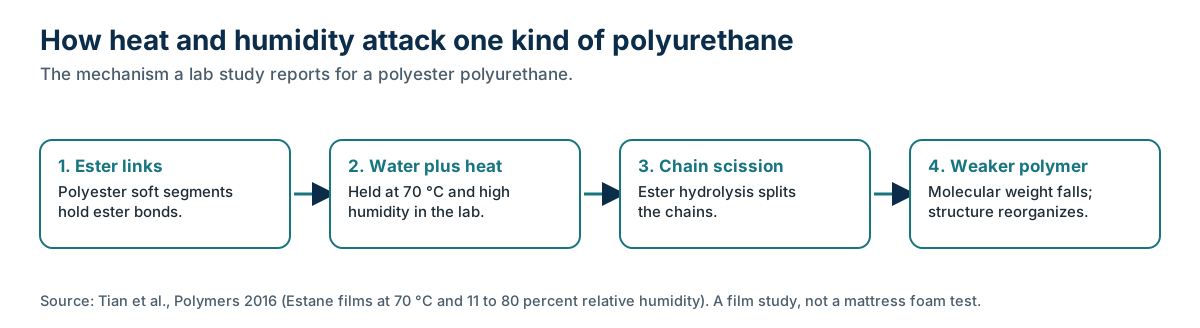
For one kind, it can break the polymer chains. Tian and colleagues held films of a polyester polyurethane at 70 °C and 11, 45 and 80 percent relative humidity for one and two months (Polymers, 2016). They found "a progressive shortening of polyurethane chains with increasing humidity and aging time," and tied it to "hydrolysis of ester links." They cite earlier work that "ester hydrolysis is the dominant mechanism of the molecular weight loss" in that material under heat and humidity.
We're careful with this. The study used thin films of one engineering polymer, held for far longer than any cleaning lasts, and mattress foams differ in chemistry from that film. What the study shows is the mechanism: water and heat together attack ester bonds in a way neither does as effectively alone. Hub 5 defines humid heat aging for the foam side of the same idea.
What does it do to memory foam?
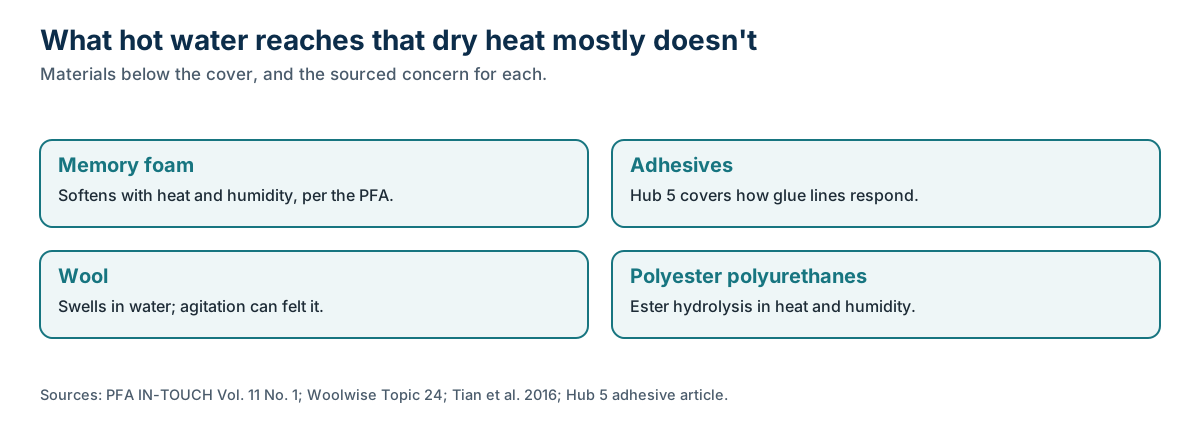
It softens it, temporarily. The Polyurethane Foam Association's viscoelastic foam bulletin notes that many such products "react to body temperature and ambient temperatures, softening with heat," and adds: "Similar to temperature effects, viscoelastic foams also react to humidity. Viscoelastic products tend to soften in more humid conditions." Hub 8's materials article explains why memory foam softens with body heat.
Hot water adds heat and humidity at the same time, inside the foam. A softened, wet layer then bears a sleeper's weight if the bed is used before it dries. We found no study measuring what that does to mattress foam over time, so we flag it as a concern, not a finding. Hub 1 covers the wet side in what happens when water penetrates memory foam.
What does it do to wool?
It sets up the conditions for felting. Woolwise course notes on wool fabric finishing say "When untreated wool in any form is treated in water with soap/detergent it will swell and consolidate. If, however, some mechanical action is applied, particularly in an acid medium, the fibres can mat together," a process the notes call felting shrinkage.
Hot solution, detergent and a scrubbing or pressing tool supply water, detergent and mechanical action at once. From the outside, there's no easy way to tell whether a mattress's wool was shrink-resist treated. Hub 8 explains the fiber science in wool in mattresses: protein fiber and felting, and Hub 2 covers wool cleaning compatibility.
What about adhesives?
Glue lines bond foam layers, and Hub 5 covers how heat and moisture affect them in can dry vapor steam affect mattress adhesives. We don't repeat that here. The relevant point for this article is depth: surface heat from a passing tool reaches the top glue line briefly, while hot water can soak to lower glue lines and then leave them damp.
Why does the water outlast the heat?
Because heat moves out of a thin, warm layer faster than water can leave a thick, wet one. Hot water starts cooling the moment it leaves the wand, losing heat to the mattress, the air and the cooler layers below. The water itself has to diffuse and evaporate out through foam and ticking, which is slow, as why premium mattresses can mold after a soak explains. The 1968 carpet patent added a heated nozzle precisely to help carpet dry after vacuuming.
So the sequence is: a brief period of heat plus wetness, then a long period of wetness alone. The heat raised the stakes for polymers and wool while it lasted. The water that remains sets up the odor and mold problems later in this hub.
Sleep Sanitation's view
This section is our view. Heat we can see, at the cover, is heat we can control; heat that travels down with water is not. So our approach pairs short vapor passes with organic methods and skips hot-water extraction entirely. We're describing our own judgment, not a manufacturer exemption. Care labels and warranty terms take priority, and checking your warranty terms before you book is worth five minutes. Our use of "sanitize" matches CDC terminology; there's no disinfection claim. Afterward, give the mattress air until it feels dry to the touch. How a visit runs is on the process page, and the wider argument is in the hub on mattress cleaning done wrong.
What we don't know
- Whether one hot-water cleaning measurably degrades common polyether mattress foams. The hydrolysis study we cite used a polyester polyurethane film over months.
- How warm the deeper layers get during hot-water extraction of a mattress. We found no temperature profile.
- How wool batting in mattresses responds to a single hot, wet cleaning. We found no test on finished mattresses.
Changelog
- 6 October 2026: First published. Sources accessed on this date.
Sources
- Chemistry 2e, 5.1 Energy Basics · OpenStax (Rice University)
- Microstructure Changes in Polyester Polyurethane upon Thermal and Humid Aging (Tian et al., Polymers, 2016) · PubMed Central
- IN-TOUCH Vol. 11 No. 1: Viscoelastic (memory) foam (revised 2016) · Polyurethane Foam Association
- Wool 482/582, Topic 24: Principles of Wool Fabric Finishing (Pailthorpe) · Australian Wool Education Trust, Woolwise
- US Patent 4,154,578: Method and apparatus for cleaning a carpet on location (filed 1977) · Google Patents (USPTO record)
- US Patent 3,617,205: Method for cleaning carpets and like materials (filed 1968) · Google Patents (USPTO record)
Last reviewed October 6, 2026. Manufacturer specifications and care instructions change; check the current version for your exact model. This page is general information, not medical advice. How we source and check pages: editorial standards.