
Short answer
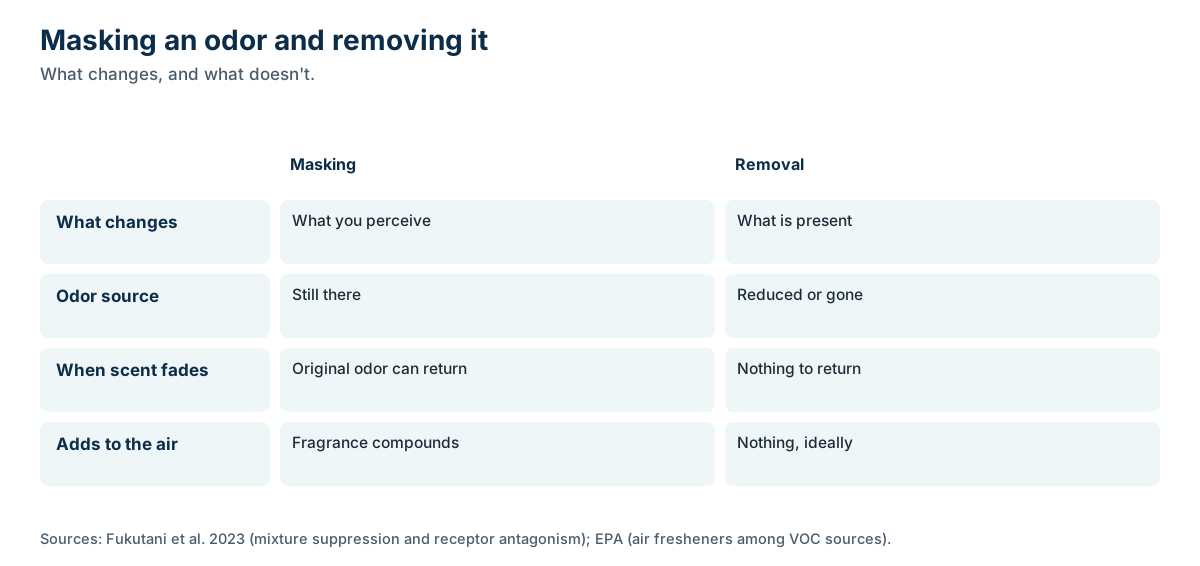
Masking changes what you perceive; removal changes what's present. Olfaction research shows one odorant can weaken another, both by mixture suppression and by blocking the receptors that detect it. The malodor molecules are still in the fabric. When the fragrance fades, or humidity brings the source forward, the original odor can return. Fragrance also adds volatile compounds to the room.
Key terms used on this page
- Mixture suppression:
- When an odor mixture smells less intense than its parts added together. Fukutani and colleagues call it a commonly observed phenomenon and the basis of much odor masking.
- Odorant receptor antagonism:
- One odorant blocking the nose's receptors for another. Fukutani's group showed β-ionone reduced the intensity and unpleasantness of methanethiol, a sulfur malodor, by acting at receptor level.
- Odor masking:
- Covering a smell with fragrance instead of removing its source. The Carpet and Rug Institute warns that some odor products may simply mask the odor, which can reappear in high humidity.
- Odor rebound:
- A urine smell that fades after cleaning and comes back later, often on humid days or when the bed is slept on again. The Carpet and Rug Institute notes that urine odor 'may reappear' in high humidity. It usually means residue remains deeper than the treatment reached.
- Damp-laundry malodor (4M3H):
- A sour, sweaty smell in laundry hung to dry indoors. Kubota and colleagues identified 4-methyl-3-hexenoic acid as its major component and Moraxella osloensis as the main bacterium able to make it.
- Volatile organic compounds (VOCs):
- Chemicals emitted as gases from certain solids or liquids. The EPA lists furnishings among sources and says many VOCs are consistently higher indoors than outdoors.
Masking changes what you perceive; removal changes what's present. Olfaction research shows one odorant can weaken another, both by mixture suppression and by blocking the receptors that detect it. The malodor molecules are still in the fabric. When the fragrance fades, or humidity brings the source forward, the original odor can return. Fragrance also adds volatile compounds to the room's air.
General information about mattress cleaning methods, not medical advice.
Hasn't Hub 3 defined masking already?
Yes, briefly. Hub 3's glossary defines odor masking as covering a smell with fragrance instead of removing its source, and its article on why urine odor comes back after a mattress dries explains rebound for urine. This article explains how masking works in the nose, using olfaction research, and why it fits so neatly with wet cleaning methods that leave moisture behind.
How does one odor hide another?
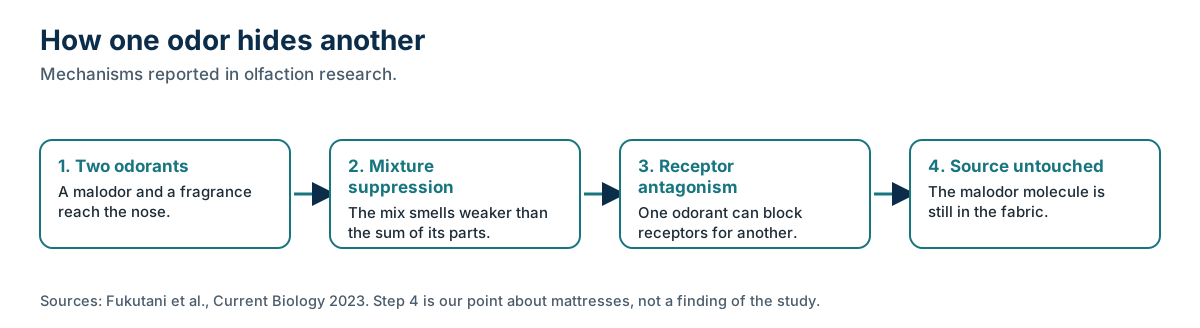
Two mechanisms are documented. Fukutani and colleagues, writing in Current Biology (2023), describe the first: "Mixture suppression, which occurs when the intensity of an odor is less than a linear sum of component odorants, is commonly observed phenomenon." Earlier studies suggested that processing in the brain plays a role.
The second is at the nose itself. The authors explain that each odorant receptor "is activated by specific odorous ligands, and like other GPCRs, antagonism can block activation of ORs." They screened for odorants that block the receptors responding to two sulfur malodors and found several, including β-ionone, a fragrance compound. In human tests, they report that β-ionone "effectively reduced malodor intensity and unpleasantness."
What does that mean for a mattress?
That a fragrance can genuinely make a bed smell better while leaving its contents unchanged. In the study, the malodor gas was still present; the receptors simply responded less to it. The same principle applies to a scented product sprayed on ticking. The perceived smell improves. The soil, residue or microbial byproducts producing the original odor are still in the fabric and foam.
That's not a criticism of fragrance as such. People like pleasant smells, and the research is about perception, not deception. The issue is what a pleasant smell tells you. It tells you what your nose perceives at that moment, not what's in the layers below.
Why can the original odor come back?
Because the source outlasts the cover. Fragrance compounds are volatile by design, so they evaporate and fade. The malodor's source sits in the mattress and keeps producing, or keeps releasing, its own compounds. When the fragrance has faded enough, the balance in the nose shifts back. Hub 3 calls this odor rebound.
Moisture makes it worse. Hub 3's definition of masking notes that a masked odor can reappear in high humidity. Water left by wet cleaning is exactly the condition that can bring odor forward, which is why a wet-cleaned mattress can smell worse later. Masking and leftover moisture can combine: a pleasant smell at the end of the visit, then a stronger, sour one days later.
What kinds of odors are being masked?
Several, with different sources. In laundry, Kubota and colleagues (Applied and Environmental Microbiology, 2012) traced a "wet-and-dirty-dustcloth-like malodor" to a bacterium producing 4-methyl-3-hexenoic acid. WHO's dampness and mould guidelines treat moldy odor as a sign of damp conditions. Urine produces its own set, explained in Hub 3. Each has a source that fragrance doesn't touch.
Van Herreweghen and colleagues, reviewing textile malodour (Microorganisms, 2020), note that during laundering "fragrances and enzymes and other ingredients from the detergent/softener attach to the clothing." Fabric holds onto fragrance as well as soil. In a mattress, that means scent and source sit side by side in the same fibers. Hub 6 helps you work out whether an odor is in the cover or the foam.
Does fragrance add anything to the air?
Yes: volatile compounds. The EPA's page on VOCs and indoor air lists "moth repellents and air fresheners" among household sources and says VOCs "include a variety of chemicals, some of which may have short- and long-term adverse health effects." It also notes concentrations of many VOCs are consistently higher indoors than outdoors.
We make no claim about any particular product, and we aren't saying fragrance is harmful. The point is narrow. A scent added to a mattress is something added to the air you breathe at night, and it doesn't remove anything. Hub 8 covers the separate topic of off-gassing from mattress foam.
What does removal look like instead?
It targets the source. For urine, Hub 3 explains how an enzyme cleaner breaks down the compounds that cause the smell, and why dwell time matters. For body soil, the job is lifting what's at the surface without pushing more water in. For moisture-driven odor, the job is drying, because WHO's guidelines tie microbial growth indoors to sufficient moisture being available. None of these is instant, and none of them works by adding a stronger smell.
Removal also has limits that masking hides. Odor that's soaked into the core of a mattress may be out of reach of any surface method, and Hub 6 explains how to tell cover odor from core odor. An honest answer sometimes includes this may not fully come out. A masked result can look better on the day and turn out worse a week later, which is why the test below relies on time.
How can you tell masking from removal?
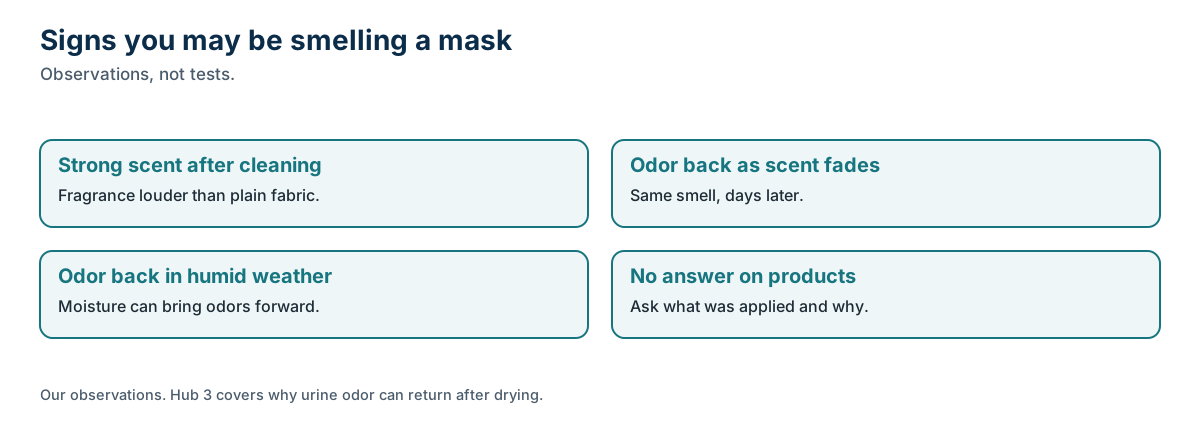
Time and humidity are the test. Notice how strong the scent is right after cleaning compared with plain fabric. Notice whether the original smell returns as the scent fades over the following days, or after a humid stretch or a spill. And ask what was applied and what it's meant to do to the odor source, not just how it smells.
These questions are part of the method questions in this hub. If you used a scented product yourself, the DIY mistakes article covers what home methods tend to do.
Sleep Sanitation's view
This section is our view. No fragrance finish goes on a mattress we clean; we want you to judge the result by what the bed smells like on its own. Where urine or organic odor is the source, enzyme work targets it, and vapor handles the rest. We can't promise every odor will lift, and saying so is part of the point. Our approach is our reasoning, not a manufacturer exemption: the care label and warranty terms govern, so check your warranty terms before you book. "Sanitize" follows the CDC's usage, and there's no disinfection claim. The visit itself is laid out on our process page. Back to the hub on mattress cleaning done wrong.
What we don't know
- How common fragrance finishing is in mattress cleaning. We found no survey.
- How long typical fragrance products mask mattress odors before the source comes back. We found no study on mattresses.
- Whether the receptor antagonism shown for sulfur malodors applies to the acids and amines typical of mattress odors. The study tested specific compounds.
Changelog
- 6 October 2026: First published. Sources accessed on this date.
Sources
- Antagonistic interactions between odorants alter human odor perception (Fukutani et al., Current Biology, 2023) · PubMed Central
- Volatile Organic Compounds' Impact on Indoor Air Quality · US EPA
- Moraxella Species Are Primarily Responsible for Generating Malodor in Laundry (Kubota et al., Appl Environ Microbiol, 2012) · PubMed Central
- Biological and Chemical Processes that Lead to Textile Malodour Development (Van Herreweghen et al., Microorganisms, 2020) · PubMed Central
- WHO Guidelines for Indoor Air Quality: Dampness and Mould (2009) · World Health Organization
- A brief guide to mold, moisture and your home · US EPA
Last reviewed October 6, 2026. Manufacturer specifications and care instructions change; check the current version for your exact model. This page is general information, not medical advice. How we source and check pages: editorial standards.