
Short answer
Wet extraction came to mattresses from carpet cleaning, where a thin pile sits on a backing over a hard floor. A mattress has no backing, no drain and thick foam. Water pushed into it spreads by capillary action, sinks by gravity and is held in small pores that suction can't fully clear, leaving moisture, residue and odor behind. Low-moisture methods are designed to avoid most of that by putting little water in.
By Matthew Brunken · Updated October 6, 2026 · Last reviewed October 6, 2026 · Sources · Editorial standards
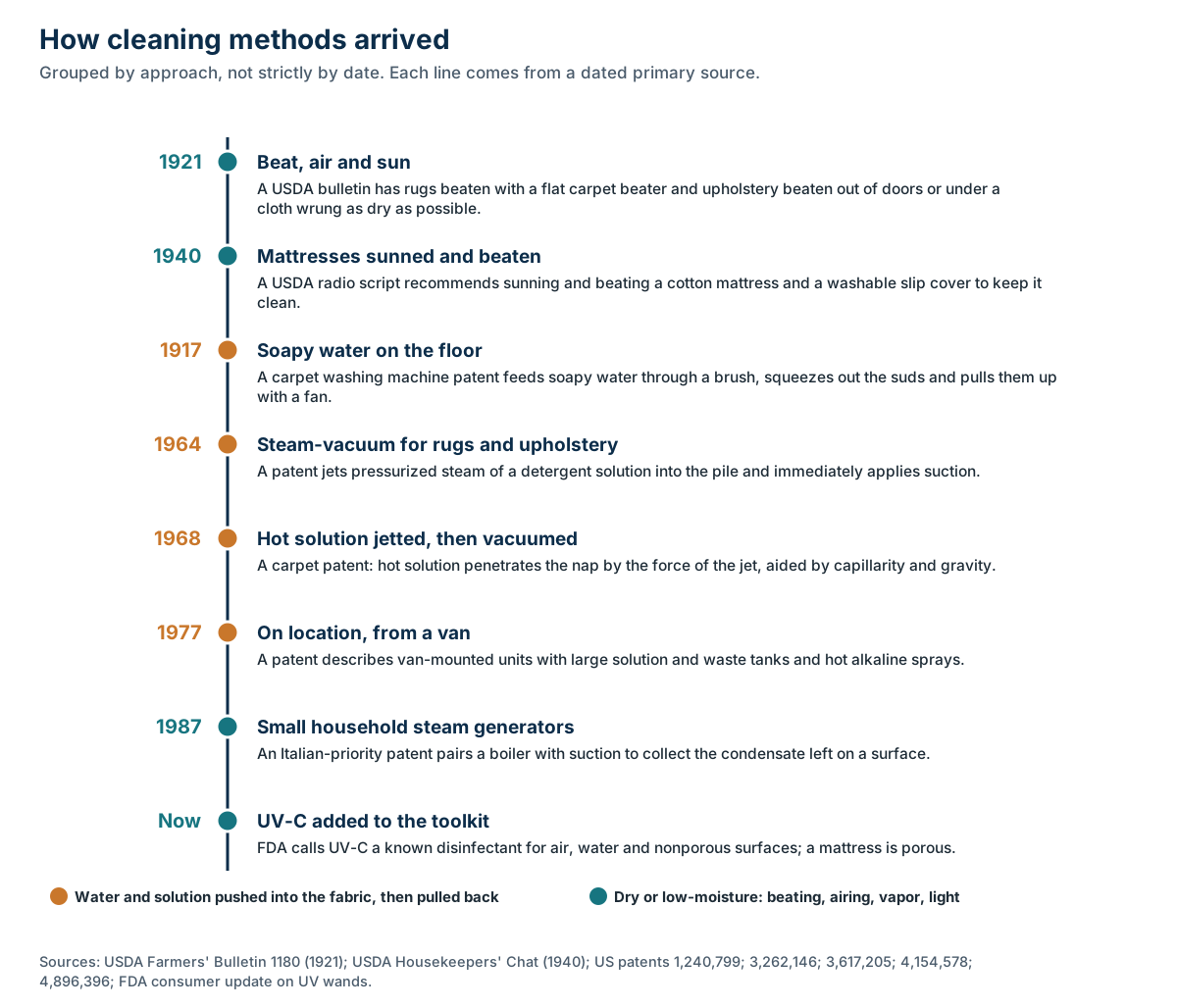
The failure this hub follows is a single one: water pushed into a bed that can't let it back out. The method came from carpet cleaning, where a thin pile sits on a backing over a hard floor, and it arrived at mattresses because a bed looks like one more piece of upholstery. This hub traces that history through dated patents and USDA guides, then explains the physics: where pushed-in water goes, why suction can't retrieve it, and what it leaves behind.
This hub is general information about mattress cleaning methods, not medical advice. For health questions, ask a doctor.
Why a hub about doing it wrong
Earlier hubs answer what to do. Hub 1 compares methods and machines, Hub 5 explains moisture, heat and drying, and Hub 6 helps owners decide. That leaves a different question: if wet cleaning is so hard on a mattress, how did it reach mattresses at all? Answering that takes history, which explains how the habit formed, and physics, which explains exactly where it breaks.
This hub stays on those two threads. It doesn't repeat what water does inside memory foam, which Hub 1's memory foam article covers, or the mold rules in Hub 5's mildew and mold article. It links to them at the point where they matter. It also stays on methods. We name no businesses and judge no one who uses these methods; the pages examine what a method does to a mattress, and plenty of careful people use every method described.
How carpet methods reached the mattress
Early government advice on mattress care was dry. A 1940 USDA radio script on cotton mattresses recommended "sunning and beating every week if possible, or at least once a month," and a washable slip cover. Meanwhile, carpet cleaning was moving to the floor: a 1917 patent describes a soapy-water machine "adapted for cleaning carpets" right where they lay, without taking them up, and later patents added upholstery, hot solution jets and van-mounted units. The history article lays out each step with its source, and the carpet add-on article explains how beds joined the route; the federal industry list still has no category for mattress cleaning.
The equipment carried carpet assumptions with it. A 1968 patent draws the carpet base or backing under the pile and angles its spray to keep soil from being driven down toward it. A mattress has no such floor, which is the subject of why carpet gear doesn't fit a mattress. And the word "steam" stuck to machines that spray hot liquid, as why steam cleaning means two different things explains.
The physics of a wet mattress
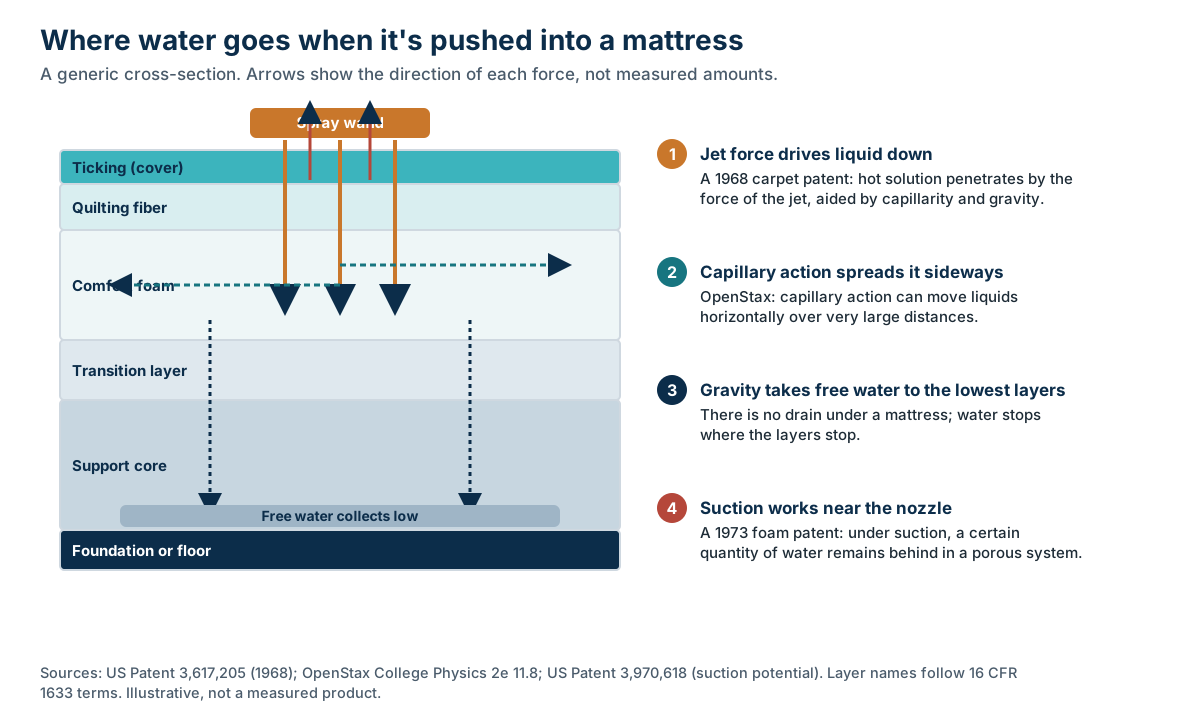
Once water passes the cover, four things govern it. The jet pushes it in; capillary action, which OpenStax notes "can move liquids horizontally over very large distances," spreads it sideways; gravity takes free water down; and trapped air leaves some pockets full and others dry. Where water goes walks through each force.
Getting it back out is harder than putting it in. OpenStax is blunt: "Fluids push rather than pull, so the smallest absolute pressure is zero." No suction can exceed one atmosphere, air follows the widest channels, and water in fine pores needs a pressure difference to move. Why suction can't pull water back out of foam does the arithmetic. Heat adds another layer: hot water carries heat deep and leaves the water there, a contrast covered in hot water versus dry heat. And thick, plush beds take longest to give water up, which is why premium mattresses can mold after a soak.
What wet cleaning leaves behind
Water rarely goes in alone. Detergent helps it wet foam and then stays: a 1977 carpet patent reports cleaned fiber reading as alkaline as the detergent, and the Carpet and Rug Institute links excess residue to rapid resoiling, the subject of detergent residue in a mattress. Fragrance can cover an odor without touching its source, as masking versus removal explains. And laundry research ties damp fabric and leftover soil to malodor, which is why a wet-cleaned mattress can smell worse later.
Consequences you can check
Two consequences are worth checking for yourself. The first is paperwork: liquid damage is a common mattress warranty exclusion, and the FTC says a warranty must be available to read before you buy, so how wet extraction can void a warranty covers what to look for. The second is the mattress itself: rings, a cool damp feel, a musty smell or a damp underside, set out in signs your mattress was overwetted.
Doing it differently
The fix isn't a secret technique; it's asking where the water goes. Questions to ask before hiring anyone turns each failure mode into a question about method. DIY mistakes covers soaking, baking soda pastes, vinegar on wool, hair dryers and rental carpet machines. And what a low-moisture method does differently explains, briefly, what changes when little water goes in, with links to the full methods hub.
How we handle evidence here
Patents are our main historical source because they're dated, public and specific. A patent records what an inventor claimed and how a machine was meant to work; it doesn't prove the machine worked as claimed, so we describe patent statements as claims. We cite patents by number and title and leave out names, because this hub is about methods, not people or companies. Physics comes from OpenStax textbooks, health statements from WHO and the EPA, and odor and foam findings from peer-reviewed studies, each described with its limits. Where we couldn't find a source, including several tempting history claims, we cut the claim; each article's What we don't know list says what's missing.
Sleep Sanitation's position
This section is our view. We built our service around keeping water out of mattresses, so this hub is close to home, but the physics stands on its sources, not on us. We use Italian-made Vapor Clean machines, organic methods by default and enzyme treatment for urine and organic odor, with no extraction step. That's our own reasoning, not a manufacturer exemption; your care label and warranty terms govern, so check your warranty terms before you book. We use "sanitize" in the CDC's sense and make no disinfection claim. We also can't promise that every stain or odor will lift. Every visit includes two checks, a moisture check and the built-in bed mite sensor on our UV-C vacuum; bedroom CO₂ testing is optional and priced by quote. The first mattress is $249, and the bed stays unmade until it's dry to the touch. Details are on our process page.
How to use this hub
If you're deciding how to have a mattress cleaned, start with the method questions, then read where water goes. If a mattress was already cleaned wet and smells or feels off, go to the signs article and why it can smell worse later. If you're curious how the habit formed, read the history first. For machine comparisons, go to Hub 1; for drying and mold, Hub 5.
What we don't know
- How much water typical wet methods leave in a finished mattress. We found no published measurement on whole mattresses.
- When mattress cleaning first became a routine add-on to carpet work. The patents and industry codes show the carpet origin, not that moment.
- How lab findings on foams, films and laundry carry over to a specific branded mattress, which combines many materials.
Changelog
- 6 October 2026: First published. Sources accessed on this date.