
Short answer
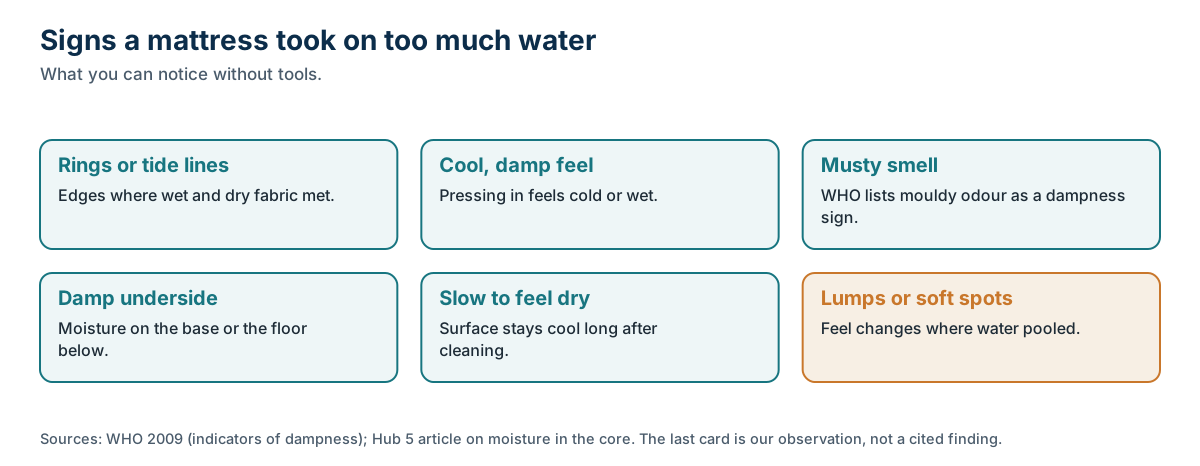
Look for several signs together. Rings or tide lines show where wet fabric met dry. A cool, damp feel when you press in means moisture near the surface. A musty or sour smell, especially days later, suggests microbes acting in damp layers; WHO lists moldy odor as a dampness indicator. Moisture on the underside or the base means water went all the way through. None of these measures the core directly.
Key terms used on this page
- Dampness indicators:
- The signs WHO uses to recognize problem moisture indoors: condensation on surfaces, visible mold, a perceived moldy odor and a history of water damage, leakage or penetration.
- Surface-dry vs dry through:
- A cover can feel dry while the layers under it are still damp. Hub 1 defines dry to the touch; after a urine accident, dry through is the standard that matters for odor and mold.
- Dry to the touch vs dry through:
- Dry to the touch means the surface fabric feels dry. Dry through means the moisture inside the comfort layers has also left. A mattress can feel dry on top while still holding water underneath.
- Wicking:
- Moisture moving through a material as it dries, carrying dissolved soil or stain with it. When the moisture evaporates at the surface, the stain can reappear on a fabric that looked clean.
- Water activity:
- A measure of how available the water in a material is to microbes: the vapor pressure above the material divided by that above pure water. WHO's dampness guidelines say the species that grow on a substrate depend largely on it.
The signs that a mattress was overwetted during cleaning are best read together. Rings or tide lines show where wet fabric met dry. A cool, damp feel when you press in means moisture near the surface. A musty or sour smell, especially days later, suggests microbes acting in damp layers; WHO lists moldy odor as a dampness indicator. Moisture on the underside or the base means water went all the way through. None of these measures the core directly.
General information about mattress cleaning methods, not medical advice. For health questions, ask a doctor.
Isn't this covered in Hub 5?
Partly. Hub 5 explains how to tell if moisture reached a mattress core and the difference between surface moisture and saturation. Those articles are about moisture from any cause. This one is narrower: the signs that a cleaning visit put in more water than the mattress could release, what each sign means and what it can't tell you. Read them together.
Sign one: rings or tide lines
A ring at the edge of a cleaned area shows where water reached the surface and dried. As a wet zone dries, capillary action pulls water toward the evaporating edge, carrying dissolved soil and residue with it. That's wicking, and the carpet trade has known it for decades: a 1968 carpet patent calls its adverse effects "well known both to the trade and to householders who have had carpets cleaned by in situ methods."
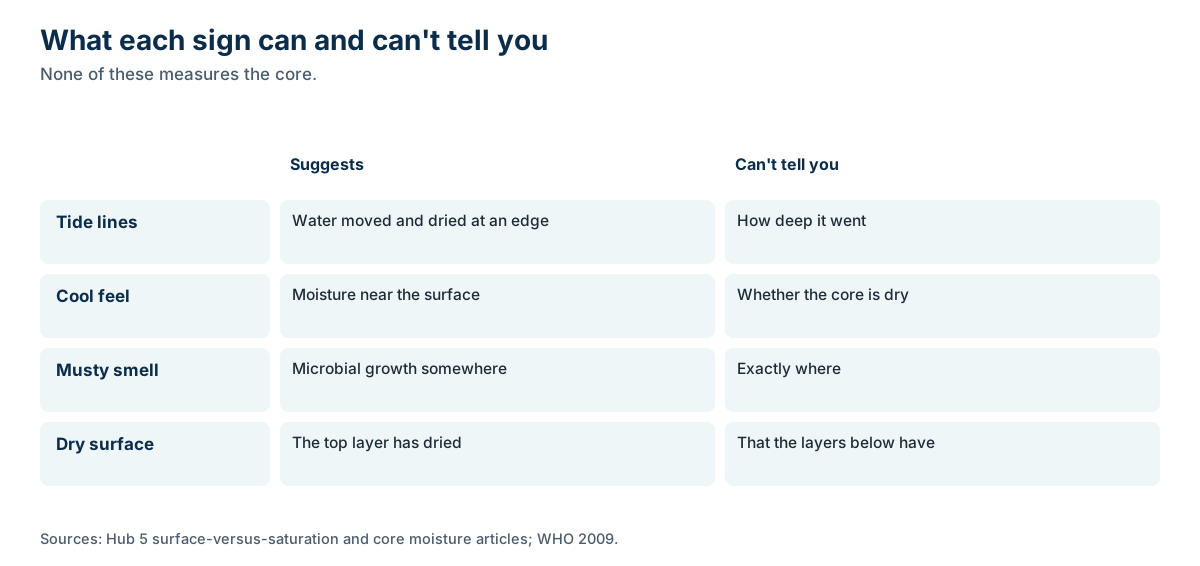
A ring tells you water moved and dried at that line. It doesn't tell you how deep the water went. OpenStax notes that "Capillary action can move liquids horizontally over very large distances," in its section on capillary action, so a ring can sit well outside the area that was sprayed. Hub 7 explains the chemistry of why stains come back after drying.
Sign two: a cool, damp feel
Press a flat hand into the cleaned area and hold it. A surface that feels cool after it has had time to reach room temperature is usually still giving off moisture; evaporation takes heat. A surface that feels damp, or leaves your palm damp, has water near the top. Compare it with an uncleaned area of the same mattress.
This test is limited to the top layer. Hub 3 explains the difference between surface dry and dry through, and Hub 1 defines dry to the touch. A surface can pass the hand test while the layers below are still wet, because the surface dries first.
Sign three: a smell that develops
Odor from microbes takes time. A mattress can smell clean on the day and develop a sour or musty smell later, for reasons explained in why a wet-cleaned mattress can smell worse later. WHO's dampness and mould guidelines list "visible mould, perceived mouldy odour" and "a history of water damage, leakage or penetration" among "Indicators of dampness and microbial growth."
A smell that's stronger in humid weather, or when you lie on the bed and warm it, points to moisture deeper in. A perfumed smell fading into an older one points to masking, covered in fragrance masking versus odor removal. A smell is a strong sign, but it doesn't tell you exactly where the moisture is.
Sign four: a damp underside or base
This is the clearest sign. If the underside of the mattress, the foundation, the slats or the floor beneath is damp, water travelled all the way through. Lift a corner and check, including the center if you can. On a platform base, look for moisture or marks on the wood or fabric.
Water that reaches the bottom has, by definition, passed every layer. It's also the water hardest to dry, because the underside rests on a base with little airflow. Where water goes explains why free water collects there, and the suction article explains why extraction can't recover it.
Sign five: a surface that stays cool and slow
A cleaned area that still feels cool or damp long after the rest of the bed feels normal suggests a lot of water below. We don't give a number of hours, because drying depends on the room, air movement, temperature and the mattress. The comparison with the uncleaned area is what matters. OpenStax's section on diffusion explains why depth slows drying out of proportion: the distance molecules travel grows with the square root of time.
Sign six: a change in how the bed feels
If one area feels softer, lumpier or different after cleaning, note where. We found no study linking a changed feel to overwetting, so treat it as a reason to check the other signs in that spot, not as a sign on its own. What water does to foam itself is covered in Hub 5's what happens when memory foam gets wet and Hub 1's what happens when water penetrates memory foam.
Why read the signs together?
Because each one has blind spots. A ring can form from a small amount of water that wicked sideways. A cool surface can come from a room that's simply cold. A smell can come from an old accident rather than the cleaning. Two or three signs in the same area, appearing after the visit, make a much stronger case than any one alone. Note when each sign appeared and where, ideally with dates, so you can describe it clearly to a manufacturer or a cleaner later.
What should you do if you see these signs?
Dry it first. The EPA's mold guide says "The key to mold control is moisture control." Strip the bedding and any protector. Stand the mattress on edge if you can, or prop it so air reaches the underside. Use fans and open doors or windows when the weather allows. The Better Sleep Council's care guidance for damp spots is to "remove all bedding and covers and blot with a dry towel."
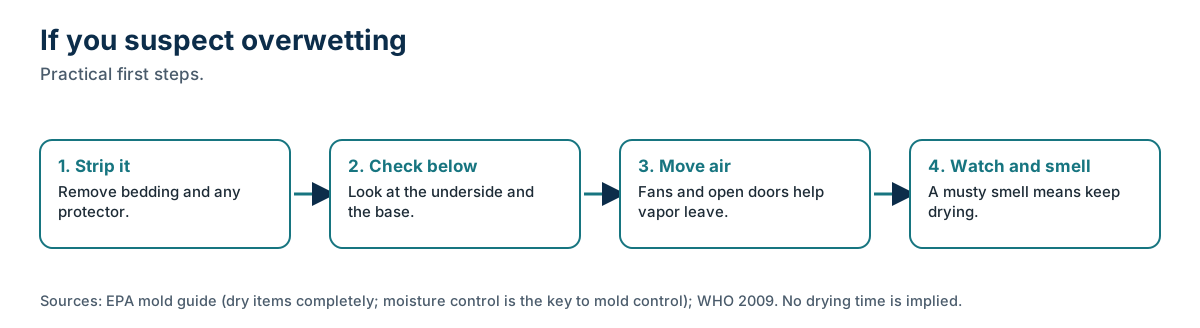
Don't remake the bed until it's dry, and keep checking the smell over the following days. If a musty smell persists, you see mold or anyone has symptoms, read Hub 6's clean-or-replace guide, consider replacement and talk to a doctor about the symptoms.
How can you prevent it next time?
Ask before anyone starts. What goes into the mattress, what pulls it back out, and how dryness is checked are the first three of this hub's method questions. If you're cleaning it yourself, the DIY mistakes article covers the common ways home methods overwet a bed.
Sleep Sanitation's view
This section is our view. Overwetting is the failure we design around, which is why a moisture check, not a hand on the fabric, ends each of our visits. If a bed already shows these signs from an earlier cleaning or a spill, we'll say so and suggest drying before anything else, because no surface method reaches water in a core. Our approach is our own reasoning, not an exemption granted by any manufacturer; follow your care label, and check your warranty terms before you book. We use "sanitize" the way the CDC does and make no disinfection claim. See the process for details, or the hub on mattress cleaning done wrong for the bigger picture.
What we don't know
- How reliably surface signs predict moisture in the core. We found no study comparing them with core measurements in mattresses.
- How deep consumer moisture meters read in mattress foam. Meter designs vary, and we found no mattress-specific validation.
- Whether lumps or soft spots after wet cleaning reflect lasting damage. We found no study.
Changelog
- 6 October 2026: First published. Sources accessed on this date.
Sources
- WHO Guidelines for Indoor Air Quality: Dampness and Mould (2009) · World Health Organization
- A brief guide to mold, moisture and your home · US EPA
- College Physics 2e, 12.7 Molecular Transport Phenomena: Diffusion, Osmosis, and Related Processes · OpenStax (Rice University)
- College Physics 2e, 11.8 Cohesion and Adhesion in Liquids: Surface Tension and Capillary Action · OpenStax (Rice University)
- US Patent 3,617,205: Method for cleaning carpets and like materials (filed 1968) · Google Patents (USPTO record)
- Caring for a Mattress · Better Sleep Council (mattress industry consumer site)
Last reviewed October 6, 2026. Manufacturer specifications and care instructions change; check the current version for your exact model. This page is general information, not medical advice. How we source and check pages: editorial standards.