
Short answer
Because the name outlived the machine. Early rug and upholstery machines in the 1960s really did jet steam of a cleaning solution. By the late 1970s, carpet patents still called their method steam cleaning while spraying hot detergent solution at about 40 to 60 °C, well below boiling. Today the same words cover hot-water extraction and boiler-made vapor, which put very different amounts of water into a mattress.
Key terms used on this page
- Steam-vacuum cleaning (historical):
- A 1960s approach that jetted pressurized steam of a detergent or solvent solution into rug pile and immediately applied suction. Later carpet patents kept the steam name while spraying hot liquid.
- Hot-water extraction (HWE):
- The carpet industry's most common professional method. The Carpet and Rug Institute defines an extractor as equipment that uses pressure, water or cleaning solution, and suction to remove soil. It is often marketed as 'steam cleaning' even though it sprays hot water rather than steam.
- Saturated steam:
- Steam at the boiling point for its pressure: 212°F (100°C) at atmospheric pressure, about 324°F (162°C) at 80 psi gauge and about 352°F (178°C) at 123 psi gauge. Most portable vapor-steam boilers make saturated steam.
- Dry-vapor steam:
- Steam made in a sealed, pressurized boiler and released through a hose and nozzle as hot vapor with a low liquid-water content. In the vendor specifications we reviewed, professional units are rated from 80 psi (Ladybug 2350) to 150 psi (Daimer), with stated boiler temperatures from about 345°F (Optima) to 360°F (Daimer); these are maker claims. Daimer describes its steam as about 5% water or less and Vapor Clean claims 'just 5-6% moisture'; that is a vendor claim, not an independent standard.
- Wet steam:
- Steam that carries a noticeable amount of liquid water droplets, often from a cooling hose, spitting nozzle or condensate that wasn't purged. Wet steam puts more water on a surface and carries less heat per kilogram.
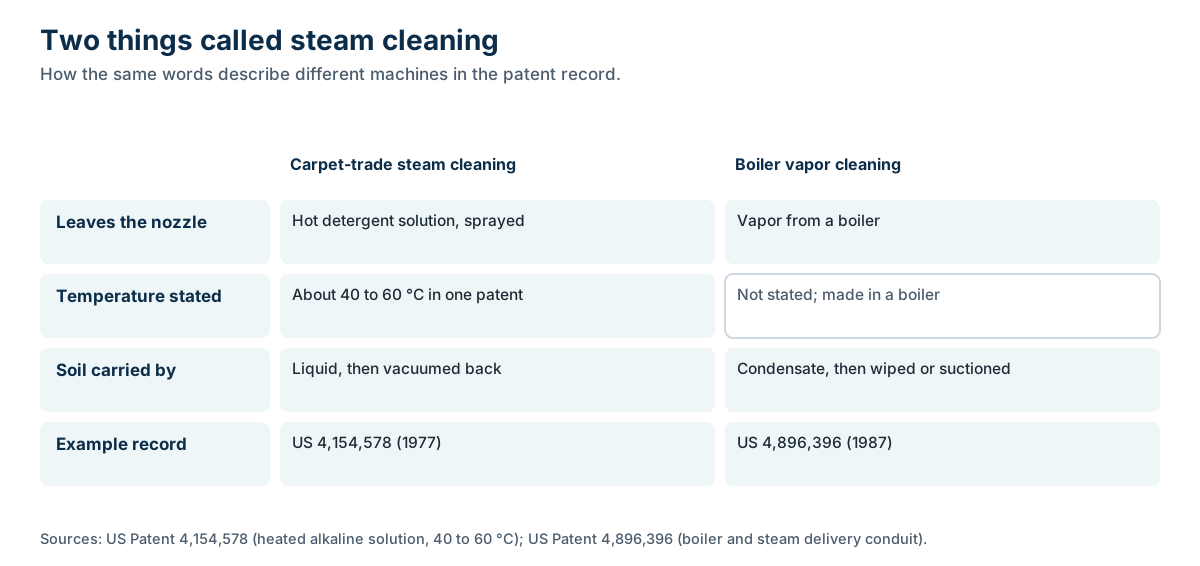
"Steam cleaning" means two different things because the name outlived the machine. Rug and upholstery machines of the 1960s really did jet steam of a cleaning solution. By the late 1970s, carpet patents still called their method steam cleaning while spraying hot detergent solution at about 40 to 60 °C, well below boiling. Today the same words cover hot-water extraction and boiler-made vapor, two methods that put very different amounts of water into a mattress.
General information about mattress cleaning methods, not medical advice.
What is steam, physically?
Water as a gas. At atmospheric pressure, water boils at 100 °C (212 °F); Hub 1's glossary defines saturated steam as steam at the boiling point for its pressure. Below that temperature, heated water stays liquid, however hot it feels. A machine that sprays water at 50 °C is spraying hot water, and a machine whose boiler is under pressure can make vapor hotter than 100 °C.
That's the whole distinction in one line, and it matters because liquid and vapor behave differently in fabric. Liquid soaks in and has to be pulled back out. Vapor delivers heat and condenses in small amounts where it touches a cooler surface. The rest of this article shows how the trade's language blurred the two.
When did steam cleaning mean real steam?
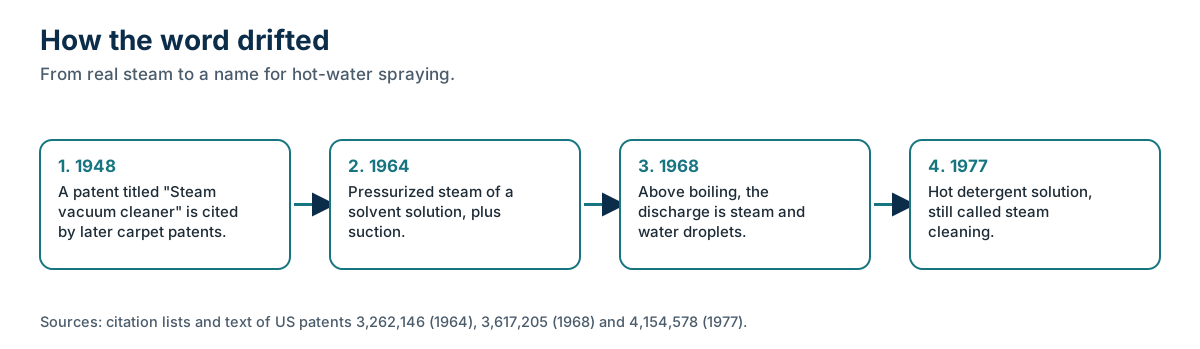
In the patents of the 1960s. A 1964 patent for a "Steam-vacuum generator for rug and upholstery cleaning" describes "a mechanism for supplying high pressure steam of a solventcontaining solution" to one chamber of a nozzle while the other chamber applies vacuum. Its boiler converts the liquid to steam, which is discharged "down into the pile, nap or fabric of the material being cleaned," then sucked back with the dirt.
That's steam in the physical sense, though it's steam of a detergent solution, and the patent mentions "spray droplets carried thereby." The 1968 carpet patent discussed below lists among its citations a 1948 patent titled "Steam vacuum cleaner." The name was established early, attached to machines that did make vapor.
How did the meaning drift?
Gradually, as liquid took over. A 1968 carpet patent sits at the transition. When its heater runs above boiling, "the discharge will be steam and water droplets," but it also says the fluid "is commonly water, with an added cleaning agent," and that "The water may, or may not, be heated before entering the head cavity." Cold or hot water would both work. The steam had become optional.
By the 1977 patent, the name had separated from the physics. It describes its field as portable steam carpet cleaning, and then explains what those operations do: they "spray a dilute, hot detergent solution having a pH registering in the area of 10 or above into the surface of the carpet." Its own preferred method heats the solution "to at least between about 40° C. and about 60° C." That's hot water, far below boiling, still called steam cleaning.
What does the carpet trade call the method now?
Hot water extraction, at least in its standards. CRI's residential standard says "The most common professional residential carpet cleaning systems used is a hot water extraction (HWE) system." Hub 1's glossary notes that hot water extraction is often marketed as steam cleaning even though it sprays hot water rather than steam. The standards language is precise; the everyday language isn't.
And what does the boiler side look like?
Different from the start. A household appliance patent with an Italian priority date of 1987 describes "a steam generator including a boiler and a steam delivery conduit extending from the boiler," plus an electric aspirator. It notes that when steam meets a surface, "some of the steam is condensed, and the condensate, enclosing the removed dirt, must then be taken away." Its aspirator removes "the condensate left on the surface being cleaned."
Here the water involved is condensate on a surface, not solution sprayed into fabric. Hub 1 calls modern versions of this approach dry vapor steam, and its article on whether dry vapor steam is actually dry explains that it still leaves some moisture. The point isn't that vapor is waterless; it's that the amount and the location of the water differ.
Why does the difference matter on a mattress?
Because water left in a mattress drives most of the problems in this hub. A method that sprays liquid into the ticking has to recover it from a thick, enclosed stack with no backing, which is the subject of why carpet gear doesn't fit a mattress. Whatever it doesn't recover spreads by capillary action and gravity, as where water goes explains, and suction can't retrieve all of it, as why suction can't pull water back out of foam explains.
A method that delivers heat as vapor puts far less liquid in, and what condenses is mostly near the surface. Heat itself has limits on mattress materials, which Hub 5 covers in heat versus water; this hub's hot water versus dry heat article explains why the combination of heat and lingering water is the harder one.
Can a steam machine still put a lot of water in?
Yes, and that's the second blur. Hub 1 defines wet steam as steam carrying noticeable liquid droplets, from a cooling hose, a spitting nozzle or condensate that wasn't purged. The 1968 patent's "steam and water droplets" is an early example. A boiler doesn't ensure dryness; technique, hose length, nozzle and pass speed all change how much liquid reaches the fabric.
So the name on the machine is a starting point, not an answer. Hub 1's comparison of steam cleaners and dry vapor steam cleaners sorts the machine types in detail. This article, part of the hub on mattress cleaning done wrong, explains why the labels became unreliable in the first place.
How can you tell which kind you're getting?
Ask what the machine does, not what it's called. Three questions sort most cases. Is there a pressurized boiler? What leaves the tip: vapor, or liquid with a cleaning agent? What gets pulled back: a tank of waste water, or a little condensate? The answers tell you which steam you're getting.
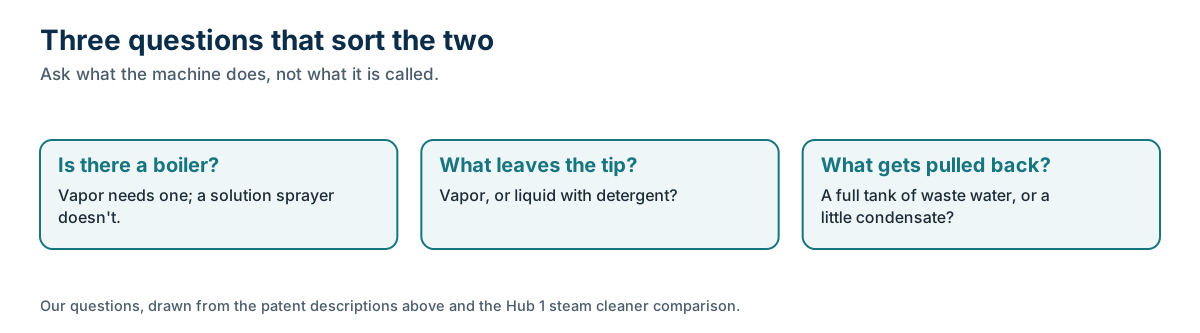
These questions fit into a longer list in questions to ask before hiring anyone, which turns each failure mode in this hub into a question about method. None of them asks about a company's name or reputation; they're about water.
Sleep Sanitation's view
This section is our view. We use Italian-made Vapor Clean boiler machines, so we're on one side of this naming split, and we'd rather customers understood the difference than took either word on trust. Our method is our own reasoning, not a manufacturer exemption. Your care label and warranty terms govern, so check your warranty terms before you book. We use "sanitize" as defined in the CDC's cleaning terms and make no disinfection claim. Leave the bed unmade until it's dry to the touch; our moisture check confirms it before we go. Our full sequence is on our process page.
What we don't know
- When the carpet trade began using the steam name for machines that spray only hot water. The patents show the drift, not a date.
- How much liquid typical boiler machines and typical extractors each leave in a mattress. We found no side-by-side measurement on mattresses.
- How consumers interpret the term today. We found no survey on it.
Changelog
- 6 October 2026: First published. Sources accessed on this date.
Sources
- US Patent 3,262,146: Steam-vacuum generator for rug and upholstery cleaning (filed 1964) · Google Patents (USPTO record)
- US Patent 3,617,205: Method for cleaning carpets and like materials (filed 1968) · Google Patents (USPTO record)
- US Patent 4,154,578: Method and apparatus for cleaning a carpet on location (filed 1977) · Google Patents (USPTO record)
- US Patent 4,896,396: Electrical household appliance for steam cleaning (Italian priority 1987) · Google Patents (USPTO record)
- CRI 205 Residential Carpet Standard for Maintenance and Cleaning (2023) · Carpet and Rug Institute
- Cleaning and disinfecting your school (definitions) · CDC
Last reviewed October 6, 2026. Manufacturer specifications and care instructions change; check the current version for your exact model. This page is general information, not medical advice. How we source and check pages: editorial standards.