
Short answer
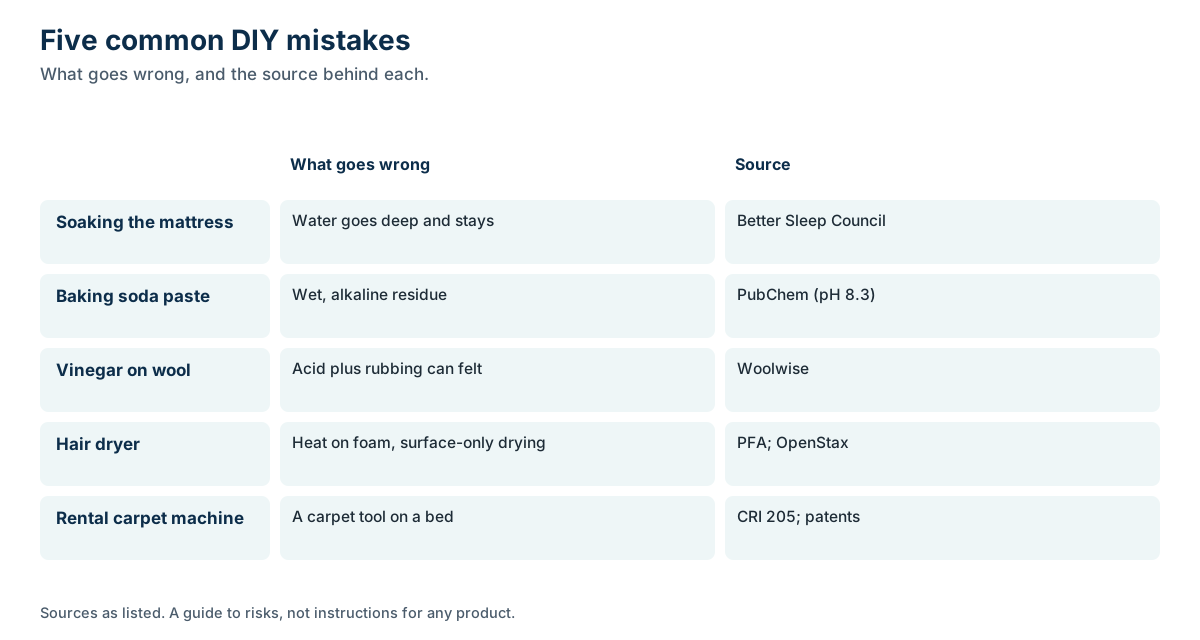
Most DIY mistakes put too much water into the mattress. Soaking a stain, spreading a baking soda paste or running a rental carpet machine all push liquid past the ticking, where it spreads and lingers. Vinegar plus scrubbing can felt wool, and a hair dryer heats the surface while the water below stays put. Mattress industry guidance is simpler: blot, use a light sprinkle, a little mild soap and cold water, and check the label first.
Key terms used on this page
- Sodium bicarbonate (baking soda):
- A mildly alkaline white powder. PubChem lists the pH of a freshly prepared 0.1 molar solution as 8.3 and notes that it decomposes when heated.
- Felting shrinkage:
- Irreversible shrinkage when wool fibers mat together under mechanical action in water. Woolwise says it keeps progressing with washing time until the fabric reaches a limiting density.
- UV-C radiation:
- Short-wavelength ultraviolet light. The FDA describes it as a known disinfectant for air, water and nonporous surfaces, and warns that some consumer UV wands give off unsafe levels.
- Heat softening:
- The temporary softening of viscoelastic foam as it warms. The PFA says heat, even body heat, can soften viscoelastic materials and, in extreme situations, affect the foam's ability to provide support. It gives an optimum range for memory action of 55°F to 85°F.
- Dwell vs soak:
- Dwell means giving a product its contact time on the stain. Soak means adding enough liquid to wet the layers below. Enzyme products need the first, not the second.
Most DIY mattress cleaning mistakes put too much water into the mattress. Soaking a stain, spreading a baking soda paste or running a rental carpet machine all push liquid past the ticking, where it spreads and lingers. Vinegar plus scrubbing can felt wool, and a hair dryer heats the surface while the water below stays put. Mattress industry guidance is simpler: blot, use a light sprinkle, a little mild soap and cold water, and check the label first.
General information about mattress cleaning methods, not medical advice.
Why do DIY methods go wrong?
For the same reason professional wet methods can: they treat a mattress like something that drains. Home cleaning advice often comes from carpet, upholstery or laundry, where water either drains through, gets extracted from a thin layer or goes into a dryer. A mattress does none of those things. The mistakes below are about physics, not effort; most come from doing a careful job with the wrong assumption.
Mistake one: soaking the stain
It's the natural instinct, and the one mattress care guidance warns against most directly. The Better Sleep Council, the mattress industry's consumer education site, says in caring for a mattress: "Avoid soaking your mattress or foundation with any liquid." It also warns against "harsh chemicals like dry cleaning products or spot removers," which "can harm the fabric or underlying materials."
Water poured or sprayed heavily on a stain passes the ticking and spreads by capillary action and gravity, as where water goes explains. The stain may lift from the surface while its dissolved remains travel deeper and come back as a ring. Hub 3 defines the difference between a dwell and a soak: enough liquid to work on a stain versus enough to flood the layers.
Mistake two: baking soda paste
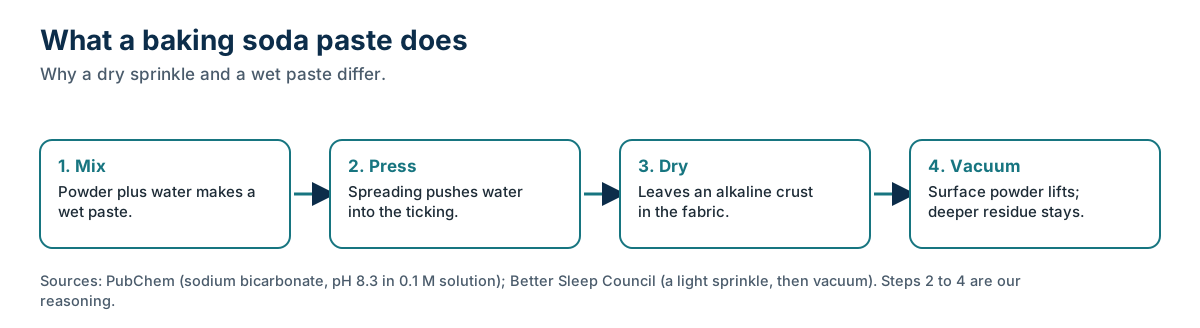
A dry sprinkle and a wet paste are different treatments. The Better Sleep Council says: "Some suggest a light sprinkle of baking soda on it to absorb the moisture, then vacuum." That's a dry powder on the surface, vacuumed off.
A paste adds water and leaves the powder in the fabric. PubChem's entry for sodium bicarbonate lists its "pH (of freshly prepared 0.1 molar aqueous solution): 8.3," mildly alkaline, and notes that in solution it "begins to break up into carbon dioxide and sodium carbonate at about 20 °C." Pressed into ticking and left to dry, a paste can leave an alkaline crust that vacuuming lifts only from the surface. Hub 9's glossary has an entry for sodium bicarbonate.
Mistake three: vinegar and scrubbing on wool
Acid plus agitation is a felting recipe. Woolwise course notes on wool fabric finishing explain that untreated wool in water with soap or detergent "will swell and consolidate," and that if "some mechanical action is applied, particularly in an acid medium, the fibres can mat together." Vinegar is a dilute acid, and scrubbing is mechanical action.
The law tag lists a mattress's fill materials, and Hub 8 explains how to read a mattress law tag. Hub 8 explains the fiber in wool in mattresses, Hub 2 covers wool cleaning compatibility, and Hub 7 covers pH and mattress materials. If your mattress contains wool, check the care label before using any acid or alkali.
Mistake four: a hair dryer on a wet spot
It dries the wrong part. A hair dryer heats and dries the top of the ticking quickly, so the spot feels dry, while the water below stays put. OpenStax's section on diffusion explains why the inside lags: the distance molecules travel grows only with the square root of time. The surface passes the touch test long before the layers below are dry.
Heat also affects foam. The Polyurethane Foam Association says many memory foam products "react to body temperature and ambient temperatures, softening with heat," in its viscoelastic foam bulletin. Concentrated hot air on a wet comfort layer adds heat to moisture, the combination hot water versus dry heat describes. Moving room-temperature air over and under the mattress is gentler.
Mistake five: a rental carpet machine
It's a carpet tool. Carpet extraction machines are designed around a thin pile, a backing and a floor, as the carpet gear article explains. On a mattress, they can push water deeper than their own suction reaches, and the suction article explains why the water left behind is hard to retrieve.
CRI's carpet standard adds a warning that applies even on carpet: "Using higher concentration of cleaning solution than recommended may cause excess residues left in the carpet. This will contribute to rapid resoiling." It's tempting to add extra solution to be thorough. In a mattress, that residue has nowhere to go, as the detergent residue article explains.
Mistake six: trusting a UV wand
Light reaches only what it shines on. The FDA's consumer update on UV wands says "UV-C radiation is a known disinfectant for air, water, and nonporous surfaces," and warns that "Certain UV wands may cause injuries within seconds and should not be used." A mattress is porous fabric over foam; light can't reach between fibers or below the surface.
UV-C has a place as one step among several, and we use UV-C light treatment after HEPA vacuuming. On its own, held by hand over a bed, it's not a cleaning method, and some consumer wands carry real safety risks.
Mistake seven: making the bed too soon
A damp mattress under a sheet, a protector and a duvet dries far slower than one left open to the air. If you've wetted any part of the mattress, leave it uncovered until it's dry to the touch and the spot no longer feels cool compared with the rest. Signs your mattress was overwetted lists what to check.
What should you do instead?
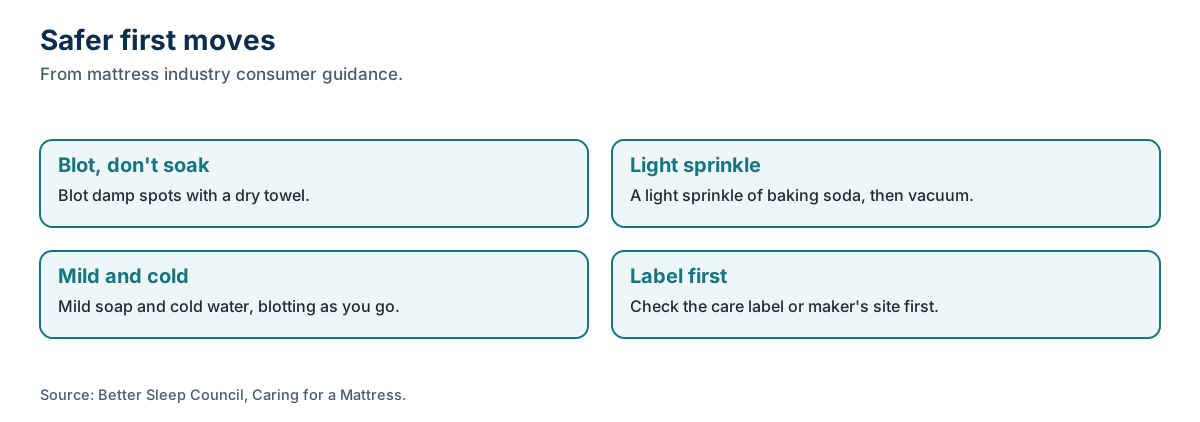
Use less water and less chemistry. The Better Sleep Council's sequence is: "remove all bedding and covers and blot with a dry towel," then a light sprinkle of baking soda and vacuum. For a stain, "lightly apply mild soap and cold water, blotting as you go." And: "Always check your care label or visit the manufacturer's website for recommendation first!"
For urine, Hub 3 explains how to get urine out of memory foam without soaking it. For stains in general, Hub 7's stain chemistry hub explains why each stain family behaves the way it does. This article is part of the hub on mattress cleaning done wrong.
Sleep Sanitation's view
This section is our view. Good DIY care is mostly blotting and patience, and a mattress protector does more than any home method. When a bed needs more than that, we use low-moisture vapor and organic methods by default, with enzyme work for urine, and no extraction. That's our reasoning, not a manufacturer exemption; your care label and warranty terms govern, so check your warranty terms before you book. We use "sanitize" in the CDC's sense and make no disinfection claim. See our process page.
What we don't know
- How often DIY cleaning leads to mold or warranty problems in mattresses. We found no study.
- How much baking soda residue remains after a paste dries and is vacuumed. We found no measurement.
- How much a household hair dryer heats foam below the ticking. We found no published test.
Changelog
- 6 October 2026: First published. Sources accessed on this date.
Sources
- Caring for a Mattress · Better Sleep Council (mattress industry consumer site)
- Sodium Bicarbonate (CID 516892) · PubChem, US National Library of Medicine
- Wool 482/582, Topic 24: Principles of Wool Fabric Finishing (Pailthorpe) · Australian Wool Education Trust, Woolwise
- IN-TOUCH Vol. 11 No. 1: Viscoelastic (memory) foam (revised 2016) · Polyurethane Foam Association
- Beware of Ultraviolet Wands That Give Off Unsafe Levels of UV Radiation · US Food and Drug Administration
- CRI 205 Residential Carpet Standard for Maintenance and Cleaning (2023) · Carpet and Rug Institute
- College Physics 2e, 12.7 Molecular Transport Phenomena: Diffusion, Osmosis, and Related Processes · OpenStax (Rice University)
Last reviewed October 6, 2026. Manufacturer specifications and care instructions change; check the current version for your exact model. This page is general information, not medical advice. How we source and check pages: editorial standards.