
Short answer
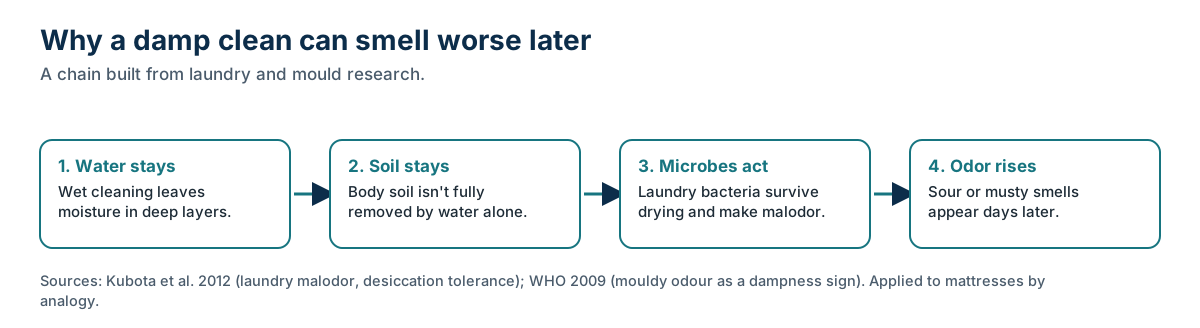
Because wet cleaning can leave the three ingredients for odor together: moisture, body soil and microbes. Laundry research finds that slow drying leaves more microbes on textiles and that clothes left in humid conditions develop malodor. One odor-causing laundry bacterium tolerates drying well. A mattress is far thicker than a shirt and can't go in a dryer, so the same chemistry can have longer to work.
Key terms used on this page
- Damp-laundry malodor (4M3H):
- A sour, sweaty smell in laundry hung to dry indoors. Kubota and colleagues identified 4-methyl-3-hexenoic acid as its major component and Moraxella osloensis as the main bacterium able to make it.
- Desiccation tolerance:
- A microbe's ability to survive drying out. The Kubota study found the laundry odor bacterium highly tolerant of desiccation and UV light, one reason it outlasts the drying of washed fabric.
- Water activity:
- A measure of how available the water in a material is to microbes: the vapor pressure above the material divided by that above pure water. WHO's dampness guidelines say the species that grow on a substrate depend largely on it.
- Odor rebound:
- A urine smell that fades after cleaning and comes back later, often on humid days or when the bed is slept on again. The Carpet and Rug Institute notes that urine odor 'may reappear' in high humidity. It usually means residue remains deeper than the treatment reached.
- Dampness indicators:
- The signs WHO uses to recognize problem moisture indoors: condensation on surfaces, visible mold, a perceived moldy odor and a history of water damage, leakage or penetration.
- Cover odor:
- A smell that sits in the ticking, quilting or a removable cover. It tends to be localized and to fade after cleaning and airing. Our field guidance, not a measured category.
A wet-cleaned mattress can smell worse later because wet cleaning can leave the three ingredients for odor together: moisture, body soil and microbes. Laundry research finds that slow drying leaves more microbes on textiles, and that clothes left in humid conditions develop malodor. One odor-causing laundry bacterium tolerates drying well. A mattress is far thicker than a shirt and can't go in a dryer, so the same chemistry can have longer to work.
General information about mattress cleaning methods, not medical advice. For health questions, ask a doctor.
Why look at laundry research?
Because it's the best-studied case of damp fabric smelling bad. We found no peer-reviewed study of odor after wet mattress cleaning. Laundry research has looked closely at what happens when textiles carrying body soil are wetted and then dry slowly, which is the situation wet cleaning creates in a mattress. We use it as an analogy and say so each time.
What makes laundry smell after drying?
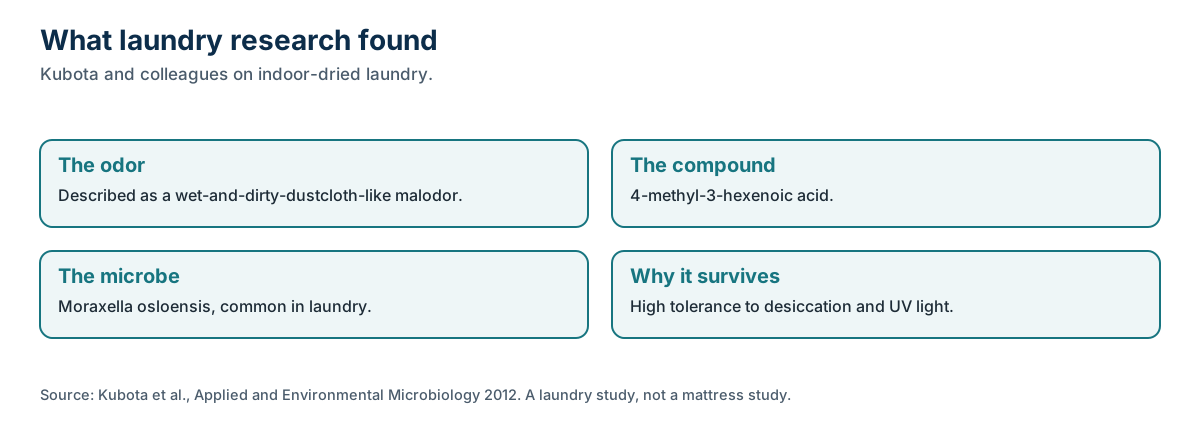
A bacterial product, in one well-studied case. Kubota and colleagues (Applied and Environmental Microbiology, 2012) studied an odor from laundry "hung to dry indoors," described as a "wet-and-dirty-dustcloth-like malodor" or an "acidic or sweaty odor." They identified its main component as 4-methyl-3-hexenoic acid and traced it to Moraxella osloensis, which "has the potential to generate 4M3H in laundry."
They note that this compound "has never been reported as a component of major dirt in laundry such as grime, sebum, sweat, or soil." In other words, the smell wasn't in the dirt. Bacteria made it afterward. That's why the odor can be absent right after washing and present later.
Doesn't drying stop the bacteria?
Not reliably. Kubota and colleagues found that M. osloensis "showed a high tolerance to desiccation and UV light irradiation, providing one of the possible reasons why they survive in laundry during and even after drying." A bacterium that survives drying can resume activity when moisture returns, from humidity, sweat or the next spill.
Hub 9's glossary defines desiccation tolerance for this reason. It explains why drying a mattress, though essential, isn't the same as removing what's in it. It's also why a smell can come back on a humid night weeks after the bed seemed fine.
Why does slow drying make it worse?
Because microbes have more time while the fabric is damp. Van Herreweghen and colleagues, reviewing textile malodour (Microorganisms, 2020), report: "Fast drying and tumble drying were found to be effective in decreasing the microbial load, while slow drying resulted in a higher microbial load on textiles." They add that "Laundered clothes that are left in humid conditions are known to form immanent malodours."
A shirt is thin and hangs in open air. A mattress is thick, enclosed and lies flat on a base, so it dries far slower, for reasons explained in why premium mattresses can mold after a soak. OpenStax's section on diffusion explains why: the time for molecules to travel grows with the square of distance. Whatever slow drying does to a shirt, a mattress gives it longer.
Why does humid weather bring the smell back?
Because microbes respond to available water, not to how dry the surface feels. WHO's guidelines define water activity as "the ratio of the vapour pressure above a substrate relative to that above pure water measured at the same temperature and pressure," and explain that "The species that grow on a given substrate depends largely on the water activity of the substrate." For fungi on building surfaces, WHO puts the minimum water activity for growth anywhere "from less than 0.80 to greater than 0.98."
Fabric and foam take up moisture from humid air, so water availability in a mattress rises and falls with the room. By our reasoning, a bed that was left damp in its deeper layers sits closer to those thresholds, and a humid spell can tip it over. A smell that appears in muggy weather and fades in dry weather points to moisture, and moisture points back to how the bed was cleaned or what was spilled.
Where does the soil come from?
From the sleeper. The same review explains that "The contact with the skin with consequent transfer of microorganisms, volatiles and odour precursors leads to the formation of a distinctive textile microbiome and volatilome." A mattress collects that transfer night after night. Wet cleaning doesn't remove all of it; as the suction article explains, some water and whatever is dissolved in it always stays.
Wet cleaning can also move soil around. Water spreads sideways and sinks, as where water goes explains, carrying dissolved body soil deeper, then pulls some back to the surface as it dries. The result is soil, moisture and microbes distributed through more of the mattress than before.
Does detergent residue play a part?
Possibly. A 1977 carpet patent argued that alkaline residue attracts soil and speeds resoiling on carpet. In a mattress, residue and moisture may combine to hold soil in place in damp layers. We found no study measuring this in mattresses. The detergent residue article covers what we do know.
What do different smells suggest?
Different sources. A sour, damp-cloth smell suggests bacteria acting on soil, as in the laundry studies. A musty smell suggests mold. WHO's dampness and mould guidelines list "visible mould, perceived mouldy odour" and "a history of water damage" among indicators of dampness and microbial growth. An ammonia smell suggests urine, covered in Hub 3's article on why urine odor comes back.
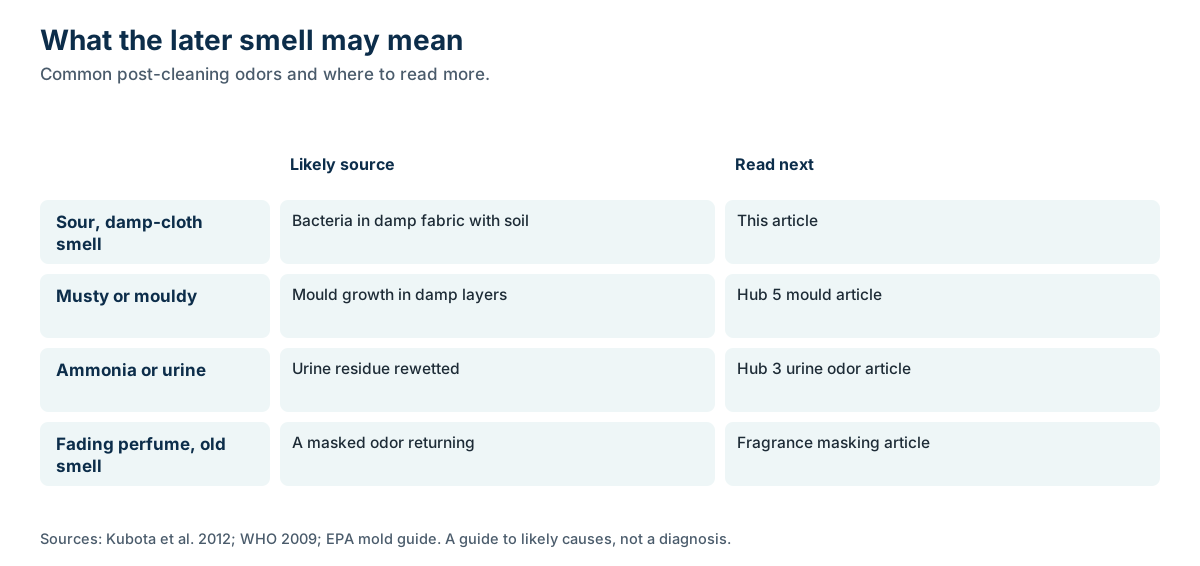
A sweet or perfumed smell fading into the old smell suggests masking, explained in fragrance masking versus odor removal. Hub 6 helps you judge whether odor is in the cover or the foam.
What should you do about it?
Dry it, then judge. The EPA's mold guide says "The key to mold control is moisture control." Strip the bed and get air moving around all sides, including the underside. Check for dampness below, using signs your mattress was overwetted. Hub 5 explains how to tell if moisture reached the core. If a musty smell persists or you see mold, consider whether the mattress should be replaced, and talk to a doctor about any symptoms.
Sleep Sanitation's view
This section is our view. A sour smell days after cleaning can be where leftover water finally announces itself, and it's the outcome our whole method is built to sidestep. Moisture stays near the surface, enzyme treatment goes only where odor has a source, and a moisture check closes the visit. That's a judgment on our part rather than a manufacturer exemption, so read your care label, and check your warranty terms before you book. We don't promise every odor will lift. Our word "sanitize" means what the CDC means by it, nothing more, and we make no disinfection claim. More on our process; more context in the hub on mattress cleaning done wrong.
What we don't know
- Which microbes produce odor in mattresses after wet cleaning. The studies we cite are about laundry.
- How common delayed odor is after wet mattress cleaning. We found no survey or study.
- How much body soil wet extraction removes from a mattress compared with what it moves deeper. We found no measurement.
Changelog
- 6 October 2026: First published. Sources accessed on this date.
Sources
- Moraxella Species Are Primarily Responsible for Generating Malodor in Laundry (Kubota et al., Appl Environ Microbiol, 2012) · PubMed Central
- Biological and Chemical Processes that Lead to Textile Malodour Development (Van Herreweghen et al., Microorganisms, 2020) · PubMed Central
- WHO Guidelines for Indoor Air Quality: Dampness and Mould (2009) · World Health Organization
- A brief guide to mold, moisture and your home · US EPA
- College Physics 2e, 12.7 Molecular Transport Phenomena: Diffusion, Osmosis, and Related Processes · OpenStax (Rice University)
- US Patent 4,154,578: Method and apparatus for cleaning a carpet on location (filed 1977) · Google Patents (USPTO record)
Last reviewed October 6, 2026. Manufacturer specifications and care instructions change; check the current version for your exact model. This page is general information, not medical advice. How we source and check pages: editorial standards.