
Short answer
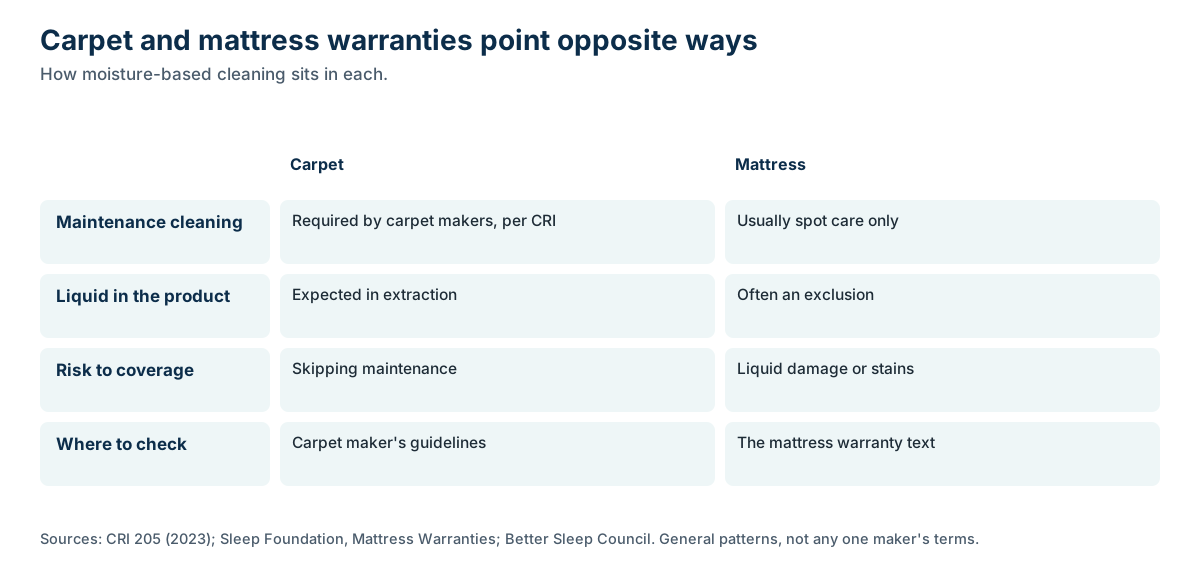
By leaving the kinds of damage mattress warranties commonly exclude. The Sleep Foundation reports that liquid damage often voids a mattress warranty and that spills, stains and water damage typically aren't covered. Carpet is the reverse: CRI says many carpet makers require approved cleaning to keep coverage. A habit that maintains a carpet warranty can put a mattress warranty at risk. Your warranty's own wording decides.
Key terms used on this page
- Implied warranty:
- A promise that comes with a sale under state law even if nothing is written. The FTC notes implied warranties don't cover problems caused by abuse, misuse, ordinary wear, failure to follow directions or improper maintenance.
- Law tag:
- The required labels on a mattress. The federal 1633 label lists the maker, address, month and year of manufacture, model, prototype ID and certification; state bedding tags such as Pennsylvania's add filling materials.
- Hot-water extraction (HWE):
- The carpet industry's most common professional method. The Carpet and Rug Institute defines an extractor as equipment that uses pressure, water or cleaning solution, and suction to remove soil. It is often marketed as 'steam cleaning' even though it sprays hot water rather than steam.
- Residual moisture:
- Water left in a material right after cleaning, before drying. For carpet, the Carpet and Rug Institute's test for its deep-cleaning extractor seal allows up to 8 ounces per square yard. We have not found an equivalent published test for mattresses.
Wet extraction can void a mattress warranty by leaving the kinds of damage mattress warranties commonly exclude. The Sleep Foundation reports that liquid damage often voids a mattress warranty and that spills, stains and water damage typically aren't covered. Carpet is the reverse: CRI says many carpet makers require approved cleaning to keep coverage. A habit that maintains a carpet warranty can put a mattress warranty at risk. Your warranty's own wording decides.
General information about mattress warranties, not medical advice and not legal advice. Your warranty's own terms govern.
Why do carpet and mattress warranties point opposite ways?
Because carpet is built to be wet-cleaned and a mattress isn't. CRI's residential carpet standard says "many carpet manufacturers now require the use of SOA-certified products and CRI-approved cleaning methods to maintain carpet warranties." It warns that "Failure to follow this standard or the carpet manufacturer's maintenance guidelines may result in the loss of warranty coverage." For carpet, periodic hot water extraction is part of keeping the warranty.
Mattress warranties look at liquid from the other side. The Sleep Foundation's guide to mattress warranties says "Causing any kind of liquid damage to a mattress often voids its warranty," and "Spills, stains, water damage, scratches, tears, or any other physical flaws caused by the owner are not typically covered by a mattress warranty." The same guide notes that customers are often responsible for "properly cleaning and rotating the mattress."
How did that mismatch happen?
Through the route this hub describes. On our reading of the record, traced in the carpet add-on article, mattress cleaning was filed alongside carpet and upholstery work, and the carpet trade's tools and habits came with it. On the carpet side, wet extraction is what the warranty asks for. On the mattress side, it adds the very thing many warranties exclude. Nobody had to intend the mismatch for it to happen.
What kinds of damage could a wet clean leave?
The kinds this hub covers. Water left deep in the layers, which Hub 1 calls residual moisture, explained in the suction article, can lead to odor and, given time, mold, as the premium mattress article explains. Water that dries unevenly can leave rings and tide lines, and dissolved soil can wick up into new stains, which Hub 7 covers in why stains come back after drying. Heat plus moisture can affect foams and wool, covered in hot water versus dry heat.
Whether any of that counts as excluded damage under a particular warranty is a question for the warranty and the manufacturer. We're not saying it always does. We're saying wet methods create more of the conditions that warranties commonly name, and that a stain left by cleaning is still a stain.
What does federal warranty guidance say?
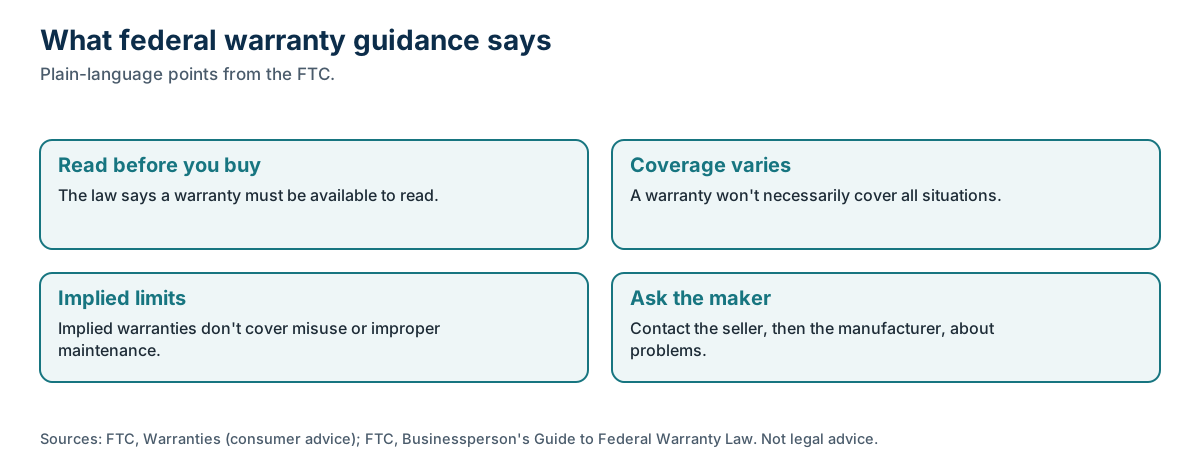
It puts the written terms first. The FTC's consumer guide to warranties says "Whenever there's a warranty, the law says it must be available for you to read before you buy," and "A warranty won't necessarily cover all situations or repairs." It suggests asking whether a warranty covers "problems that happen if you change the way a product works or misuse it," or "only problems that happen after you maintain or use the product according to the directions."
The FTC's business guide to federal warranty law adds a point about implied warranties, the unwritten promises state law creates: they "do not cover problems such as those caused by abuse, misuse, ordinary wear, failure to follow directions, or improper maintenance." Hub 9's glossary defines implied warranty. Following the care label is the simplest way to stay inside "the directions."
What do mattress makers' own care tips say?
Avoid soaking. The Better Sleep Council, the mattress industry's consumer education site, advises in caring for a mattress: "Avoid soaking your mattress or foundation with any liquid." It recommends blotting damp spots with a dry towel and adds: "Always check your care label or visit the manufacturer's website for recommendation first!" It's general industry advice; your own manufacturer's instructions come first.
It also says the law tag matters for warranties: "the information on the label will serve as a means of identification should you have a warranty claim, so you should leave it for future reference." Hub 8 explains how to read a mattress law tag.
Can anyone promise a cleaning won't affect a warranty?
Not on a manufacturer's behalf. A cleaner, including us, can describe a method and its moisture level. Only the warranty text and the manufacturer can say what's covered. Hub 2's glossary defines a warranty exclusion, and its brand guides summarize what some makers publish. If the terms are unclear, contact the manufacturer before any cleaning, wet or not.
What should you do before any wet cleaning?
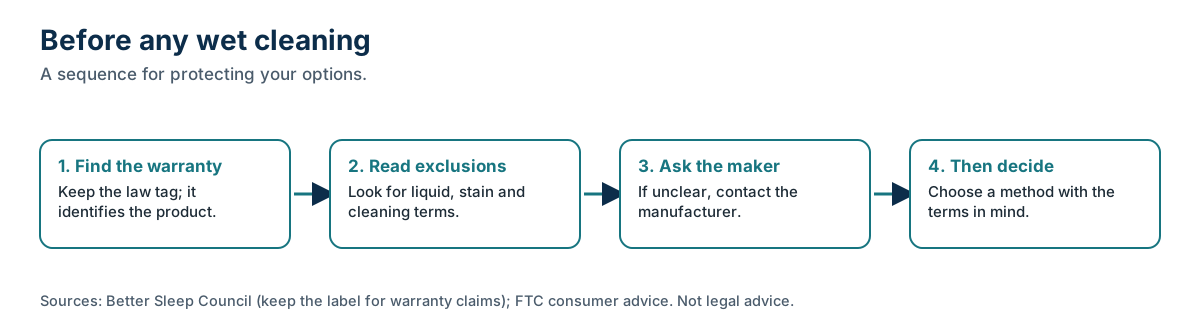
Read first, clean second. Find the warranty and the law tag. Read the exclusions for liquid, stains and cleaning. If the language is unclear, ask the manufacturer. Then choose a method with the terms in mind. A mattress protector is the Sleep Foundation's suggested way to prevent liquid damage in the first place.
The other questions worth asking, about water, suction, solution and drying, are collected in questions to ask before hiring a mattress cleaner. Hub 6's questions for an expensive mattress adds owner-side checks.
What about service plans and extended coverage?
Read those separately. The FTC's consumer guide points out that service contracts aren't warranties, and that a warranty "won't necessarily cover all situations or repairs." A stain-protection plan sold with a mattress may have its own cleaning rules, separate from the manufacturer's warranty. Read its cleaning and liquid clauses as carefully as the warranty's.
The practical habit is the same for every document: find it, read the cleaning and liquid clauses, and keep notes of what was done to the mattress and when. If a claim ever comes up, a record of a low-moisture method and the care label you followed is more useful than a memory of what a technician said at the door.
Is wet cleaning ever the trade's own concern?
Yes, even on carpet. A 1977 carpet patent recalls an era when carpets were cleaned in plants and returned "dry, and hopefully unshrunken," and warns that some spray pressures "often soak the carpet fiber to an undersirable degree." Overwetting has been a known risk for as long as wet methods have existed. A mattress, with no backing and no drain, just raises the stakes.
Sleep Sanitation's view
This section is our view. Nobody outside a mattress company can vouch for its warranty, us included, so our standing advice is to read yours before booking anyone. What we can describe is our own method: low moisture, organic products first, vapor applied through the cover. That reflects our reasoning and is not a manufacturer exemption; the care label and warranty terms govern, and checking your warranty terms before you book is the step we'd never skip. Sanitizing, in our usage, follows the CDC's definition; no disinfection claim is made. Our process page lists each step. This article sits in the hub on mattress cleaning done wrong.
What we don't know
- How often mattress warranty claims are denied because of cleaning. We found no published data.
- How individual manufacturers treat professional cleaning in their terms. Wording varies, and we haven't surveyed every warranty.
- Whether any mattress maker endorses a specific professional cleaning method. We found no published endorsement.
Changelog
- 6 October 2026: First published. Sources accessed on this date.
Sources
- Mattress Warranties · Sleep Foundation
- CRI 205 Residential Carpet Standard for Maintenance and Cleaning (2023) · Carpet and Rug Institute
- Warranties (consumer advice) · Federal Trade Commission
- Businessperson's Guide to Federal Warranty Law · Federal Trade Commission
- Caring for a Mattress · Better Sleep Council (mattress industry consumer site)
- US Patent 4,154,578: Method and apparatus for cleaning a carpet on location (filed 1977) · Google Patents (USPTO record)
Last reviewed October 6, 2026. Manufacturer specifications and care instructions change; check the current version for your exact model. This page is general information, not medical advice. How we source and check pages: editorial standards.