
Short answer
The record points to the carpet route. Patents show carpet washing moving onto the floor in 1917, adding upholstery by the 1960s and riding in vans by the late 1970s. The federal industry code still covers rugs, carpets and upholstery, with no entry for mattress cleaning. A bed looks like upholstery, so, on our reading, the carpet route's hot-water extraction came along with it.
Key terms used on this page
- NAICS 561740:
- The US industry code for carpet and upholstery cleaning services: establishments primarily engaged in cleaning and dyeing used rugs, carpets and upholstery. The 2022 index has no separate entry for mattress cleaning.
- On-location (in situ) cleaning:
- Cleaning a carpet where it lies instead of sending it to a plant. A 1977 patent recalls that carpets were once nailed to frames, scrubbed and dried in plants before portable units allowed cleaning in the home.
- Hot-water extraction (HWE):
- The carpet industry's most common professional method. The Carpet and Rug Institute defines an extractor as equipment that uses pressure, water or cleaning solution, and suction to remove soil. It is often marketed as 'steam cleaning' even though it sprays hot water rather than steam.
- Truckmount and portable extractors:
- The two common kinds of hot-water extraction equipment. A truckmount is a vehicle-powered system that pumps heated solution through long hoses; a portable extractor is a wheeled unit with its own tanks, pump and vacuum. Both are designed around carpet and upholstery.
- IICRC S300:
- The ANSI/IICRC procedural standard for professional upholstery cleaning, covering fibers, equipment, methods and inspections. It addresses upholstery; we found no equivalent consensus standard written for mattresses.
- Carpet backing:
- The base layer that carpet pile is anchored in. A 1968 carpet-cleaning patent draws it as the carpet base or backing and angles its spray so soil isn't driven down toward it.
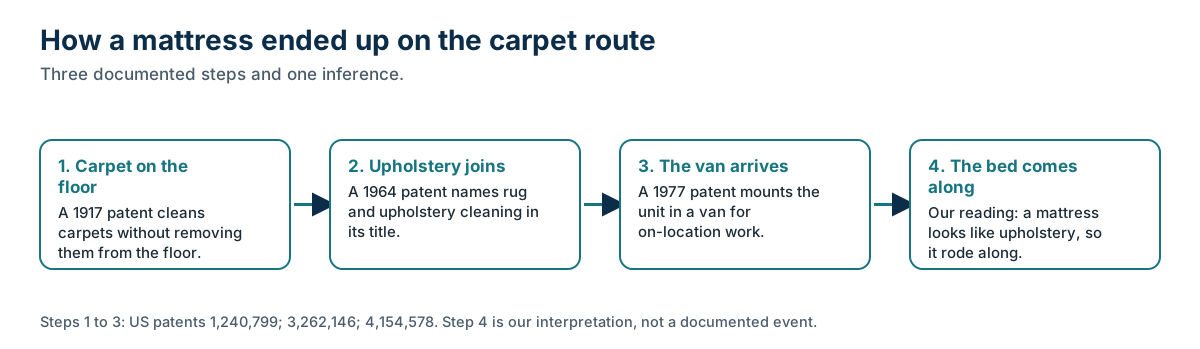
On our reading of the record, mattress cleaning became a carpet-cleaning add-on because it was filed alongside upholstery and inherited the same tools. Dated patents show carpet washing moving onto the floor in 1917, adding upholstery by the 1960s and riding in vans by the late 1970s. The federal industry code still covers rugs, carpets and upholstery, with no line for mattresses. A bed looks like upholstery, so hot-water extraction came along with it. No source dates the moment that happened.
General information about mattress cleaning methods, not medical advice.
Where does mattress cleaning sit in the official industry list?
Nowhere of its own. The US Census Bureau's North American Industry Classification System files cleaning businesses by what they clean. Code 561740, Carpet and Upholstery Cleaning Services, is described this way in the 2022 NAICS descriptions: "This industry comprises establishments primarily engaged in cleaning and dyeing used rugs, carpets, and upholstery."
The 2022 index file, which lists the everyday names that map to each code, fills in the picture. Under 561740 it lists entries such as "Carpet cleaning on customers' premises," "Upholstery cleaning on customers' premises" and "Furniture cleaning services." We searched the whole index for mattresses. Every mattress entry we found sits under manufacturing, wholesale or retail, such as mattress stores. None describes cleaning one.
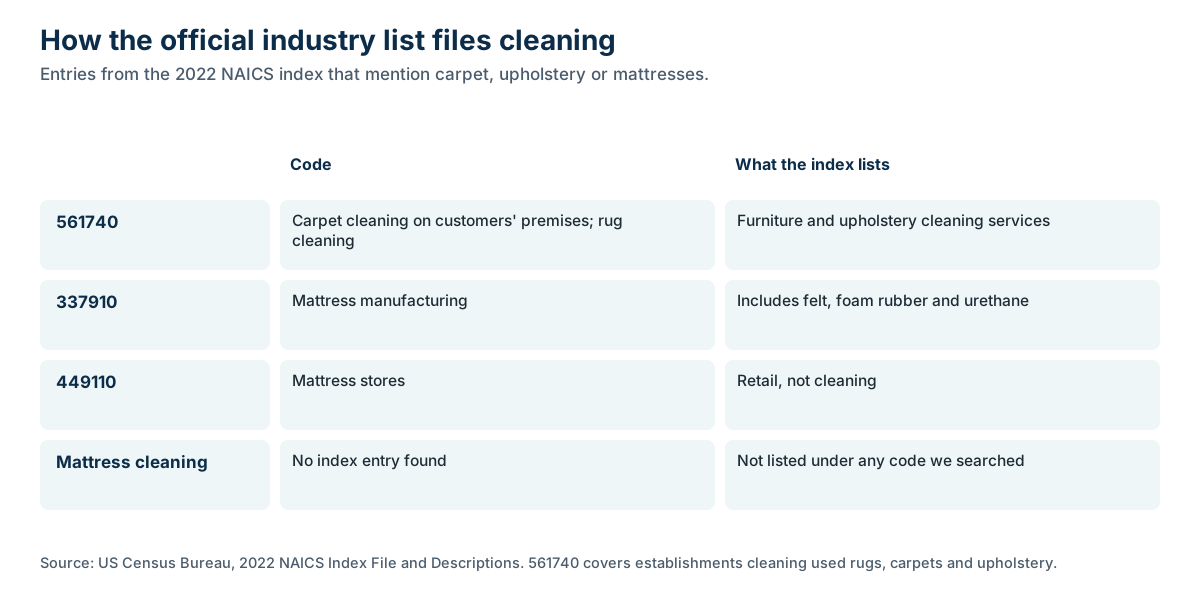
That's a classification fact, not a judgment, and it's where this hub on mattress cleaning done wrong starts. But it explains a lot. A mattress that has no category is filed with its nearest neighbor, and its nearest neighbor is upholstery. Whatever tools and habits serve upholstery and carpet will be the first ones brought to the bed.
How did carpet cleaning move into the home?
In steps, and the patent record dates them. Carpets used to leave the house. A 1977 patent recalls that "carpets were removed from their location in the home or office and taken to plants," where they were "generally tacked or nailed to a frame or border, scrubbed and rinsed thoroughly" and then left to dry.
The move into the home started early. A 1917 patent for a "Carpet washing and rinsing machine" describes a brush fed with "cleaning liquid as a soapy water," a roller to squeeze the suds back out and a fan to pull them up. The inventor notes the machine is adapted for cleaning carpets in place, without taking them up. That's the first idea the mattress later inherited: clean the object where it sits, by putting liquid in and pulling it back.
By the 1960s the same approach had reached furniture. A 1964 patent is titled "Steam-vacuum generator for rug and upholstery cleaning," and describes jetting pressurized steam of a detergent solution into "the pile, nap or weave of a fabric" and then applying suction. Upholstery now shared a machine with rugs.
When did the van arrive?
By the late 1970s. The 1977 patent calls its field portable steam carpet cleaning done on location, in the home or office. Its drawing shows the unit "positioned in the back of a van," and the text says the alkaline and vacuum tanks "hold about 135 gallons each." The head sprays "a dilute, hot detergent solution" into the carpet and vacuums it back to a waste tank.
By our reading, that business model shaped what came next. A van that carries large solution and waste tanks is built to clean a lot of surface per visit. Rooms of carpet fill the day; a sofa or two fills gaps. A mattress fits the gaps too, and it's the same type of fabric-covered object as the sofa. The history article puts this sequence alongside the older, dry methods that came before it.
What does carpet cleaning look like today?
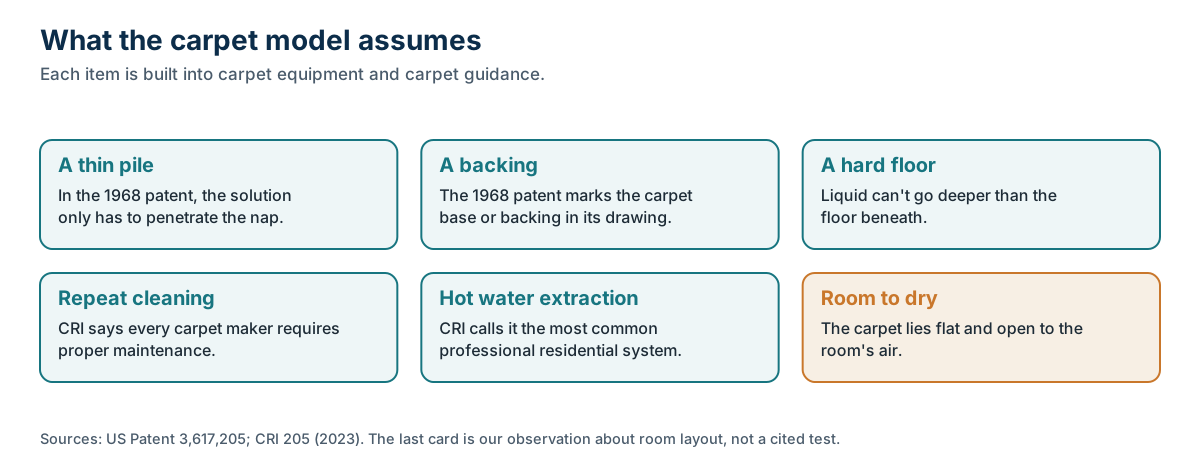
The Carpet and Rug Institute's residential standard, CRI 205, states it plainly: "The most common professional residential carpet cleaning systems used is a hot water extraction (HWE) system." It lists three forms: truck mount, professional portable with hose and wand, and self-contained walk-behind units. Hub 1 defines hot water extraction and explains how it works.
The standard is written for carpet, and it shows. Among the questions it expects a professional to ask is "Do we need to move any furniture?", adding that most cleaners don't move beds or heavy furniture. The bed is furniture to be worked around. That's sensible for carpet, and it's a hint about how a mattress fits into the work.
Is there a standard written for mattresses?
We found none. The IICRC publishes S300, which it describes as providing "a specific set of practical standards for upholstery cleaning," covering fibers, equipment, methods and inspections. The CRI publishes carpet standards. Neither one addresses the depth, layering and lack of drainage that make a mattress different.
Without a standard of its own, a mattress is cleaned by analogy. If the analogy is upholstery, the tools are upholstery tools, and in the patent record above, upholstery shared its machines with rugs and carpet. Hub 1's comparison of carpet and mattress equipment explains what those tools do. This hub's article on why carpet gear doesn't fit a mattress explains the physical mismatch.
Why didn't mattresses keep their older care routine?
Because the older routine was something owners did themselves, and it took effort. A 1940 USDA radio script on cotton mattresses passed on the department's advice: "They recommend sunning and beating every week if possible, or at least once a month; turning from side to side and from end to end very often." It added: "To keep a mattress clean use a washable mattress slip cover."
Sunning and beating suited a cotton mattress that could be carried outdoors. They don't suit a heavy foam or hybrid bed. When owners stopped hauling mattresses into the yard, the nearest professional service was the one already cleaning their carpet and sofa. That's our reading of the record, not something any source states, and the history article flags it the same way.
What changed when the mattress joined the route?
Mostly the object, not the method. A carpet is thin, sits on a backing over a hard floor and lies open to the room. A mattress is thick, has no backing, no drain and limited airflow beneath it. The method that suits the first object was applied to the second with smaller wands and the same principle: put liquid in, pull some back.
The consequences of that switch fill the rest of this hub, from where pushed-in water goes to why suction can't pull it all back. The language came along too. "Steam cleaning" stuck to machines that spray hot liquid, which is why steam cleaning means two different things.
What does this mean if you're hiring someone?
It means the name on the van tells you less than the method. Some carpet companies have built careful mattress practices; some mattress-only services use wet methods. Judge the method, not the category. Hub 6 covers choosing between a carpet cleaner and a mattress specialist without favoring either, and this hub's method questions help you get specific answers about water.
Sleep Sanitation's view
This section is our view. We're a mattress-only service, so we have an interest here, and we've tried to keep the history to what the records show. We started from the opposite end of the carpet model: put very little water in, so there's nothing to pull back out. That approach is our own reasoning, not a manufacturer exemption. Your care label and warranty terms govern, so check your warranty terms before you book. We use "sanitize" in the CDC's sense and make no disinfection claim. How our model differs is on how we're different.
What we don't know
- When mattress cleaning first became a routine add-on to carpet and upholstery work. The patents and industry codes show the origin, not the moment.
- How many mattress cleanings today use wet extraction. We found no public survey of methods.
- Whether any trade body is drafting a mattress-specific cleaning standard. We found no public announcement.
Changelog
- 6 October 2026: First published. Sources accessed on this date.
Sources
- 2022 NAICS Descriptions (561740 Carpet and Upholstery Cleaning Services) · US Census Bureau
- 2022 NAICS Index File · US Census Bureau
- US Patent 1,240,799: Carpet washing and rinsing machine (filed 1917) · Google Patents (USPTO record)
- US Patent 3,262,146: Steam-vacuum generator for rug and upholstery cleaning (filed 1964) · Google Patents (USPTO record)
- US Patent 4,154,578: Method and apparatus for cleaning a carpet on location (filed 1977) · Google Patents (USPTO record)
- CRI 205 Residential Carpet Standard for Maintenance and Cleaning (2023) · Carpet and Rug Institute
- ANSI/IICRC S300 Standard for Professional Upholstery Cleaning (overview page) · IICRC
- Housekeepers' Chat: Cotton Mattresses (radio script, 15 May 1940) · US Department of Agriculture, via Internet Archive
Last reviewed October 6, 2026. Manufacturer specifications and care instructions change; check the current version for your exact model. This page is general information, not medical advice. How we source and check pages: editorial standards.