
Short answer
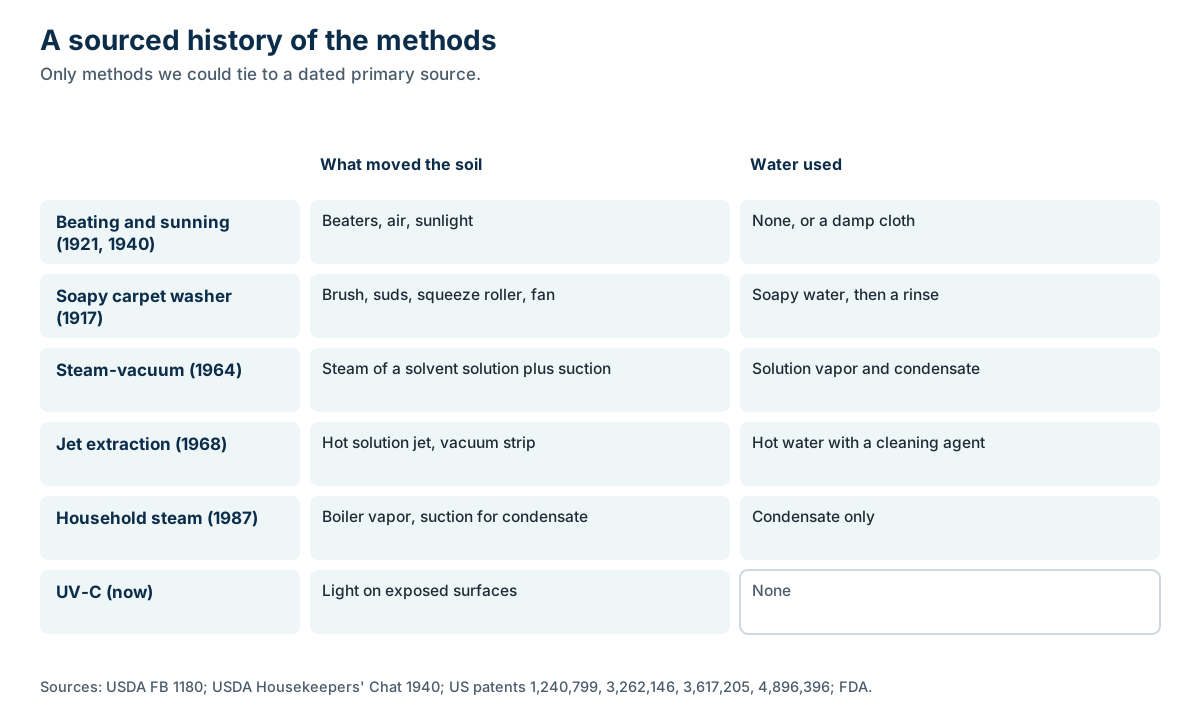
Early home care was dry: a 1921 USDA bulletin has upholstery beaten outdoors, and a 1940 USDA script recommends sunning and beating a cotton mattress. Wet methods were invented for carpet, from a 1917 soapy-water washer to 1960s steam-vacuum and 1970s hot-solution extraction from vans. Household steam generators with suction followed in the late 1980s, and UV-C is the newest addition. Only sunning and beating appear in a source written about mattresses.
Key terms used on this page
- Steam-vacuum cleaning (historical):
- A 1960s approach that jetted pressurized steam of a detergent or solvent solution into rug pile and immediately applied suction. Later carpet patents kept the steam name while spraying hot liquid.
- On-location (in situ) cleaning:
- Cleaning a carpet where it lies instead of sending it to a plant. A 1977 patent recalls that carpets were once nailed to frames, scrubbed and dried in plants before portable units allowed cleaning in the home.
- Hot-water extraction (HWE):
- The carpet industry's most common professional method. The Carpet and Rug Institute defines an extractor as equipment that uses pressure, water or cleaning solution, and suction to remove soil. It is often marketed as 'steam cleaning' even though it sprays hot water rather than steam.
- UV-C radiation:
- Short-wavelength ultraviolet light. The FDA describes it as a known disinfectant for air, water and nonporous surfaces, and warns that some consumer UV wands give off unsafe levels.
- Dry-vapor steam:
- Steam made in a sealed, pressurized boiler and released through a hose and nozzle as hot vapor with a low liquid-water content. In the vendor specifications we reviewed, professional units are rated from 80 psi (Ladybug 2350) to 150 psi (Daimer), with stated boiler temperatures from about 345°F (Optima) to 360°F (Daimer); these are maker claims. Daimer describes its steam as about 5% water or less and Vapor Clean claims 'just 5-6% moisture'; that is a vendor claim, not an independent standard.
Mattress cleaning methods have moved from dry to wet and partly back again. A 1921 USDA bulletin describes beating upholstery outdoors, and a 1940 USDA script recommends sunning and beating a cotton mattress. Wet methods were invented for carpet: a 1917 soapy-water washer, 1960s steam-vacuum machines and 1970s hot-solution extraction from vans. Household steam generators with suction appear in a late-1980s patent, and UV-C light is the newest addition. Of these, only sunning and beating appear in a source written about mattresses.
General information about mattress cleaning methods, not medical advice.
How we built this history
From dated primary records only. That means USDA publications held by the Internet Archive and US patents, which carry filing dates and describe exactly what the inventor claimed. A patent shows that an idea existed and how it was meant to work; it doesn't show how widely it was used, so we describe patents as claims and dates as filing dates. We left out anything we couldn't tie to a record, and we list those cuts near the end. This article is part of the hub on mattress cleaning done wrong, and its job is to show where the wet habit came from.
Before machines: beating, airing and sun
The earliest care was mechanical and dry. USDA's Farmers' Bulletin 1180, "Housecleaning Made Easier" (1921), lists carpet beaters and notes that "Those of flat reed are least hard on the carpet fibers." It advises that upholstered furniture "should be taken out of doors occasionally and beaten with a flat carpet beater." Air and sun did the rest: where pests were found, the bulletin has carpets taken outside to be "aired and sunned."
Mattresses got the same treatment. A 1940 USDA radio script on making cotton mattresses tells listeners to "beat the mattress and sun it on both sides every day for about two weeks" after making one. For ongoing care, the department's demonstrators "recommend sunning and beating every week if possible, or at least once a month." The script's prevention advice is plain too: "To keep a mattress clean use a washable mattress slip cover."
A 1921 low-moisture method
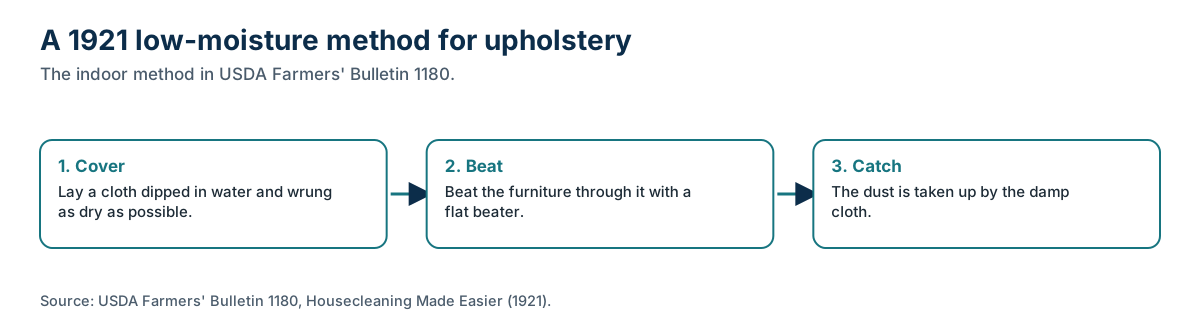
The same bulletin describes something closer to modern low-moisture work. For upholstery cleaned indoors, "The article to be cleaned is first covered with a cloth that has been dipped in water and wrung as dry as possible, then beaten with a flat beater, the dust being taken up by the damp cloth."
That's a small amount of water, held in a cloth, used to catch dust rather than to flush the fabric. It's worth noticing because the later wet methods went the other way. We aren't recommending beating a foam mattress; the point is that a century ago, the official advice for upholstery already kept water to a minimum.
1917: soapy water on the floor
The first wet machine in our record is for carpet. A 1917 patent, the "Carpet washing and rinsing machine," feeds "cleaning liquid as a soapy water" through a brush whose movement "produces a suds upon the carpet." A roller follows to squeeze out the soapy liquid, which a fan pulls up by suction, and a rinse brush comes after. The inventor notes the machine can clean carpets where they lie on the floor.
The design sets a pattern that lasts: liquid in, mechanical action, suction back out. It's a carpet machine, built for a thin layer on a hard floor.
1964 to 1968: steam-vacuum and jet extraction
By the 1960s, rugs and upholstery shared machines. A 1964 patent describes "high pressure steam of a solventcontaining solution" delivered to one chamber of a nozzle while the other chamber applies vacuum. The inventor calls it effective "to discharge a jet of pressurized steam of a solution containing a vaporizable solvent into the pile, nap or weave of a fabric," then immediately apply suction.
A 1968 patent for cleaning carpets shows the next step. Its head sprays hot solution and steam under pressure; "the hot solution penetrates the nap by the force of the jet, aided by capillarity and gravity." It names the problem that followed in-place cleaning: "wicking is a problem," with adverse effects "well known both to the trade and to householders who have had carpets cleaned by in situ methods." The steam article follows how the word "steam" stayed with these machines as they shifted to hot liquid.
1977: on location, from a van
By the late 1970s, the machine had moved into a vehicle. A 1977 patent shows its unit mounted in a van with large solution and waste tanks. It recalls that carpets used to be taken to plants and "tacked or nailed to a frame or border, scrubbed and rinsed thoroughly," and contrasts that with portable methods that clean "without having to remove the carpets and send them to an inplant operation."
Its spray was hot, alkaline detergent, which the inventor wanted to neutralize with an acid rinse. That residue story belongs to detergent residue in a mattress. For the history, the key point is the business model: a van full of solution, sent to homes. The carpet add-on article explains how mattresses joined that route.
1987: small boilers with suction
A different line of development appears in a household appliance patent with an Italian priority date of 1987. It observes that "small steam generators for household use are enjoying ever-increasing acceptance by the market," and pairs a boiler with an electric aspirator. After steaming, the aspirator is switched on "to remove by suction the condensate left on the surface being cleaned."
That's a meaningful difference. The water involved is condensate on a surface, not a solution sprayed into fabric. Hub 1 explains what dry vapor steam cleaning is today and how much moisture it uses; we don't claim this patent describes any particular modern machine.
Now: UV-C light
The newest addition uses no water at all. The FDA's consumer update on UV wands states: "UV-C radiation is a known disinfectant for air, water, and nonporous surfaces." The same page warns that some consumer wands give off unsafe levels of UV-C. A mattress cover is porous, so whatever UV-C does, it acts on exposed surfaces. We make no disinfection claim for UV-C or anything else.
What we cut from this history
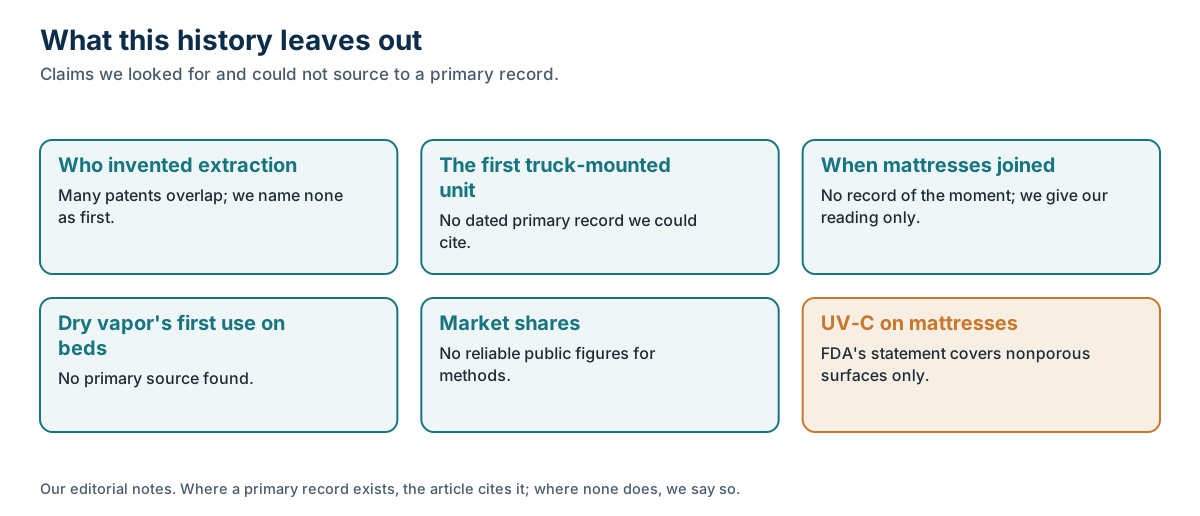
Several claims that often appear in cleaning histories didn't survive the sourcing check. We couldn't find a dated primary record for who invented hot water extraction, so we name no inventor as first; many patents overlap and cite each other. We found no primary record of the first truck-mounted unit, the first use of dry vapor on mattresses or the moment mattresses became a routine carpet add-on. We found no reliable public figures for how common each method is. And we found no source showing UV-C reaches inside a mattress, so we don't suggest it does.
What the history suggests
Read in order, the record shows that the wet methods were designed for carpet and rugs and extended to upholstery, while the methods described for mattresses were dry. Nothing in the record we found shows wet extraction being developed for beds. The federal industry code still reflects that: its 2022 description of code 561740 covers "used rugs, carpets, and upholstery." Why that mismatch matters is the subject of why carpet gear doesn't fit a mattress.
Sleep Sanitation's view
This section is our view. We like this history because it shows low moisture isn't a gimmick; a 1921 government bulletin wrung its cleaning cloth dry. Our own service pairs dry vapor with HEPA vacuuming and UV-C light, with enzyme treatment for urine and organic odor where it's needed. That's our own reasoning, not a manufacturer exemption, and your care label and warranty terms govern; check your warranty terms before you book. We use "sanitize" in the CDC's sense and make no disinfection claim. The steps are on our process page.
What we don't know
- How widely each patented machine was built or used. Patents record ideas and designs, not sales.
- When the first wet extraction of a mattress took place. We found no dated record.
- Whether earlier, unindexed sources describe mattress cleaning methods we've missed. Our record is limited to what we could find and cite.
Changelog
- 6 October 2026: First published. Sources accessed on this date.
Sources
- Farmers' Bulletin 1180: Housecleaning Made Easier (1921) · US Department of Agriculture, via Internet Archive
- Housekeepers' Chat: Cotton Mattresses (radio script, 15 May 1940) · US Department of Agriculture, via Internet Archive
- US Patent 1,240,799: Carpet washing and rinsing machine (filed 1917) · Google Patents (USPTO record)
- US Patent 3,262,146: Steam-vacuum generator for rug and upholstery cleaning (filed 1964) · Google Patents (USPTO record)
- US Patent 3,617,205: Method for cleaning carpets and like materials (filed 1968) · Google Patents (USPTO record)
- US Patent 4,154,578: Method and apparatus for cleaning a carpet on location (filed 1977) · Google Patents (USPTO record)
- US Patent 4,896,396: Electrical household appliance for steam cleaning (Italian priority 1987) · Google Patents (USPTO record)
- Beware of Ultraviolet Wands That Give Off Unsafe Levels of UV Radiation · US Food and Drug Administration
- 2022 NAICS Descriptions (561740 Carpet and Upholstery Cleaning Services) · US Census Bureau
Last reviewed October 6, 2026. Manufacturer specifications and care instructions change; check the current version for your exact model. This page is general information, not medical advice. How we source and check pages: editorial standards.