
Short answer
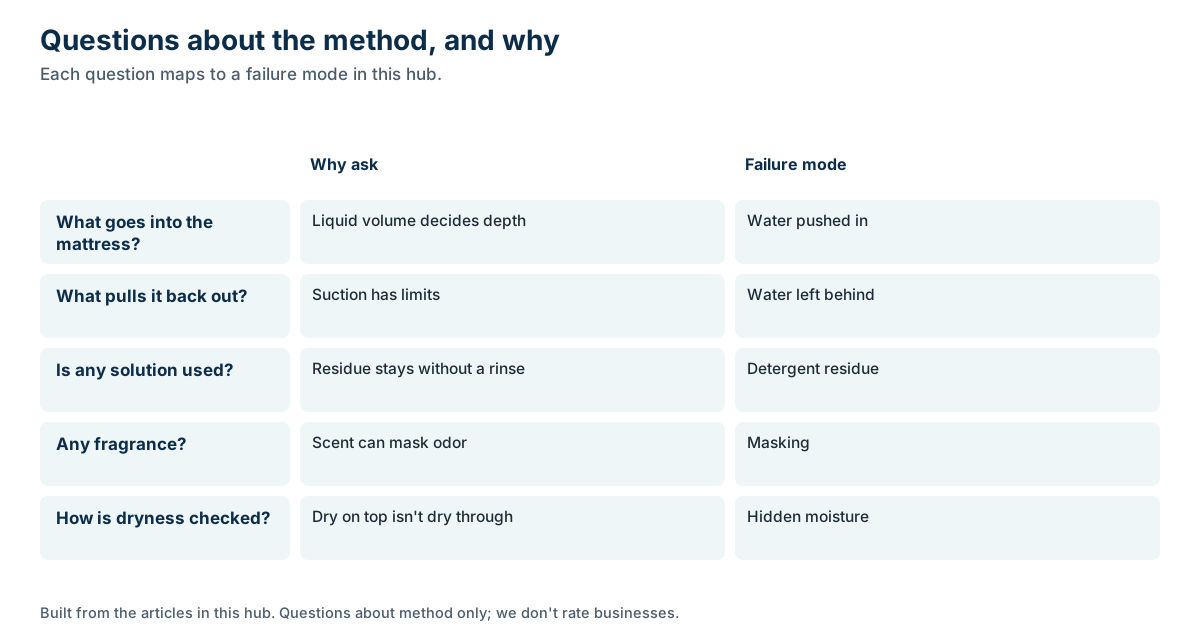
Ask about the method, because each failure mode in this hub has a matching question. What goes into the mattress, and how much? What pulls it back out? Is any cleaning solution used, and is anything left behind? Is fragrance added? How is dryness checked before the visit ends? Useful answers are specific and checkable. Do your own homework first: read the care label and the warranty.
Key terms used on this page
- Quote comparison:
- Lining up two mattress cleaning quotes item by item: method, inspection, seams and edges, urine treatment, drying guidance and surcharges. The cheaper quote may be for a different job.
- Residual moisture:
- Water left in a material right after cleaning, before drying. For carpet, the Carpet and Rug Institute's test for its deep-cleaning extractor seal allows up to 8 ounces per square yard. We have not found an equivalent published test for mattresses.
- Detergent residue:
- Cleaning chemistry left behind in the fabric after cleaning. The Carpet and Rug Institute says residue from over-concentrated solution contributes to rapid re-soiling, which is why extraction cleaners are told to rinse.
- Odor masking:
- Covering a smell with fragrance instead of removing its source. The Carpet and Rug Institute warns that some odor products may simply mask the odor, which can reappear in high humidity.
- IICRC S300:
- The ANSI/IICRC procedural standard for professional upholstery cleaning, covering fibers, equipment, methods and inspections. It addresses upholstery; we found no equivalent consensus standard written for mattresses.
Before hiring a mattress cleaner, ask about the method, because each failure mode in this hub has a matching question. What goes into the mattress, and how much? What pulls it back out? Is any cleaning solution used, and is anything left behind? Is fragrance added? How is dryness checked before the visit ends? Useful answers are specific and checkable. Do your own homework first: read the care label and the warranty.
General information about mattress cleaning methods, not medical advice.
Why ask about method rather than reputation?
Because the physics doesn't care who's holding the wand. The problems in this hub, water left deep in foam, residue, masking and slow drying, follow from what a method does, not from who uses it. A well-run business can use a method that doesn't suit mattresses, and a small one can use one that does. Questions about method get at the thing that decides the outcome.
We also don't rate businesses, here or anywhere in the Knowledge Center. This list is about methods. Hub 6's questions for an expensive mattress covers owner-side checks like age and construction; this article focuses on the method questions that map to this hub's failure modes.
Is asking questions normal in this trade?
Yes, on the carpet side it's built into the standard. CRI's residential carpet standard gives consumers a list of questions for carpet cleaners, including whether they use approved solutions and equipment and "Do you vacuum before deep cleaning the carpet?" It also lists questions a good cleaner should ask you, such as "Do you have any odor issues?" and "Do you have any stains? If so, what have you used to try to remove the stain?"
The same habit fits mattresses, with different questions, because a mattress fails differently. The IICRC publishes S300 for upholstery, which it describes as "a procedural standard," but we found no consensus standard for mattresses, so the questions have to do more work.
Question one: what goes into the mattress, and how much?
This is the most useful question. The amount of liquid decides how deep water goes, how far it spreads and how much is left behind. Water pushed into a mattress spreads by capillary action and gravity, as where water goes explains. A useful answer names the machine and what leaves the nozzle: hot solution, plain water or boiler-made vapor.
If the answer is "steam," ask one more question: does the machine have a pressurized boiler, or does it spray heated liquid? Why steam cleaning means two different things explains why the word alone won't tell you.
Question two: what pulls it back out?
If liquid goes in, something has to recover it. Suction has a hard ceiling and leaves water behind in small pores, as the suction article explains. Hub 1 defines what stays as residual moisture. OpenStax's physics text explains the ceiling in one line: "Fluids push rather than pull, so the smallest absolute pressure is zero," in its section on gauge and absolute pressure. A useful answer is honest that extraction recovers part of the water, not all of it, and says what happens next.
If little liquid goes in, there's little to recover. That's the logic behind what a low-moisture method does differently.
Question three: is any solution used, and does any stay?
Detergent stays when water evaporates. A 1977 carpet patent complained that alkaline residue left carpet at the detergent's own pH and sped resoiling. Carpet can be rinsed; a mattress mostly can't, as the detergent residue article explains. Ask what product is used, where, and whether any is meant to remain in the fabric. Hub 1's glossary defines detergent residue.
Question four: is fragrance added?
A pleasant smell isn't the same as a removed odor. Fragrance can weaken how strongly you perceive a malodor without changing its source, as fragrance masking versus odor removal explains. Ask whether a scent is applied and why. If the answer is about leaving it smelling fresh, ask what's done about the source of any odor.
Question five: how is dryness checked?
Dry on top isn't dry through. A useful answer describes a check, such as a moisture meter reading or a comparison against an untreated area, not just a hand on the surface. Ask what happens if the reading is high, and how long you should leave the bed unmade. Signs your mattress was overwetted explains what you can check yourself afterward.
What do useful answers sound like?
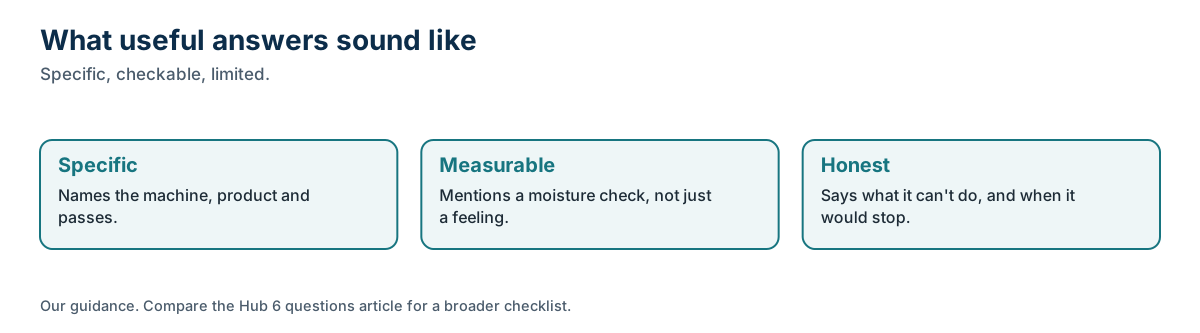
Specific, checkable and limited. Specific means naming the machine, the product and the number of passes. Checkable means describing a measurement, not a feeling. Limited means saying what the method can't do, and when the cleaner would stop or recommend something else. Hub 6 lists problems professional cleaning can't fix; an honest cleaner will mention some of them.
What if the answers don't match the bed?
Then the method and the mattress may not suit each other, which isn't a judgment of anyone. A method built for carpet over a floor can be excellent on carpet. If what you hear involves a volume of liquid, a long rinse or a fragrance finish, weigh it against your mattress's construction and care label. Thick foam, wool and natural latex are the materials this hub flags as slow to dry, and Hub 2 covers which mattress materials are most moisture sensitive.
The FTC's business guide to warranty law notes that implied warranties "do not cover problems such as those caused by abuse, misuse, ordinary wear, failure to follow directions, or improper maintenance." Choosing a method that fits the care label is part of following directions. When in doubt, ask the manufacturer what it recommends before anyone starts, and keep a note of the answer.
What should you do before you call?
Read your own documents. The Better Sleep Council's care guidance says: "Always check your care label or visit the manufacturer's website for recommendation first!" The FTC's warranty guide says that "Whenever there's a warranty, the law says it must be available for you to read before you buy." The Sleep Foundation's warranty guide notes that liquid damage often voids mattress warranties, as the warranty article explains.
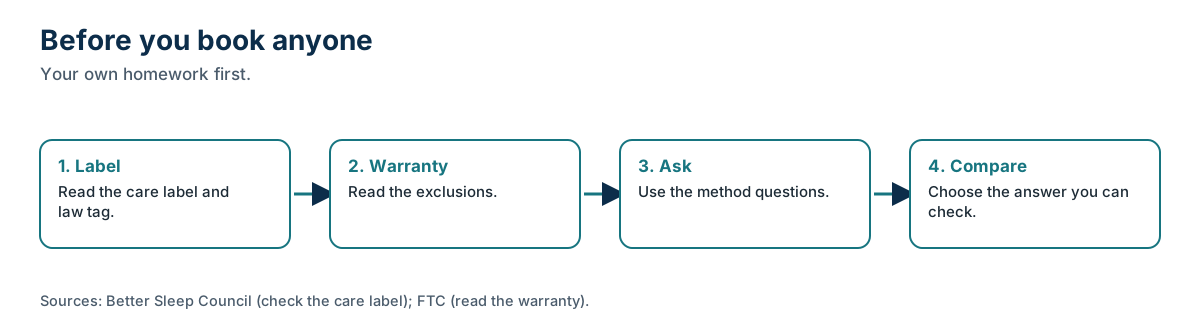
Then compare answers, and only after that compare prices. Hub 6 explains how to compare quotes; two prices compare well only when the methods behind them are similar.
Sleep Sanitation's view
This section is our view. We'd rather be asked these questions than not, and we answer them the same way for every bed: Italian-made Vapor Clean boiler machines, organic methods by default, enzyme work where urine calls for it, and no extraction step. Every visit includes two checks, a moisture check and the built-in bed mite sensor on our UV-C vacuum; bedroom CO₂ testing is optional and priced by quote. That's our reasoning, not a manufacturer exemption. Your care label and warranty terms govern, so check your warranty terms before you book. We use "sanitize" in the CDC's sense and make no disinfection claim. See our process page. This article belongs to the hub on mattress cleaning done wrong.
What we don't know
- Which of these questions best predicts a good outcome. We found no study linking pre-hire questions to cleaning results.
- How consumers choose mattress cleaners today. We found no survey.
- Whether a consensus mattress cleaning standard is in development. We found no public draft.
Changelog
- 6 October 2026: First published. Sources accessed on this date.
Sources
- CRI 205 Residential Carpet Standard for Maintenance and Cleaning (2023) · Carpet and Rug Institute
- ANSI/IICRC S300 Standard for Professional Upholstery Cleaning (overview page) · IICRC
- Caring for a Mattress · Better Sleep Council (mattress industry consumer site)
- Warranties (consumer advice) · Federal Trade Commission
- Businessperson's Guide to Federal Warranty Law · Federal Trade Commission
- Mattress Warranties · Sleep Foundation
- US Patent 4,154,578: Method and apparatus for cleaning a carpet on location (filed 1977) · Google Patents (USPTO record)
- College Physics 2e, 11.6 Gauge Pressure, Absolute Pressure, and Pressure Measurement · OpenStax (Rice University)
Last reviewed October 6, 2026. Manufacturer specifications and care instructions change; check the current version for your exact model. This page is general information, not medical advice. How we source and check pages: editorial standards.