
Short answer
Mattress stains fall into chemical families, and each family needs a different first move. Protein stains like blood and vomit set with heat, so extension guides start them in cold water. Tannin stains from coffee, tea and wine respond to oxidizers. Body oils and lotions need detergent or solvent. Dyes are the hardest. Urine has its own hub, and severe or biohazard jobs are quoted before we start.
By Matthew Brunken · Updated October 5, 2026 · Last reviewed October 5, 2026 · Sources · Editorial standards
Most stain advice is a list of tricks. This hub is about why the tricks work, and why some of them backfire on a mattress. A mattress stain is a chemical deposit in a layered, absorbent object that can't be thrown in a washing machine. What the deposit is made of decides whether cold water, an enzyme, an oxidizer, a detergent or nothing at all is the right first move. What the mattress is made of decides how much of that move it can take.
This hub is general information about stain chemistry, not medical advice. For health questions, ask a doctor.
Stains come in families
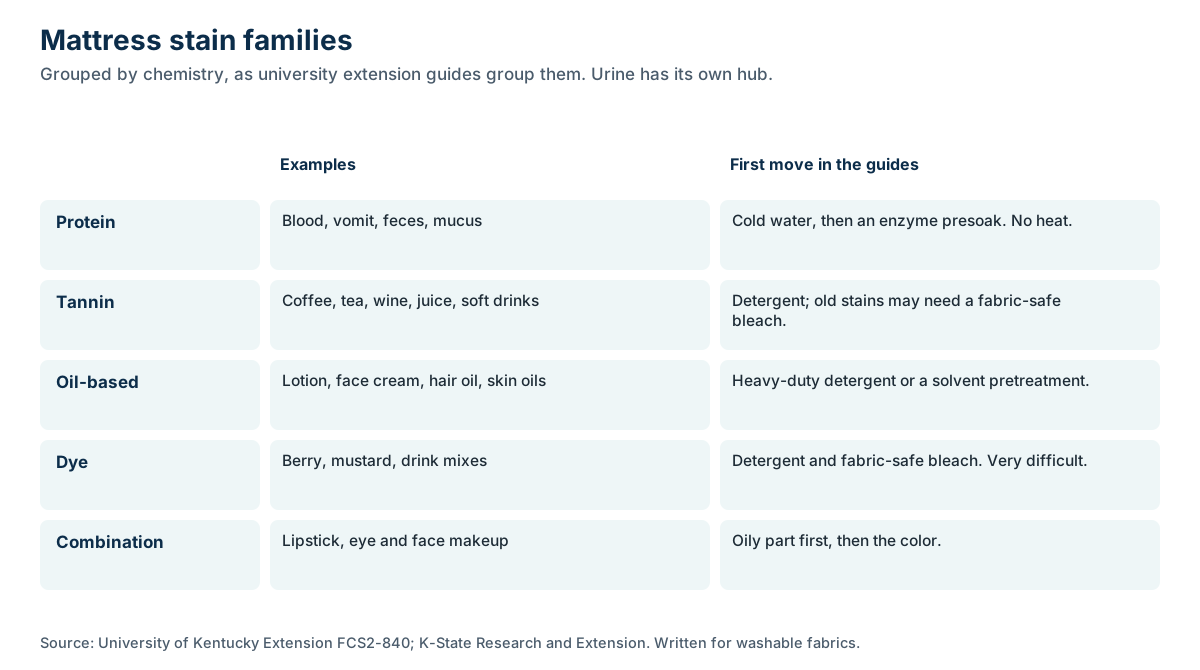
Extension services that teach textile care sort stains by chemistry, not by color. University of Kentucky Extension uses five families: protein, tannin, oil-based, dye and combination, plus a short list that needs special handling. K-State Research and Extension groups them the same way and pairs each family with a treatment: protein stains need enzymes, oil stains need enzymes or a solvent, and dye and tannin stains need a bleaching agent. Here is the summary, with the urine exception noted.
| Stain family | Examples listed by Kentucky Extension | What does the work | What the extension guides do first |
|---|---|---|---|
| Protein | Blood, vomit, feces, mucus, egg (urine is in our accidents hub) | Proteins that coagulate with heat | Cold water, then an enzyme presoak (UKY, Iowa State) |
| Tannin | Coffee, tea, alcoholic drinks, fruit juice, soft drinks | Plant polyphenols and roasting pigments | Detergent; old stains may need a bleach that's safe for the fabric (UKY) |
| Oil-based | Hand lotion, face cream, hair oil, collar and cuff greasy rings | Fats, oils and waxes, including skin oils | Heavy-duty detergent or a solvent pretreatment (UKY) |
| Dye | Cherry, blueberry, mustard, powdered drink mix | Colorants that bond to fiber | Detergent and a bleach that's safe for the fabric; "very difficult to remove" (UKY) |
| Combination | Lipstick, eye makeup, face makeup | An oily or waxy part plus a dye or pigment | Two steps: the oily part, then the color (UKY) |
Two cautions sit under that table. First, these guides were written for washable fabrics. The chemistry transfers to a mattress; the soaking and laundering don't. Second, real stains are mixtures. Vomit can carry protein, stomach acid, fats and bile pigment at once. Menstrual blood carries tissue from the uterine lining as well as blood. The family tells you where to start, not where you'll finish.
Why the first move matters most
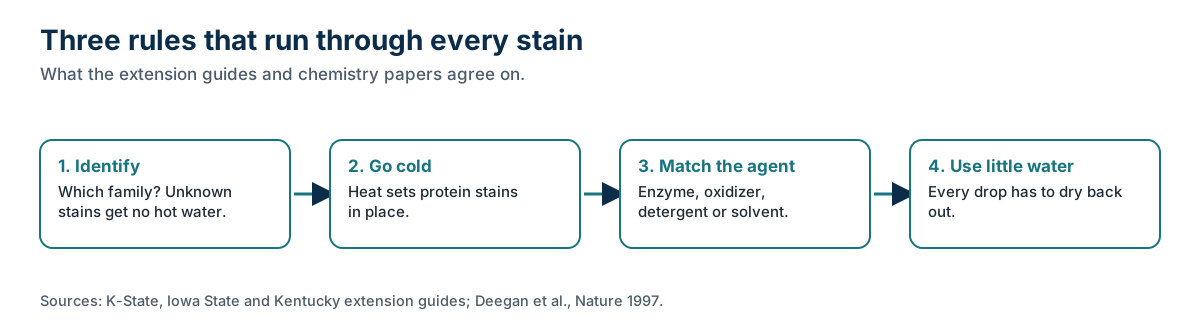
The one rule every extension source repeats is about heat and protein. Iowa State's AnswerLine explains that hot water "cooks the protein, causing it to coagulate between the fibers," and Kentucky Extension says flatly: "Never iron stained fabrics because heat sets stains." Georgia Extension's blood guide puts it as "Stains set by heat will be difficult to remove." That's why the heat article sits first in this hub. On a mattress, heat also comes from hair dryers, irons pressed on a towel and steam, so the question of what has to happen before any heat matters more than it would on a shirt.
The second rule is about time. Blood changes color as hemoglobin oxidizes; Bremmer and colleagues measured that shift and found it fast in the first hours and slower afterward. Body oils yellow slowly as they react with air, a process Chi and Obendorf's review links to discoloration of aged oily soils. The fresh versus dried blood and sweat and yellowing articles cover each.
The third rule is about water. Every liquid you add to a mattress has to leave again, and as it leaves it carries dissolved material toward the edge of the wet area. Deegan and colleagues explained this ring-forming flow in a drying drop. The article on stains that come back applies it to a mattress, and Hub 5 explains surface moisture versus saturation.
What this hub covers
Blood: why heat can set it, fresh versus dried, hydrogen peroxide and colored ticking and menstrual blood. Body fluids and oils: sweat and yellowing, vomit and lotion, makeup and hair oil. Drinks: coffee, wine and tea. How stains behave: rings and reappearing stains, which enzyme for which stain and pH and mattress materials.
Two topics live elsewhere so they aren't repeated here. Urine, with its urea, ammonia and uric acid chemistry, is covered in the accidents hub, starting with the urine and odor guide. Whether a given material tolerates cleaning at all, material by material and maker by maker, is in the compatibility hub; this hub links to it wherever a material question comes up.
How we handle evidence here
The sources are university extension guides for the practical rules, and peer-reviewed papers and NIH resources for the chemistry. We quote extension guidance as written and note that it was written for washable fabrics. Chemistry papers are cited for what they measured: the bloodstain color study measured stains on a lab surface under set conditions, not stains in a mattress, and we say so. Where a figure appears, it comes from a linked source. We don't give stain-removal odds, because no source we found measures them for mattresses.
Sleep Sanitation's position
This section is our view. Stain chemistry is the reason we inspect before we treat. A protein stain, an oil stain and a dye stain call for different first steps, and a wool-topped mattress takes different products from a foam one. Organic cleaning methods are our default, with enzyme treatment for urine and organic odor, and our Italian-made Vapor Clean machines let us adjust output and pass speed to the material in front of us. We use "sanitize" in the cleaning sense set out in Hub 2's entry on the CDC's cleaning and sanitizing terms, and we make no disinfection or health claim.
For blood and other body fluids we stay with general chemistry on this site and don't publish a step-by-step process. Every bed gets assessed, and severe or biohazard jobs are quoted before we start. We can't promise that any stain will come out; some won't. That approach is our own reasoning, not a manufacturer exemption, and your care label and warranty terms govern your decision, so check your warranty terms before you book. The first mattress is $249, and the pricing page lists everything else. Questions first? Call (402) 512-5658.
How to use this hub
If you're looking at a stain right now, find its family in the table and open that article; each one opens with the answer. If a stain keeps coming back, start with why stains reappear. If you're about to reach for a product, read which enzyme for which stain and pH and mattress materials first, then check the material's page in the compatibility hub.
What we don't know
- How often common stains come fully out of a mattress, as opposed to a washable fabric. We found no study that measures it.
- How the stain chemistry studies, mostly run on glass, paper or cotton swatches, translate to quilted ticking over foam.
- How long a stain can sit before it can't be lifted. The sources describe faster and slower changes, not a cutoff.
Changelog
- 5 October 2026: First published. Sources accessed on this date.