
Short answer
Each material has a different weak point. Wool is a protein fiber: textile sources warn that too much alkali damages it, ammonia damages it, and enzymes that digest protein can digest it. Polyurethane foam's urethane links can break down by hydrolysis, and chlorine bleach is ruled out on it. Cotton is cellulose, which strong acid breaks down. pH also changes stains themselves: alkalies can set tannin stains and shift wine's color.
Key terms used on this page
- pH:
- A scale for how acidic or alkaline a solution is. Wool is damaged by too much alkali, while cotton's cellulose is broken down by strong acid, so a cleaner's pH matters as much as its strength.
- Wool batting:
- A layer of wool fiber placed under the ticking, often in natural mattresses, for comfort and moisture management. Wool fiber takes up moisture from the air, which is why it matters how much water a cleaning method leaves behind.
- Polyfoam (polyurethane foam):
- Conventional polyurethane foam, used for comfort, transition and base layers. Like memory foam it has cells that liquid can enter; Casper warns that 'the foam in the mattress core will soak up water and detergent.'
- Tannin stain:
- A stain from plant drinks such as coffee, tea, wine, fruit juice and soft drinks. The colored compounds are plant polyphenols and, in coffee, brown roasting pigments. Old tannin stains may need an oxidizing bleach that's safe for the fabric.
- Protease:
- An enzyme that cuts proteins at their peptide bonds. In cleaners it targets blood, vomit and other protein soil, and because wool is protein, Kentucky Extension warns against enzyme presoaks on wool and silk.
pH affects wool, foam and cotton differently because each material has its own weak point. Wool is a protein fiber, so textile sources warn that too much alkali damages it, ammonia damages it, and enzymes that digest protein can digest it. Polyurethane foam's urethane links can break down by hydrolysis, and chlorine bleach is ruled out on it. Cotton is cellulose, which strong acid breaks down. pH changes the stains, too: alkalies can set tannin stains, and they shift the color of wine.
General information about textile and polymer chemistry, not medical advice.
What does pH mean for cleaning?
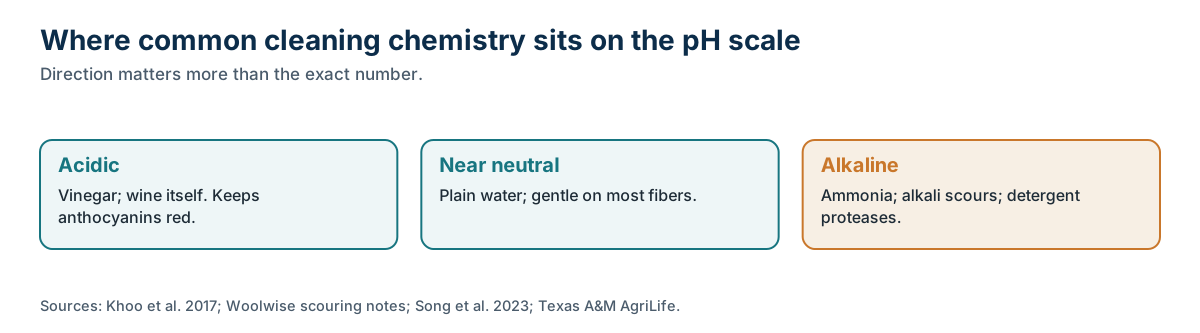
pH is a scale of how acidic or alkaline a solution is, with neutral in the middle. Vinegar sits on the acidic side. Ammonia sits on the alkaline side, and so do the conditions that many detergent enzymes prefer: Song and colleagues note that detergent alkaline proteases "exhibit the highest activity in the pH range of 8 to 13." Alkalinity also helps with grease. The Woolwise scouring notes describe "Converting the oil, grease or fat into a soap by using an alkali," a reaction called saponification, and add the catch: "too much alkali can damage wool."
So pH is a trade-off. The chemistry that lifts a stain can be the same chemistry that harms a fiber, and every mattress material draws that line in a different place.
Why is wool so sensitive to alkali?
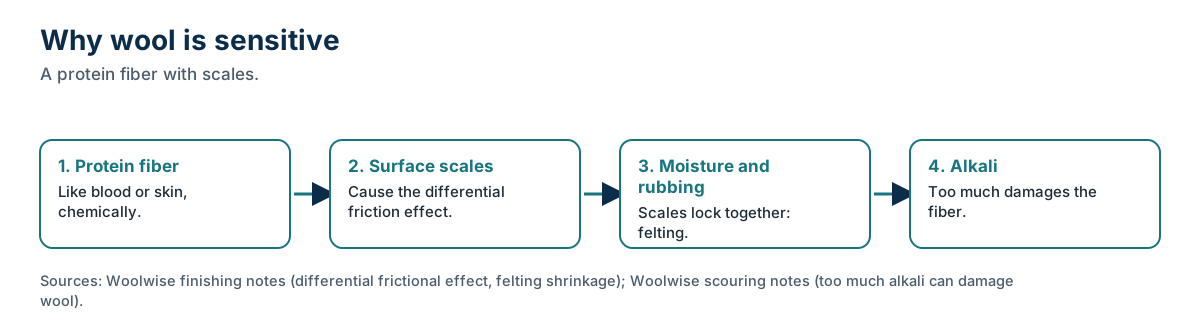
Wool is a protein fiber, chemically closer to hair than to cotton. Alkali attacks it, which is why the Woolwise notes warn against too much in scouring and why Georgia Extension states plainly that "Ammonia damages silk and wool." Kentucky Extension adds two more cautions: chlorine bleach "should not be used on fabrics containing silk, wool, spandex, or urethane," and enzyme presoaks shouldn't be used on silk or wool "since enzymes digest protein."
Wool has a second weakness that isn't about pH at all. The Woolwise finishing notes explain that wool fibers "have surface scales that give rise to the so called differential frictional effect (DFE)," which "can lead to felting shrinkage." Felting happens when wool is worked in water: "If, however, some mechanical action is applied, particularly in an acid medium, the fibres can mat together." The industrial version, called milling, runs "under mildly alkaline conditions or under strongly acid conditions." Either way, the trigger is water plus rubbing, and the result is "an irreversible shrinkage."
What can pH do to polyurethane foam?
Polyurethane foam is built from urethane links. Lapcik and colleagues note that "the urethane or carbamate linkage is also susceptible to hydrolysis," though it "occurs less readily than with the carboxylic ester linkage." In their conditioning tests on PU foam, they identified signs of matrix hydrolysis at the hottest, most humid settings. That's a laboratory finding about heat and moisture, not about household cleaners, and we found no study measuring cleaner pH against mattress foam.
What the extension guides do say is narrower. Kentucky lists polyurethane foam among materials chlorine bleach shouldn't be used on. Beyond that, the practical rule is the moisture rule: keep foam from staying wet. The compatibility hub has the per-material answers for memory foam and latex.
What about cotton?
Cotton is cellulose, a chain of sugar units. Strong acid can break those chains, which is how laboratories make cellulose nanocrystals; Pandi and colleagues produced them from cotton by acid hydrolysis. That's far stronger than anything used in cleaning, but it shows the direction: acid is cotton's weak side, the reverse of wool. Mild acids are a different matter; Kentucky's guide lists white vinegar among its everyday stain-removal supplies for washable fabrics.
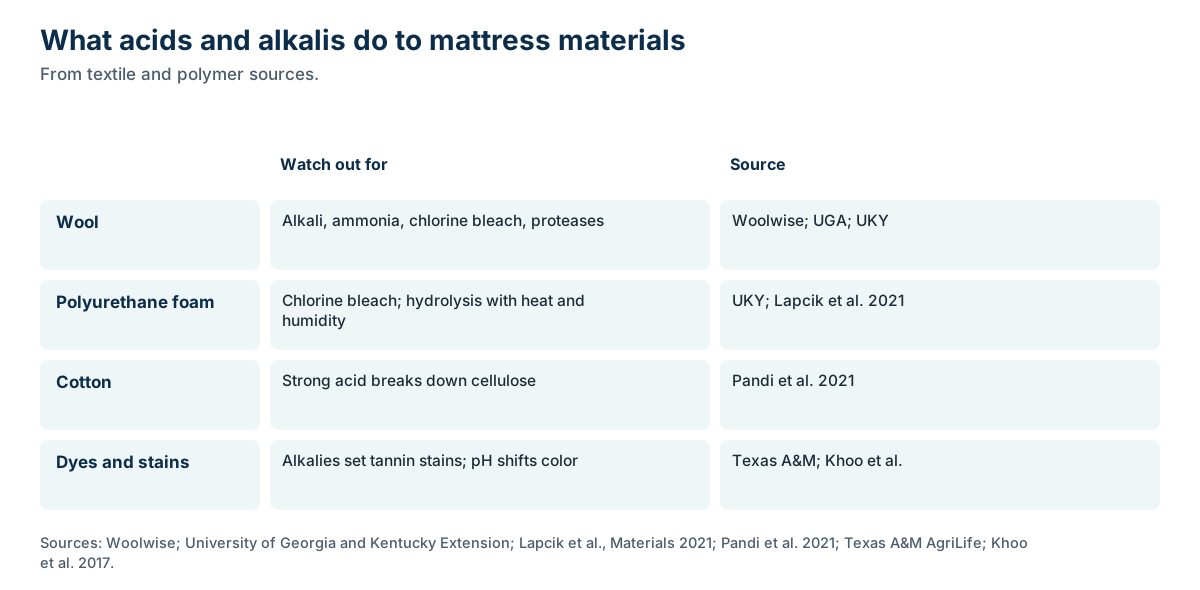
| Material | What it's made of | Watch out for | Source |
|---|---|---|---|
| Wool | Protein fiber with scales | Alkali, ammonia, chlorine bleach, proteases; water plus rubbing | Woolwise; UGA; UKY; Woolwise finishing |
| Polyurethane foam | Urethane-linked polymer | Chlorine bleach; hydrolysis under heat and humidity | UKY; Lapcik 2021 |
| Cotton | Cellulose | Strong acid | Pandi 2021 |
| Stains and dyes | Pigments, tannins, proteins | Alkalies set tannin stains; pH shifts anthocyanin color | Texas A&M; Khoo 2017 |
How does pH change the stain itself?
Two ways. First, setting. Texas A&M AgriLife notes that "Some stains (for example coffee, tea, and fruits) are set by alkalies such as ammonia," and that blood and vomit "are set by alcohol." Choosing the wrong pH can make a stain more permanent.
Second, color. Khoo and colleagues write that "In acidic condition, anthocyanins appear as red but turn blue when the pH increases." A red wine or berry stain treated with an alkaline cleaner can turn blue-gray, which looks like progress until you realize the pigment is still there. The coffee, wine and tea article covers that in detail, and the enzyme article explains why alkaline conditions suit proteases but not wool.
Why do guides use vinegar for some stains and ammonia for others?
Because each one pushes pH in a different direction, and the stain decides which direction helps. Kentucky's perspiration advice is a clear example: if sweat has changed a fabric's color, "apply ammonia to fresh stains or white vinegar to old stains." The same guide shows that pH can move dyes, too. Its note on white vinegar reads: "If the dye changes color after use, rinse well with water to remove vinegar and add a few drops of ammonia to the area to neutralize." It also warns, "Do not use colored vinegar—it can leave a stain."
Those instructions were written for washable fabric, where a rinse is easy. On a mattress, the logic still holds but the margin is smaller. Ammonia is ruled out on wool by Georgia's warning, and on tannin stains by Texas A&M's. Vinegar is the milder choice on many fabrics, but it can still shift a dye, which is why the spot test comes first. Whatever the product, it has to be blotted out with very little water.
What does this mean in practice?
Identify the material before choosing the chemistry. A wool-topped mattress calls for mild, low-agitation care; a foam mattress calls for limited moisture; a cotton ticking tolerates more but can still lose color. Check the care label first, test any product on a hidden spot, and keep the area unmade until dry to the touch. We don't repeat the yes-or-no answers for each material here because the compatibility hub keeps them in one place, including wool and moisture limits.
Sleep Sanitation's view
This section is our view. We choose products by material, which is why wool gets milder treatment and less agitation than synthetic ticking. Organic methods are our default, our Italian-made Vapor Clean machines let us control moisture, and each visit includes a moisture check and the built-in bed mite sensor. We can't promise a stain will lift, and we make no disinfection claim; the CDC's cleaning and sanitizing terms explain why. This is our own reasoning, not a manufacturer exemption. Your care label and warranty terms govern, so check your warranty terms before you book. Prices are on the pricing page, starting at $249 for the first mattress, and the stain chemistry hub links the other articles.
What we don't know
- How household cleaners at typical strengths affect mattress foam over time. Lapcik's hydrolysis findings came from hot, humid laboratory conditioning, not from cleaners.
- What pH a given mattress fabric's dyes and finishes tolerate. That varies by product, and makers rarely publish it.
- How quickly a wool comfort layer felts under the light agitation of spot cleaning. We found no study on mattresses.
Changelog
- 5 October 2026: First published. Sources accessed on this date.
Sources
- Aqueous Scouring and Detergents (Wool 482/582 lecture notes) · Australian Wool Education Trust / University of New England (Woolwise)
- Wool 482/582, Topic 24: Finishing of wool fabrics (Woolwise education materials, accessed 2026-10-05) · Australian Wool Education Trust, Woolwise
- Remove Stains from Blood (accessed 2026-10-05) · University of Georgia Extension, Textiles
- Stain Removal for Washable Fabrics (FCS2-840) · University of Kentucky Cooperative Extension
- Removing Stains From Washable Fabric (2025) · Texas A&M AgriLife Extension
- Effect of Conditioning on PU Foam Matrix Materials Properties (Lapcik et al., Materials, 2021) · PubMed Central
- Synthesis of cellulose nanocrystals (CNCs) from cotton using ultrasound-assisted acid hydrolysis (Pandi et al., Ultrasonics Sonochemistry, 2021) · PubMed Central
- Anthocyanidins and anthocyanins: colored pigments as food, pharmaceutical ingredients, and the potential health benefits (Khoo et al., Food and Nutrition Research, 2017) · PubMed Central
- Microbial proteases and their applications (Song et al., Frontiers in Microbiology, 2023) · PubMed Central
- Cleaning and disinfecting your school (definitions) · CDC
Last reviewed October 5, 2026. Manufacturer specifications and care instructions change; check the current version for your exact model. This page is general information, not medical advice. How we source and check pages: editorial standards.