
Short answer
Clean it if the bed is sound, the accident was a single one or caught early, and the urine stayed in the cover and upper layers. Replace it if urine has soaked the core again and again, if mold has grown through the layers, or if the bed was already sagging. Your care label and warranty limit which method is open to you.
Key terms used on this page
- Clean-or-replace decision:
- Our four-test framework for a problem mattress: whether the bed is structurally sound, how deep the problem goes, what the care label and warranty allow, and whether the cause is really a pest or health issue. It's our decision guidance, not a published standard.
- Treatable depth:
- How far into a mattress a problem sits relative to what a surface method reaches. A problem in the cover or upper layers is within reach of low-moisture work; one in the core may not be. No published study measures it; it's our working term.
- Core odor:
- A smell whose source sits in the foam or fill below the cover, such as urine that soaked through. The Carpet and Rug Institute notes that masked urine odor may reappear in high humidity, which is one clue that the source is deeper.
- Contamination limit:
- The point where a mattress is better replaced than cleaned, such as mold through the layers or a core soaked again and again. EPA says absorbent or porous materials may have to be thrown away if they become moldy.
- Custom surcharge:
- The extra charge for severe or biohazard contamination, quoted before any work starts. Ordinary urine accidents and pet odor are in the standard price.
Here's the short version. Urine on a mattress is a depth problem, not a stain problem. If the bed still supports you, the accident happened once or was caught early, and the urine stayed in the cover and upper comfort layers, cleaning is the sensible choice. If the core has been soaked again and again, if mold has taken hold inside, or if the bed was already sagging before the accident, replace it. Everything else in this article is about telling those cases apart, and about what your care label allows.
General information about mattress care, not medical advice. For health concerns after an accident, ask a doctor.
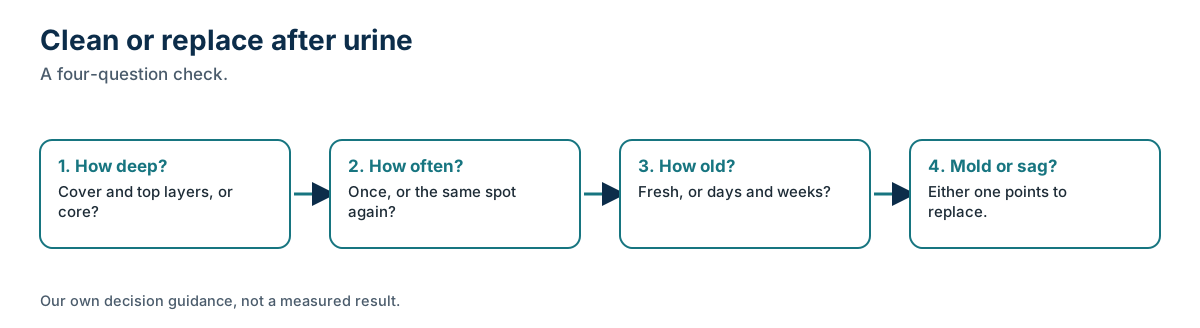
Four questions that decide it
Is the bed still sound? Run this first, because it can settle the matter before urine comes into it. The Better Sleep Council, an industry-sponsored group, lists sagging, tearing and damage among its signs that a mattress needs replacing. Sleep Foundation lists a bed that is noticeably saggy or damaged in certain areas. If the bed was failing anyway, an accident is a reasonable moment to replace it.
How deep did it go? A small accident blotted within minutes may not get past the quilting. A large one, or one that sat overnight, can wick into the comfort foam and beyond. Hub 3 explains what happens when urine soaks into a mattress, and its urine wicking entry describes how liquid spreads sideways and down.
How many times? One accident and a spot that has been wet many times are different problems. Repeated wetting builds up residue in the same place and pushes it deeper each time. Hub 3 asks how many times a mattress can be treated for urine and doesn't pretend there's a fixed number.
How old is it, and is there mold? Old urine has had time to dry, set and spread. Moisture that stayed in the bed for days raises the mold question, which is a replace signal. EPA's mold guide says absorbent or porous materials "may have to be thrown away if they become moldy."
What each answer points to
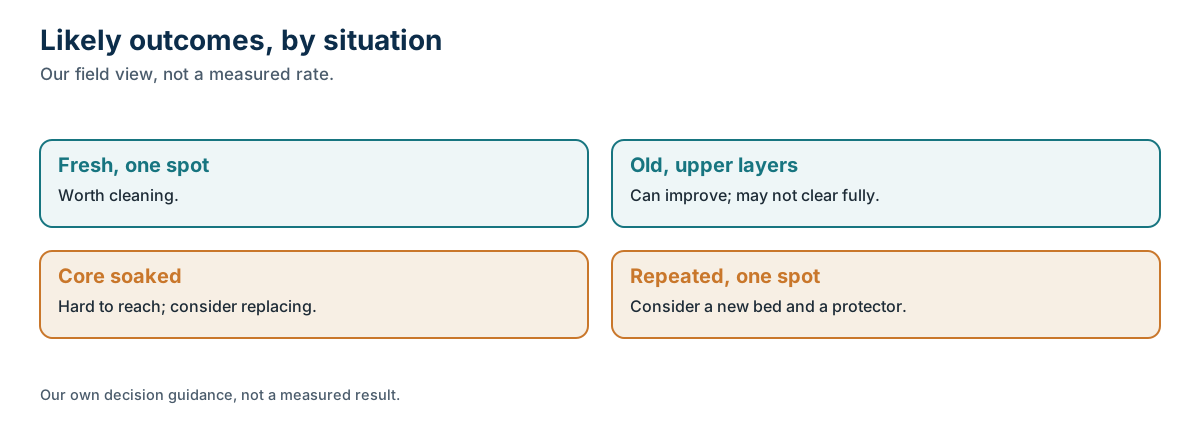
A fresh, single accident in the upper layers of a sound bed is the strongest case for cleaning. An older accident in the same position can still improve, though a set stain may lighten rather than disappear. Repeated accidents that reached the core are where cleaning runs out, because a low-moisture method works from the surface and isn't designed to flush a soaked core. Hub 3's clean-or-replace guide and does urine mean you have to replace your mattress? go into each case with more detail on odor chemistry.
There's one in-between case worth naming. A mattress where the odor returns after every cleaning, especially in humid weather, is telling you the source is deeper than the treatment reaches. The Carpet and Rug Institute's pet urine bulletin makes the same point for carpet: masked odor "may reappear" in high humidity, and "Unless the cat urine can be completely removed, complete odor removal is unlikely." A mattress isn't carpet, but the logic of a hidden source holds. Hub 3 covers why odor comes back after a mattress dries and why a mattress can smell after the stain is gone.
What not to do while you decide
The instinct is to pour cleaner on and scrub. That can make things worse. Water added to a urine spot carries the urine further into the foam. Casper's care guidance says: "Be careful not to saturate the mattress with too much water and/or detergent, as the foam in the mattress core will soak up water and detergent." Blot with dry towels, press rather than rub, and let air move over the spot.
Check your care label before using any product. Some makers prohibit wet cleaning outright, and Hub 2's compatibility guide quotes the ones we checked in full. If you own a bed with rules like that, the decision is partly made for you before urine even comes into it, and the maker is the first call.
Drying and the mold line
Speed matters because of drying. EPA's guidance for water-damaged materials says to dry them within 24-48 hours to prevent mold growth, and its remediation table says upholstered furniture "May be difficult to completely dry within 48 hours." That guidance is for leaks and floods, not urine, and we don't turn it into a rule for mattresses. Hub 5 explains why foam is slow to dry and how to tell if moisture reached the core.
If you find mold, the decision is made. We'd replace the bed rather than clean it.
The sources, in their settings
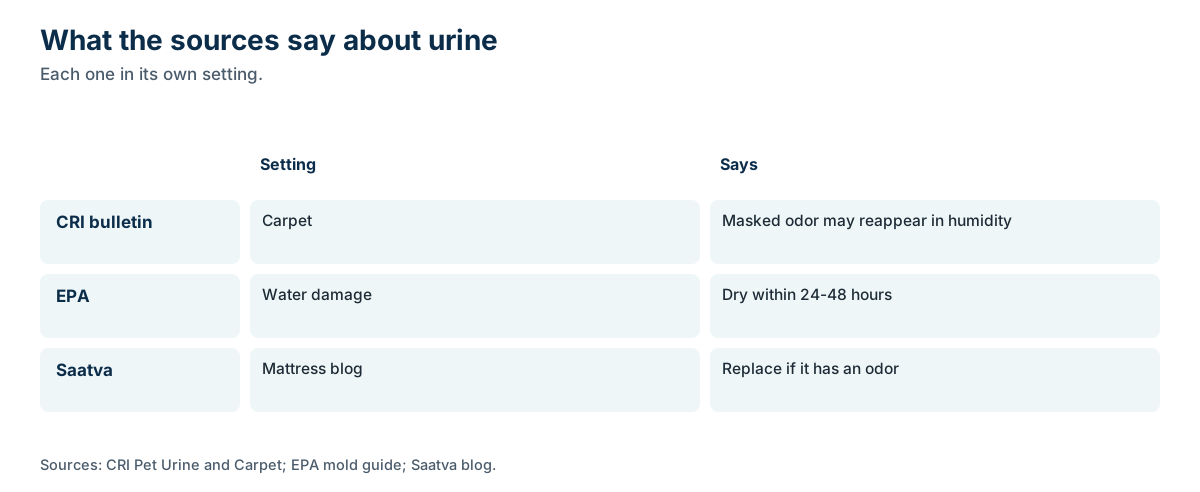
None of the sources here studied urine in mattresses. The CRI bulletin is about carpet. EPA's drying and mold guidance is about water damage. The replacement guidelines come from an industry-sponsored council and a sleep information site. Maker care pages describe each maker's own products. We use each for what it covers and say so, which is why this article gives a framework and not a promise.
How we'd approach a urine call
This part is our view. When we're called about urine, the first thing we do is look. A materials inspection decides steam temperature and pass speed, and it tells us whether the problem looks like it sits in the cover and comfort layers or deeper. We treat urine and organic odor with an enzyme product, and organic cleaning methods are our default otherwise. Dry vapor from our Italian-made Vapor Clean machines, the Magnum XP with its built-in vac, the ProV 350 and the Pro6 Duo, covers the area and the seams, tufts, ridges and edges where dust and shed skin flakes collect. If what we find points to a soaked core or mold, we'll tell you it's a replacement, not a cleaning.
That's our own method and reasoning, not a manufacturer exemption; your care label and warranty terms govern. In our view and experience we can treat any mattress or topper, and if a material reacts we adjust or stop. We use "sanitize" in the cleaning sense that Hub 2's CDC terms entry describes, with no disinfection or health claim.
If your bed passes the four questions, book a urine treatment visit. The first mattress is $249, or $199 under our limited-time Fall 2026 offer, with ordinary urine accident treatment included and severe or biohazard contamination quoted before we start; the pricing page has the details.
Where to read next
The decision guide puts urine beside the other clean-or-replace questions, and this hub lists every article. If you're unsure how deep the smell sits, read is the odor in the cover or the foam?. For the cases past saving, see when is a mattress too contaminated to clean?. For an older pet accident, Hub 3's old dog urine smell is the closer match, and for a valuable bed, see restoring an expensive mattress after a pet accident.
What we don't know
- How deep a given accident went without opening the mattress. Smell and touch give clues, not measurements.
- How many treatments a spot can take before replacement makes more sense. We found no study.
- Whether the CRI's carpet findings on odor return hold for foam. We use them as a clue.
- How long urine takes to cause mold inside a mattress. EPA's 24-48 hours is for water-damaged materials in general.
Changelog
- 3 October 2026: First published. Sources accessed on this date.
Sources
- Pet Urine and Carpet (technical bulletin, revised 27 July 2017) · Carpet and Rug Institute
- A brief guide to mold, moisture and your home · US EPA
- Mold Remediation in Schools and Commercial Buildings, Table 1: Water Damage, Cleanup and Mold Prevention · US EPA
- Replacing a Mattress (accessed 2026-10-03) · Better Sleep Council (sponsored by the International Sleep Products Association)
- When Should You Replace Your Mattress? (accessed 2026-10-03) · Sleep Foundation
- How to clean your mattress: a mattress care guide (accessed 2026-10-02) · Casper
- Caring for your TEMPUR (UK, updated 11 July 2023, accessed 2026-10-02) · Tempur UK
- Magnum XP-Vac product page (maker's claims, accessed 2026-10-02) · Vapor Clean
- ProV 350 product page ('Italian Made'; maker's claims, accessed 2026-10-02) · Vapor Clean
- Pro6 Duo product page ('Made in Italy'; maker's claims, accessed 2026-10-02) · Vapor Clean
- Cleaning and disinfecting your school (definitions) · CDC
Last reviewed October 3, 2026. Manufacturer specifications and care instructions change; check the current version for your exact model. This page is general information, not medical advice. How we source and check pages: editorial standards.