
Short answer
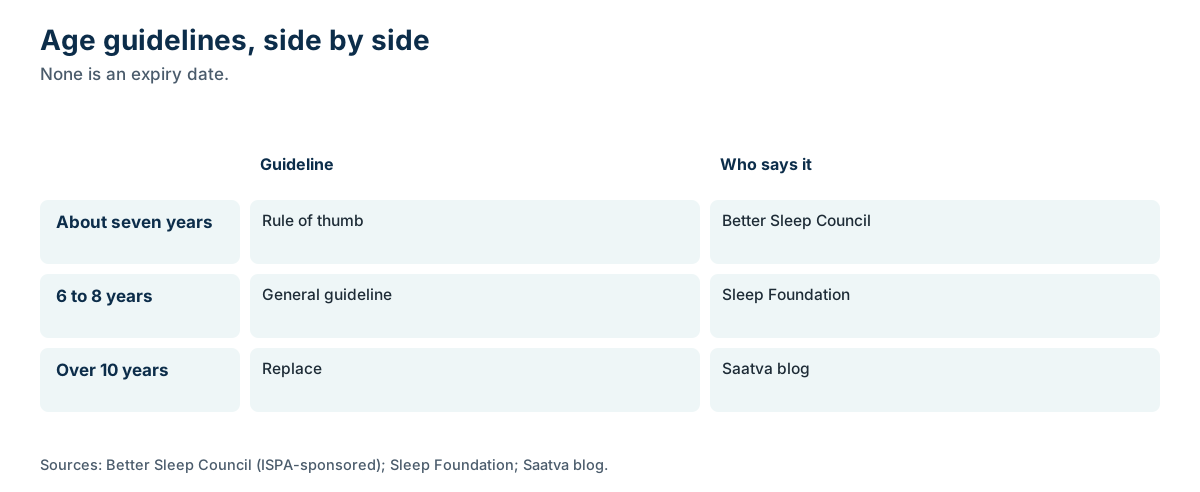
It can be, if it still supports you. Age guidelines from the industry-sponsored Better Sleep Council, Sleep Foundation and Saatva run from about seven years to over 10, and none is an expiry date. Check support first. If the bed sags or has broken coils or torn fabric, replace it. If the problem is odor or stains, cleaning can make sense.
Key terms used on this page
- Mattress age guideline:
- A publisher's rule of thumb for when to think about replacing a bed. The Better Sleep Council, sponsored by the mattress industry's trade association, says about seven years; Sleep Foundation says 6 to 8 years; Saatva's blog says over 10. None is an expiry date.
- Structural wear:
- Loss of support or shape that no cleaning can reverse, such as sagging, lumps, broken springs or torn fabric. The Better Sleep Council, which is sponsored by the mattress industry's trade association (ISPA), lists sagging, tearing, ripping and holes among signs you may need a new mattress.
- Sagging:
- A mattress surface that has dipped and no longer springs back. Sleep Foundation lists a bed that is noticeably saggy or damaged in certain areas as a reason to replace it. Cleaning removes soil; it can't restore support.
- Coil failure:
- Broken, bent or noisy springs in an innerspring or hybrid unit. Sleep Foundation notes that noisy springs are common in old innerspring mattresses and lists more noise than usual as a sign to replace. It is a mechanical problem, not a cleaning one.
- Body impression:
- A shallow, lasting dip where someone sleeps. It's a change in shape, not in soil, so a cleaning visit doesn't remove it. Whether an impression counts as a defect is set by each maker's own warranty terms.
A 10-year-old mattress can still be worth cleaning, as long as it still does its main job: support. Age guidelines from three publishers range from about seven years to over 10, and none of them is a date when a bed stops working. So don't decide by the calendar. Check support, fabric and springs first. If the bed sags, has broken springs or torn fabric, cleaning won't fix that and the money is better spent on a replacement. If it still sleeps well and the problem is an odor, stains or dust, a cleaning is a reasonable spend.
General mattress information, not medical advice. If an old bed seems tied to pain or poor sleep, ask a doctor.
What the age guidelines say
We checked three publishers, and they give three numbers.
The Better Sleep Council, which is sponsored by the International Sleep Products Association, says: "How long your mattress lasts depends on how often it's used and what level of quality it is, but in general a mattress set that is seven years old has reached the end of the line and needs to be replaced." It immediately calls this "a good rule of thumb," not a rule.
Sleep Foundation says: "Under normal conditions, mattresses should be replaced every 6 to 8 years."
Saatva's blog, from a mattress maker, says to replace a mattress "if it sags, has an odor, or is over 10 years old."
Two things stand out. First, these are guidelines, not measured lifespans for any specific bed; the Better Sleep Council itself says lifespan depends on use and quality. Second, two of the three come from the mattress industry, through a trade-association sponsor and a mattress seller. We report the figures as each publisher's, and we don't add a number of our own.
Support first
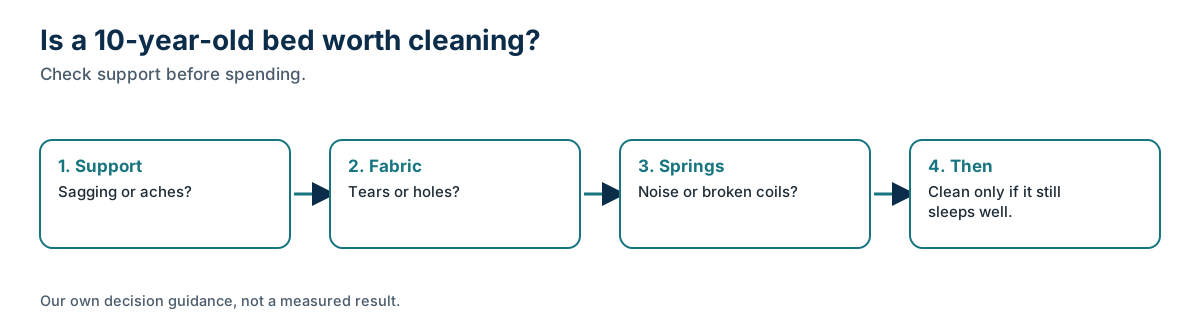
The signs that matter are physical, and they're the same in each source. The Better Sleep Council lists a mattress that "sags, has visible tearing, ripping, holes, staining or damage." Sleep Foundation lists a bed that's noticeably saggy or damaged in certain areas and one making more noise than usual, noting that "noisy springs are common in old innerspring mattresses." It also offers the simplest test: "Essentially, you should replace your bed if it's no longer helping you get restful sleep."
Run through them in order:
- Support. Lie in your usual position. Do you sink into a dip? Wake stiff? Roll toward the middle?
- Fabric. Look for tears, holes or worn-through ticking, especially at edges and corners.
- Springs. Listen and feel for creaks, pokes or uneven spots in an innerspring or hybrid.
- Then decide. If all three pass, the bed's age alone isn't a reason not to clean it.
A body impression, the shallow dip where you sleep, is a change of shape, not soil. Cleaning doesn't remove it, and whether it counts as a defect depends on the maker's warranty terms. Hub 6's entry on body impressions explains.
Weighing the spend
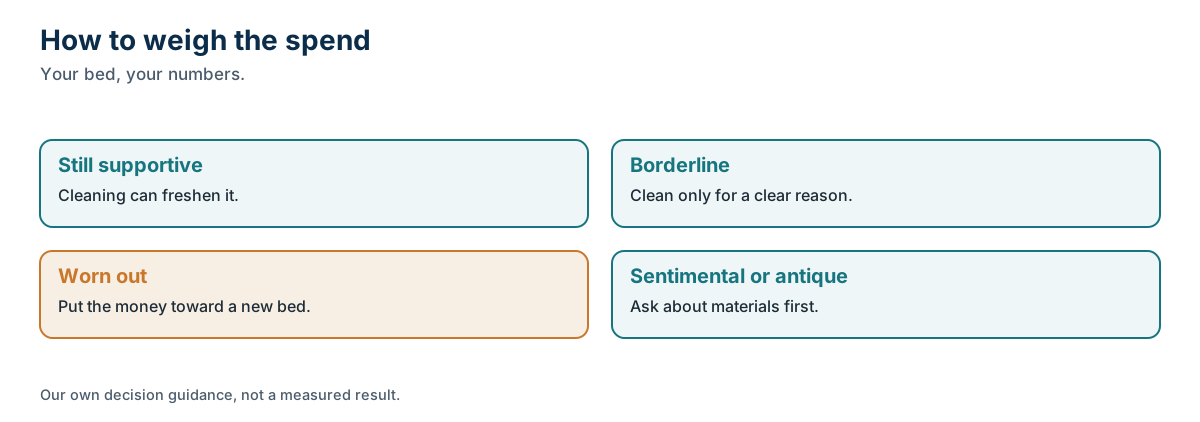
Once the bed passes the support check, the question is simple arithmetic you can do yourself: the cost of a visit against the cost of a new mattress and the remaining life you expect from this one. A still-supportive bed with an odor or stains is a reasonable candidate; cleaning can freshen it for the years it has left. A borderline bed, one that's starting to dip or creak, is worth cleaning only for a clear reason, such as an accident you need dealt with now. A worn-out bed is a replacement.
There's also the bed that's special: a family piece, a natural-fiber mattress, a bed you'd rather not part with. For those, ask about materials first. Older fabrics and fills may be more fragile, and the care label, if it's still there, still governs. Hub 2's material pages on wool, innerspring and pillow-top mattresses are useful here.
What a decade of use leaves behind
An older bed has had more time to collect what all beds collect. Hub 4 describes what lives in mattress dust, and its settled dust entry explains why dust gathers on and in a mattress over time. An older bed may also carry old accidents. If you smell urine on humid days, the source may sit deeper than a surface clean reaches; Hub 3's old dog urine smell and how many times a mattress can be treated cover that case.
If the bed has spent time in storage or a closed room, check for a musty smell. EPA's mold guide says porous materials "may have to be thrown away if they become moldy." Mold through the layers ends the decision.
Toppers and pillow-tops on older beds
Older beds sometimes carry a topper bought later to soften a firm or tired surface. A topper can hide early sagging, so take it off before you run the support check. If the bed underneath dips, the topper is masking a structural problem, and cleaning both won't change that. If the bed underneath is sound, the topper can be cleaned with it; Hub 2's mattress topper entry covers the terms. A sewn-on pillow-top is part of the mattress and wears with it. If the pillow-top has compressed into ridges or pockets, that's wear, and it belongs with the support decision, not the cleaning one.
Passing an old bed on
If you're cleaning an older mattress before giving it away, that's reasonable for a sound bed. The new owner should still inspect it. EPA's bed bug fact sheet says: "Do not bring second-hand furniture into your home unless you have thoroughly inspected and cleaned the items first." CDC's bed bug page notes that bed bugs can hide in "The seams of mattresses." See can a used mattress be sanitized?.
How we'd treat an older bed
This section is our view. An older mattress gets the same start as any other: a materials inspection that decides steam temperature and pass speed. If fabric looks fragile, we slow down and reduce output, or we stop. Our Italian-made Vapor Clean machines, the Magnum XP with its built-in vac, the ProV 350 and the Pro6 Duo, let us adjust both. We work the seams, tufts, ridges and edges where dust and shed skin flakes collect. Organic cleaning methods are our default, with enzyme treatment for urine and organic odor. If what we find says the bed has failed structurally, we'll tell you so. In our view and experience we can treat any mattress or topper, and if a material reacts we adjust or stop. It's our own method and reasoning, not a manufacturer exemption; your care label and warranty terms govern. We use "sanitize" in its cleaning sense, as described in Hub 2's CDC terms entry, with no health claim.
If your older bed passes the support check, pick a time online. The first mattress is $249, or $199 under the limited-time Fall 2026 offer, and the pricing page shows additional-bed prices.
Where to read next
The decision guide explains structure as the first of four tests, and this hub lists the rest. For everything cleaning can't fix, see problems professional cleaning can't fix. For value in general, read is professional mattress sanitation worth it?.
What we don't know
- How long your particular mattress will last. The figures above are publishers' guidelines.
- Whether cleaning changes a mattress's lifespan. We found no study.
- How older fabrics and fills respond to dry vapor. We inspect and adjust, but we haven't seen published testing.
- How the publishers arrived at their figures. None of the pages we read describes a method.
Changelog
- 3 October 2026: First published. Sources accessed on this date.
Sources
- Replacing a Mattress (accessed 2026-10-03) · Better Sleep Council (sponsored by the International Sleep Products Association)
- When Should You Replace Your Mattress? (accessed 2026-10-03) · Sleep Foundation
- How to Clean Your Mattress in 5 Simple Steps (blog, accessed 2026-10-02) · Saatva
- About Bed Bugs (26 April 2024, accessed 2026-10-03) · CDC
- Bed Bug Prevention, Detection and Control (fact sheet, 2014) · US EPA
- A brief guide to mold, moisture and your home · US EPA
- Magnum XP-Vac product page (maker's claims, accessed 2026-10-02) · Vapor Clean
- ProV 350 product page ('Italian Made'; maker's claims, accessed 2026-10-02) · Vapor Clean
- Pro6 Duo product page ('Made in Italy'; maker's claims, accessed 2026-10-02) · Vapor Clean
- Cleaning and disinfecting your school (definitions) · CDC
Last reviewed October 3, 2026. Manufacturer specifications and care instructions change; check the current version for your exact model. This page is general information, not medical advice. How we source and check pages: editorial standards.