
Short answer
Cleaning removes soil, odor and stains. It can't fix structure: sagging, broken or noisy coils, torn fabric or body impressions. It can't remove mold that has grown through the layers or flush a core soaked again and again. It isn't a bed bug treatment, and it isn't a health treatment. Those need a warranty claim, a new bed, pest control or a doctor.
Key terms used on this page
- Structural wear:
- Loss of support or shape that no cleaning can reverse, such as sagging, lumps, broken springs or torn fabric. The Better Sleep Council, which is sponsored by the mattress industry's trade association (ISPA), lists sagging, tearing, ripping and holes among signs you may need a new mattress.
- Sagging:
- A mattress surface that has dipped and no longer springs back. Sleep Foundation lists a bed that is noticeably saggy or damaged in certain areas as a reason to replace it. Cleaning removes soil; it can't restore support.
- Coil failure:
- Broken, bent or noisy springs in an innerspring or hybrid unit. Sleep Foundation notes that noisy springs are common in old innerspring mattresses and lists more noise than usual as a sign to replace. It is a mechanical problem, not a cleaning one.
- Body impression:
- A shallow, lasting dip where someone sleeps. It's a change in shape, not in soil, so a cleaning visit doesn't remove it. Whether an impression counts as a defect is set by each maker's own warranty terms.
- Contamination limit:
- The point where a mattress is better replaced than cleaned, such as mold through the layers or a core soaked again and again. EPA says absorbent or porous materials may have to be thrown away if they become moldy.
Professional cleaning removes soil, odor and stains from the parts of a mattress it can reach. It can't fix anything structural: sagging, broken or noisy springs, torn fabric, compressed comfort layers or body impressions. It can't remove mold that has grown through the layers, or flush a core that has been soaked again and again. It isn't a bed bug treatment and it isn't a health treatment. Knowing these limits up front saves you paying for a visit that can't help, and points you to the help that can.
General information, not medical or pest-control advice. Health and infestation questions belong with qualified professionals.
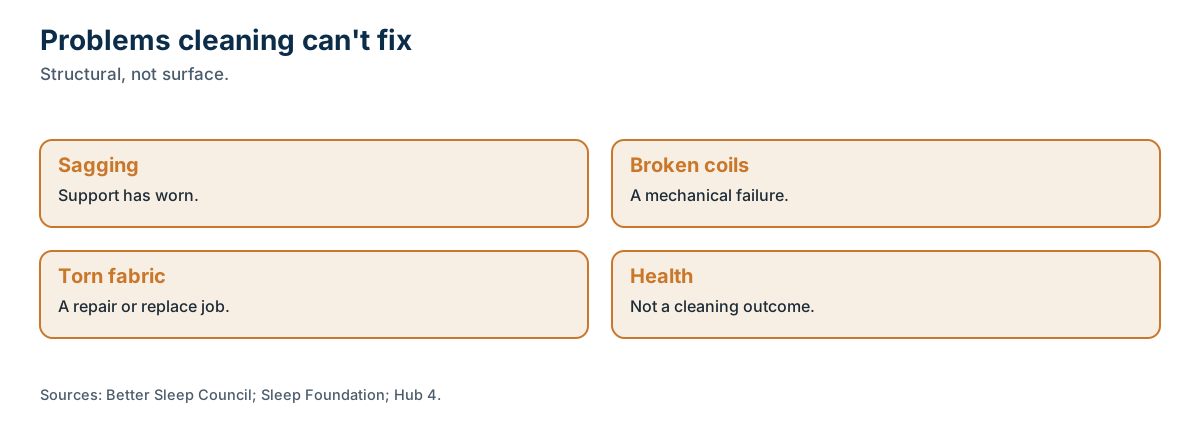
Structural problems stay
Sagging. A sag is support that has worn out, in foam that has softened or springs that have given. The Better Sleep Council, an industry-sponsored group, lists a mattress that "sags, has visible tearing, ripping, holes, staining or damage" among its replacement signs. Sleep Foundation lists a bed that is noticeably saggy or damaged in certain areas.
Broken or noisy coils. Springs are mechanical. Sleep Foundation notes that "noisy springs are common in old innerspring mattresses," and lists more noise than usual as a sign to replace. Cleaning doesn't touch them.
Torn fabric. A tear is a repair or replace job. Steam over a tear would reach the layers underneath directly, which is one more reason we look before we start.
Body impressions. The shallow dip where you sleep is a change of shape. Whether it counts as a defect is a warranty question, set by each maker's terms. See our body impression entry.
Lumps and shifted fill. Fiber, wool or cotton fill can bunch and leave hollows, and foam can break down into soft spots. Both are changes inside the bed's construction. Cleaning reaches the surface and the seams; it doesn't redistribute fill or rebuild foam. If a lump came with a warranty, the maker's terms decide whether it's covered.
Edge collapse. An edge that sinks when you sit on it is a support problem too. It may matter more to you than to the bed's overall comfort, but it's not something a cleaning changes.
Compressed pillow-tops. A pillow-top that has flattened into ridges is wear. Hub 2's pillow-top compatibility page covers cleaning one that's still in good shape.
Problems cleaning only partly fixes
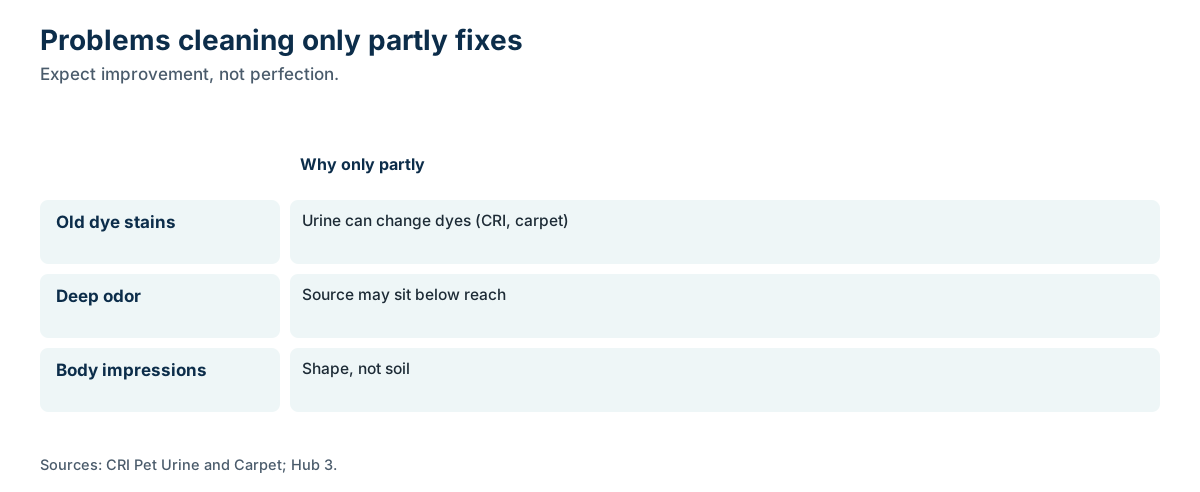
Some problems improve without disappearing.
Old, set stains. Fresh stains respond well; old ones may lighten. Urine can change dyes as well as leave residue. The Carpet and Rug Institute's pet urine bulletin says urine can permanently damage carpet dyes. That's a carpet finding, but mattress ticking is dyed fabric too, so a faded or discolored patch may remain after the residue is gone.
Deep odor. If the source sits below what a surface method reaches, odor can improve and then return, especially in humid weather. The CRI bulletin notes for carpet that masked odor "may reappear" in high humidity. Hub 3 explains why urine odor comes back after a mattress dries, and our article on cover versus foam odor gives a home check.
Impressions with soil. A dip that also has staining can be cleaned; the dip stays.
Contamination beyond reach
Two kinds of contamination go past what cleaning can do. Mold through the layers is the first. EPA's mold guide says porous materials "may have to be thrown away if they become moldy," because "the mold may be difficult or impossible to remove completely." A core soaked repeatedly is the second; a low-moisture method works from the surface and isn't designed to flush it. Hub 5 explains surface moisture versus saturation. Our article on when a mattress is too contaminated to clean sets out the lines.
Pests aren't a cleaning job
Bed bugs need pest control. CDC's bed bug page advises contacting "a professional pest control company experienced with treating bed bugs." We don't offer bed bug treatment, and a cleaning visit isn't a substitute. Hub 4's dust mites vs bed bugs vs bed mites sorts out which is which.
Health isn't a cleaning outcome
If you want a cleaning because of allergies, asthma or another symptom, that question belongs with a doctor. We make no health claims. The trials we know of tested covers, not cleaning. Woodcock and colleagues gave allergen-impermeable covers to 1,122 adults with asthma and concluded the covers as a single intervention "seem clinically ineffective in adults with asthma." The AAAAI and ACAAI practice parameter recommends mite allergen-proof encasings but says that "in many cases mite covers alone are unlikely to achieve a clinical benefit" outside a broader plan. Hub 4's does mattress sanitation cure allergies? gives the full answer, which is no.
A rule that can block cleaning altogether
Some mattresses can't be steam cleaned at all under their maker's rules. Hub 2's compatibility guide quotes those rules in full for the brands we checked. For a bed with a prohibition like that, steam isn't the fix whatever the problem is, so the limits in this article come with one more: the label itself. The maker is the first call.
Where to go instead
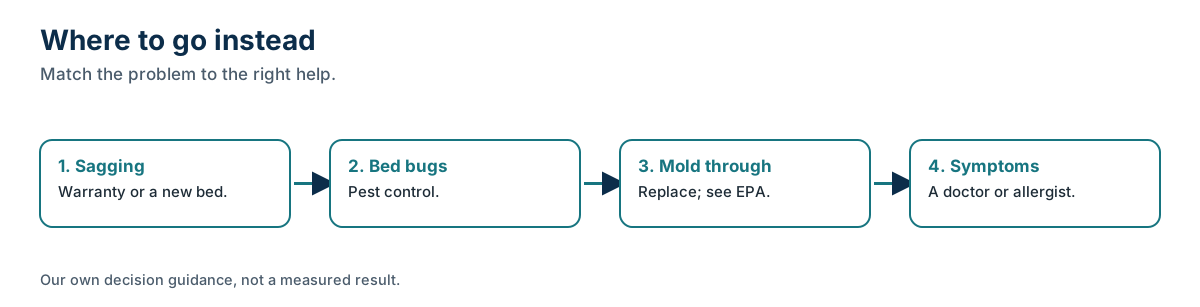
- Sagging, impressions, broken coils: read the warranty, then consider a new bed.
- Bed bugs: a pest control company.
- Mold through the layers: replace the bed and fix the moisture source.
- Symptoms: a doctor or allergist.
- A label that rules out the method: the maker.
What cleaning can fix
So that the list above doesn't sound like a reason never to clean, here's the other side. On a sound bed whose label allows it, a visit addresses odor in the cover and comfort layers, surface stains, body-oil discoloration, recent urine accidents that stayed in the upper layers, and dust and shed skin flakes on the surface and in the seams. That's a real list of real problems.
Our approach
This section is our view. We'd rather tell you a bed has failed than clean it and leave you disappointed. Every visit starts with a materials inspection that decides steam temperature and pass speed, and that's when we spot structural problems. If we find one, we'll say so before doing any work. When cleaning fits, our Italian-made Vapor Clean machines, the Magnum XP with its built-in vac, the ProV 350 and the Pro6 Duo, work the surface and the seams, tufts, ridges and edges where dust and shed skin flakes collect. Organic cleaning methods are our default; enzyme treatment covers urine and organic odor. In our view and experience we can treat any mattress or topper, and if a material reacts, we adjust or stop. It's our own method and reasoning, not a manufacturer exemption; your care label and warranty terms govern. "Sanitize," for us, is a cleaning term, as Hub 2's CDC terms entry explains, with no disinfection or health claim.
If your bed's problem is on the fixable list, schedule it here. The first mattress is $249, or $199 under our limited-time Fall 2026 offer; the pricing page has the details.
Where to read next
The decision guide explains structure as the first test, and this hub lists every question. For an older bed, see is a 10-year-old mattress worth cleaning?. For urine specifically, read should I clean or replace my mattress after urine?.
What we don't know
- Whether cleaning changes how quickly a mattress wears. We found no study.
- Whether the CRI's carpet dye findings apply to mattress ticking. We use them as a caution.
- How much a given old stain will lighten. That depends on the stain and fabric, and no source gives a rate.
- Where the line sits between a body impression and a defect. That's set by each maker's warranty.
Changelog
- 3 October 2026: First published. Sources accessed on this date.
Sources
- Replacing a Mattress (accessed 2026-10-03) · Better Sleep Council (sponsored by the International Sleep Products Association)
- When Should You Replace Your Mattress? (accessed 2026-10-03) · Sleep Foundation
- Pet Urine and Carpet (technical bulletin, revised 27 July 2017) · Carpet and Rug Institute
- A brief guide to mold, moisture and your home · US EPA
- About Bed Bugs (26 April 2024, accessed 2026-10-03) · CDC
- Control of exposure to mite allergen and allergen-impermeable bed covers for adults with asthma (Woodcock et al., N Engl J Med, 2003) · PubMed
- Environmental assessment and exposure control of dust mites: a practice parameter (Portnoy et al., Ann Allergy Asthma Immunol, 2013) · AAAAI and ACAAI
- Caring for your TEMPUR (UK, updated 11 July 2023, accessed 2026-10-02) · Tempur UK
- Magnum XP-Vac product page (maker's claims, accessed 2026-10-02) · Vapor Clean
- ProV 350 product page ('Italian Made'; maker's claims, accessed 2026-10-02) · Vapor Clean
- Pro6 Duo product page ('Made in Italy'; maker's claims, accessed 2026-10-02) · Vapor Clean
- Cleaning and disinfecting your school (definitions) · CDC
Last reviewed October 3, 2026. Manufacturer specifications and care instructions change; check the current version for your exact model. This page is general information, not medical advice. How we source and check pages: editorial standards.