
Short answer
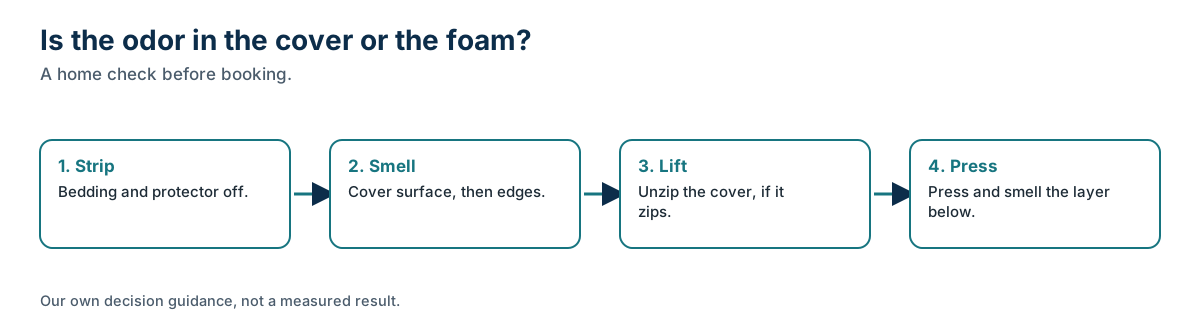
Strip the bed, smell the cover, open it only if it's designed to come off, then press and smell the layer below. An odor that stays in one clear spot, shows up right after use and fades after cleaning points to the cover. One that spreads, returns on humid days or comes back days after cleaning points deeper. These are clues, not proof.
Key terms used on this page
- Odor source check:
- A home check before calling anyone: strip the bed, smell the cover, open it only if it's designed to come off, then press and smell the layer below. It helps you describe the problem; it doesn't replace an inspection.
- Cover odor:
- A smell that sits in the ticking, quilting or a removable cover. It tends to be localized and to fade after cleaning and airing. Our field guidance, not a measured category.
- Core odor:
- A smell whose source sits in the foam or fill below the cover, such as urine that soaked through. The Carpet and Rug Institute notes that masked urine odor may reappear in high humidity, which is one clue that the source is deeper.
- Treatable depth:
- How far into a mattress a problem sits relative to what a surface method reaches. A problem in the cover or upper layers is within reach of low-moisture work; one in the core may not be. No published study measures it; it's our working term.
- Contamination limit:
- The point where a mattress is better replaced than cleaned, such as mold through the layers or a core soaked again and again. EPA says absorbent or porous materials may have to be thrown away if they become moldy.
You can get a good idea of where a smell sits with a five-minute check, before paying anyone. Strip the bed. Smell the cover surface and edges. If the cover is designed to unzip, open it. Then press down and smell the layer below. An odor that stays in one clear spot, is strongest right after use, and fades after cleaning points to the cover and quilting. One that spreads over a wide area, returns on humid days, or comes back days after cleaning points deeper. These are clues, not proof. But they change the decision, because a cover odor is the easiest kind to fix and a core odor may not be fixable at all.
General information on mattress odor, not medical advice. For symptoms, ask a doctor. If you suspect mold, consult a qualified professional.
The home check, step by step
1. Strip everything. Sheets, mattress pad, protector, topper. Wash them, because sometimes the smell is in the bedding, not the mattress.
2. Smell the cover. Work across the surface and along the edges and seams. Note where the smell is strongest and how big the area is.
3. Lift the cover, if it's designed to come off. Check your care label first. Some covers zip off by design; others are attached, and opening them can do damage. If the cover isn't removable, skip this step.
4. Press and smell. Press firmly into the spot and smell right away. Pressing pushes air out of the layers beneath. If the smell gets stronger when you press, the source may be below the cover.
5. Feel for damp. A cold or damp feel when you press in means moisture is present. Hub 5's how to tell if moisture reached a mattress core explains what that suggests.
Clues that point one way or the other
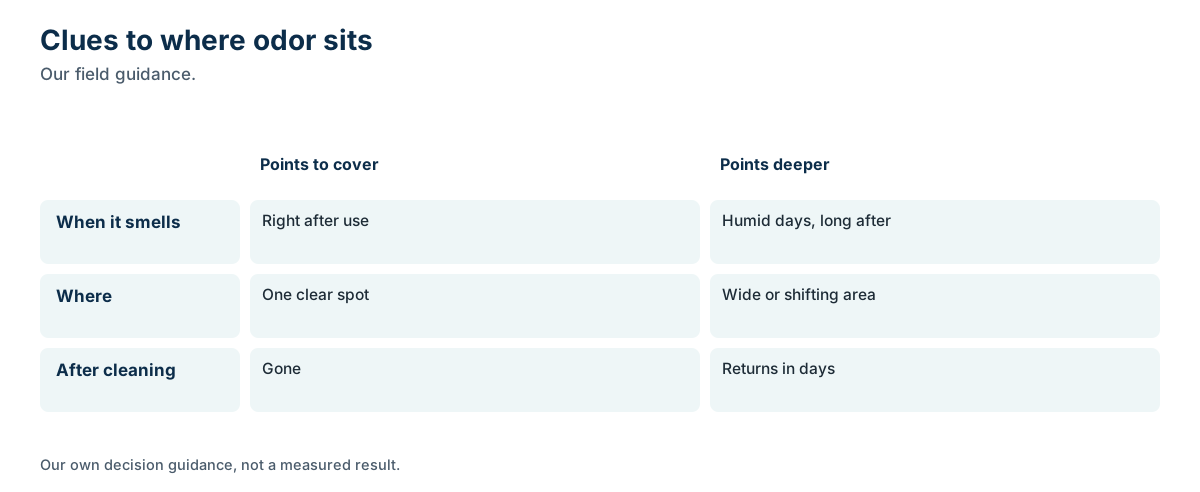
These are our field guidance, not measured categories.
When it smells. A cover odor tends to be strongest right after the bed is used, from sweat and body oils on the surface. A deeper odor shows up on humid days, long after the event that caused it.
Where it smells. A cover odor tends to stay in one clear spot. A deeper one spreads or shifts, because liquid wicks sideways as it soaks down. Hub 3's urine wicking entry explains why.
After cleaning. A cover odor goes away and stays away. A deeper one fades and then returns within days, especially in humid weather.
The humidity clue has some support. The Carpet and Rug Institute's pet urine bulletin says, for carpet, that masked odor "may reappear" in high humidity, and "Unless the cat urine can be completely removed, complete odor removal is unlikely." A mattress isn't carpet, but the idea of a hidden source surfacing when the air is damp carries across. Hub 3's odor rebound entry explains the term.
What kind of smell is it?
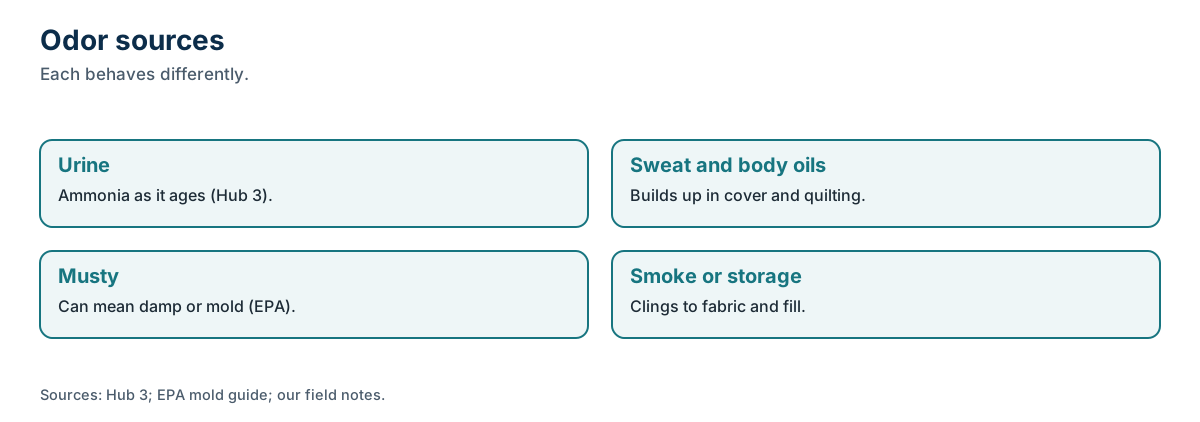
Urine. Sharp, sometimes ammonia-like as it ages. Hub 3's guide to urine and odor explains the chemistry and why urine odor comes back.
Sweat and body oils. A stale, personal smell that builds up in the cover and quilting over time. This is the classic cover odor.
Musty. An earthy, damp smell can mean moisture or mold. EPA's mold guide says porous materials "may have to be thrown away if they become moldy." If a musty smell persists after airing in a dry room, take it seriously. Hub 5's can mattress moisture lead to mildew or mold? covers it.
Smoke or storage. Smoke and the smell of a storage unit cling to fabric and fill. They can sit in both the cover and the layers beneath.
What each answer means
Cover odor. This is the best case. The source is within reach of low-moisture cleaning and, for organic odors, enzyme treatment. Hub 3's why a mattress smells after the urine stain is gone covers the case where the visible spot is gone but the smell isn't.
Upper-layer odor. Treatable, sometimes in stages. A single accident that reached the comfort foam is a reasonable candidate.
Core odor. Uncertain. A low-moisture method works from the surface and isn't designed to flush a core, and adding water to foam carries its own risks. Casper's care guidance says the foam in its mattress core "will soak up water and detergent." If the core has been soaked repeatedly, replacement may be the better answer; see when is a mattress too contaminated to clean?.
Musty through and through. Treat it as a mold question first. EPA's remediation table notes upholstered furniture "May be difficult to completely dry within 48 hours."
Things not to do while you investigate
Don't pour liquid on the spot to "test" it. That pushes any source deeper. Don't mask the smell with fragrance sprays; they make it harder to locate and harder to judge after cleaning. Don't cut into the mattress. And check your care label before using any product, because some makers prohibit wet cleaning altogether; Hub 2's compatibility guide collects their exact wording.
What to tell a cleaner
The check gives you useful things to say: where the smell is, how big the area is, whether it's worse on humid days, whether it changed when you pressed, whether there's damp, and what you think caused it. Photos help as well: a picture of any stain, the care label and the law tag lets a cleaner see the materials and the problem before arriving. If you've tried anything already, such as a spray, a home steamer or baking soda, say so, because it changes what's in the fabric. Those details help anyone judge whether the problem is in reach before they arrive. They also help you judge the answer you get; see questions to ask before cleaning an expensive mattress.
How we work out the source
This section is our view. On a visit, we repeat a version of the home check with more experience behind it, and we combine it with a materials inspection that decides steam temperature and pass speed. Enzyme treatment is our approach for urine and organic odor, and organic cleaning methods are our default. Dry vapor from our Italian-made Vapor Clean machines, the Magnum XP with its built-in vac, the ProV 350 and the Pro6 Duo, works the area and the seams, tufts, ridges and edges where dust and shed skin flakes collect. If the source looks like it's in the core and has been there a long time, we'll say so rather than promise. From our experience, we can treat any mattress or topper, adjusting or stopping if a material reacts; that's our own method and reasoning, not a manufacturer exemption, and your care label and warranty govern. Check your warranty terms before you book any cleaning. We use "sanitize" in its cleaning sense, following Hub 2's CDC terms entry, and make no disinfection or health claim.
If your check points to the cover or upper layers, arrange an odor treatment visit. The first mattress is $249, or $199 under our limited-time Fall 2026 offer, with pet odor treatment included; the pricing page has the rest.
Where to read next
The decision guide explains depth as its second test, and this hub lists every article. For urine decisions, read should I clean or replace my mattress after urine?. For partial fixes, see problems professional cleaning can't fix.
What we don't know
- How reliably the home check locates an odor. It's our field guidance, not a tested method.
- Whether the CRI's carpet findings on humidity and odor apply to foam.
- How deep an odor's source sits without opening the mattress.
- How long a given odor will take to fade after treatment. No source gives a figure.
Changelog
- 3 October 2026: First published. Sources accessed on this date.
Sources
- Pet Urine and Carpet (technical bulletin, revised 27 July 2017) · Carpet and Rug Institute
- A brief guide to mold, moisture and your home · US EPA
- Mold Remediation in Schools and Commercial Buildings, Table 1: Water Damage, Cleanup and Mold Prevention · US EPA
- How to clean your mattress: a mattress care guide (accessed 2026-10-02) · Casper
- Caring for your TEMPUR (UK, updated 11 July 2023, accessed 2026-10-02) · Tempur UK
- Magnum XP-Vac product page (maker's claims, accessed 2026-10-02) · Vapor Clean
- ProV 350 product page ('Italian Made'; maker's claims, accessed 2026-10-02) · Vapor Clean
- Pro6 Duo product page ('Made in Italy'; maker's claims, accessed 2026-10-02) · Vapor Clean
- Cleaning and disinfecting your school (definitions) · CDC
Last reviewed October 3, 2026. Manufacturer specifications and care instructions change; check the current version for your exact model. This page is general information, not medical advice. How we source and check pages: editorial standards.