
Short answer
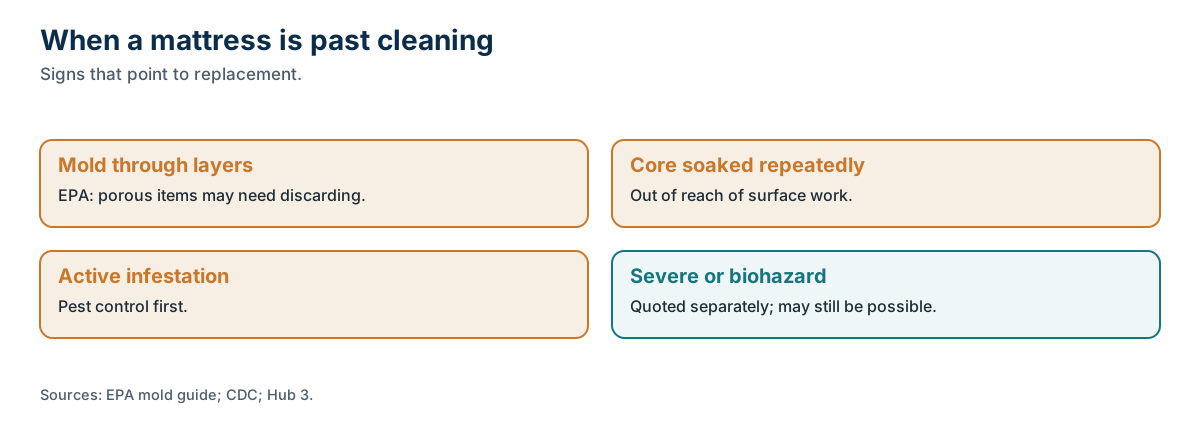
When mold has grown through the layers, when the core has been soaked again and again, when there's an active infestation, or when the bed has also failed structurally. Severe or biohazard contamination isn't automatically the end; it may still be treatable, and we quote it before starting. Depth and repetition decide, not how bad a stain looks.
Key terms used on this page
- Contamination limit:
- The point where a mattress is better replaced than cleaned, such as mold through the layers or a core soaked again and again. EPA says absorbent or porous materials may have to be thrown away if they become moldy.
- Treatable depth:
- How far into a mattress a problem sits relative to what a surface method reaches. A problem in the cover or upper layers is within reach of low-moisture work; one in the core may not be. No published study measures it; it's our working term.
- Custom surcharge:
- The extra charge for severe or biohazard contamination, quoted before any work starts. Ordinary urine accidents and pet odor are in the standard price.
- Pest control first:
- The order to follow when bed bugs are suspected. CDC advises contacting a professional pest control company experienced with treating bed bugs. A cleaning visit comes after treatment, if at all, and is not a substitute for it.
- Core odor:
- A smell whose source sits in the foam or fill below the cover, such as urine that soaked through. The Carpet and Rug Institute notes that masked urine odor may reappear in high humidity, which is one clue that the source is deeper.
A mattress is past cleaning when the problem has gone deeper than any surface method reaches, or when the problem isn't a cleaning problem at all. In practice that means four things: mold through the layers, a core soaked again and again, an active bed bug infestation, or contamination on a bed that has also failed structurally. Severe or biohazard contamination isn't automatically on that list. It may still be treatable, and when it is, we quote it as a custom surcharge before we start. What decides it is depth and repetition, not how alarming a stain looks.
General information only. It isn't medical, mold-remediation or pest-control advice; for those, consult a qualified professional.
Mold through the layers
This is the clearest line. EPA's brief guide to mold says: "Absorbent or porous materials, such as ceiling tiles and carpet, may have to be thrown away if they become moldy. Mold can grow on or fill in the empty spaces and crevices of porous materials, so the mold may be difficult or impossible to remove completely." EPA doesn't name mattresses, but foam and fiber fill are porous. EPA's remediation table adds that upholstered furniture "May be difficult to completely dry within 48 hours," and suggests consulting a restoration professional for a valuable piece.
If mold has grown through a mattress, we'd replace it rather than clean it. Surface spotting caught early on an otherwise dry bed is a different case, but if you're unsure, assume the worse one. Hub 5's can mattress moisture lead to mildew or mold? explains the moisture side, and Hub 3's mold drying window entry explains why time matters.
A core soaked again and again
A single accident that reached the comfort layer can be worth treating. A spot that has been soaked many times, each time pushing residue deeper, is a different problem. A low-moisture method works from the surface; it isn't designed to flush out a core, and flushing would add more water to foam that already holds too much. Hub 5 explains surface moisture versus saturation, and Hub 3's saturated core entry defines the term.
The telltale sign is odor that comes back. The Carpet and Rug Institute's pet urine bulletin, written for carpet, says masked odor "may reappear" in high humidity, and "Unless the cat urine can be completely removed, complete odor removal is unlikely." In a mattress, if odor returns after each treatment, especially in humid weather, the source likely sits beyond reach. Hub 3 asks how many times a mattress can be treated for urine.
How far it has gone
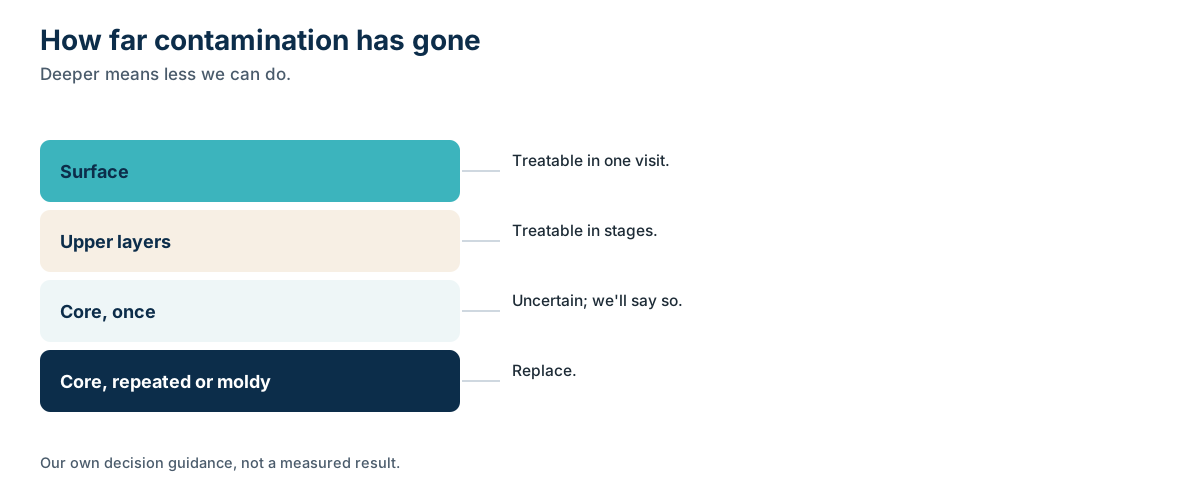
Think of it as a ladder. Surface contamination, in the cover and quilting, is the most treatable. Contamination in the upper comfort layers is treatable, sometimes in stages. Contamination that reached the core once is uncertain, and we'll tell you so rather than promise. Contamination that reached the core repeatedly, or that has mold with it, is a replacement. The ladder isn't a measured scale; it's how we think about reach. Hub 5's how to tell if moisture reached a mattress core gives the clues.
Active infestation
Bed bugs aren't a contamination level; they're a pest problem. CDC's bed bug page says to "contact a professional pest control company experienced with treating bed bugs." EPA's guide to finding bed bugs explains where to look. We don't treat infestations, and we won't take a job whose purpose is to deal with one. Once a pest professional has finished, a cleaning may make sense; that's their call and yours.
Severe or biohazard: not automatically the end
Some contamination is beyond an ordinary accident. Hub 3's entry on severe or biohazard contamination describes it. The question for these beds is the same as for any other: how deep, how repeated, and is the bed sound? Some are treatable with more time and care, and we quote that as a custom surcharge before any work starts. Some are better replaced, and we'll say so. Ordinary urine accidents and pet odor are in the standard price.
When a bed fails twice over
Contamination on a bed that has also failed structurally is an easy call. The Better Sleep Council, an industry-sponsored group, lists sagging, tearing and damage among its signs that a mattress needs replacing. Cleaning a sagging, stained bed buys you a clean, sagging bed. See problems professional cleaning can't fix.
When the label rules it out
There's one more case where cleaning isn't open to you, whatever the contamination: a care label or warranty that prohibits the method. Some makers rule out steam or wet cleaning in plain terms, and Hub 2's brand pages set out their wording in full. For a bed like that, a contaminated mattress is a question for the maker first, and possibly a warranty claim, before it's a question for any cleaner.
What to do with a bed that's past saving
Replacement raises its own small questions. Check with your local waste service about mattress disposal or recycling. If bed bugs were involved, ask your pest professional how to dispose of the bed so it doesn't spread them to someone else's home; don't leave it on the curb unmarked. If mold was the problem, deal with the moisture source before the new bed arrives, or the same thing can happen again. EPA's mold guide starts with fixing the water problem for that reason. And if the old bed was under warranty, read its terms before disposing of the bed.
How we make the call
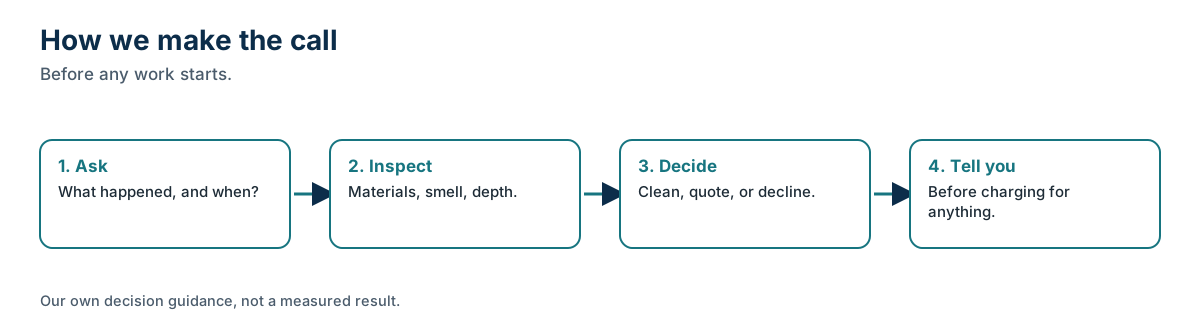
This section is our view. We ask what happened and when. We inspect the materials, smell the bed and look for depth clues. Then we decide: clean it at the standard price, quote a custom surcharge for severe or biohazard contamination, or decline. We tell you which before charging for anything. When we do clean, the inspection sets steam temperature and pass speed, and our Italian-made Vapor Clean machines, the Magnum XP with its built-in vac, the ProV 350 and the Pro6 Duo, work the surface and the seams, tufts, ridges and edges where dust and shed skin flakes collect. Enzyme treatment handles urine and organic odor; organic cleaning methods are our default. In our experience we can treat any mattress or topper, and if a material reacts we adjust or stop. That's our own reasoning, not a manufacturer exemption, and your care label and warranty terms govern. We use "sanitize" in the cleaning sense from Hub 2's CDC terms entry, with no disinfection or health claim.
If you're not sure which side of the line your bed is on, ask for an inspection visit. The first mattress is $249, or $199 under our limited-time Fall 2026 offer, and the pricing page explains how severe or biohazard surcharges are quoted before we start.
Where to read next
The decision guide puts contamination under its second test, and this hub lists every article. For urine specifically, read should I clean or replace my mattress after urine?. For a smell you can't place, see is the odor in the cover or the foam?.
What we don't know
- Exactly where the line between treatable and not treatable sits for a given bed. It's a judgment from inspection, not a test result.
- How long a damp mattress takes to grow mold inside. EPA's guidance is general, not mattress-specific.
- Whether the CRI's carpet findings on odor return hold for foam.
- How deep contamination went without opening the mattress.
Changelog
- 3 October 2026: First published. Sources accessed on this date.
Sources
- A brief guide to mold, moisture and your home · US EPA
- Mold Remediation in Schools and Commercial Buildings, Table 1: Water Damage, Cleanup and Mold Prevention · US EPA
- Pet Urine and Carpet (technical bulletin, revised 27 July 2017) · Carpet and Rug Institute
- About Bed Bugs (26 April 2024, accessed 2026-10-03) · CDC
- How to Find Bed Bugs (accessed 2026-10-03) · US EPA
- Replacing a Mattress (accessed 2026-10-03) · Better Sleep Council (sponsored by the International Sleep Products Association)
- Caring for your TEMPUR (UK, updated 11 July 2023, accessed 2026-10-02) · Tempur UK
- Magnum XP-Vac product page (maker's claims, accessed 2026-10-02) · Vapor Clean
- ProV 350 product page ('Italian Made'; maker's claims, accessed 2026-10-02) · Vapor Clean
- Pro6 Duo product page ('Made in Italy'; maker's claims, accessed 2026-10-02) · Vapor Clean
- Cleaning and disinfecting your school (definitions) · CDC
Last reviewed October 3, 2026. Manufacturer specifications and care instructions change; check the current version for your exact model. This page is general information, not medical advice. How we source and check pages: editorial standards.