
Short answer
It can be. A protector keeps new spills and soil off the mattress; it doesn't remove what was there before it went on, and it doesn't cover everything. If the bed went uncovered, had an accident get through, or smells, cleaning still has a job. If it was covered from day one and is clean, you may not need a visit.
Key terms used on this page
- Protector vs encasement:
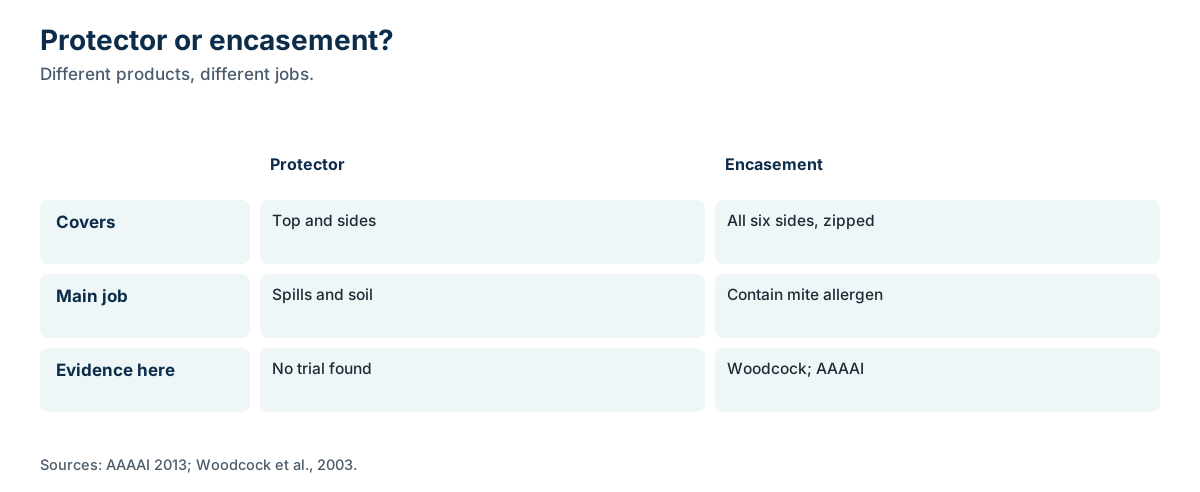
- A protector covers the top and sides to keep spills and soil off; an encasement zips around all six sides. The AAAAI and ACAAI practice parameter recommends mite allergen-proof encasings, and says covers alone are in many cases unlikely to bring clinical benefit.
- Care label first:
- The rule that a mattress's own care label and warranty come before any cleaner's method, ours included. Tempur UK notes that a label stitched inside the cover gives specific care instructions for the item purchased.
- Clean-or-replace decision:
- Our four-test framework for a problem mattress: whether the bed is structurally sound, how deep the problem goes, what the care label and warranty allow, and whether the cause is really a pest or health issue. It's our decision guidance, not a published standard.
- Pest control first:
- The order to follow when bed bugs are suspected. CDC advises contacting a professional pest control company experienced with treating bed bugs. A cleaning visit comes after treatment, if at all, and is not a substitute for it.
- Treatable depth:
- How far into a mattress a problem sits relative to what a surface method reaches. A problem in the cover or upper layers is within reach of low-moisture work; one in the core may not be. No published study measures it; it's our working term.
It can be, depending on the bed's history. A protector keeps new spills and soil off a mattress; that's its job, and it does it. It doesn't remove what was in the bed before it went on, it can be bypassed at the edges or when it wears, and it isn't the same thing as a zippered encasement. So if the mattress was used uncovered for a while, had an accident that got through or around the protector, smells, or came to you used, cleaning still has a job to do. If the bed has been covered since it was new and is clean and odor-free, you may not need a visit at all.
This is general product information, not medical advice. For allergy or asthma questions, ask a doctor.
Protector or encasement: two products
People use the words interchangeably, but they're different products.
A protector is a fitted cover for the top and sides of the mattress, like a fitted sheet with a barrier layer. Waterproof versions are designed to stop liquid from reaching the mattress. Hub 2's mattress protector entry and Hub 3's waterproof protector entry explain them.
An encasement zips around all six sides. It's the product the AAAAI and ACAAI practice parameter has in mind when it recommends "mite allergen-proof mattress, box spring, and pillow encasings," and the product EPA's treatment preparation page describes for bed bugs, with zippers that close completely. Hub 1's encasement and Hub 4's mite-impermeable encasing entries cover the details.
What the encasement evidence measured
The best-known trial is Woodcock and colleagues, published in 2003. It was a double-blind trial of allergen-impermeable bed covers in 1,122 adults with asthma. Mite allergen in mattress dust was measured in a 10% random subsample of homes in the trial: it was lower in the cover group at 6 months, but not at 12 months. The authors found no difference in peak flow or in stopping inhaled steroids, and concluded that the covers, as a single intervention, "seem clinically ineffective in adults with asthma."
The AAAAI and ACAAI practice parameter recommends encasings, and in the same document says: "Although encasings effectively contain mite allergens, in many cases mite covers alone are unlikely to achieve a clinical benefit unless they are used as part of a more comprehensive multifaceted avoidance plan." It also says woven microfiber encasings with a pore size under 10 µm block mite allergen, and it doesn't recommend nonwoven encasings.
Neither source tested a protector of the fitted-top kind, and neither tested mattress cleaning. We use them for what they measured: encasements, mite allergen and, in Woodcock's case, asthma outcomes in adults. We make no health claims for either covers or cleaning. Hub 4 asks whether sanitation can replace a dust mite encasement; the answer is no, and the reverse holds too.
What a protector does and doesn't do
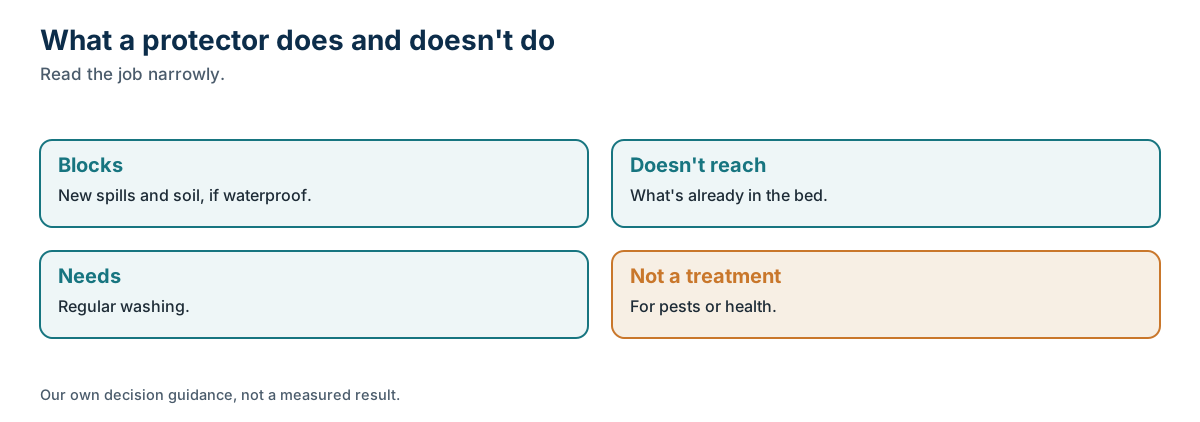
It blocks new spills and soil, if it's waterproof and intact.
It doesn't reach what's already in the bed. A protector put on a used or soiled mattress covers the problem, it doesn't remove it.
It needs washing, per its care label. A soiled protector is just another layer of soil.
It isn't a pest treatment or a health treatment. If you see signs of bed bugs, CDC's bed bug page advises contacting "a professional pest control company experienced with treating bed bugs."
When cleaning still makes sense with a protector
- The bed was used uncovered before the protector went on.
- A spill got through or around it: past an edge, through a worn spot, or before you noticed.
- There's an odor. Urine odor can return after the stain is gone; the Carpet and Rug Institute's pet urine bulletin notes, for carpet, that masked odor "may reappear" in high humidity. Hub 3's why a mattress smells after the urine stain is gone explains.
- The bed came to you used. See can a used mattress be sanitized?.
- The seams and edges. A protector covers the top and sides, but dust and shed skin flakes collect in seams, tufts and edges over time regardless.
When you may not need a visit
If the mattress has been under a waterproof protector since it was new, the protector has been washed per its label, nothing has gotten through, and there's no odor, you may not need cleaning. A vacuum of the surface and seams now and then, plus a look for problems, may be enough. We'd rather say that plainly than suggest every bed needs a visit.
Choosing a protector
If you're buying one, match it to the job. For spills and accidents, look for a waterproof layer that's quiet and breathable enough to sleep on, and a fit deep enough for your mattress so the edges stay put. Check that it can be washed the way its label says, because a protector you can't wash easily won't stay clean. If the goal is mites or bed bugs, the product you want is an encasement rather than a fitted protector, and the AAAAI guidance on woven microfiber applies. For a child's bed or a pet that shares the bed, a second protector to swap in while one is in the wash makes the routine easier.
Using both, in order
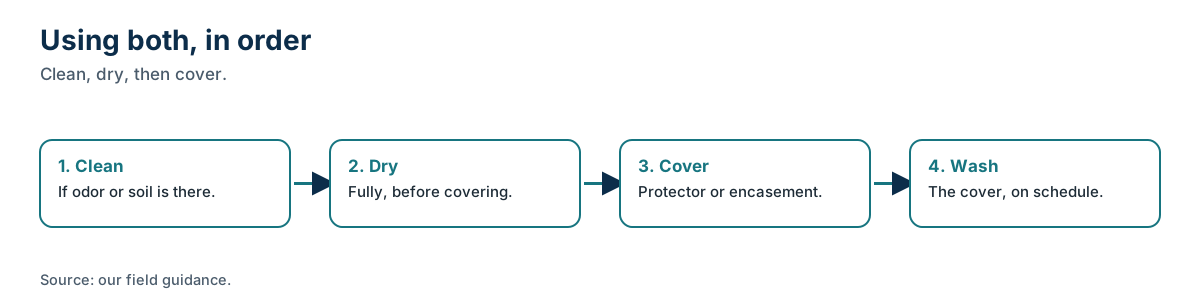
If there's a reason to clean, do it before the cover goes on. Clean the mattress, let it dry fully, then put on the protector or encasement. Covering a damp mattress traps moisture against the foam; EPA's mold guide explains why moisture left in porous materials is a problem. Then wash the protector per its care label. Hub 1's how long a mattress should take to dry gives context on drying, and the dry to the touch entry explains the test we use.
Check your mattress's care label too, before the cleaning and before the cover. Some makers prohibit steam or wet cleaning outright, and Hub 2's compatibility guide quotes them in full; a protector doesn't change those rules.
How we'd treat a protected bed
This section is our view. A protected bed can be a lighter job, and we treat it accordingly. The visit starts with a materials inspection that decides steam temperature and pass speed. Dry vapor from our Italian-made Vapor Clean machines, the Magnum XP with its built-in vac, the ProV 350 and the Pro6 Duo, works the surface and the seams, tufts, ridges and edges where dust and shed skin flakes collect. Organic cleaning methods are our default; enzyme treatment covers urine and organic odor. We'll give you drying guidance so the protector goes back on at the right time. In our view and experience we can treat any mattress or topper, adjusting or stopping if a material reacts. That's our own method and reasoning, not a manufacturer exemption; your care label and warranty terms govern. We use "sanitize" in its cleaning sense, following Hub 2's CDC terms entry, with no disinfection or health claim.
If your protected bed still has a reason for a cleaning, pick a slot. The first mattress is $249, or $199 under the limited-time Fall 2026 offer, and the pricing page covers additional beds.
Where to read next
The decision guide covers protectors alongside the other decisions, and this hub lists every article. For value in general, read is professional mattress sanitation worth it?. For a guest bed under a protector, see should you clean a guest-room mattress?.
What we don't know
- How a fitted protector compares with cleaning over time. We found no study.
- How much soil gets past a protector in everyday use. No source we found measured it.
- Whether Woodcock's encasement results would differ for a fitted protector. The trial tested encasements.
- How long a protector stays effective with washing. That depends on the product and its label.
Changelog
- 3 October 2026: First published. Sources accessed on this date.
Sources
- Control of exposure to mite allergen and allergen-impermeable bed covers for adults with asthma (Woodcock et al., N Engl J Med, 2003) · PubMed
- Environmental assessment and exposure control of dust mites: a practice parameter (Portnoy et al., Ann Allergy Asthma Immunol, 2013) · AAAAI and ACAAI
- Preparing for Treatment Against Bed Bugs (accessed 2026-10-03) · US EPA
- About Bed Bugs (26 April 2024, accessed 2026-10-03) · CDC
- A brief guide to mold, moisture and your home · US EPA
- Pet Urine and Carpet (technical bulletin, revised 27 July 2017) · Carpet and Rug Institute
- Caring for your TEMPUR (UK, updated 11 July 2023, accessed 2026-10-02) · Tempur UK
- Magnum XP-Vac product page (maker's claims, accessed 2026-10-02) · Vapor Clean
- ProV 350 product page ('Italian Made'; maker's claims, accessed 2026-10-02) · Vapor Clean
- Pro6 Duo product page ('Made in Italy'; maker's claims, accessed 2026-10-02) · Vapor Clean
- Cleaning and disinfecting your school (definitions) · CDC
Last reviewed October 3, 2026. Manufacturer specifications and care instructions change; check the current version for your exact model. This page is general information, not medical advice. How we source and check pages: editorial standards.