
Short answer
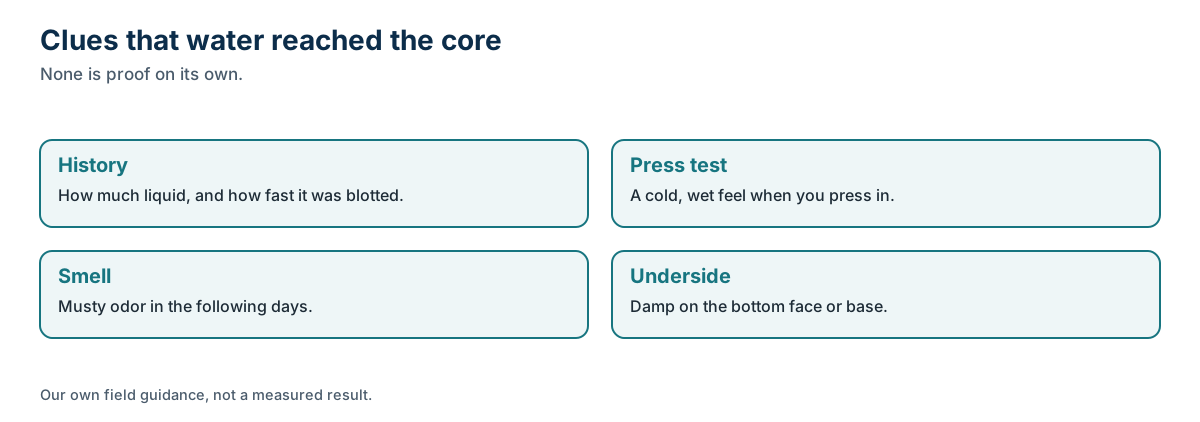
No published method measures moisture inside a mattress at home. The practical clues are how much liquid went on and how fast it was blotted, a cold or wet feel when you press in, a musty smell in the following days, and damp on the underside or base. None proves the core is dry; together they tell you whether to keep drying.
Key terms used on this page
- Mattress saturation:
- Water filling the open cells of a foam or fiber layer below the cover, rather than sitting at the surface. Casper's care page warns that the foam in the mattress core will soak up water and detergent; saturation is that outcome.
- Surface moisture:
- Water held in the cover fabric and the top of the comfort layer, close enough to the air to evaporate quickly. It is the moisture a low-moisture method aims to leave, as opposed to water that has travelled down into the core.
- Weight-gain test:
- Weighing an item before and after treatment to measure how much water it took on. Puckett and colleagues weighed steam-treated mattress-material arenas at intervals from 5 minutes to 7 days and recorded average gains of 0.92 to 1.44 grams at 5 minutes.
- Open-cell foam:
- Foam whose cells connect, so air can move through it. The PFA primer says foam performance is optimized when air flow is maximized, which indicates the cells are open. The same open structure that lets air through also lets liquid water in.
- Thermal conductivity:
- How readily a material passes heat. Engineering ToolBox lists polyurethane foam at 0.03 W/(m K) and liquid water at 0.606 W/(m K). Foam is an insulator, which is one reason surface heat does not travel far into a thick foam layer.
Water that has reached a mattress core is invisible from outside. The cover may look and feel dry while the comfort layer or the foam below it is still holding liquid. There's no published test for this that a homeowner can run, and we haven't found one written for professionals either. What you can do is read several indirect clues together. Here they are, with what each one can and can't tell you.
This article is general information about cleaning and materials, not medical or engineering advice. For mold or health questions, talk to a qualified professional.
Start with what happened
The most reliable clue is the history. How much liquid went on, and how long did it sit before anyone blotted it? A small spill blotted at once may not have passed the cover. A large accident discovered in the morning almost certainly did. Casper's care page, written for its own beds, describes where the water goes: "If you need to clean your Casper mattress or cover, we suggest spot-cleaning affected areas with water and mild detergent. Be careful not to saturate the mattress with too much water and/or detergent, as the foam in the mattress core will soak up water and detergent. Allow the treated area to air dry completely before putting your sheets and bedding back on."
Open-cell foam is the reason. The Polyurethane Foam Association's primer says foam performance "is optimized when air flow is maximized. This indicates that cells are open". Open cells take liquid in as readily as they pass air. Surface moisture vs saturation covers the distinction.
The press test
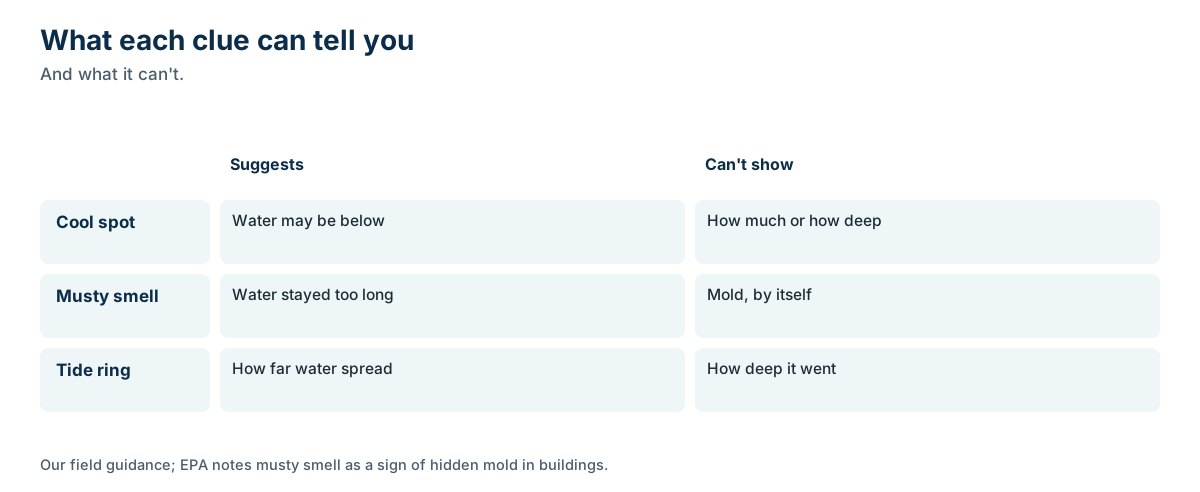
Press a flat palm firmly into the area for several seconds, then compare it with a part of the bed that stayed dry. A surface that feels cool but not wet is the cover giving up its last moisture. A cold, clammy feel that comes up only when you press suggests water below the cover.
The cooling has a physical basis. Evaporation takes heat from its surroundings, and foam is slow to replace it: Engineering ToolBox lists polyurethane foam's thermal conductivity at 0.03 W/(m K). A wet zone inside foam can stay cooler than the rest of the bed for some time. That's a clue, not a measurement. A room that is cold or a bed that hasn't been slept on will feel cool all over.
Smell over the next few days
A musty smell that appears after a spill, or one that gets stronger instead of fading, can mean water stayed inside long enough to matter. EPA's mold guide makes the same inference about buildings: "You may suspect hidden mold if a building smells moldy, but you cannot see the source, or if you know there has been water damage". A musty smell isn't proof of mold, but it's a reason to keep drying and to look more carefully.
Urine is a separate case, because its odor can return as humidity rises even after the mattress is dry. Hub 3 explains that in why urine odor comes back after a mattress dries.
Look at the underside and the base
Water that went all the way through will show on the bottom face or the base. Lift a corner and check the underside, the box spring fabric or the slats. Damp, a tide mark or a musty smell there means the water crossed the whole mattress. A solid platform base is worth checking closely, because it blocks the bottom face from the air.
Tide marks and stains
When water spreads through fabric and then dries, it can leave a ring at its outer edge where dissolved material collected. A ring on the cover shows how far the water spread sideways at the surface. It doesn't show how deep it went. A ring that keeps growing over several days suggests water is still moving.
Why the core is the part that matters
A damp cover is a short-lived problem. It meets the room's air, dries quickly and can be checked by touch. The core is different. It holds water in open cells, it sits under every other layer, and it can't be seen or felt directly. Water there is closer to the kind of soaking EPA's water-damage guidance addresses, and Casper's care page names it directly when it warns that "the foam in the mattress core will soak up water and detergent." That's why every clue in this article is about the core rather than the cover. It's also why Hub 3's articles on accidents, such as what happens when urine soaks into a mattress, spend so much time on depth.
What doesn't work well
Moisture meters. We found no published method for using a moisture meter on a mattress. The meters we know of are designed for building materials, and a reading taken through a cover, fiber and foam would be hard to interpret.
Weighing. The one steam study that measured moisture in mattress material, by Puckett, McDonald and Gold, did it by weighing small arenas before and after treatment. That works in a lab with a scale and a box. A full mattress is too heavy and too variable for a home scale to detect a spill's worth of water.
Opening the mattress. Avocado's cleaning guide, for its own beds, says: "Do not attempt to remove the mattress ticking to access the internal materials or support unit." Opening a mattress to check the core can void a warranty and doesn't make drying easier.
If the clues say the core is wet
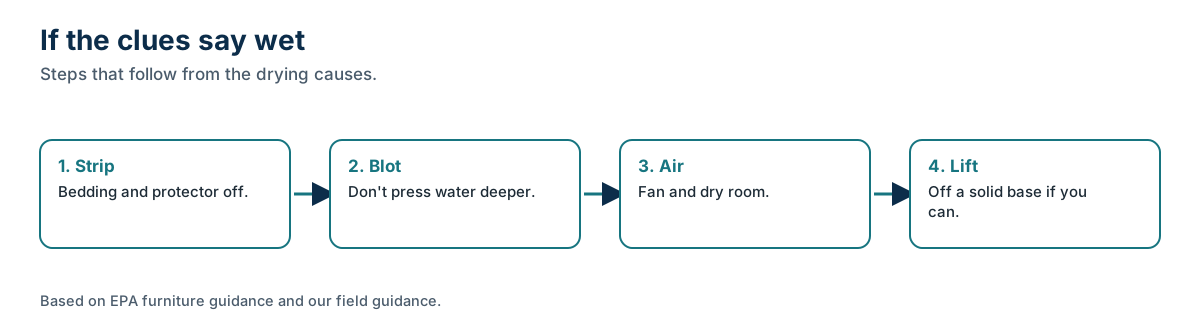
Keep drying. Strip the bed, blot without pressing, move air across the surface, and lift the mattress off a solid base if you can. EPA's water-damage table for upholstered furniture recommends extraction, then "Accelerate drying process with dehumidifiers, fans, and/or heaters," and warns that such items "May be difficult to completely dry within 48 hours." That's EPA's guidance for flood-soaked furniture, but it's the closest published advice. Why foam mattresses are slow to dry and can mattress moisture lead to mold? cover what to watch for.
Where our work fits
A dry-vapor visit is meant to leave nothing in the core to check for. We inspect each mattress's materials first, and that decides steam temperature and pass speed. Dry vapor then works the surface and the seams, tufts, ridges and edges where dust and shed skin flakes collect, in moving passes. The equipment is Italian-made: the Magnum XP with its built-in vac, the ProV 350 and the Pro6 Duo. Organic cleaning methods are our default.
Reading these clues and keeping water low are part of our own method and reasoning, not a manufacturer exemption. Your care label and warranty terms still govern your decision, so look at the warranty first. Inspection and drying advice fall within the standard price; for severe or biohazard contamination we quote a custom surcharge in advance. When we say "sanitize," we mean the cleaning sense covered by Hub 2's CDC's cleaning and sanitizing terms.
Where to read next
The moisture and heat guide brings water, heat and construction together, and this hub lists every article. Hub 3's entry on surface-dry vs dry through explains why the top can mislead you.
What we don't know
- Any validated way to measure moisture inside a mattress without opening it. We found none.
- How long a wet zone inside foam stays detectably cooler than the rest of the bed.
- Whether moisture meters give useful readings through a mattress cover and comfort layer.
- How reliable the press test is on different covers. A thick quilted top may hide a cool spot that a thin knit cover would show.
Changelog
- 3 October 2026: First published. Sources accessed on this date.
Sources
- How to clean your mattress: a mattress care guide (accessed 2026-10-02) · Casper
- Comparison of multiple steam treatment durations for control of bed bugs (Puckett, McDonald and Gold, Pest Manag Sci, 2013) · Texas A&M Urban Entomology (author copy)
- A brief guide to mold, moisture and your home · US EPA
- Mold Remediation in Schools and Commercial Buildings, Table 1: Water Damage, Cleanup and Mold Prevention · US EPA
- IN-TOUCH Vol. 1 No. 1: Flexible Polyurethane Foam, a Primer (revised 2016) · Polyurethane Foam Association
- Thermal conductivity of common materials · Engineering ToolBox
- How to Clean Your Natural Mattress Without Using Harsh Chemicals (25 June 2026, accessed 2026-10-02) · Avocado
- Magnum XP-Vac product page (maker's claims, accessed 2026-10-02) · Vapor Clean
- ProV 350 product page ('Italian Made'; maker's claims, accessed 2026-10-02) · Vapor Clean
- Pro6 Duo product page ('Made in Italy'; maker's claims, accessed 2026-10-02) · Vapor Clean
- Cleaning and disinfecting your school (definitions) · CDC
Last reviewed October 3, 2026. Manufacturer specifications and care instructions change; check the current version for your exact model. This page is general information, not medical advice. How we source and check pages: editorial standards.