
Short answer
It can be cleaned, but cleaning isn't a pest treatment and carries no health promise. Inspect it before it comes inside: seams, piping, tags and the box spring, for spots, shed skins or live bugs. If you find signs, leave it out and call pest control. If you find none, a cleaning can deal with surface soil, odor and dust.
Key terms used on this page
- Secondhand mattress:
- A used mattress with a history you don't know. EPA's bed bug fact sheet advises not to bring second-hand furniture into your home unless you have thoroughly inspected and cleaned the items first. Cleaning isn't a pest treatment.
- Bed bug signs:
- Physical evidence of bed bugs. EPA lists rusty or reddish stains, dark spots of excrement, eggs and eggshells, shed skins and live bugs, and says they hide near the piping, seams and tags of a mattress and box spring.
- Pest control first:
- The order to follow when bed bugs are suspected. CDC advises contacting a professional pest control company experienced with treating bed bugs. A cleaning visit comes after treatment, if at all, and is not a substitute for it.
- Protector vs encasement:
- A protector covers the top and sides to keep spills and soil off; an encasement zips around all six sides. The AAAAI and ACAAI practice parameter recommends mite allergen-proof encasings, and says covers alone are in many cases unlikely to bring clinical benefit.
- Contamination limit:
- The point where a mattress is better replaced than cleaned, such as mold through the layers or a core soaked again and again. EPA says absorbent or porous materials may have to be thrown away if they become moldy.
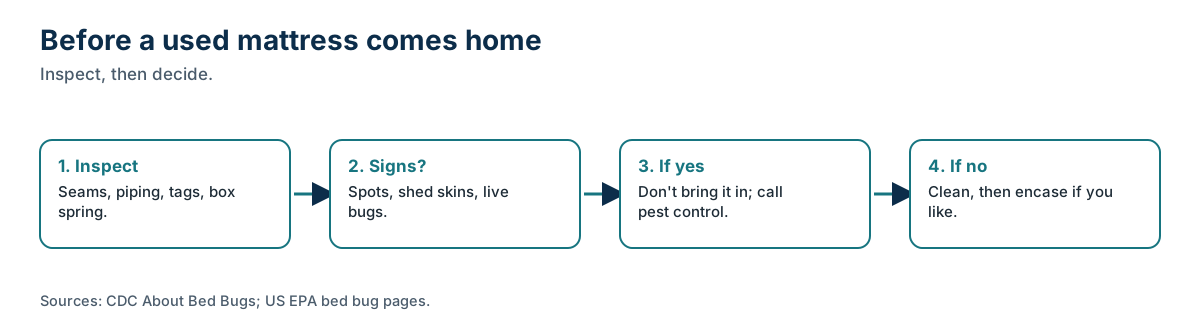
A used mattress can be cleaned. Whether it should come into your home is a separate question, and cleaning doesn't answer it. Cleaning isn't a pest treatment, and we make no promise about bed bugs or disease. The decision order is inspect, then decide, then clean. Check the seams, piping, tags and any box spring for signs of bed bugs before the bed comes inside. If you find signs, leave it out and call a pest control company. If you find none and the bed is sound, a cleaning can deal with surface soil, odor and dust.
This is general information, not medical or pest-control advice. For an infestation, contact a licensed pest professional.
Inspect before it comes inside
EPA's bed bug fact sheet gives the rule plainly: "Do not bring second-hand furniture into your home unless you have thoroughly inspected and cleaned the items first." Inspection comes first in that sentence for a reason. Once a bed is in your bedroom, any bugs it carries are too.
Where to look: EPA's guide to finding bed bugs says that "Around the bed, they can be found near the piping, seams and tags of the mattress and box spring, and in cracks on the bed frame and headboard." CDC's bed bug page also names "The seams of mattresses," box springs and bed frames.
What to look for: EPA lists rusty or reddish stains on the fabric, dark spots of excrement, eggs and eggshells, shed skins, and live bugs. Take a flashlight, look along every seam and under any tag, and check the box spring and frame if they come with it.
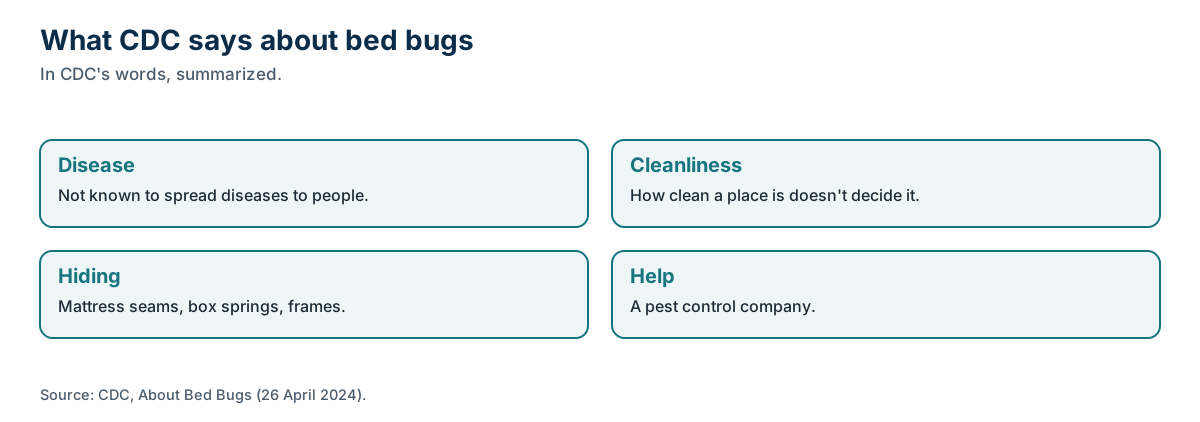
What not to rely on: how clean the bed looks. CDC says: "How clean a place is does not determine whether bed bugs are present." A spotless cover tells you nothing about the seams.
Questions to ask the seller
Before you even look, ask. How old is the bed? Where has it been: a home, a rental, storage? Were there pets or children? Any accidents or spills? Has it ever had bed bugs, or been near a home that did? Is the care label still attached? A seller who can't or won't answer isn't proof of a problem, but answers help you weigh the inspection. A missing label matters too, because without it you can't check the maker's care rules, and Hub 2's care label entry explains why those come first. If the answers worry you, the cheapest choice is to walk away; no cleaning makes up for a bed you'd rather not have in the house.
Warranty and paperwork on a secondhand bed
Ask the seller for the receipt, the warranty card, or at least the maker's name and model. Whether a warranty passes to a second owner is set by the maker's own terms, so if any came with the bed, check your warranty terms before you book cleaning rather than assuming either way. The care label works the same way: its cleaning rules still apply to the bed, whoever owns it now. If there's no paperwork and no label, tell your cleaner, because the method then has to be chosen from an inspection of the materials alone. The decision guide makes the label and warranty the third of its four tests.
If you find signs
Don't bring it in. CDC's advice is: "If you think you have a bed bug infestation, contact a professional pest control company experienced with treating bed bugs." That applies to a mattress you're considering, too. A pest professional can tell you whether the bed can be treated and whether it's worth it. EPA's treatment preparation page describes the kind of preparation a pest professional may ask for, including encasements with zippers that close completely.
We don't offer bed bug treatment. A cleaning visit isn't a substitute for one, and we'd decline a job where the purpose was to deal with an active infestation.
What cleaning can't promise
Said plainly:
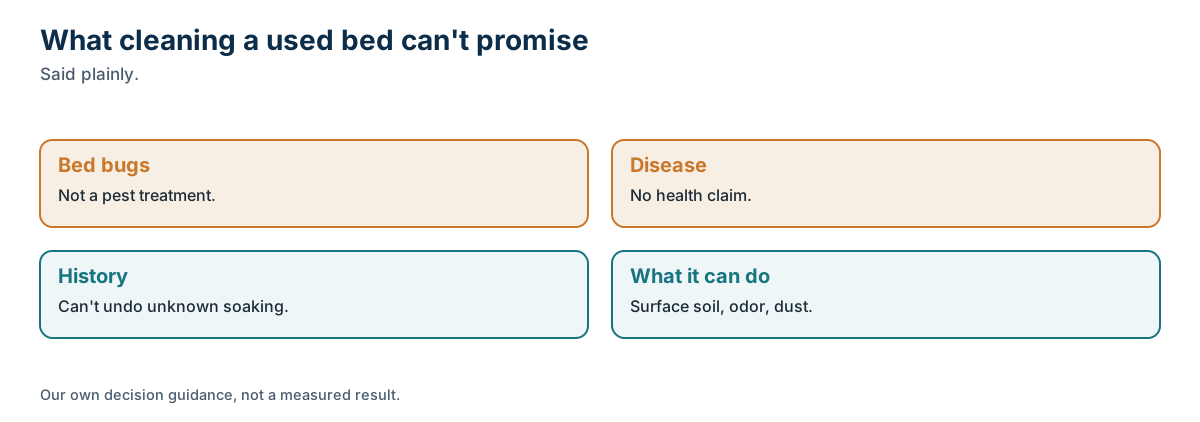
- Bed bugs. Cleaning isn't pest control. We don't claim a visit removes an infestation.
- Disease. We make no health claims. CDC says that "Bed bugs are not known to spread diseases to people," and for any other health question about a used bed, a doctor is the right person to ask.
- History. A used mattress may have been soaked by urine, sweat or spills over years. A surface method can't undo saturation in the core. Hub 5 explains surface moisture versus saturation.
- Mold. If a used bed smells musty or shows growth, EPA's mold guide says porous materials "may have to be thrown away if they become moldy."
What cleaning can do
If the bed passes inspection, is structurally sound and doesn't smell musty, a cleaning can deal with what's on and near the surface: stains, body-oil discoloration and odor in the cover and comfort layers, and dust and shed skin flakes in the seams, tufts and edges. That's the same work we do on any bed. It doesn't make the history disappear; it addresses what we can reach.
Check structure too. The Better Sleep Council, an industry-sponsored group, lists sagging, tearing, holes and damage among signs a mattress needs replacing. A cheap used bed that sags isn't a bargain once you've paid to clean it.
After cleaning: encasement or protector
Once a used bed is clean and fully dry, a cover is a sensible next step. An encasement zips around all six sides; EPA's treatment preparation guidance mentions bed-bug-proof covers, which it notes are also called encasements, with zippers that close completely. A protector covers the top and sides and is for spills and soil. Hub 1's encasement entry and Hub 4's mite-impermeable encasing entry explain the difference. See also is mattress sanitation worth it with a protector?.
How we'd handle a used mattress
This section is our view. We'll ask where the bed came from and whether you've inspected it. If you've seen any sign of bed bugs, we'll ask you to call pest control first. If not, the visit starts like any other, with a materials inspection that decides steam temperature and pass speed. Dry vapor from our Italian-made Vapor Clean machines, the Magnum XP with its built-in vac, the ProV 350 and the Pro6 Duo, covers the surface and the seams, tufts, ridges and edges where dust and shed skin flakes collect. Organic cleaning methods are our default, with enzyme treatment for urine and organic odor. In our view and experience we can treat any mattress or topper, and we adjust or stop if a material reacts; that's our own method and reasoning, not a manufacturer exemption, and any care label or warranty that came with the bed still governs. Check any warranty terms that transferred with the bed before booking. We use "sanitize" in its cleaning sense, as Hub 2's CDC terms entry sets out, and make no disinfection, pest or health claim.
If your used mattress has passed inspection, request a cleaning. The first mattress is $249, or $199 under our limited-time Fall 2026 offer, and the pricing page has the rest.
Where to read next
The decision guide puts pests under its fourth test, and this hub lists every article. For a bed coming out of a move or storage, see should you sanitize a mattress after moving?. For the limits of cleaning in general, read when is a mattress too contaminated to clean?. Hub 4's dust mites vs bed bugs vs bed mites sorts out the names.
What we don't know
- What cleaning does to a used mattress with an unknown history. We found no study.
- Whether any cleaning visit affects bed bugs on a full mattress. The steam studies we know of used small arenas, not whole beds, and we don't rely on them for this.
- How deep past soaking went in a given used bed. Only opening it would tell.
- What a used bed carried before you got it. Inspection reduces uncertainty; it doesn't remove it.
Changelog
- 3 October 2026: First published. Sources accessed on this date.
Sources
- About Bed Bugs (26 April 2024, accessed 2026-10-03) · CDC
- How to Find Bed Bugs (accessed 2026-10-03) · US EPA
- Bed Bug Prevention, Detection and Control (fact sheet, 2014) · US EPA
- Preparing for Treatment Against Bed Bugs (accessed 2026-10-03) · US EPA
- A brief guide to mold, moisture and your home · US EPA
- Replacing a Mattress (accessed 2026-10-03) · Better Sleep Council (sponsored by the International Sleep Products Association)
- Magnum XP-Vac product page (maker's claims, accessed 2026-10-02) · Vapor Clean
- ProV 350 product page ('Italian Made'; maker's claims, accessed 2026-10-02) · Vapor Clean
- Pro6 Duo product page ('Made in Italy'; maker's claims, accessed 2026-10-02) · Vapor Clean
- Cleaning and disinfecting your school (definitions) · CDC
Last reviewed October 3, 2026. Manufacturer specifications and care instructions change; check the current version for your exact model. This page is general information, not medical advice. How we source and check pages: editorial standards.