
Short answer
Each does a different job. HEPA vacuuming removes loose dust and allergen-carrying particles without water, but doesn't reliably remove live dust mites. Dry-vapor steam applies heat with little moisture, which can kill mites and microbes it reaches, but removes nothing by itself. Hot-water extraction flushes water-soluble soil out, but adds the most water. They're complements, not substitutes; a common sequence is vacuum, heat, vacuum.
Key terms used on this page
- HEPA vacuuming:
- Vacuuming with a sealed system and a filter meeting the HEPA standard, which the EPA says can theoretically remove at least 99.97% of airborne particles 0.3 microns in size. It removes loose dust and allergen-carrying particles without adding water or heat.
- Dry-vapor steam:
- Steam made in a sealed, pressurized boiler and released through a hose and nozzle as hot vapor with a low liquid-water content. In the vendor specifications we reviewed, professional units are rated from 80 psi (Ladybug 2350) to 150 psi (Daimer), with stated boiler temperatures from about 345°F (Optima) to 360°F (Daimer); these are maker claims. Daimer describes its steam as about 5% water or less and Vapor Clean claims 'just 5-6% moisture'; that is a vendor claim, not an independent standard.
- Hot-water extraction (HWE):
- The carpet industry's most common professional method. The Carpet and Rug Institute defines an extractor as equipment that uses pressure, water or cleaning solution, and suction to remove soil. It is often marketed as 'steam cleaning' even though it sprays hot water rather than steam.
- Allergen reservoir:
- A material that collects and holds allergen-carrying particles over time. Allergy practice guidelines name mattresses, pillows and bedding as major reservoirs of dust mite allergen.
- Der p 1:
- One of the main dust mite allergens, a protein carried mostly on mite fecal particles. It is the allergen most often measured in mattress and carpet studies. It is stable enough that removing it matters as much as killing live mites.
- Encasement:
- A zippered, tightly woven cover that surrounds a mattress or pillow and blocks mite allergen from passing through. Allergy guidelines recommend encasements as one of the better-supported dust mite measures.
- Moisture load:
- The total amount of water a cleaning process puts into a mattress, whether from spray, steam condensate, shampoo or rinse. It is the main thing that decides how long a mattress takes to dry.
Each method does a different job. HEPA vacuuming removes loose dust and allergen-carrying particles without adding water, but it doesn't reliably remove live dust mites. Dry-vapor steam applies heat with little moisture, which can kill mites and microbes it reaches, but it removes nothing by itself. Hot-water extraction flushes water-soluble soil out of fabric, but it adds the most water of the three. They're complements, not substitutes, and a common sequence for a mattress is vacuum, heat, then vacuum again.
Most people comparing these three want to know one thing: which will do the most about dust mite allergen without harming the mattress. The answer depends on whether you need removal, heat or a wash. The flagship guide adds shampooing and covers each method in full, and the Cleaning Methods hub defines terms such as allergen reservoir.
Three different mechanisms
- HEPA vacuuming: removal by airflow. Suction lifts loose particles, and the HEPA filter keeps fine particles from blowing back into the room. The EPA says a HEPA filter can theoretically remove at least 99.97% of airborne particles 0.3 microns in size, the hardest size to catch.
- Dry-vapor steam: treatment by heat. Vapor condenses on the fabric and heats it quickly. It loosens soil but doesn't remove it.
- Hot-water extraction: removal by flushing. Heated water and solution go in under pressure and are vacuumed back out with what they dissolved, per the Carpet and Rug Institute's description.
What each accomplishes
| Goal | HEPA vacuuming | Dry-vapor steam | Hot-water extraction |
|---|---|---|---|
| Remove loose dust, skin flakes, hair | Yes | No, not by itself | Partly |
| Remove dust mite allergen (fecal particles) | Yes, from the surface | No; heat doesn't destroy it at cleaning temperatures | Partly; wet cleaning removes allergen |
| Kill live dust mites | Not reliably | Heat can, if it reaches them; shown on carpet | Not reliably in the rug studies cited by AAAAI |
| Remove water-soluble soil (sweat, spills) | No | Loosens; needs wiping or vacuuming | Yes, where water is recovered |
| Inactivate microbes | No | Shown on lab and hospital hard surfaces; not measured on mattresses | Not its purpose |
| Water added | None | Small amount of condensate | Most of the three |
| Residue | None | None unless a product is added | Possible if not rinsed |
What the evidence says about vacuuming
If you only do one thing, the question is whether vacuuming alone is enough, and the allergy guideline gives a mixed answer. Read as a decision aid, the AAAAI/ACAAI dust mite practice parameter makes three separate points about vacuums: they leave live mites behind; frequent vacuuming has not been shown to significantly reduce how many mites a home holds; and yet the fecal particles that carry allergen can be removed. That combination is why the guideline still lists HEPA vacuuming next to encasements in a mite plan. A vacuum is a removal tool, not a mite-control tool.
For a mattress owner, the distinction matters because the bed is where the allergen reservoir sits, and Der p 1 travels mostly on those fecal particles. Taking particles away lowers what you breathe at night even while the mite population is unchanged. Brands agree vacuuming is basic care but differ on technique: Purple puts vacuuming first in its cleaning steps, while Sleep Number asks for a non-bristled upholstery attachment and warns that vacuuming directly on its mattresses could damage them. Check the instructions for your model before choosing a tool.
Why the timing of vacuuming matters
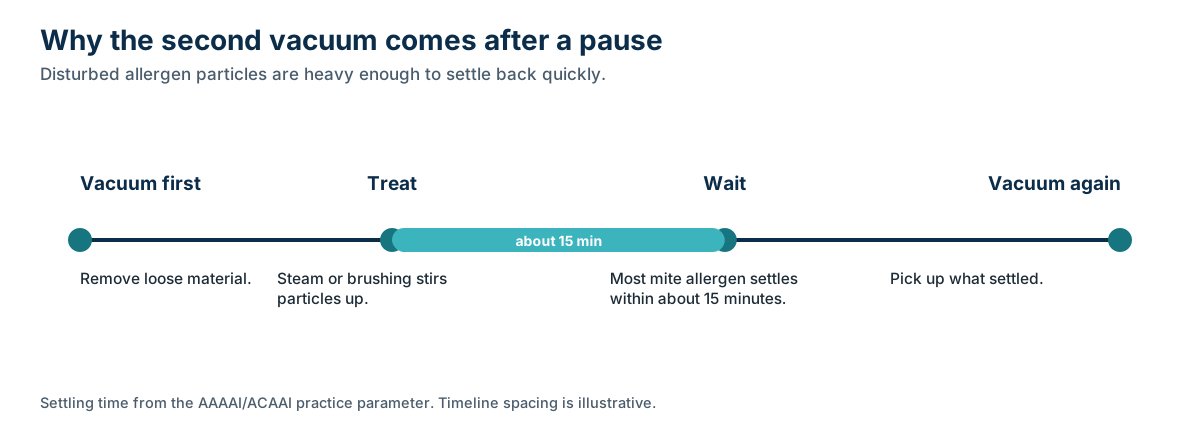
Allergen particles don't stay in the air long. The AAAAI/ACAAI practice parameter notes that most mite allergen particles are relatively large and settle within about 15 minutes of being disturbed. Two practical points follow. First, any process that agitates a mattress, including steam and brushing, stirs particles up that then settle back onto the surface, which is one reason to vacuum after treatment as well as before. Second, a vacuum with poor filtration can blow fine particles back into the room as it works. A HEPA filter only helps if the machine is sealed so that air passes through the filter rather than around it.
What the evidence says about adding steam
The case for adding steam to a vacuum rests on carpet research, so each result has to be read for what it measured. Here they are, ordered by how directly they answer the HEPA-versus-steam question:
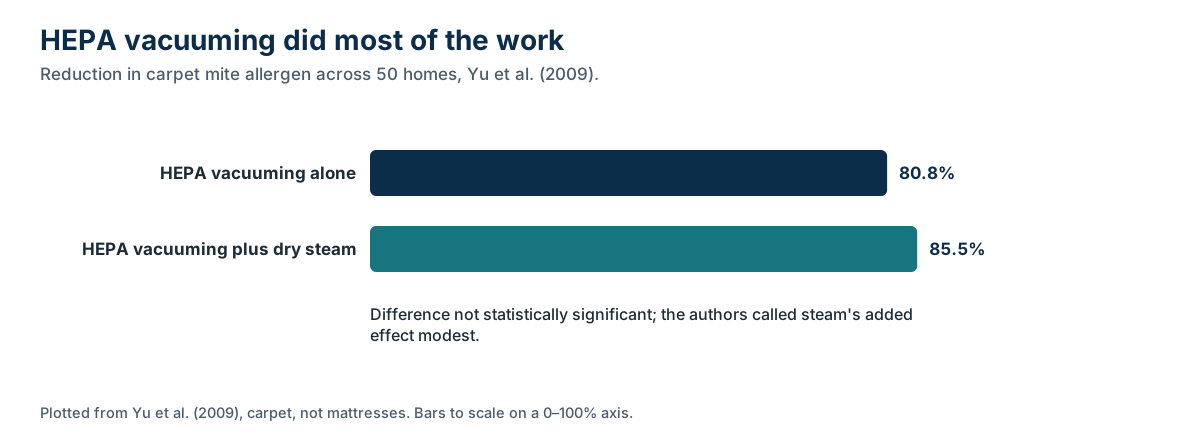
- The head-to-head test. Yu et al. (2009) is the only study here that put the two options side by side in real homes. Across carpets in 50 homes, HEPA vacuuming on its own cut mite allergen by 80.8%; adding dry steam brought the figure to 85.5%. The gap was not statistically significant, and the authors described steam's contribution as modest. Whatever else is true, a good HEPA vacuum does most of the allergen work by itself.
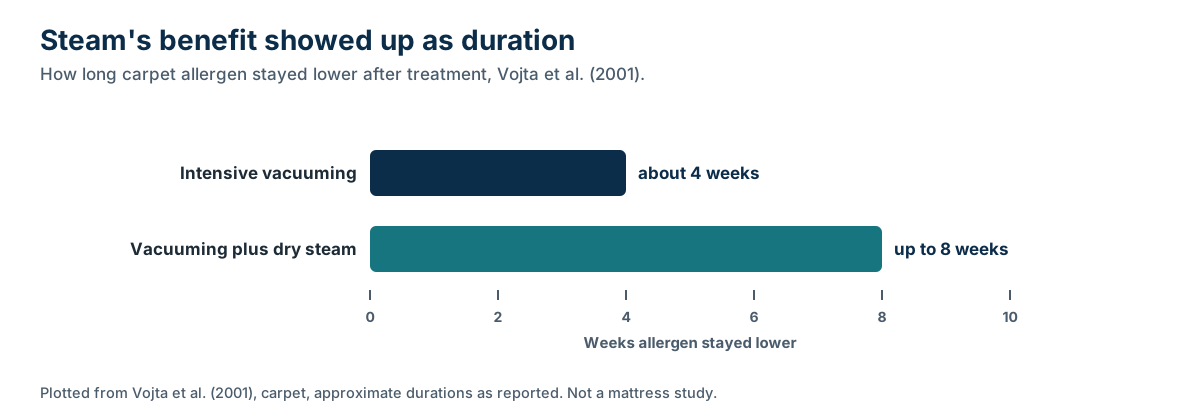
- How long the benefit lasts. In Vojta et al. (2001), what separated the approaches was duration. Carpets that got vacuuming plus dry steam stayed lower in allergen for as long as 8 weeks, while intensive vacuuming without steam held for roughly 4. That points to steam's value as slowing the rebound rather than removing more on the day.
- What heat does that suction can't. The carpet trial by Colloff, Taylor and Merrett (1995) is the clearest evidence of a kill effect: sampling found no live mites in steam-treated carpet over four months, and Der p 1 dropped 86.7% against 4.7% where carpet went untreated. Per the guideline above, a vacuum on its own isn't expected to do that to live mites.
Put together, the trade-off for a mattress looks like this. HEPA vacuuming captures most of the removable allergen. Steam adds heat against live mites and may stretch the time before allergen climbs back. None of the three studies treated a mattress, and the one home study found the extra benefit too small to separate from chance, so steam is best thought of as an addition to vacuuming, never a replacement for it.
What the evidence says about combining kill and removal
The idea of pairing a kill step with a removal step for mattresses is old. A 1986 study by Colloff used liquid nitrogen to kill mites in mattresses, followed by vacuuming, and argued for both killing mites and removing allergen. The specific tools have changed, but the logic carries over: heat or cold for living mites, vacuuming for what they leave behind.
What about UV-C?
Many mattress vacuums add a UV-C lamp. UV-C can inactivate microbes on surfaces it reaches, but a 2022 laboratory study by Tomás et al., testing UV-C against SARS-CoV-2, found that porous materials such as bed linen and upholstery needed much higher and more variable doses than hard surfaces. We haven't found studies of UV-C mattress vacuums specifically, so we treat UV-C as a possible extra, not a proven result.
A sensible sequence
- Vacuum with a sealed, HEPA-filtered machine to remove loose material.
- Heat-treat with dry-vapor steam in moving passes, where the manufacturer allows it, keeping the moisture load low.
- Vacuum again to remove what the heat loosened.
- Spot-treat specific stains only where needed.
- Dry, then protect with an encasement, which allergy guidelines recommend.
Extraction fits where water-soluble soil is the main problem and the item can be fully dried, such as a removable washable cover. For a foam mattress, see what happens when water penetrates memory foam? and dry-vapor steam vs carpet extraction for mattresses.
Questions to ask a provider
When the reason for booking is allergies, the useful questions are about filtration, sequence and claims rather than heat alone:
- "Is your vacuum HEPA-filtered and sealed?" The EPA's HEPA definition describes the filter. If the housing leaks, fine particles can bypass it and return to the room.
- "Do you vacuum both before and after the heat step?" Steam and brushing stir up particles, and the AAAAI/ACAAI practice parameter says most mite allergen particles settle within about 15 minutes. A second pass collects what settled.
- "What does the UV-C lamp on your vacuum do, and what supports that?" A careful answer mentions that porous fabrics needed far higher doses than hard surfaces in the Tomás study cited above, and that we haven't found studies of UV-C mattress vacuums themselves.
- "Will you recommend an encasement?" Allergy guidelines rate encasements among the better-supported mite measures, so an allergy-focused provider should bring them up.
- "What result do you claim, and how was it measured?" Be cautious of allergen or germ reduction percentages that aren't tied to a named test on mattresses. The cleaning, sanitizing and disinfecting definitions help you read those claims.
Sleep Sanitation's appointments combine the two: dry-vapor steam from our Vapor Clean equipment and a heated UV-C mattress vacuum. If dust mites are the main concern, our allergens page goes deeper, and the Omaha bed mite service explains what a visit includes. Our process shows the order of steps, and the pricing page lists rates.
What we don't know
- Mattress-specific comparisons. We haven't found a study comparing HEPA vacuuming, steam and extraction on mattresses.
- How long results last on a mattress. The 8-week vs 4-week result was on carpet.
- UV-C mattress vacuums. We haven't found published tests of them.
Sources
- What is a HEPA filter? · US EPA
- Dust mite practice parameter (Portnoy et al., 2013) · AAAAI-ACAAI
- Yu et al. (2009), HEPA vacuuming with and without dry steam · Journal of Environmental Monitoring
- Vojta et al. (2001), dry steam cleaning and allergen reduction · Environmental Health Perspectives
- Colloff, Taylor & Merrett (1995), steam cleaning of carpets and dust mites · Clinical & Experimental Allergy
- Colloff (1986), mattress mite control with liquid nitrogen and vacuuming · Clinical Allergy
- CRI 205 Residential Carpet Cleaning Standard · Carpet and Rug Institute
- Tomás et al. (2022), UV-C inactivation of SARS-CoV-2 on porous and non-porous surfaces · Journal of Photochemistry and Photobiology B
- How to clean a mattress · Purple
- Cleaning your mattress · Sleep Number
Last reviewed October 2, 2026. Manufacturer specifications and care instructions change; check the current version for your exact model. This page is general information, not medical advice. How we source and check pages: editorial standards.