
Short answer
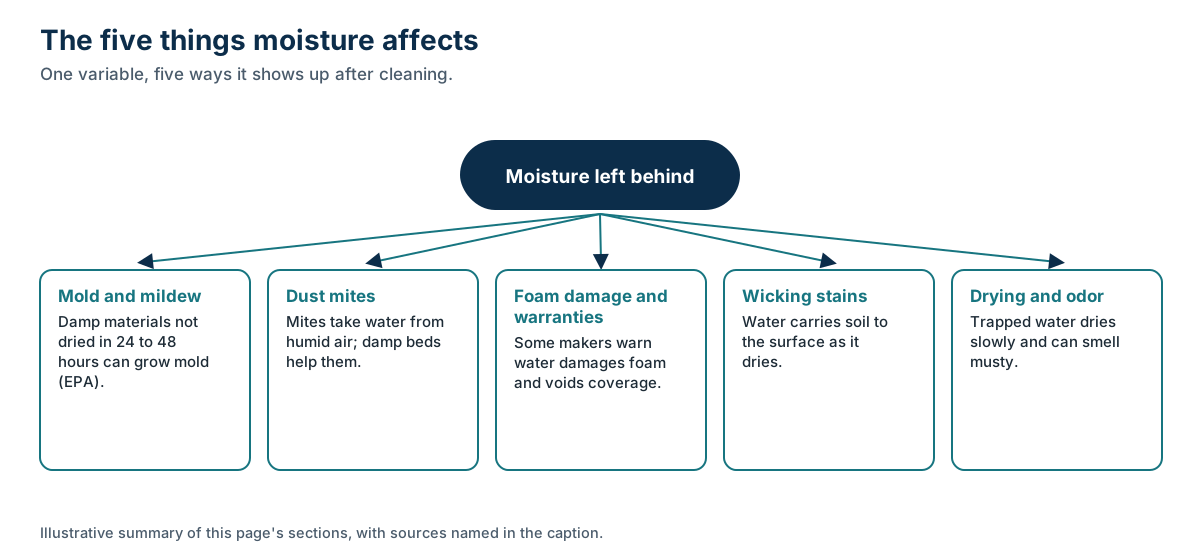
Moisture matters because a mattress is a deep, undrained stack of materials that dries slowly. Water left in it can let mold grow if it isn't dry within 24 to 48 hours, raises the humidity dust mites need, can damage foam that manufacturers say should never be soaked, and carries soil back up as stains. The less water a method leaves behind, the fewer of those risks apply.
Key terms used on this page
- Moisture load:
- The total amount of water a cleaning process puts into a mattress, whether from spray, steam condensate, shampoo or rinse. It is the main thing that decides how long a mattress takes to dry.
- Residual moisture:
- Water left in a material right after cleaning, before drying. For carpet, the Carpet and Rug Institute's test for its deep-cleaning extractor seal allows up to 8 ounces per square yard. We have not found an equivalent published test for mattresses.
- Dry to the touch vs dry through:
- Dry to the touch means the surface fabric feels dry. Dry through means the moisture inside the comfort layers has also left. A mattress can feel dry on top while still holding water underneath.
- Wicking:
- Moisture moving through a material as it dries, carrying dissolved soil or stain with it. When the moisture evaporates at the surface, the stain can reappear on a fabric that looked clean.
- Mattress layers (ticking, comfort layers, support core):
- Ticking is the outer fabric cover. Comfort layers are the foams, latex, fiber or wool directly under it. The support core is the coil unit or base foam underneath. Most mattresses also include a fire barrier between the ticking and the comfort layers.
- Memory foam (viscoelastic foam):
- An open-cell, slow-recovery polyurethane foam that softens with body heat and conforms to pressure. Because its cells are open, liquid can travel into it, and because it is dense and insulating, it is slow to dry.
- Allergen reservoir:
- A material that collects and holds allergen-carrying particles over time. Allergy practice guidelines name mattresses, pillows and bedding as major reservoirs of dust mite allergen.
Moisture matters because a mattress is a deep, undrained stack of materials that dries slowly. Water left inside it can let mold grow if it isn't dry within 24 to 48 hours. It raises the humidity that dust mites depend on. It can damage foams that manufacturers say should never be soaked. And as it dries, it can carry dissolved soil back to the surface as stains. The less water a cleaning method leaves behind, the fewer of these risks apply, which is why the moisture load is the single most important variable in mattress cleaning.
Each risk below comes with its source, from the EPA's mold window to Tempur's warning about soaking foam. The flagship guide compares the four common methods on moisture, and the Cleaning Methods hub defines moisture load and residual moisture.
Why a mattress is different from a carpet
Carpet is a thin layer of fiber on a backing and pad. A mattress is a stack of layers: the ticking (outer fabric), usually a fire barrier, comfort layers of foam, latex, fiber or wool, and a support core of coils or base foam. It's many inches deep and has no drain.
Two physical facts make that stack slow to dry. First, foam resists airflow, so water vapor has a long, slow path back to the surface. Second, foam is an insulator. Polyurethane foam conducts heat at roughly 0.03 W/m·K, according to Engineering ToolBox, which is close to still air. That makes it hard to warm the inside of a mattress enough to drive moisture out quickly.
Even for carpet, the Carpet and Rug Institute tells homeowners that carpet should be dry within 12 hours of extraction and that DIY cleaning usually takes 6 to 12 hours to dry. A mattress has more material and less airflow.
The five things moisture affects
| Risk | What happens | What the source says |
|---|---|---|
| Mold and mildew | Damp material that stays wet long enough can support mold growth | EPA: dry wet materials within 24 to 48 hours; in most cases mold won't grow if you do |
| Dust mite habitat | Mites absorb water from the air; damp microclimates help them | AAAAI/ACAAI: mites need RH above about 65% to thrive and decline below 50%; keep indoor RH at 35% to 50% |
| Foam damage | Some foams can be permanently harmed by soaking | Tempur UK: "a high risk" that soaking "will cause irreversible damage"; "It will also invalidate your guarantee" |
| Stains returning | Water dissolves soil, then carries it to the surface as it evaporates | Known as wicking |
| Slow drying and odor | Water deep in comfort layers takes much longer to leave than water on the surface | Purple: a saturated dense-foam mattress would take days to dry |
Mold and mildew
The EPA's 24-to-48-hour guidance was written for building materials and furnishings in general, not mattresses specifically, but it's the most widely cited benchmark. Saatva's care guide makes the same point for mattresses: they "aren't designed to get wet, especially memory foam," and one that stays damp can start to develop mold and mildew.
Dust mites
The AAAAI/ACAAI practice parameter treats humidity control as a core mite measure. It also notes mites can survive if humidity is high for even part of the day, so a mattress that stays damp overnight works against the goal. A cleaning that adds a lot of water can briefly create the conditions mites need, in the place they're most concentrated, since mattresses are a major allergen reservoir.
Foam damage and warranties
Memory foam is the least forgiving material. Tempur-Pedic's US care page says TEMPUR material should never become wet. Casper warns that the foam will soak up water and detergent. We cover the details in what happens when water penetrates memory foam?
Wicking stains
When a stain is wetted, some of what caused it dissolves. If water then travels down into the fabric and later evaporates from the top, it brings the dissolved material back with it. That's how a stain that looked gone can reappear the next day, sometimes with a ring around it. More water and slower drying make it worse.
Drying and odor
A mattress can be dry to the touch while still damp inside. A musty smell a day or two later is often the first sign that moisture stayed too long. See how long should a mattress take to dry after professional cleaning?
Where the water comes from in each method
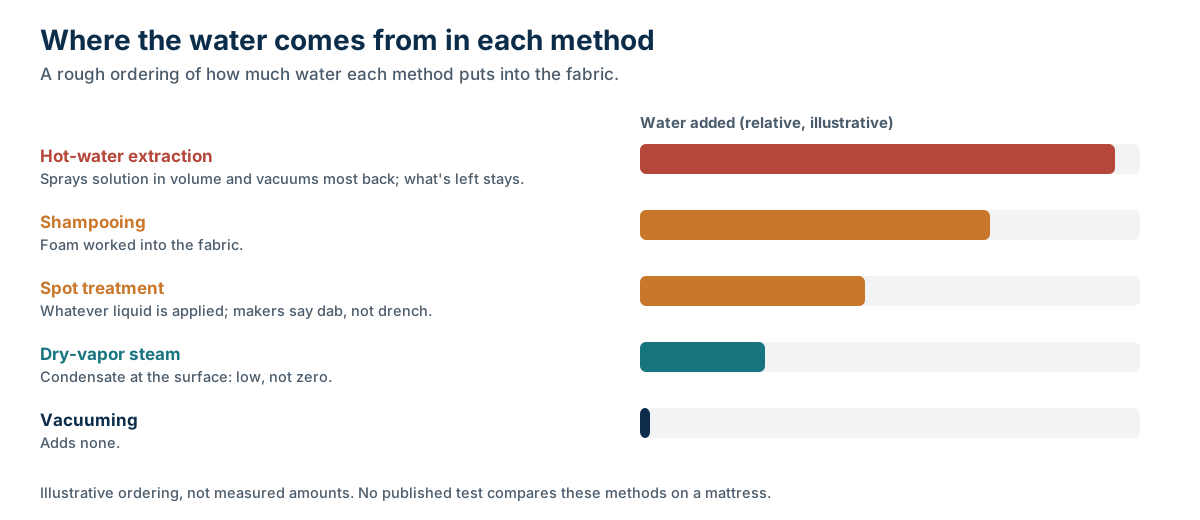
- Hot-water extraction sprays solution into the fabric and vacuums most of it back; the residual moisture and any water past the ticking are what's left. See dry-vapor steam vs carpet extraction for mattresses.
- Shampooing wets the fabric with foam and works it in.
- Dry-vapor steam leaves condensate at the surface. It's low-moisture, not zero-moisture, as explained in is dry-vapor steam actually "dry"?
- Vacuuming adds none.
- Spot treatments add whatever liquid is applied. Manufacturers consistently say to dab, not drench.
Why "low-moisture" doesn't mean "no risk"
Low-moisture methods reduce these risks; they don't remove them. A dry-vapor pass still leaves condensate. A spot treatment still adds liquid. And the room still decides how fast the mattress dries. A humid basement bedroom in July dries more slowly than an air-conditioned room with a ceiling fan, whatever method was used.
Three situations deserve extra care:
- Dense or thick foam mattresses, where water that does get in has the furthest to travel.
- Mattresses with a history of spills or accidents, where cleaning tends to concentrate effort, and moisture, on one spot.
- Rooms with poor airflow or high humidity, where even a small moisture load lingers.
In each case, the fix is the same: less water in, more airflow out, and patience before the bed is made. Saatva's own guidance for spot cleaning is to dab rather than drench and to allow several hours for a cleaned spot to dry completely.
How to keep moisture risk low
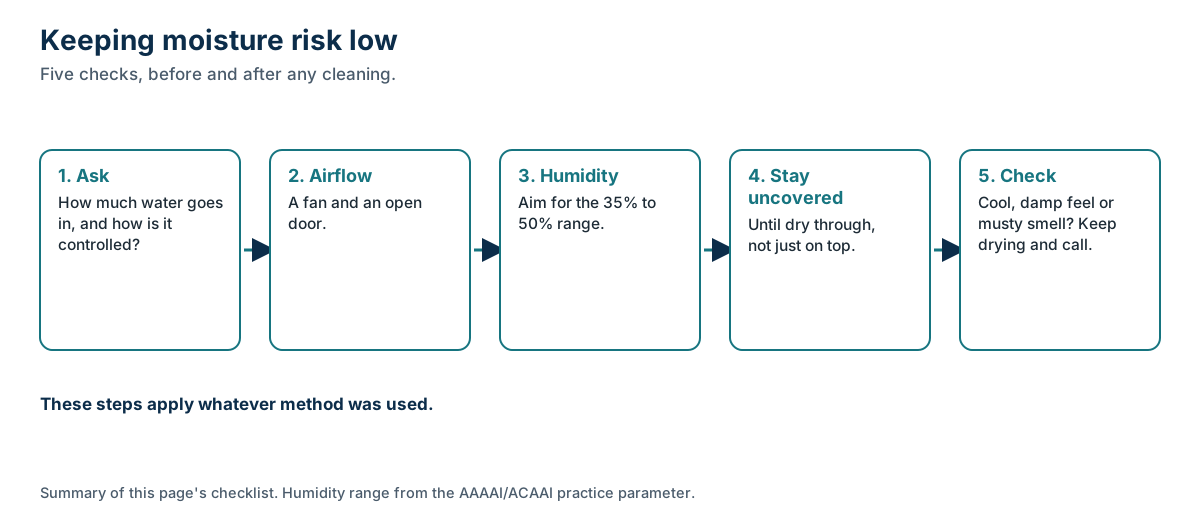
Whatever method is used:
- Ask how much water goes in and how it's controlled.
- Make sure the room has airflow. A fan and an open door help.
- Lower humidity if you can; the 35% to 50% range the AAAAI recommends for mites is also good for drying.
- Keep protectors, encasements and bedding off until the mattress is dry through, not just on top.
- If you notice a cool, damp feel under pressure or a musty smell, keep drying and call whoever cleaned it.
Sleep Sanitation's whole approach is built around a low moisture load: controlled dry-vapor passes, a heated vacuum and a ventilated room. Before booking, see how we're different and what a visit costs.
What we don't know
- A mattress moisture threshold. We haven't found a published limit for how much water a mattress can safely take during cleaning.
- Mold timelines for mattresses. The EPA's 24-to-48-hour window is for wet materials generally. We haven't found mattress-specific studies.
- Residual moisture by method. We haven't found measurements of how much water any method leaves inside a mattress.
Sources
- A brief guide to mold, moisture and your home · US EPA
- Dust mite practice parameter (Portnoy et al., 2013) · AAAAI-ACAAI
- Caring for your TEMPUR mattress · Tempur UK
- Product care · Tempur-Pedic
- How to get any stain out of a mattress · Saatva
- Can you use a carpet cleaner on a mattress? · Purple
- How to clean your mattress · Casper
- CRI 205 Residential Carpet Cleaning Standard · Carpet and Rug Institute
- Thermal conductivity of common materials · Engineering ToolBox
Last reviewed October 2, 2026. Manufacturer specifications and care instructions change; check the current version for your exact model. This page is general information, not medical advice. How we source and check pages: editorial standards.