
Short answer
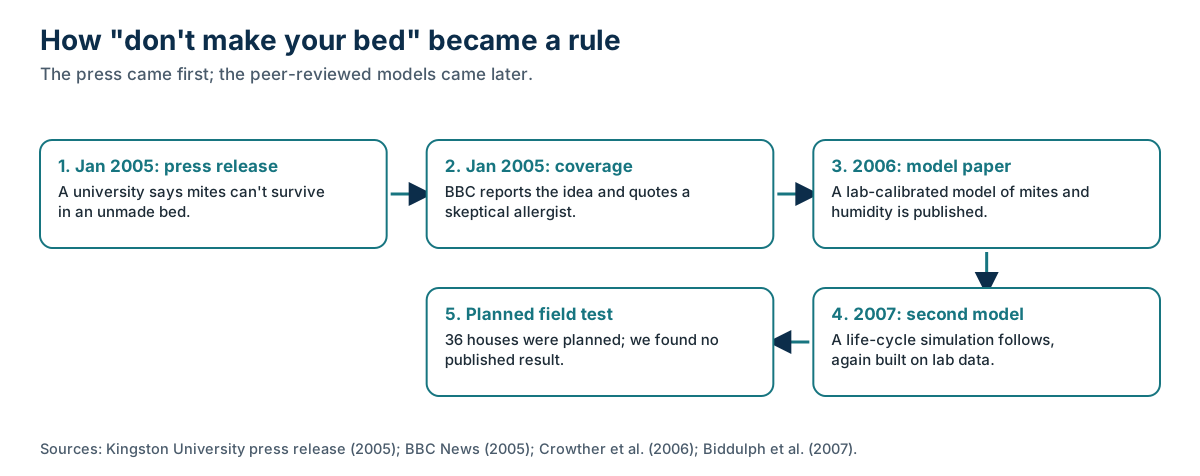
It's a reasonable idea that was never tested the way it's quoted. A 2005 university press release said mites can't survive in an unmade bed, but the research was a computer model built from lab cultures, published in 2006 with a note that it needed further validation. We found no published home test. Airing the bed is harmless; humidity control has stronger evidence.
Key terms used on this page
- Hygrothermal model:
- A computer model predicting how temperature and humidity affect something, here mite populations. The 2006 model behind the unmade-bed claim was calibrated on laboratory cultures.
- Population Equilibrium Humidity (PEH):
- The relative humidity, at a given temperature, at which a mite population neither grows nor declines. The term was defined in a 2006 model paper.
- Critical Equilibrium Humidity:
- The humidity below which an individual mite can't keep its water balance. The 2006 paper contrasts it with Population Equilibrium Humidity, which describes whole populations.
- Heating season:
- The months a home's heating runs, when indoor air is drier. A 1982 Ohio study found mite numbers lowest in the dry, late heating season.
The advice to leave your bed unmade comes from a 2005 university press release, not from a study that tested unmade beds. The research behind it was a computer model of how temperature and humidity affect mite populations, built from laboratory cultures and published in 2006 with the authors' own note that it "requires further development and validation." A planned test in 36 homes was reported at the time; we found no published result on unmade beds. Airing your bed is harmless and fits the science of humidity. It just isn't the proven mite-killer it's quoted as.
General information about bed mites and allergens, not medical advice.
What the press said in 2005
On 17 January 2005, Kingston University in London issued a press release headlined "Messy bedroom could spell end for creepy crawlies." It said a group of specialists was advising Britons to leave their beds unmade, and that "the scientists have discovered the mites cannot survive in the warm, dry conditions found in an unmade bed."
The BBC ran the story the next day under "Untidy beds may keep us healthy." It quoted Dr Stephen Pretlove, a Kingston building scientist: "Something as simple as leaving a bed unmade during the day can remove moisture from the sheets and mattress so the mites will dehydrate and eventually die." Both pieces said the team had built a computer model to track how changes in the home affect mite numbers in beds.
That's where most of today's posts trace back, often with the word "study" doing a lot of work.
What the research actually was
The peer-reviewed work appeared in 2006 in the journal Experimental and Applied Acarology. Crowther and colleagues, including Pretlove, presented a "mite population index" model that predicts whether a mite population grows or shrinks at any combination of temperature and relative humidity.
To build it, they kept laboratory cultures of one common bed mite species at fixed conditions "over 21 days" and measured how the populations changed. From that they defined a new term, the Population Equilibrium Humidity: the humidity, at a given temperature, at which a mite population neither grows nor declines. The model can be combined with a separate model of conditions inside a bed and another of conditions in a room.
A 2007 follow-up by Biddulph and colleagues built a life-cycle simulation called POPMITE from published lab data on egg development, longevity and fecundity at constant conditions.
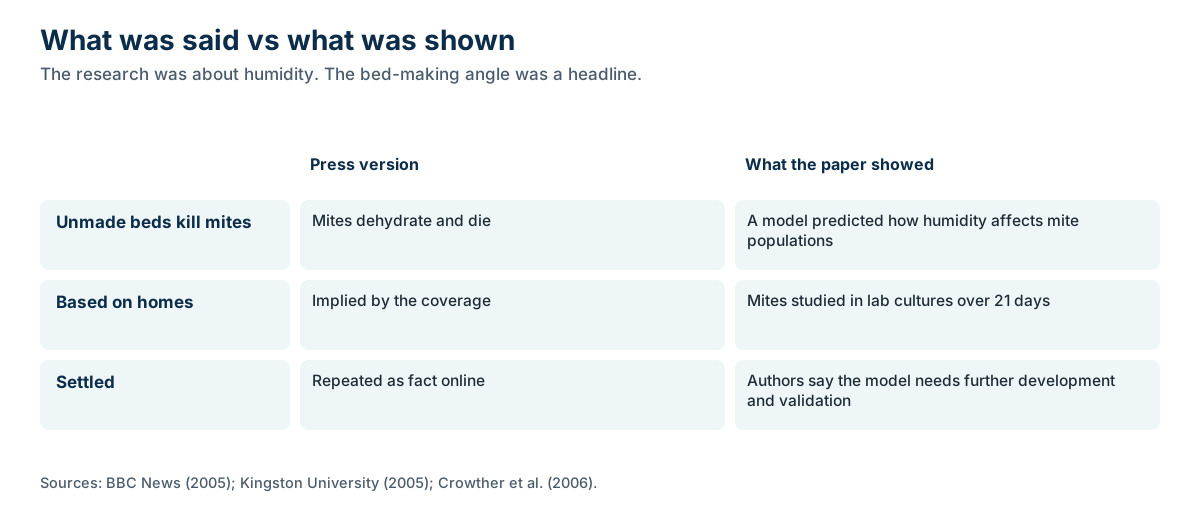
Notice what's missing. Neither paper put mites in an unmade bed in a real home and counted them. They're models of humidity and temperature effects, calibrated in the lab. The 2006 authors were candid: "Although the MPI model requires further development and validation, it has already proved useful for understanding more clearly how the different hygrothermal conditions found in beds and bedrooms can affect mite populations."
What about the 36-house test?
The BBC reported that "in the next stage of their research, the scientists are putting mite pockets into beds in 36 houses around the United Kingdom to test their computer model." That would have been the real-world test. We searched for published results from that field work that looked at unmade beds and didn't find any. It may have been published in a form we couldn't locate, or the results may not have been framed around bed-making. Either way, we can't point to a home study showing unmade beds reduce mites, and we don't think anyone else can either.
A skeptic in the same article
The BBC also quoted Professor Andrew Wardlaw of the British Society for Allergy and Clinical Immunology. He agreed that mites need humid conditions, then added: "However, most homes in the UK are sufficiently humid for the mites to do well and I find it hard to believe that simply not making your bed would have any impact on the overall humidity."
That's a fair challenge. A bed has its own microclimate, warmed and dampened by the sleeper, and airing it out could plausibly dry the top layers for a while. But mites live in the deeper, more stable layers of soft furnishings, and the room's humidity sets the baseline the bed returns to. Whether a few hours of pulled-back covers moves the needle enough to matter is exactly the question the model couldn't answer on its own.
What the humidity evidence does show
The idea underneath the headline is sound: mites depend on humidity. They absorb water vapor through their bodies and can't drink. An allergy practice parameter says they keep their water balance when relative humidity is at least about 65% and have reduced survival and reproduction below 50%. University of Kentucky entomologists put optimum growth at about 75 to 80°F and 70 to 80% relative humidity.
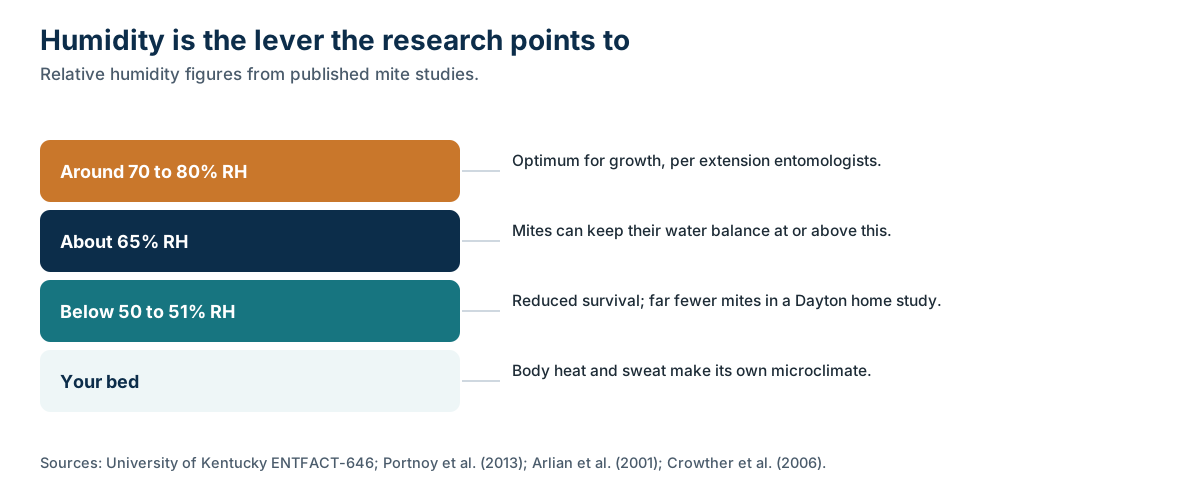
The strongest home evidence is about room humidity, not bed-making. In a study in Dayton, Ohio, homes that kept relative humidity below 51% through the humid season saw live mites fall to 8 per gram of dust, while humid homes showed "seasonal peaks of 500 to 1000 mites" per gram. After 17 months, allergen levels in the dry homes were "more than 10 times lower." That's a dehumidifier and air conditioning, not a messy duvet.
So should you make your bed?
Do whatever you like, honestly. Pulling the covers back for a while after you get up lets the moisture from the night escape, and that's consistent with what mites need and what the models suggest. It costs nothing. But don't treat it as mite control. If mites are a concern, especially with an allergic sleeper, the measures with evidence are humidity control, weekly bedding washes and encasings, as described in why mite control needs more than one step.
Related myths are covered across this hub, including whether autumn is mite season and what home methods reach inside a mattress. If you track bedroom air, bedroom CO2, humidity and bed mites connects ventilation to the same humidity question.
Sleep Sanitation's view
This section is our view. We like the instinct behind the unmade-bed advice, because humidity really is what mites depend on. We just don't want anyone thinking a messy bed replaces drier air, washing or cleaning. Our mattress visits use dry vapor steam with little water, HEPA vacuuming and UV-C light, and each includes a moisture check after service and the built-in bed mite sensor on our UV-C vacuum. See our process or call or text (402) 512-5658.
What we don't know
- Whether the 36-house field test was completed and what it found about bed-making. We couldn't locate a published result.
- How long airing a bed actually lowers humidity in the layers where mites live, and whether that lasts through the next night.
- How the UK model applies to Nebraska's humid summers and dry, heated winters.
Changelog
- 7 October 2026: First published. Sources accessed on this date.
Sources
- Messy bedroom could spell end for creepy crawlies (press release, 17 January 2005) · Kingston University London
- Untidy beds may keep us healthy (18 January 2005) · BBC News
- A Simple Model for Predicting the Effect of Hygrothermal Conditions on Populations of House Dust Mite (Crowther et al., 2006) · PubMed
- Predicting the Population Dynamics of the House Dust Mite in Response to a Constant Hygrothermal Environment (Biddulph et al., 2007) · PubMed
- Reducing Relative Humidity Is a Practical Way to Control Dust Mites and Their Allergens in Homes in Temperate Climates (Arlian et al., 2001) · PubMed
- Environmental Assessment and Exposure Control of Dust Mites: A Practice Parameter (Portnoy et al., 2013) · PubMed Central
- House Dust Mites (ENTFACT-646) · University of Kentucky Entomology
Last reviewed October 7, 2026. Manufacturer specifications and care instructions change; check the current version for your exact model. This page is general information, not medical advice. How we source and check pages: editorial standards.