
Short answer
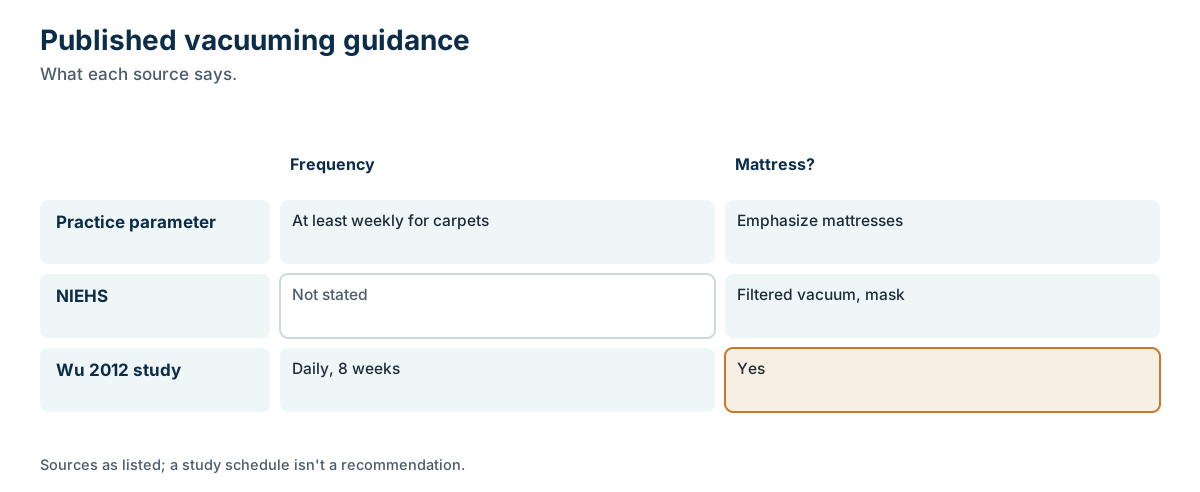
We found no published mattress-specific frequency. Allergist guidance calls regular vacuuming essential, recommends at least weekly for carpets, and tells people to emphasize mattresses. One study had people vacuum their mattresses daily for eight weeks and saw mite allergen fall. Ideally someone without the allergy does the vacuuming, because exposure rises while it's done.
Key terms used on this page
- HEPA filtration:
- High-efficiency particulate air filtration. The practice parameter recommends vacuums with HEPA filtration, or a central vacuum that vents outside, so mite fecal particles stay in the machine instead of going back into the room.
- Mite fecal particle:
- The droppings of dust mites, which carry much of their allergen. The practice parameter notes that vacuuming can remove mite allergens in the form of fecal particles even though it does not remove all live mites.
- Allergen load:
- The total amount of allergen collected from a surface, as opposed to its concentration per gram of dust. Studies report both. A surface can lose dust and allergen load while the concentration per gram stays about the same. The Vojta study (19 homes; carpet comparison 11 homes, 5 steamed) reported both.
- Settled dust:
- Dust collected from a surface such as a mattress, carpet or sofa, usually with a vacuum and a sampling filter. The practice parameter prefers settled-dust samples over air samples for measuring mite allergen.
- Multifaceted control:
- Using several dust mite measures together, such as encasing, washing, vacuuming and humidity control. The practice parameter says mite covers alone are unlikely to achieve a clinical benefit unless used as part of a more comprehensive plan.
- Relative humidity:
- How much moisture the air holds compared with its maximum at that temperature. Dust mites depend on humid air. NIEHS advises keeping indoor humidity at or below 50 percent, and the practice parameter gives a range of 35 to 50 percent.
Ask how often to vacuum a mattress and you'll find confident numbers everywhere, from weekly to daily to monthly. Most aren't sourced. Here's what allergist guidance actually says, what the mattress studies tested, and how to build a routine from that without pretending to more precision than exists.
This article is general information about cleaning, not medical advice. For allergy or asthma questions, talk to your doctor or an allergist.
What allergist guidance says
The 2013 practice parameter from the AAAAI and ACAAI is the most detailed guidance we found. Its recommendation is to vacuum regularly with a filtered machine: "Recommend regular vacuuming using cleaners that have HEPA filtration or using a central vacuum with adequate filtration or that vents to the outside to decrease exposure to dust mite allergen-containing particles."
It gives a frequency for carpets: "Regular (at least weekly) vacuuming is essential for preventing buildup of mite allergens in homes with carpets." And when it lists questions for assessing a home, it says "Ideally the carpeting should be vacuumed at least weekly or more frequently depending on traffic and use."
For beds, it adds emphasis but no separate number: "Emphasis should be placed on bedrooms, mattresses, and other locations where dust mites are likely to live." It also notes that "Bedding and furniture also can be vacuumed to decrease mite allergen exposure from those reservoirs."
So the honest summary: regular, with weekly as the floor for carpets and the bed emphasized. We didn't find a mattress-specific frequency in any guidance we reviewed.
What NIEHS adds
The NIEHS dust mite page doesn't give a vacuuming frequency. It focuses on how: "Use a double-layered microfilter bag or a HEPA filter in your vacuum cleaner. Wear a mask while vacuuming, and stay out of the vacuumed area for 20 minutes after vacuuming, to allow dust and allergens to settle." It does give a weekly frequency for bedding: "Wash all bedding and blankets once a week."
What the mattress studies tested
Two studies had people vacuum mattresses on a set schedule.
In the 2012 Wu study, 20 volunteers vacuumed their mattresses daily for eight weeks. Total mite allergen fell from a geometric mean of 4.07 micrograms to 0.42 micrograms, and the authors attributed most of the drop to a 77.7 percent reduction in total dust.
In the 2019 Jeon study, caregivers of 40 children were randomly split; one group vacuumed the child's mattress daily for two weeks. Dust weight fell, but "The concentrations of HDM allergens were not changed significantly."
Both used daily vacuuming. Neither compared daily with weekly, so neither tells you that daily is necessary or that weekly falls short.
A study schedule isn't a recommendation
This is worth spelling out because it's a common leap. Researchers choose an intensive schedule to see whether an effect exists at all. If daily vacuuming for eight weeks lowers allergen, that's evidence vacuuming can work on a mattress. It isn't evidence that anything less frequent fails, and it isn't guidance for the general public. The Wu authors called daily vacuuming "a practical and cheaper alternative" to covers for reducing exposure; that's their view from their study, and allergist guidance still recommends encasings alongside vacuuming.
Why the bed gets the emphasis
Carpets get the weekly number because that's where most of the vacuuming research was done. The bed gets the emphasis for a different reason. The practice parameter calls mattresses, box springs and pillows "major sources of mites and mite allergens," and the bed is where a person spends hours each night with their face close to the fabric. A carpet can be vacuumed in passing; a mattress needs the bedding stripped first, which is why it tends to get skipped. If you're going to vacuum anything regularly for dust mites, the allergist guidance points to the bedroom first, and to the bed within it.
Who should hold the vacuum
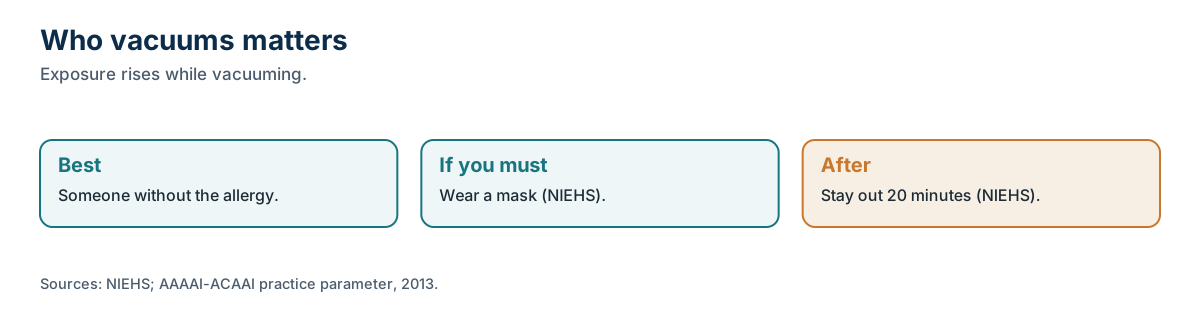
The practice parameter is direct: "Ideally, allergic individuals should not do the vacuuming because mite allergen exposure is increased during vacuuming and when the dust compartments are emptied." It cites a study whose title sums up the nuance: high-efficiency vacuum cleaners increase personal mite allergen exposure, but only slightly.
If nobody else can do it, NIEHS's suggestions apply: a mask while vacuuming, and 20 minutes out of the room afterward. Emptying the canister or changing the bag outdoors, if you can, avoids the second spike the parameter mentions.
How to vacuum a mattress well
This part is practical advice rather than a research finding. Strip everything off, including the protector or encasing. Use an upholstery tool. Move slowly, in overlapping rows, across the top, then the side panels, then the edges and seams where the panels meet. Go around tufts and buttons. The practice parameter's point that allergen varies across a room, with a coefficient of variation "as high as 80%" in one study, is a reminder to cover the whole surface rather than just where you lie.
Building a routine from the sources
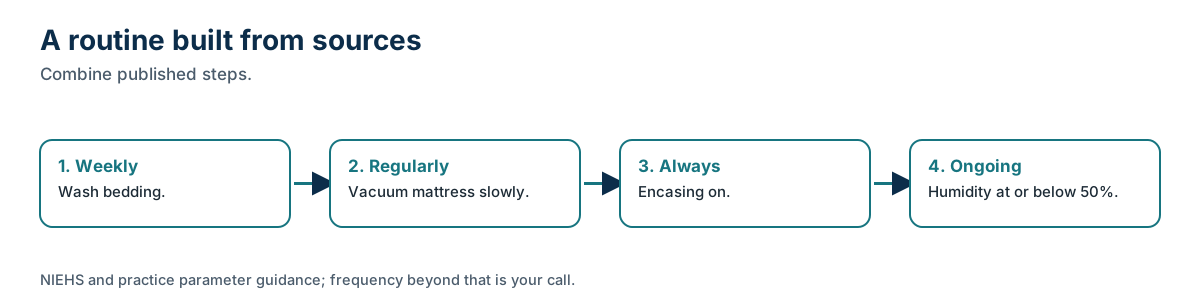
Put together, the published guidance supports a routine like this:
- Bedding: washed weekly, per both the practice parameter and NIEHS.
- Mattress and bedroom: vacuumed regularly with a filtered machine, with weekly as the carpet floor and the bed emphasized.
- Encasings: on the mattress, box spring and pillows.
- Humidity: at or below 50 percent, per NIEHS.
How often beyond that is a judgment call. If you vacuum more often, you're doing what the Wu volunteers did. If you can't, weekly is consistent with the guidance. Your allergist can tailor it to you.
Where a professional visit fits
A professional visit is an occasional addition, not a substitute for the routine. Carpet data suggest allergen comes back: in the Vojta study (19 homes; the carpet comparison used 11 homes, 5 of them steamed), carpet allergen after intensive vacuuming alone "approached pretreatment values by 4 weeks," while dry steam plus vacuuming held it down for up to eight weeks. Those were carpets, but the lesson about return applies to any surface people use every day.
If you do add a professional visit, here's how it fits next to your own vacuuming. Your routine works on loose dust week by week. A visit applies heat, which household vacuums don't. We inspect the materials to set steam output and pass speed, then steam the surface and the seams, tufts, ridges and edges where dust and shed skin flakes collect. Our Magnum XP also has a built-in vac. All of it is in the standard price; severe or biohazard contamination is quoted as a custom surcharge before we start. The care label and warranty for your mattress govern whether steam suits it; check your warranty before booking.
We don't suggest a visit frequency for allergy reasons, because we can't point to evidence that would support one. We call the work cleaning, in the CDC's sense; Hub 2 sets out the CDC's sanitize definition. We make no health claims.
Where to read next
The dust mite and allergen guide covers the full evidence, and the hub lists every article. Does vacuuming remove mite allergen? compares the two mattress studies in detail, and can sanitation replace an encasement? explains why vacuuming and encasings work together. Hub 1 compares the tools in HEPA vacuuming vs steam vs extraction.
What we don't know
- Whether weekly mattress vacuuming lowers allergen as much as the daily schedule in the Wu study. No study we found compared them.
- How much a mattress's construction changes what a vacuum can lift.
- Whether vacuuming frequency changes anyone's symptoms. That's a medical question we don't answer.
Changelog
- 3 October 2026: First published. Sources accessed on this date.
Sources
- Environmental assessment and exposure control of dust mites: a practice parameter (Portnoy et al., Ann Allergy Asthma Immunol, 2013) · AAAAI and ACAAI
- Dust Mites and Cockroaches (accessed 2026-10-03) · National Institute of Environmental Health Sciences (NIH)
- Daily vacuuming of mattresses significantly reduces house dust mite allergens, bacterial endotoxin, and fungal beta-glucan (Wu et al., J Asthma, 2012) · PubMed
- Effects of vacuuming mattresses on allergic rhinitis symptoms in children (Jeon et al., Allergy Asthma Immunol Res, 2019) · PubMed
- Effects of physical interventions on house dust mite allergen levels in carpet, bed, and upholstery dust in low-income, urban homes (Vojta et al., Environ Health Perspect, 2001) · PubMed Central
- Magnum XP-Vac product page (maker's claims, accessed 2026-10-02) · Vapor Clean
- Cleaning and disinfecting your school (definitions) · CDC
Last reviewed October 3, 2026. Manufacturer specifications and care instructions change; check the current version for your exact model. This page is general information, not medical advice. How we source and check pages: editorial standards.