
Short answer
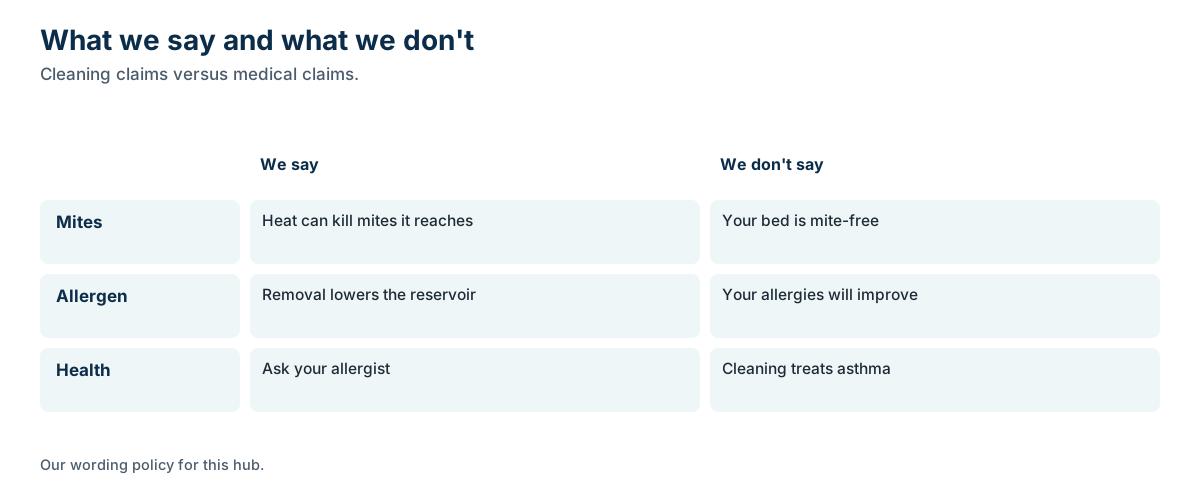
Heat kills dust mites where it reaches them, and steam studies on carpet and mattress samples report mite death and lower allergen. Vacuuming removes allergen-carrying dust but not all live mites. Encasements contain what's inside. Allergist guidance says controlled trials haven't been done to show clinical benefit from heat-based measures, so we report cleaning results, not health claims.
Key terms used on this page
- House dust mite:
- A microscopic relative of spiders that lives in house dust and feeds on flakes of dead skin shed by people and pets. NIEHS describes dust mites as a big source of indoor allergens. The two species most studied are Dermatophagoides pteronyssinus and Dermatophagoides farinae.
- Live-mite kill:
- A study outcome that counts whether mites are alive after a treatment. It is different from allergen removal: dead mites and their droppings can stay in the fabric, still carrying allergen, until something removes them.
- Allergen removal:
- A study outcome that measures how much mite allergen comes out of a surface, usually in dust samples. The practice parameter summarizes a rug study in which vacuuming, washing and shampooing removed allergen without killing the mites.
- Dry steam cleaning:
- The term carpet researchers use for low-moisture, high-temperature vapor cleaning. In the Yu study, dry steam was added to repeated HEPA vacuuming on one half of each carpet and compared with vacuuming alone.
- Mite-impermeable encasing:
- A zippered cover that fully encloses a mattress, box spring or pillow so mite allergen can't pass through. The practice parameter says woven microfiber with a mean pore size smaller than 10 micrometers can block Der p 1, and it does not recommend nonwoven covers.
- Clinical outcome:
- A health result, such as symptoms, lung function or medication use, as opposed to an environmental result such as allergen in dust. A 2008 Cochrane review of 54 trials found no effect of mite control measures on asthma outcomes. We report environmental results only.
Most of what's written about dust mites and mattresses falls into two camps. One says your bed is crawling and only a professional can save you. The other says cleaning is pointless. The studies sit between them, and they're more specific than either camp admits.
This guide goes study by study. For each one it says what was measured, on what surface, in how many homes or samples, and at what time point. Then it says what that result can't tell you. The articles in this hub take single questions further.
This guide is general information about cleaning, not medical advice. For allergy or asthma questions, talk to your doctor or an allergist.
How to read a dust mite study
Before the details, a short checklist we used for every source in this guide. It works for any study a cleaner, a product page or a news story cites at you.
- Which mite? D. pteronyssinus and D. farinae are both common, and a result for one isn't automatically a result for the other.
- Which outcome? Live mites, allergen in dust, total dust, or a health measure. These are four different questions.
- Which surface? Lab-seeded carpet, carpet in homes, upholstered furniture or mattresses. Heat and vacuums behave differently on each.
- How many? Eight carpet squares, 20 mattresses and 1,122 adults carry very different weight.
- When? Immediately after cleaning, at eight weeks, or at a year.
- Compared with what? A sham treatment or an untreated control makes a result far more convincing than a before-and-after test alone.
A study can be careful and still answer a narrower question than the headline built on it. That's the gap this guide tries to close.
What dust mites are, and why beds collect them
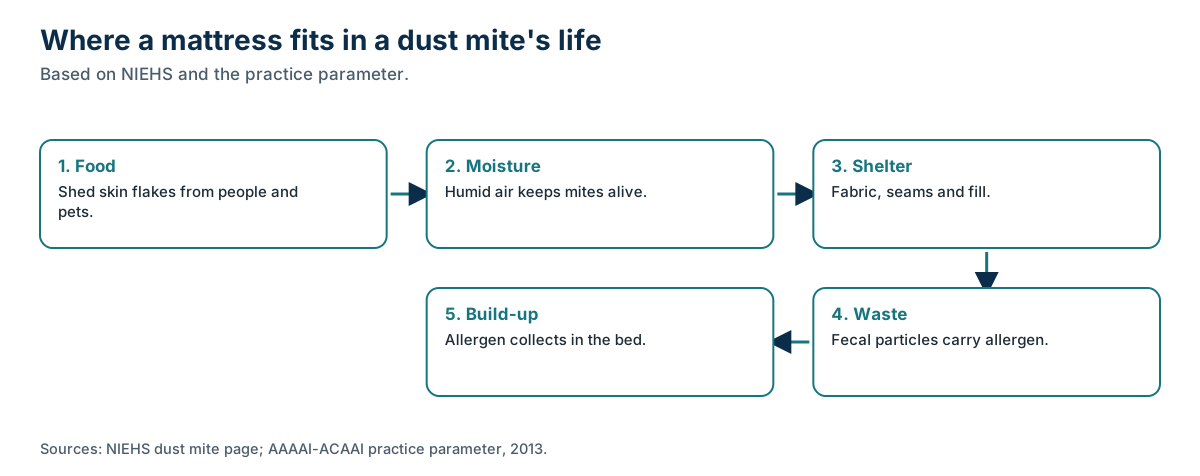
NIEHS describes dust mites as "microscopic, insect-like pests that commonly live in house dust. They feed on flakes of dead skin, or dander, that are shed by people and pets." A bed supplies all of that: skin flakes every night, warmth, and moisture from the person sleeping in it.
The allergen comes mostly from what the mites leave behind. The practice parameter from the AAAAI and ACAAI notes that "Mattresses, box springs, and pillows are major sources of mites and mite allergens." Two species dominate the research, Dermatophagoides pteronyssinus and D. farinae, and their main allergens are measured as Der p 1 and Der f 1.
Killing mites and removing allergen are different results
This is the distinction that matters most when reading any dust mite claim. A treatment can kill mites without removing their allergen, and it can remove allergen without killing mites.
The practice parameter summarizes a study of used rugs that were vacuumed, wet cleaned, shampooed or heated in an autoclave: "Autoclaving was most effective for killing mites and for eliminating allergens. The other cleaning methods did not kill the mites, although they did remove mite allergens." When you read a study, the first question is which of the two it measured. The kill vs remove article covers it in depth.
What the steam studies measured
Three studies come up again and again. Each tested something different.
Colloff, Taylor and Merrett, 1995. A domestic steam cleaner study in two parts. First, eight carpet squares seeded in a laboratory with known numbers of D. pteronyssinus were steam treated and compared with eight untreated squares for four months. "No live mites were found at any time in the treated carpet squares," while mite numbers in the controls climbed. Second, in one tenement flat in Glasgow, Der p 1 fell by a mean 86.7 percent in 12 steam-treated carpet areas, against 4.7 percent in 12 control areas. Surface: carpet. Not a mattress.
Glass and Needham, 2004. A high-temperature study of a 96°C hard surface steam cleaner on D. farinae in carpet and mattresses. The abstract reports statistically significant "mite mortality (100%) was observed in response to treatment in both textile surfaces." The abstract doesn't report the sample size. For Der f 1 in carpet, two passes cut allergen by 61.4 percent and five passes by 100 percent. The abstract doesn't give the number of samples, and the allergen pass results are for carpet.
Htut and colleagues, 2001. A double-blind trial in the homes of 30 adults with asthma. Mattresses and duvets were treated with hot air at 110°C, then steam, then heat again, and all carpets were steam cleaned; a third group of homes was sham treated. Der p 1 and Der p 2 in household dust fell and stayed lower at 6 and 12 months, while the sham homes didn't change. The trial also measured an airway test in the residents. That's a clinical question for doctors, and we don't make health claims from it.
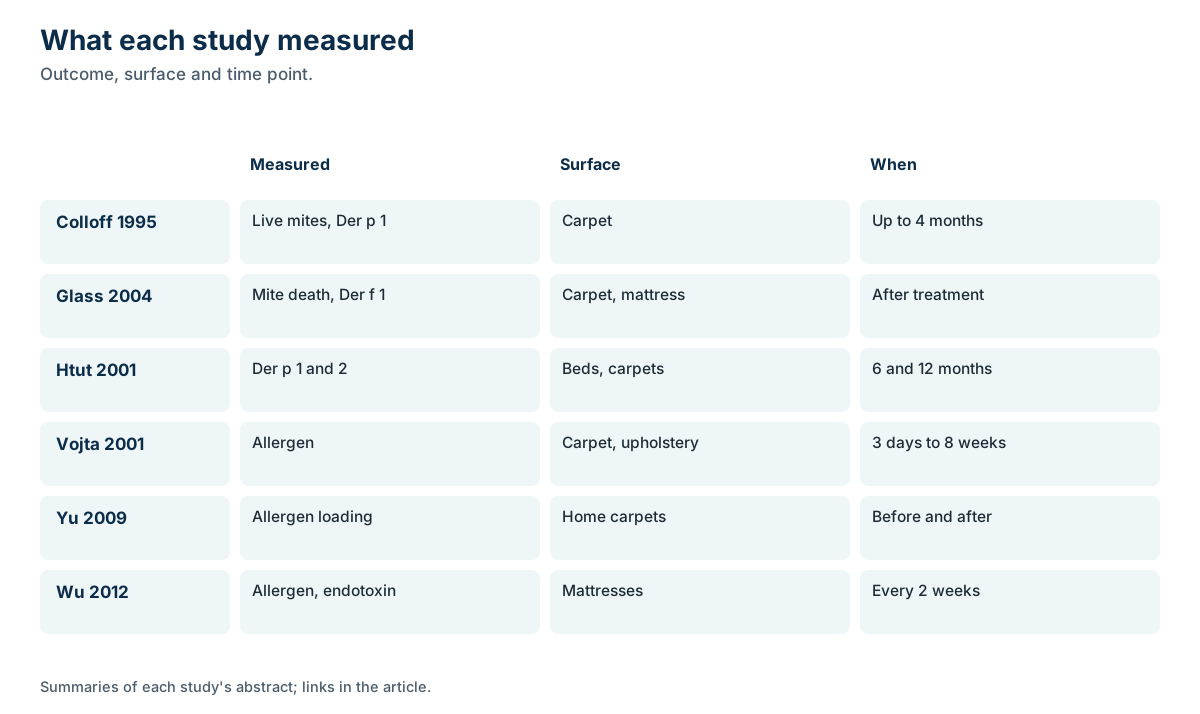
Read together, these say heat at the treated surface kills mites and that steam treatment can lower allergen in dust. They don't say how deep heat reaches in a thick mattress, and none tested the kind of low-moisture passes we use on a specific bed. The steam article goes through each.
Heat and mite eggs
Eggs are tougher than mites. The practice parameter summarizes a study on D. pteronyssinus eggs: "At 40°C, approximately 80% of eggs survived, whereas exposure to direct sunlight and dry heat at 50°C caused death after 3 to 5 hours. Mite eggs exposed to 60°C died instantaneously."
That's a lab result on eggs, not a mattress test. What it does show is that a lukewarm treatment can leave eggs behind, and that contact temperature matters more than the temperature inside a machine. Hub 1 explains why boiler temperature and surface temperature differ.

Dry steam plus HEPA vacuuming
This is the closest the published work gets to what a low-moisture professional visit looks like, and it's all on carpet and upholstery.
Vojta and colleagues, 2001. In low-income urban homes with high mite allergen, carpets and upholstered furniture got a single treatment of either dry steam cleaning plus vacuuming or intensive vacuuming alone. Dust was sampled at 3 days and at 2, 4 and 8 weeks. Both lowered carpet allergen. In the vacuum-only group, levels "approached pretreatment values by 4 weeks," while steam plus vacuuming "effected a decrease that persisted for up to 8 weeks." The full text reports 19 homes; the carpet comparison used 11 homes, 5 of them steamed. Beds in this study were encased and their bedding laundered; they weren't steamed.
Yu and colleagues, 2009. In 50 urban homes with wall-to-wall carpet, repeated HEPA vacuuming was compared with repeated HEPA vacuuming plus dry steam, sampling immediately before and after cleaning. Mite allergen was below the detection limit in 35 of the 50 carpets, so the allergen result comes from the 15 carpets with measurable allergen: loading fell 85.5 percent with steam added and 80.8 percent with vacuuming alone, and that difference was not significant. In the authors' words, "the difference was statistically significant only for dust and PAHs." The authors concluded that "dry steam cleaning added modestly to cleaning effectiveness."
Yiin and colleagues, 2008. The same research group's carpet study of lead dust, not allergen, in 50 homes. Vacuum, dry steam, vacuum cut lead loading by about 40 percent against about 29 percent for vacuuming twice.
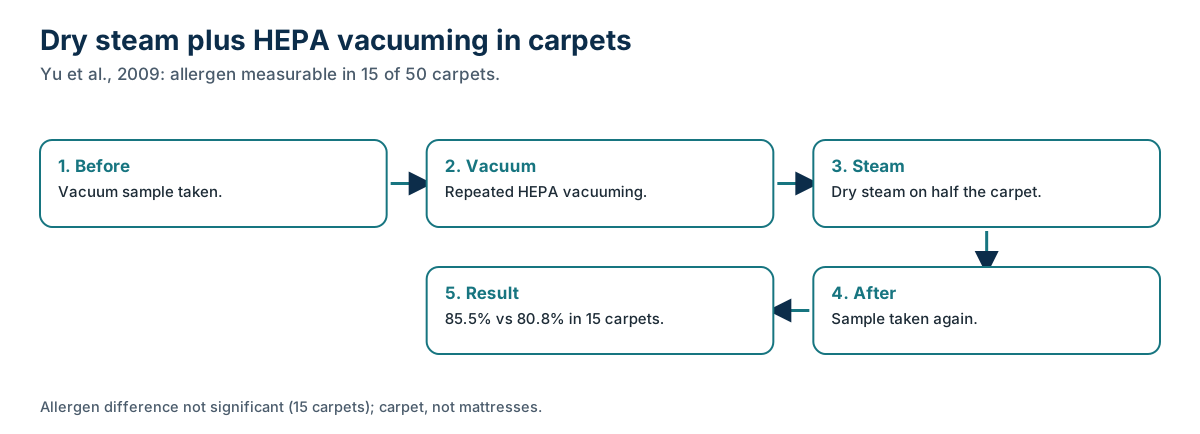
So the honest summary is: on carpet, dry steam added to vacuuming lowered allergen and, in one study, kept it lower for longer. The added effect on allergen was modest and, in Yu's 15 carpets with measurable allergen, not statistically significant. We don't stretch those results to mattresses.
What vacuuming a mattress does
Two studies vacuumed mattresses directly.
Wu and colleagues, 2012. Twenty volunteers vacuumed their mattresses daily for 8 weeks, with dust sampled every two weeks. Total Der p 1 plus Der f 1 fell from a geometric mean of 4.07 micrograms to 0.42 micrograms. Endotoxin and fungal beta-glucan fell too. The authors note the drop "was mainly due to a 77.7% (70.8-84.7) reduction in total dust."
Jeon and colleagues, 2019. Forty children's mattresses were split into two groups; one was vacuumed daily for 2 weeks. Dust weight fell significantly, but "The concentrations of HDM allergens were not changed significantly." The trial also tracked symptoms, which we leave to doctors.
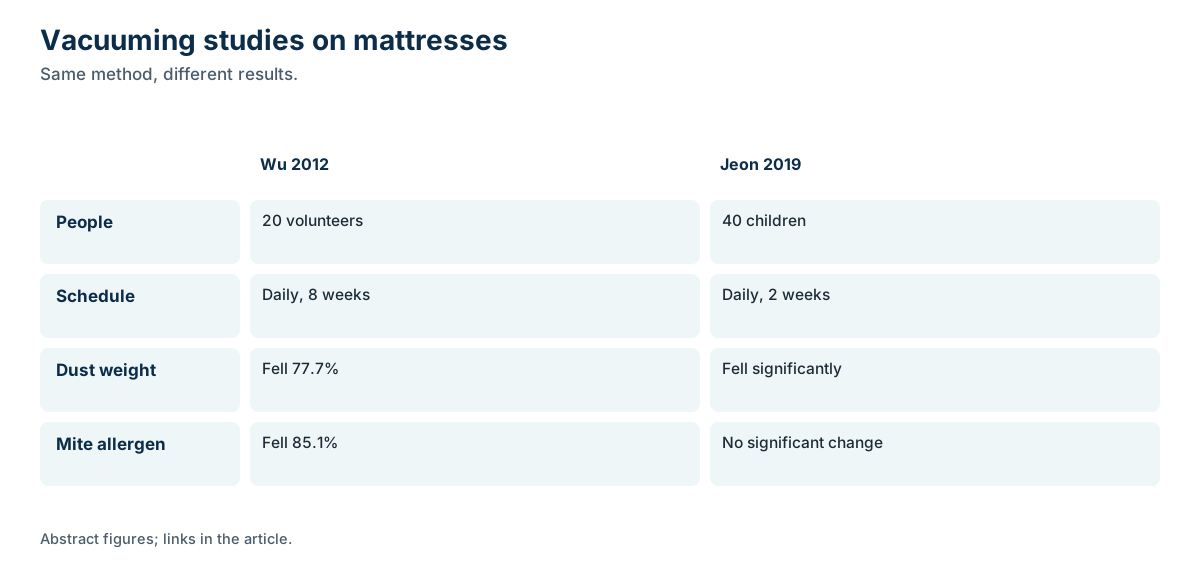
The difference likely comes down to time and how results were reported: total allergen over 8 weeks against concentration over 2 weeks. The practice parameter's line holds either way: vacuuming removes allergen-carrying dust, not all the mites. The vacuuming article has the detail.
Washing bedding
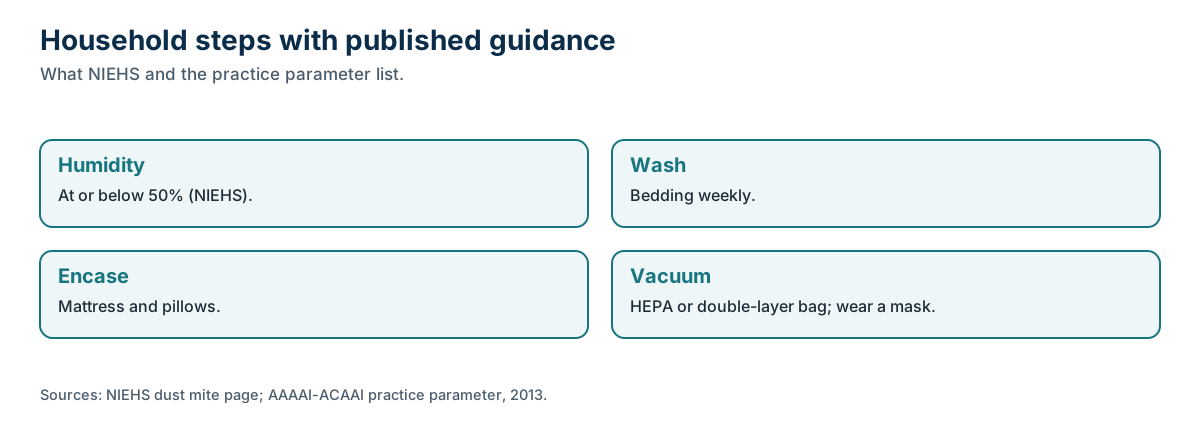
Sheets and pillowcases are washable; a mattress isn't. The practice parameter recommends that "bedding should be washed weekly to decrease dust mite numbers and mite allergen levels, and that high temperature is not necessary." It summarizes a simulated wash study in which most mites died even in cold water. NIEHS gives different advice, recommending hot water at 130 to 140 degrees Fahrenheit. Both agree on weekly washing. Whether washing sheets cleans the mattress covers what laundry reaches and what it doesn't.
Encasements
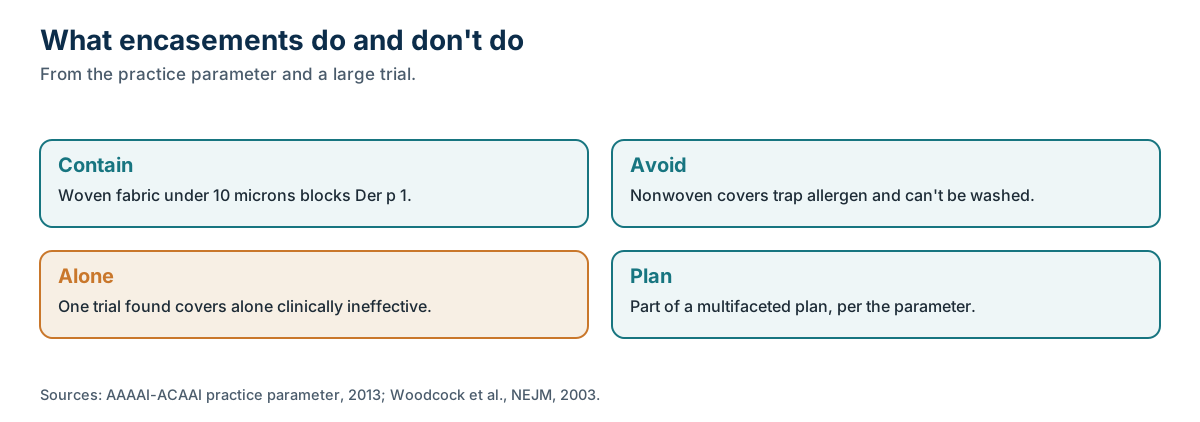
The practice parameter recommends mite-impermeable mattress, box spring and pillow encasings, and it's specific about what kind: woven microfiber with a mean pore size under 10 micrometers to block Der p 1, and not nonwoven covers, which "trap mite allergens and are not washable." It also adds a caution: "in many cases mite covers alone are unlikely to achieve a clinical benefit unless they are used as part of a more comprehensive multifaceted avoidance plan."
The largest trial of covers, Woodcock and colleagues in 2003, enrolled 1,122 adults with asthma. Der p 1 in mattress dust was lower with impermeable covers at 6 months but not significantly at 12 months, and the authors concluded covers "as a single intervention for the avoidance of exposure to dust-mite allergen, seem clinically ineffective in adults with asthma."
Hub 1 defines the encasement and the allergen reservoir it's meant to seal. Whether sanitation can replace an encasement compares the two directly.
Humidity
Mites live on moisture from the air. NIEHS advises a dehumidifier or air conditioner "to maintain humidity levels at, or below, 50 percent," and the practice parameter gives a range of 35 to 50 percent. A bed that gets a deep cleaning in a damp room will collect mites again. That's one reason the multi-step article exists.
What the health evidence says
Here's where restraint matters most. The practice parameter's recommendation on physical measures says heating, freezing and desiccation "theoretically should be effective; however, controlled trials have not been performed to demonstrate clinical benefit when they are used." The Cochrane review of 54 trials with 3,002 patients, 36 of them testing physical methods, reported: "we did not find an effect of the interventions."
Cleaning results and health results are different questions. A study showing less allergen in carpet dust is a cleaning result. Whether a person's allergies or asthma change is a medical question, and it belongs with a doctor. We describe the first and leave the second alone. The boundary article says so at length.
What manufacturers say about steam
Some mattress makers restrict steam outright, and dust mite worries don't change that. The fullest wording we've found is on Tempur's UK care page: "There is a high risk that soaking with water or other cleaning fluids will cause irreversible damage, destroying the benefits of comfort and support which the TEMPUR ® Material provides. It will also invalidate your guarantee. Do not steam-clean or dry-clean the TEMPUR ® Material." Nothing in that passage makes an exception for dust mites, for allergy reasons or for low-moisture machines, and we don't claim one.
Sleep Sanitation uses quick, repeated low-moisture dry-vapor passes as its own method and reasoning, not as an exemption from any maker's label. Your care label and warranty terms govern your decision. Check your warranty, or ask the manufacturer, before booking any steam or vapor cleaning. Hub 2's compatibility guide quotes each maker, and its Tempur-Pedic guide covers that brand in full.
Sleep Sanitation's position
This section is our view, not a finding from the studies above.
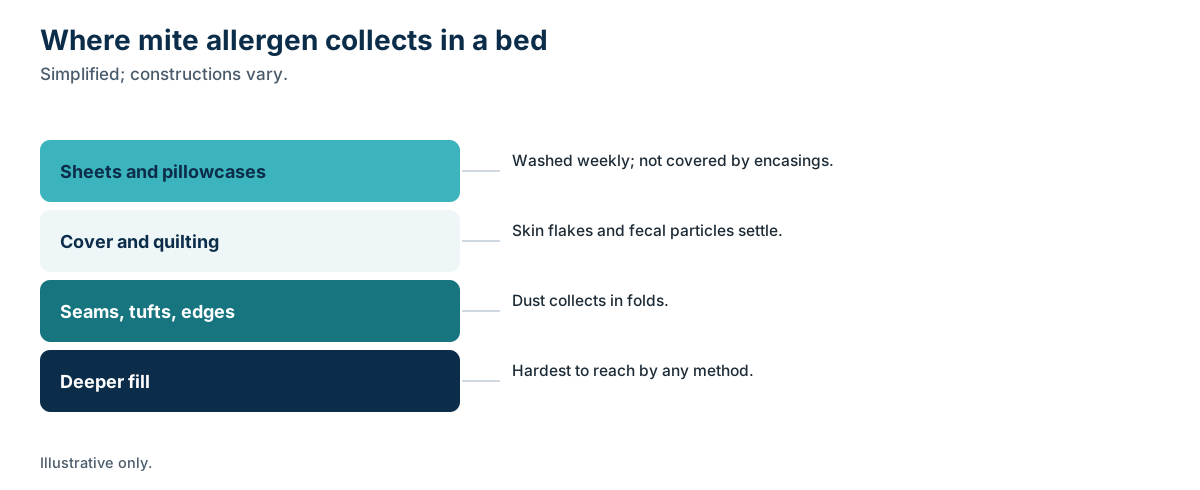
Here's the whole of what a visit does about dust mites. We start by examining the materials, and that examination decides steam output and pass speed. Dry-vapor sanitation then covers the sleep surface, and the seams, tufts, ridges and edges where dust and shed skin flakes collect get extra passes. We use three Italian-made Vapor Clean machines: the Magnum XP, which has a built-in vac, the ProV 350 and the Pro6 Duo. Organic cleaning methods are our default.
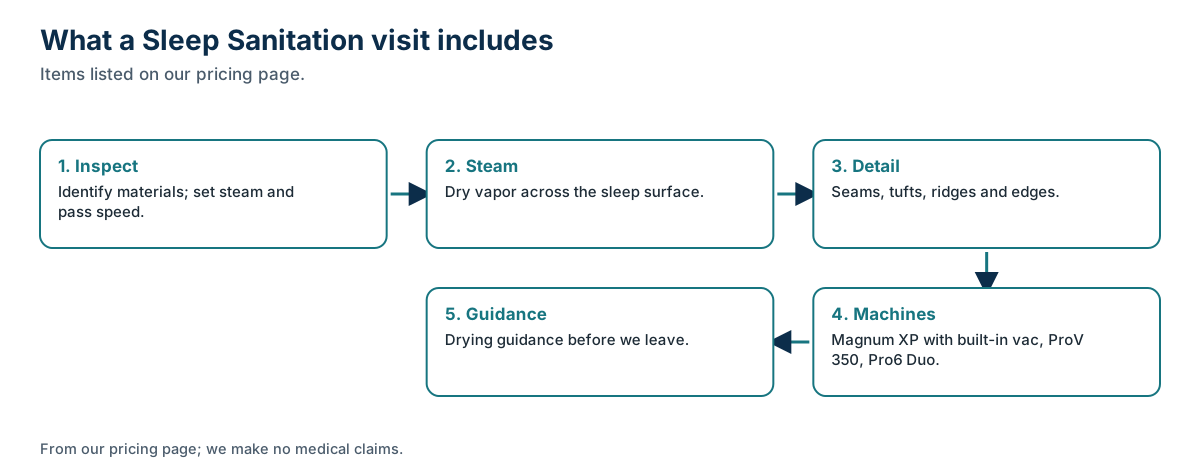
All of that is part of the standard price. Severe or biohazard contamination is quoted as a custom surcharge before we start.
What we claim is limited to the bed: heat reaching mites in the fabric and folds we treat. Vacuuming removes loose dust, as the studies above describe. We don't claim a mite-free mattress, and we don't claim any effect on allergies or asthma. The CDC treats cleaning, sanitizing and disinfecting as different steps; Hub 2's sanitize definition explains how we use the word, and we make no disinfection claim.
Bed bugs are not dust mites
People searching for "bed mites" usually mean dust mites. Bed bugs are a different animal: the CDC describes them as small, flat insects that feed on blood, from 1mm to 7mm, and notes that "How clean a place is does not determine whether bed bugs are present." Suspected bed bugs need a licensed pest professional. We don't provide pest control. Dust mites vs bed bugs vs bed mites sets out the differences.
Questions to ask any cleaner about dust mites
- Which studies support what you're claiming, and what did they measure?
- Do you claim to kill mites, remove allergen, or both?
- How do you set heat and pass speed for my mattress material?
- Do you treat seams, tufts and edges?
- Do you make any health claims? (If yes, ask for the clinical evidence.)
- What does my care label say about steam?
A cleaner who answers the fifth question with "no" is telling you the truth about the evidence.
Where to go next
Each article answers one question:
- Heat: does steam kill dust mites in mattresses? and does dry-vapor steam kill dust mites?
- Vacuums: does vacuuming remove mite allergen?
- The core distinction: killing mites vs removing allergen
- Sequence: vacuum before or after steam?
- Contents: what lives in mattress dust
- Names: dust mites vs bed bugs vs "bed mites"
- Covers: can sanitation replace an encasement?
- Routine: how often allergy sufferers should vacuum
- Laundry: does washing sheets clean the mattress?
- The bigger picture: why one step isn't enough
- The boundary: does mattress sanitation cure allergies?
Hub 1's HEPA vacuuming vs steam vs extraction compares the tools, and Hub 3's urine and odor guide covers organic stains. Questions about a visit: (402) 512-5658.
What we don't know
- How deep heat from any particular pass reaches inside a particular mattress. The studies report surfaces and samples, not depth profiles.
- Whether the carpet results for dry steam plus vacuuming hold for mattresses. No study we found tested that directly.
- How quickly mites recolonize a treated mattress in a given home. That depends on humidity, bedding and encasing, and we haven't seen a mattress study that tracked it after steam.
Changelog
- 3 October 2026: First published. Sources accessed on this date.
Sources
- Environmental assessment and exposure control of dust mites: a practice parameter (Portnoy et al., Ann Allergy Asthma Immunol, 2013) · AAAAI and ACAAI
- Dust Mites and Cockroaches (accessed 2026-10-03) · National Institute of Environmental Health Sciences (NIH)
- The use of domestic steam cleaning for the control of house dust mites (Colloff et al., Clin Exp Allergy, 1995) · PubMed
- Eliminating Dermatophagoides farinae and their allergens through high temperature treatment of textiles (Glass and Needham, J Med Entomol, 2004) · PubMed
- Eradication of house dust mite from homes of atopic asthmatic subjects: a double-blind trial (Htut et al., J Allergy Clin Immunol, 2001) · PubMed
- Effects of physical interventions on house dust mite allergen levels in carpet, bed, and upholstery dust in low-income, urban homes (Vojta et al., Environ Health Perspect, 2001) · PubMed Central
- Evaluation of HEPA vacuum cleaning and dry steam cleaning in reducing levels of PAHs and house dust mite allergens in carpets (Yu et al., J Environ Monit, 2009) · PubMed Central
- Cleaning efficacy of HEPA-filtered vacuuming and dry steam cleaning on carpet (Yiin et al., J Occup Environ Hyg, 2008) · PubMed
- Daily vacuuming of mattresses significantly reduces house dust mite allergens, bacterial endotoxin, and fungal beta-glucan (Wu et al., J Asthma, 2012) · PubMed
- Effects of vacuuming mattresses on allergic rhinitis symptoms in children (Jeon et al., Allergy Asthma Immunol Res, 2019) · PubMed
- Control of exposure to mite allergen and allergen-impermeable bed covers for adults with asthma (Woodcock et al., N Engl J Med, 2003) · PubMed
- House dust mite control measures for asthma (Gotzsche and Johansen, Cochrane review, 2008) · PubMed
- About Bed Bugs (26 April 2024, accessed 2026-10-03) · CDC
- Caring for your TEMPUR (UK, updated 11 July 2023, accessed 2026-10-02) · Tempur UK
- Magnum XP-Vac product page (maker's claims, accessed 2026-10-02) · Vapor Clean
- ProV 350 product page ('Italian Made'; maker's claims, accessed 2026-10-02) · Vapor Clean
- Pro6 Duo product page ('Made in Italy'; maker's claims, accessed 2026-10-02) · Vapor Clean
- Cleaning and disinfecting your school (definitions) · CDC
Last reviewed October 3, 2026. Manufacturer specifications and care instructions change; check the current version for your exact model. This page is general information, not medical advice. How we source and check pages: editorial standards.