
Short answer
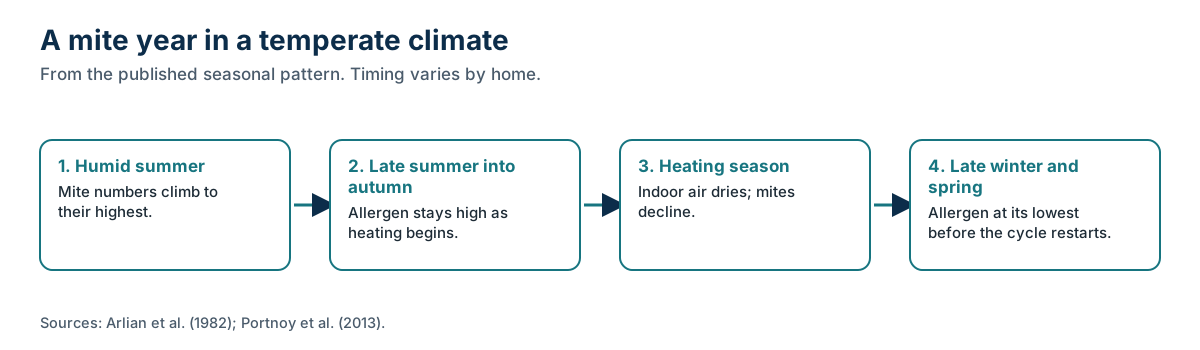
Not exactly. Published data from Ohio homes show mite numbers peaking in the humid summer months and falling to their lowest in the dry, late heating season. Allergen behaves a little differently: an allergy practice parameter says it rises in humid summer, stays elevated through winter and drops in late winter and spring. Autumn is when allergen is still high, not when mites arrive.
Key terms used on this page
- Allergen seasonality:
- The yearly rise and fall of mite allergen indoors. The practice parameter describes levels rising in humid summer, staying elevated through winter and falling in late winter and spring.
- Heating season:
- The months a home's heating runs, when indoor air is drier. A 1982 Ohio study found mite numbers lowest in the dry, late heating season.
- Population Equilibrium Humidity (PEH):
- The relative humidity, at a given temperature, at which a mite population neither grows nor declines. The term was defined in a 2006 model paper.
- Critical Equilibrium Humidity:
- The humidity below which an individual mite can't keep its water balance. The 2006 paper contrasts it with Population Equilibrium Humidity, which describes whole populations.
Not exactly. The best published data we found, from homes in Ohio, show mite numbers peaking in the humid summer months and dropping to their lowest in the dry, late heating season. Allergen, the part that actually affects allergic people, lags behind: an allergy practice parameter describes it rising in humid summer, staying elevated through winter and falling in late winter and spring. So autumn is when allergen is still high after the summer peak, not the moment mites suddenly arrive.
General information about bed mites, allergens and humidity, not medical advice.
Where the autumn idea comes from
Every September, headlines warn of a seasonal mite surge, usually quoting an allergy specialist. There's something real behind them. Many people with mite allergy notice symptoms in late summer and autumn, and allergists see it. But the headlines tend to blur two separate things: when mites are most numerous, and when their allergen is most abundant. The published data treat those separately, and so should we.
What the Ohio home studies found
In 1982, Arlian and colleagues monitored mites in the homes of mite-sensitive patients in Ohio at roughly three-week intervals for two years. They found that "mite density exhibited a seasonal fluctuation, with highest density occurring in the humid summer months and the lowest density during the dryer, late heating season." Live mites outnumbered dead ones when total numbers were high.
Two other findings from that study are worth knowing. Mite levels were highest on heavily used upholstered furniture and carpeted floors in living rooms and bedrooms, and "mattresses were not found to be the major foci for mites" in those homes. That's one study from one state four decades ago, and later work has found substantial allergen in many mattresses, but it's a useful reminder that a bed is part of a room.
In 2001, the same research group followed three groups of homes in Dayton, Ohio through two humid summers.
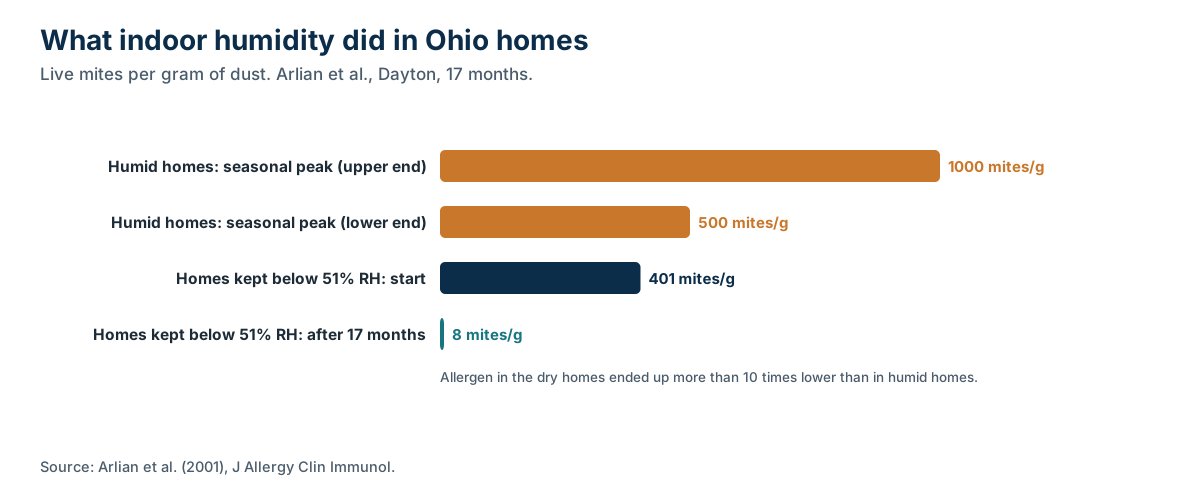
Homes that kept relative humidity below 51%, mostly with a high-efficiency dehumidifier and air conditioning, started at a mean of 401 live mites per gram of dust and fell to 8. Homes that used air conditioning without reaching that humidity, or that cooled with open windows, showed "seasonal peaks of 500 to 1000 mites" per gram. After 17 months, allergen in the dry homes was "more than 10 times lower" than in the humid homes.
Why allergen lags behind the mites
Mites die off as indoor air dries, but what they leave behind doesn't vanish with them. Mite allergen is carried mostly on fecal particles and fragments that persist in dust and fabrics until they're removed. The 2013 allergy practice parameter summarizes the pattern: allergen levels "tend to increase during the summer when humidity is high and remain elevated through the winter before decreasing during the late winter and spring." It adds that regions with large seasonal swings in temperature can see "up to a 20-fold variation" in mite exposure.
That lag explains a lot of autumn experience. The mites may already be declining as heating starts, but the summer's allergen is still in the bedding, carpets and furniture, and heating systems and closed windows can stir and keep it indoors.
What a Midwest home changes
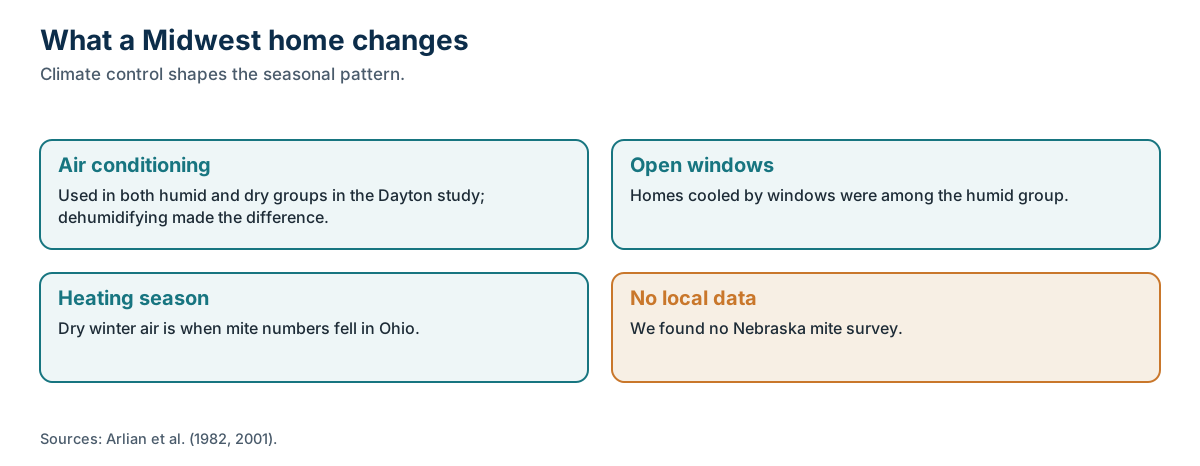
Ohio is a fair stand-in for Nebraska: humid summers, cold winters and long heating seasons. We found no published seasonal mite survey for Nebraska itself, so we won't invent one.
A national survey of US bedrooms, using dust from a representative sample of homes, found that mite allergen was "strongly influenced by region and climate." Odds of elevated levels were highest in the Northeast and South, and living in humid climates raised the odds of elevated levels of one major mite allergen three to four times compared with dry climates. That fits the Ohio picture: humidity is the driver, and the calendar is a stand-in for humidity.
What that means in practice for a Lincoln or Omaha home:
- Summer is when to act on humidity. The Dayton homes that stayed dry did it with dehumidifiers and air conditioning through the humid months.
- Open windows in humid weather work against you. The window-cooled homes were among the humid group.
- The heating season helps with live mites, because heated air is drier. University of Kentucky entomologists note that mites "are very vulnerable to dehydration."
- Allergen needs removing, not just waiting out. Washing and cleaning deal with what's already there.
Other things that peak in autumn
Not every autumn sniffle is mites. Other indoor and outdoor allergens can overlap with the same weeks, and turning on the furnace moves dust that has settled in ducts and rooms. Only an allergist can tell you which triggers matter for you. We mention this so the autumn story doesn't get pinned on your mattress alone.
What to do with the seasonal pattern
The seasonal data point to a few practical moves, none of them dramatic:
- Keep indoor relative humidity below about 50% through summer. NIEHS gives the same target.
- Wash bedding weekly year-round, as allergy guidance suggests. More in how often to wash sheets and protectors.
- If someone is mite-allergic, consider encasings. Protectors vs encasings explains the trial evidence honestly.
- If you want a mattress cleaning, late summer or early autumn follows the humid peak. Our seasonal checklist puts these in order.
Leaving the bed unmade won't do much against a humid room; see the unmade bed claim. For the rest of the schedule questions, start at the hub.
Heating season brings its own shift. The 1982 Ohio study recorded the lowest mite numbers during the dry, late heating season, so a bedroom humidifier running hard all winter gives back some of that natural advantage. The aim is comfortable air, not damp air, and a hygrometer on the nightstand shows which one you have.
Sleep Sanitation's view
This section is our view. Autumn is a sensible time to deal with the summer's buildup, but humidity drives the mite season, not the calendar. A cleaning is a surface step that belongs alongside drier air and weekly washing. Our visits use dry vapor steam with little water, HEPA vacuuming and UV-C light, and include a moisture check after service and the built-in bed mite sensor on our UV-C vacuum. Book through our schedule page, or call or text (402) 512-5658.
What we don't know
- What mite and allergen seasonality looks like in Nebraska homes specifically. We found no local data.
- How much of the autumn symptom pattern is mite allergen versus outdoor pollen, mold or furnace dust for a typical household.
- Whether modern homes with central air and tighter construction show the same seasonal swings as the Ohio homes of 1982 and the late 1990s.
Changelog
- 7 October 2026: First published. Sources accessed on this date.
Sources
- The Prevalence of House Dust Mites and Associated Environmental Conditions in Homes in Ohio (Arlian et al., 1982) · PubMed
- Reducing Relative Humidity Is a Practical Way to Control Dust Mites and Their Allergens in Homes in Temperate Climates (Arlian et al., 2001) · PubMed
- Environmental Assessment and Exposure Control of Dust Mites: A Practice Parameter (Portnoy et al., 2013) · PubMed Central
- Bedroom Allergen Exposures in US Households (Salo et al., 2018) · PubMed Central
- House Dust Mites (ENTFACT-646) · University of Kentucky Entomology
- Dust Mites and Cockroaches · National Institute of Environmental Health Sciences (NIH)
- A Simple Model for Predicting the Effect of Hygrothermal Conditions on Populations of House Dust Mite (Crowther et al., 2006) · PubMed
Last reviewed October 7, 2026. Manufacturer specifications and care instructions change; check the current version for your exact model. This page is general information, not medical advice. How we source and check pages: editorial standards.