
Short answer
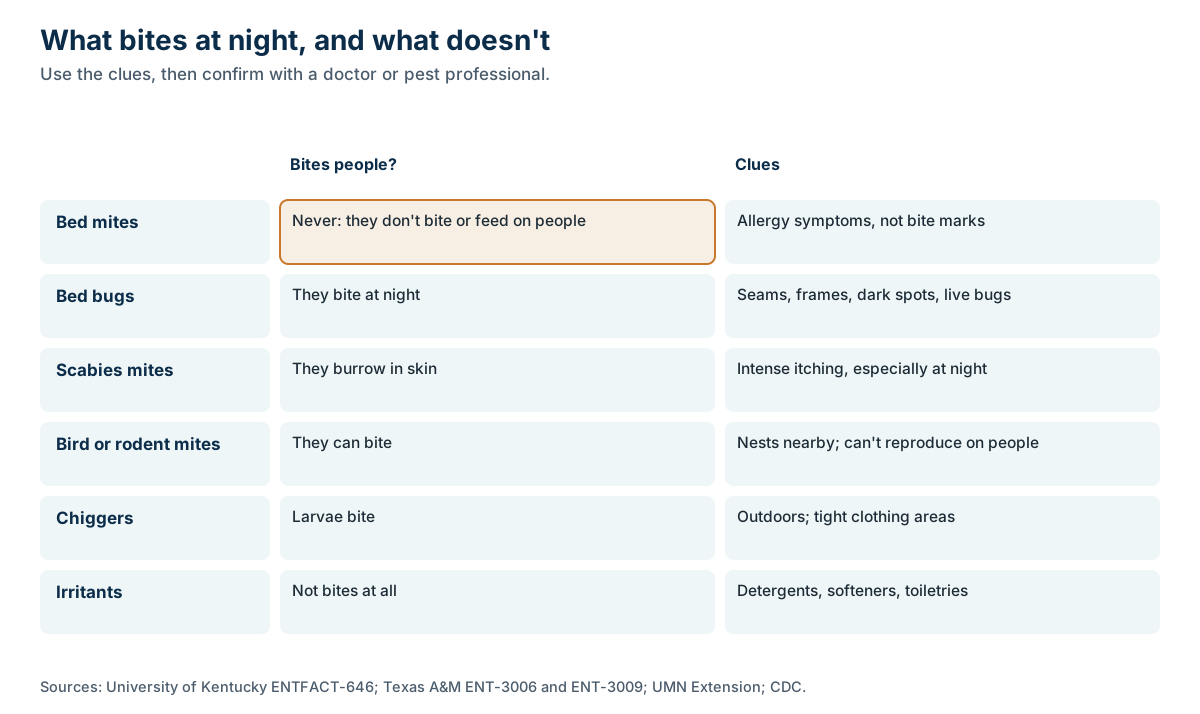
No. Extension entomologists at the University of Kentucky and Texas A&M say the mites that live in beds and house dust don't bite, sting or feed on people. They cause allergy through fragments of their bodies and droppings. If you wake with bites, look at other suspects: bed bugs, scabies mites, bird or rodent mites, chiggers, or skin irritants that mimic bites. A clinician can diagnose a rash.
Key terms used on this page
- Parasitic mite:
- A mite that feeds on a living host. Bed mites aren't parasitic; scabies mites, and bird and rodent mites that stray from nests, can bite or burrow.
- Scabies:
- A skin infestation by a human itch mite that burrows into skin. CDC lists intense itching, especially at night, and a pimple-like rash as the most common symptoms.
- Bite mimic:
- A skin reaction mistaken for an insect bite. Texas A&M lists detergents, fabric softeners, soaps and toiletries among common causes.
- Bed bug:
- A small, flat, wingless insect of the Cimex genus that feeds on blood. The CDC says bed bugs range from 1mm to 7mm and are not known to spread diseases to people. Bed bugs are a pest-control problem, not a cleaning problem.
No. The mites that live in beds, carpets and house dust don't bite. University of Kentucky entomologists say they "are not parasitic nor are they capable of biting or stinging humans," and Texas A&M's urban entomology program says they "do not bite or feed on people." Their effect is allergy, from fragments of their bodies and droppings. If you're waking up with bites or itching, something else is responsible, and it's worth working out what, because the fix depends entirely on the cause.
General information about bites, itching and household pests, not medical advice. For a rash, see a healthcare provider.
What bed mites do instead
They eat. Mites feed on the skin flakes people and pets shed, which is why beds, pillows and upholstered furniture suit them. They need humidity, absorbing water from the air through their bodies, and they avoid light by living in deeper layers of soft materials.
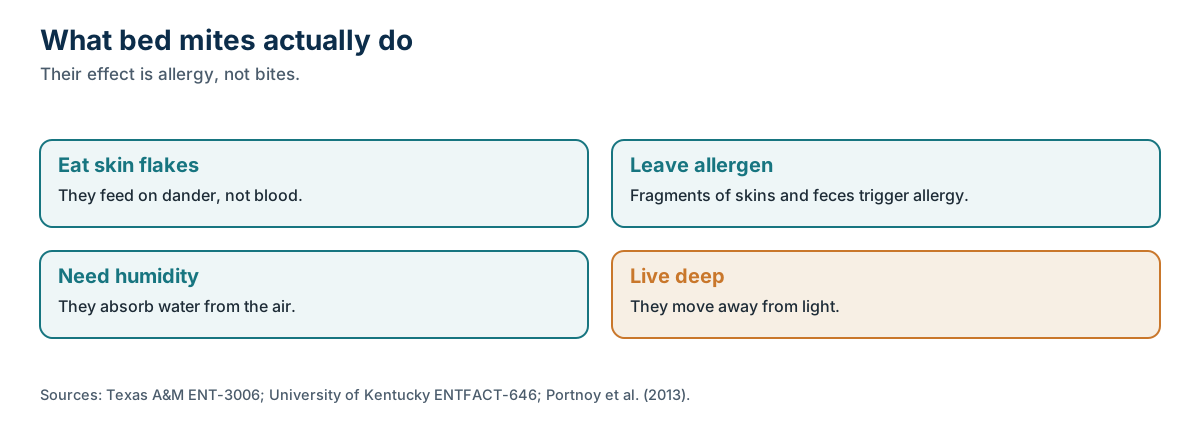
What affects people is what they leave behind. Texas A&M puts it plainly: it is "the tiny, airborne fragments" of the mites' shed skins and feces "that cause allergies for people." Kentucky lists the symptoms of mite allergy as stuffy or runny nose, sneezing, coughing or watery eyes. Itchy red bites aren't on that list. Our article on bed mites vs bed bugs explains the naming confusion in more detail; here we focus on what does bite.
The usual suspects for bites in bed
Bed bugs. These are insects, not mites, and they do bite. CDC says bed bugs "bite people and animals at night while they sleep, feeding on their blood." They're reddish-brown, flat and wingless, from 1 to 7 mm long, which CDC compares to Lincoln's head on a penny, and they hide in mattress seams, box springs, bed frames and headboards. CDC also says they aren't known to spread disease, but they cause irritation, itching and lost sleep.
Scabies mites. These are mites that live on people, not in mattresses. CDC describes scabies as an infestation of the skin by a human itch mite that burrows into the upper layer of skin. The most common symptoms are "intense itching, especially at night, and a pimple-like skin rash." It spreads mainly through prolonged skin-to-skin contact, and less commonly through shared bedding or clothing. First-time symptoms can take weeks to appear, which makes the source hard to trace.
Bird and rodent mites. Texas A&M notes that several mites that normally live on rats, mice or birds will bite people, "often producing dermatitis and itching," though none truly live on humans. University of Minnesota Extension says bird mites "can bite people but cannot reproduce on human blood," and that they often appear when a nest on or in the building is abandoned. Bites tend to cluster in rooms near the nest.
Chiggers. Only the larvae bite, and they're found outdoors in grass and weedy areas. Texas A&M notes the itching can start hours later and bites cluster where clothing is tight, such as sock lines and waistbands. People often notice them in bed after a day outside.
Itching that isn't bites
Texas A&M's guide to mysterious bites makes a point worth repeating: many apparent bites aren't bites at all. It lists enzyme-based detergents, fabric softeners, soaps, creams, makeup, deodorants, perfumes and other toiletries as things that "can cause skin sensations or reactions that can be mistaken for insect bites." Dry winter air, a new laundry product or a change in medication can all produce itching that feels like something crawling.
That matters in bed, where skin is warm, in long contact with fabric, and covered for hours. If nobody else in the house is affected and you can't find a bug, a recent change in detergent or softener is worth considering. Our viral cleaning recipes article looks at what fabric softener leaves on fibers.
What to do if you wake up itchy
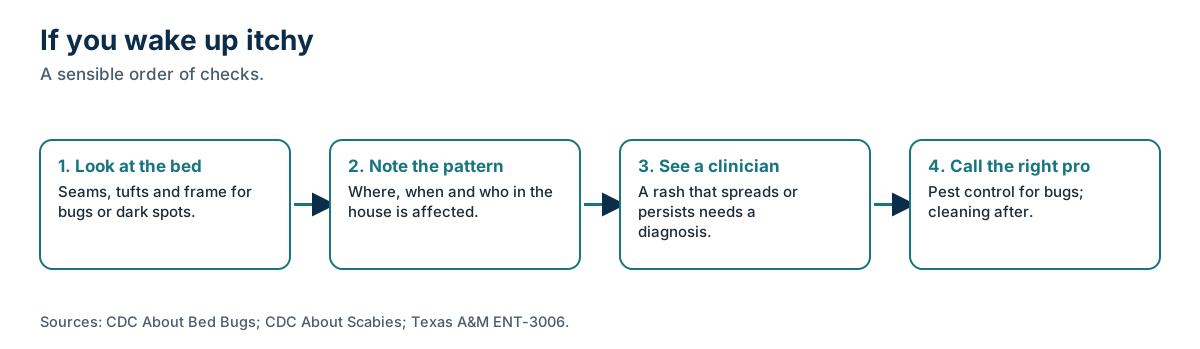
- Look before you clean. Check mattress seams and tufts, the box spring, headboard and frame with a flashlight for live bugs, shed skins or dark spots. Cleaning first can scatter the evidence.
- Note the pattern. Which body parts, which room, which nights, and who else is affected. Bites in one room only may point to a nest nearby; household-wide itching after close contact may point to scabies.
- See a healthcare provider for a rash. Scabies needs a diagnosis and prescription treatment. Texas A&M notes it must be diagnosed by a physician, usually from skin scrapings.
- Call the right professional. Bed bugs need pest control. Bird or rodent mites need the nest removed. Cleaning comes after, not instead.
For scabies, CDC advises machine washing bedding and clothing in hot water above 122°F for 10 minutes, drying on the hot cycle, or dry cleaning, and notes the mites generally don't survive more than two to three days away from human skin.
Home heat and cold methods won't settle the question either. A hot dryer cycle or an overnight freeze helps against mites in small washables, and what reaches inside a mattress explains their limits, but neither tells you what's biting. A specimen sealed in a bag, or notes on where and when the marks appear, gives a doctor or pest professional something to work with. Allergy symptoms that rise and fall through the year are a separate question, covered in is autumn mite season?.
Where mattress cleaning fits
Cleaning a mattress doesn't stop bites from bed bugs, scabies, bird mites or chiggers, and we won't suggest it does. What it addresses is the surface: skin flakes, dust and the allergen-carrying particles that bed mites leave, along with stains and odor. That's relevant to mite allergy, which is a different problem from bites. Our allergens hub covers that side carefully, and the hub links the other myth checks, including what home methods reach inside a mattress.
Sleep Sanitation's view
This section is our view. If you're getting bitten, identify the cause first; we'd rather send you to a pest professional or a doctor than sell you a cleaning that won't help. We don't treat bed bugs, and we don't claim to. For a mattress that's clear of pests and needs cleaning, our visits use dry vapor steam with little water, HEPA vacuuming and UV-C light, with a moisture check after service and the built-in bed mite sensor on our UV-C vacuum. See our process or call or text (402) 512-5658.
What we don't know
- How often people who believe they have mite bites turn out to have bed bugs, scabies or an irritant reaction. We found no survey.
- Whether any particular detergent or softener ingredient accounts for most bite-like reactions in bed. The extension guide lists categories, not culprits.
- How common bird and rodent mite bites are in Nebraska homes.
Changelog
- 7 October 2026: First published. Sources accessed on this date.
Sources
- House Dust Mites (ENTFACT-646) · University of Kentucky Entomology
- Diagnosing Mysterious Bites and Itches (ENT-3006) · Texas A&M AgriLife Extension
- Biting Mites (ENT-3009) · Texas A&M AgriLife Extension
- Bird Mites · University of Minnesota Extension
- About Scabies · US Centers for Disease Control and Prevention
- About Bed Bugs · US Centers for Disease Control and Prevention
- Environmental Assessment and Exposure Control of Dust Mites: A Practice Parameter (Portnoy et al., 2013) · PubMed Central
Last reviewed October 7, 2026. Manufacturer specifications and care instructions change; check the current version for your exact model. This page is general information, not medical advice. How we source and check pages: editorial standards.