
Short answer
Mattress dust holds shed skin flakes, the dust mites that feed on them, and the mites' droppings, which carry most of the allergen. A 2012 study of 20 mattresses also measured bacterial endotoxin and fungal beta-glucan. Some popular claims, such as a mattress doubling in weight from mites, have no study behind them that we could find.
Key terms used on this page
- House dust mite:
- A microscopic relative of spiders that lives in house dust and feeds on flakes of dead skin shed by people and pets. NIEHS describes dust mites as a big source of indoor allergens. The two species most studied are Dermatophagoides pteronyssinus and Dermatophagoides farinae.
- Mite fecal particle:
- The droppings of dust mites, which carry much of their allergen. The practice parameter notes that vacuuming can remove mite allergens in the form of fecal particles even though it does not remove all live mites.
- Endotoxin:
- Material from the outer walls of certain bacteria, measured in house dust. The Wu mattress study (20 volunteers, no control group) found daily vacuuming lowered endotoxin in mattress dust over 8 weeks, alongside mite allergen and fungal beta-glucan.
- Beta-glucan:
- A component of fungal cell walls, used in dust studies as a marker of fungal material. In the Wu study (20 volunteers, no control group) it fell from 94.4 to 19.7 micrograms in mattress dust after 8 weeks of daily vacuuming.
- Settled dust:
- Dust collected from a surface such as a mattress, carpet or sofa, usually with a vacuum and a sampling filter. The practice parameter prefers settled-dust samples over air samples for measuring mite allergen.
- Relative humidity:
- How much moisture the air holds compared with its maximum at that temperature. Dust mites depend on humid air. NIEHS advises keeping indoor humidity at or below 50 percent, and the practice parameter gives a range of 35 to 50 percent.
A mattress looks the same the day it's delivered and five years later. What changes is inside the fabric: a slow build-up of material from the people and pets who sleep on it, and from the tiny animals that live off that material. Researchers have measured some of it. A lot of what's said about it online hasn't been measured at all.
This article is general information about cleaning, not medical advice. For allergy or asthma questions, talk to your doctor or an allergist.
Skin flakes: the food supply
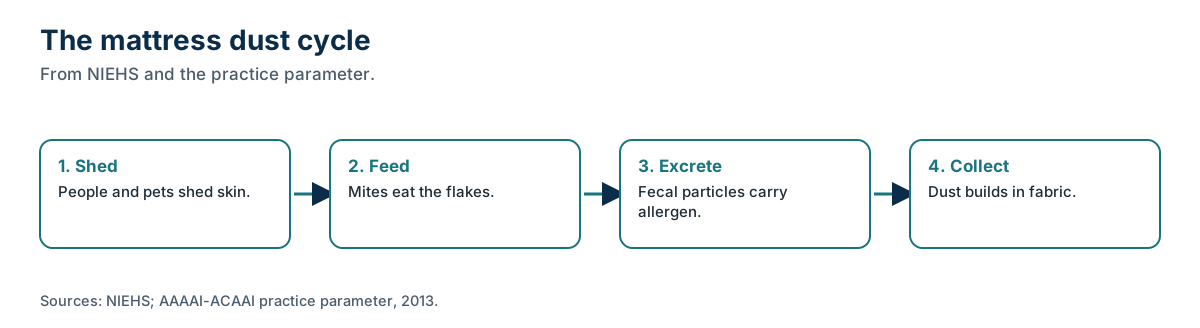
People shed skin constantly, and a bed collects a share of it every night. NIEHS describes dust mites as feeding "on flakes of dead skin, or dander, that are shed by people and pets." That's the foundation of everything else in mattress dust. Where skin flakes collect and the air is humid enough, mites can live.
Dust mites
NIEHS calls dust mites "microscopic, insect-like pests that commonly live in house dust." They're relatives of spiders rather than insects. The two species in most research are Dermatophagoides pteronyssinus and D. farinae. The allergist practice parameter is direct about where they concentrate: "Mattresses, box springs, and pillows are major sources of mites and mite allergens."
We don't give a count of mites per mattress, because we didn't find a source we'd trust for a typical number. Populations vary with humidity, bedding and how the bed is used.
Mite droppings: the allergen
Most of the allergen in mattress dust comes from mite fecal particles. The practice parameter explains that vacuuming helps because "mite allergens in the form of fecal particles can be removed," even when live mites stay put. Studies measure this allergen as Der p 1 and Der f 1 in dust samples, and those are the numbers behind most of the research in this hub.
Bacterial material
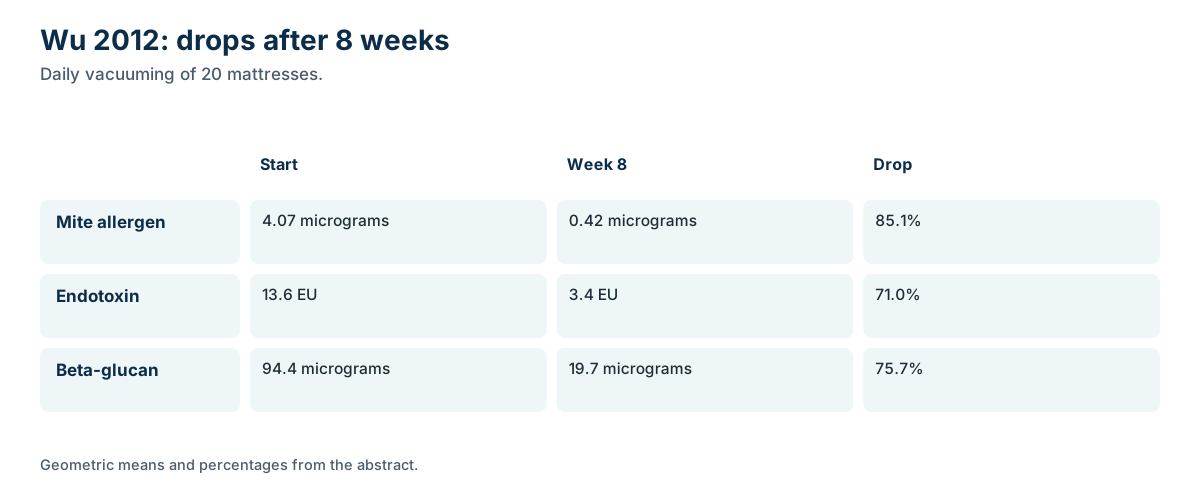
The 2012 Wu study is one of the few to measure more than mite allergen in mattress dust. Twenty volunteers vacuumed their mattresses daily for eight weeks, and the researchers measured bacterial endotoxin alongside the allergen. Endotoxin fell from 13.6 EU to 3.4 EU, a drop of 71.0 percent.
Endotoxin is material from the outer walls of certain bacteria. It's a measure of bacterial material in dust, not a count of live germs, and the study doesn't tell us which bacteria were present.
Fungal material
The same study measured beta-glucan, a component of fungal cell walls. It fell from 94.4 micrograms to 19.7 micrograms, a 75.7 percent drop, over the eight weeks. Again, that's a marker of fungal material, not a finding of visible mold.
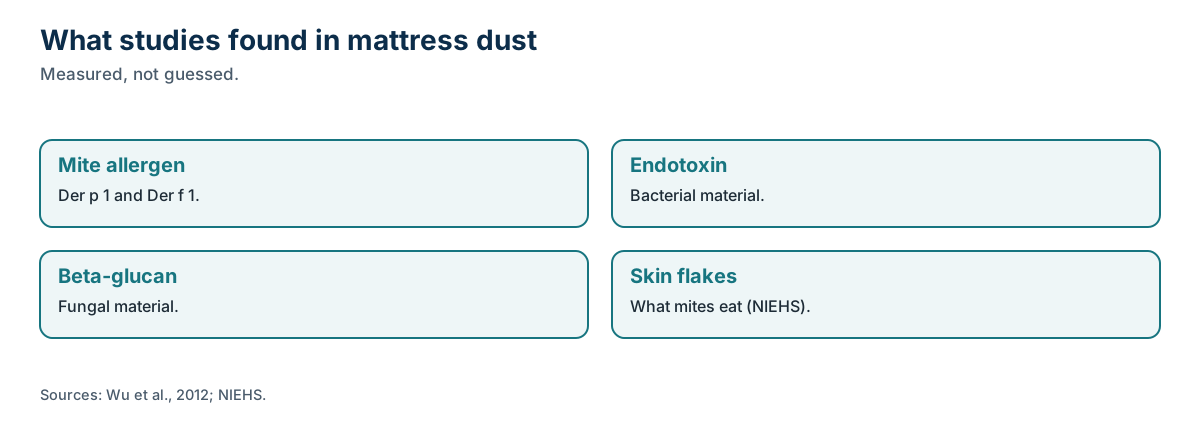
The authors linked all three drops to the same cause: total dust fell 77.7 percent. Less dust meant less of everything in it.
Pet dander and other allergens
If pets sleep on the bed, their dander joins the mix; NIEHS lists dander "shed by people and pets" as the mites' food. The practice parameter notes that encasing fabrics need a smaller pore size to block cat allergen than mite allergen, which tells you pet allergen is a separate particle with its own behavior. We haven't found a mattress study that measured pet allergen alongside mite allergen, so we leave it there.
Why humidity decides how much lives there
Mites don't drink; they take moisture from the air. That's why humidity comes up in almost every piece of dust mite guidance. NIEHS advises using "a dehumidifier or air conditioner to maintain humidity levels at, or below, 50 percent," and the practice parameter gives a range of 35 to 50 percent. A bed in a humid room, or one that stays damp after cleaning, is a better home for mites than the same bed in dry air. That's one reason we use low-moisture dry vapor rather than anything that soaks the fabric, and it's why a cleaning visit can't do the job humidity control does every day.
Clothing, bedding and the rest of the room
The mattress isn't the only reservoir. The practice parameter says "Clothing is an important and probably under-rated source of mite allergen exposure," and notes that even with encasings in place, "the blankets, sheets, and pillowcases remain a potential source of exposure." Carpets and upholstered furniture hold mite allergen too, which is why most of the cleaning research in this hub was done on them. Mattress dust is one part of a household picture.
Moisture, mold and a musty smell
Visible mold or a musty smell in a mattress is a different problem from the fungal material in ordinary dust. It's a moisture problem. The EPA's mold guide advises drying wet materials within 24 to 48 hours. Hub 3 covers what happens when a mattress gets wet in what happens when urine soaks into a mattress, and Hub 1 explains why moisture matters when cleaning a mattress.
What isn't usually in it: bed bugs
Bed bugs aren't part of mattress dust. They're insects you can see, and the CDC notes they hide in "The seams of mattresses," box springs and bed frames. If you're seeing live bugs, shed skins or rusty spots, that's a pest-control question. Dust mites vs bed bugs vs "bed mites" sets out the differences.
Claims we couldn't verify
A few statements about mattress dust get repeated so often they sound established. We looked for support and didn't find it in the allergist guidance or studies we reviewed:
- A mattress doubles in weight from mites over a decade. No source we found.
- A specific number of mites per mattress. Figures vary wildly between websites, and none we found cited a study we could check.
- A share of a pillow's weight that's mites. Same problem.
That doesn't prove them false. It means we don't repeat them.
What cleaning can and can't do about it
Cleaning can take some of this material out. The Wu study shows vacuuming removing dust and everything measured in it over time. Heat can kill mites where it reaches them. But NIEHS is plain that "No matter how clean a home is, dust mites cannot be completely eliminated," and new skin flakes arrive every night.
A visit works on the mattress surface where this dust collects. We don't sample the dust or test what's in it. We look at the materials first, which tells us what steam output and pass speed the bed can take, and then apply dry vapor to the surface and to the seams, tufts, ridges and edges where dust and shed skin flakes collect. Pricing is our standard price; severe or biohazard contamination is quoted as a custom surcharge before we start. Organic cleaning methods are our default. Your care label and warranty terms govern whether steam suits your bed, so check your warranty before booking.
We don't sample dust or test allergen, and we make no health claim. Hub 2 explains the CDC's cleaning and sanitizing terms, which we follow when describing what a visit does.
Where to read next
The dust mite and allergen guide covers the steam, vacuuming and encasement studies together, and the hub lists every article. Does vacuuming remove mite allergen? looks closely at the Wu study and a second one with different results, and does washing sheets clean the mattress? covers what laundry reaches.
What we don't know
- Which bacteria and fungi contributed the endotoxin and beta-glucan the Wu study measured. It didn't identify species.
- How the mix of materials in mattress dust varies with mattress type, age or climate.
- How much pet allergen collects in mattresses where pets sleep, compared with mite allergen.
Changelog
- 3 October 2026: First published. Sources accessed on this date.
Sources
- Dust Mites and Cockroaches (accessed 2026-10-03) · National Institute of Environmental Health Sciences (NIH)
- Daily vacuuming of mattresses significantly reduces house dust mite allergens, bacterial endotoxin, and fungal beta-glucan (Wu et al., J Asthma, 2012) · PubMed
- Environmental assessment and exposure control of dust mites: a practice parameter (Portnoy et al., Ann Allergy Asthma Immunol, 2013) · AAAAI and ACAAI
- Effects of vacuuming mattresses on allergic rhinitis symptoms in children (Jeon et al., Allergy Asthma Immunol Res, 2019) · PubMed
- A brief guide to mold, moisture and your home · US EPA
- About Bed Bugs (26 April 2024, accessed 2026-10-03) · CDC
- Cleaning and disinfecting your school (definitions) · CDC
Last reviewed October 3, 2026. Manufacturer specifications and care instructions change; check the current version for your exact model. This page is general information, not medical advice. How we source and check pages: editorial standards.