
Short answer
No. Washing removes mites and allergen from what goes in the machine: sheets, pillowcases, blankets, and a washable protector or encasing. It doesn't touch the mattress underneath. Allergist guidance recommends washing bedding weekly and says high temperature isn't necessary; NIEHS recommends hot water. Both agree the mattress itself needs other measures.
Key terms used on this page
- Mite-impermeable encasing:
- A zippered cover that fully encloses a mattress, box spring or pillow so mite allergen can't pass through. The practice parameter says woven microfiber with a mean pore size smaller than 10 micrometers can block Der p 1, and it does not recommend nonwoven covers.
- Allergen removal:
- A study outcome that measures how much mite allergen comes out of a surface, usually in dust samples. The practice parameter summarizes a rug study in which vacuuming, washing and shampooing removed allergen without killing the mites.
- Live-mite kill:
- A study outcome that counts whether mites are alive after a treatment. It is different from allergen removal: dead mites and their droppings can stay in the fabric, still carrying allergen, until something removes them.
- Mite fecal particle:
- The droppings of dust mites, which carry much of their allergen. The practice parameter notes that vacuuming can remove mite allergens in the form of fecal particles even though it does not remove all live mites.
- Multifaceted control:
- Using several dust mite measures together, such as encasing, washing, vacuuming and humidity control. The practice parameter says mite covers alone are unlikely to achieve a clinical benefit unless used as part of a more comprehensive plan.
- Settled dust:
- Dust collected from a surface such as a mattress, carpet or sofa, usually with a vacuum and a sampling filter. The practice parameter prefers settled-dust samples over air samples for measuring mite allergen.
Fresh sheets feel like a clean bed. For dust mites, they're half of one. Washing does a lot for the fabric that goes in the machine. It does nothing for the mattress the fabric was lying on, which is where allergist guidance says mites and their allergen concentrate.
This article is general information about cleaning, not medical advice. For allergy or asthma questions, talk to your doctor or an allergist.
What washing does for bedding
The allergist practice parameter gives weekly washing a strong recommendation: "Advise patients that bedding should be washed weekly to decrease dust mite numbers and mite allergen levels, and that high temperature is not necessary." NIEHS also says to wash bedding weekly. That's one of the clearest frequencies in dust mite guidance.
Washing works on both counts this hub keeps separating. It removes allergen, and it removes or kills mites. The parameter summarizes a study in which washing sheets in warm water at 104°F removed 98 percent of mite allergen, and another in which cold water with detergent removed 95 percent of mite allergen from duvets, blankets and sleeping bags.
Hot water or not?
Here the two main sources differ, and it's worth knowing why.
NIEHS says: "Wash all bedding and blankets once a week in hot water, 130 to 140 degrees Fahrenheit, to kill dust mites."
The practice parameter says high temperature isn't necessary, and explains where the hot-water advice came from: "the frequent recommendation to wash items in 55°C (130°F) water to kill mites is based not on washing blankets or clothing but on immersing mites placed in permeable capsules into water of different temperatures." It then summarizes a simulated 17-minute wash cycle with "96% to 100% mortality at 50°C (122°F), 88% to 96% mortality at 40°C (104°F), and 90% to 98% mortality in cold water, indicating that most mites died by drowning."
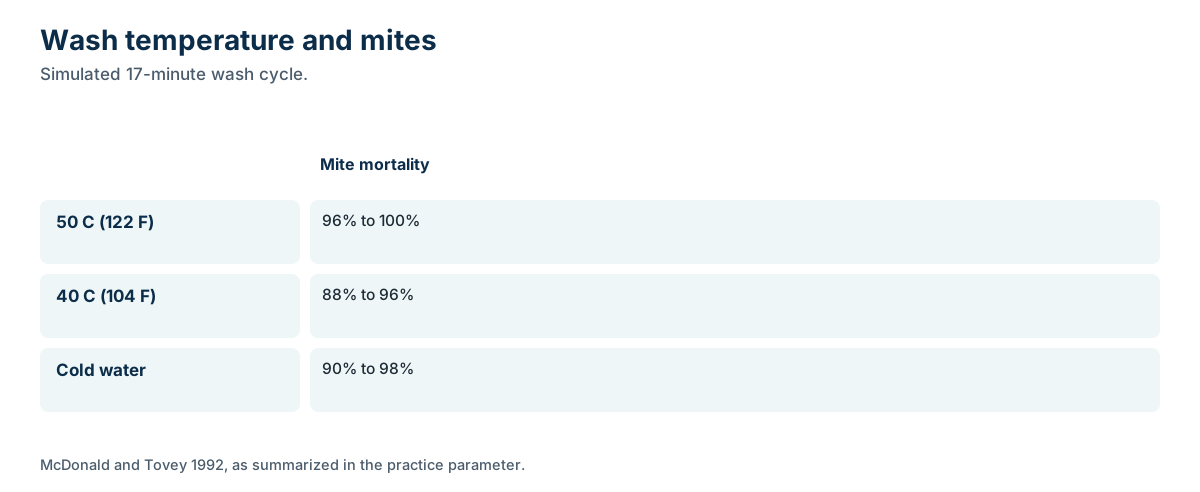
Its key point: "as long as the mites are removed, it is immaterial whether the mites are scalded to death, drowned, or simply washed down the drain still alive." The parameter also advises keeping home water heaters below 120°F because of scalding risk to occupants.
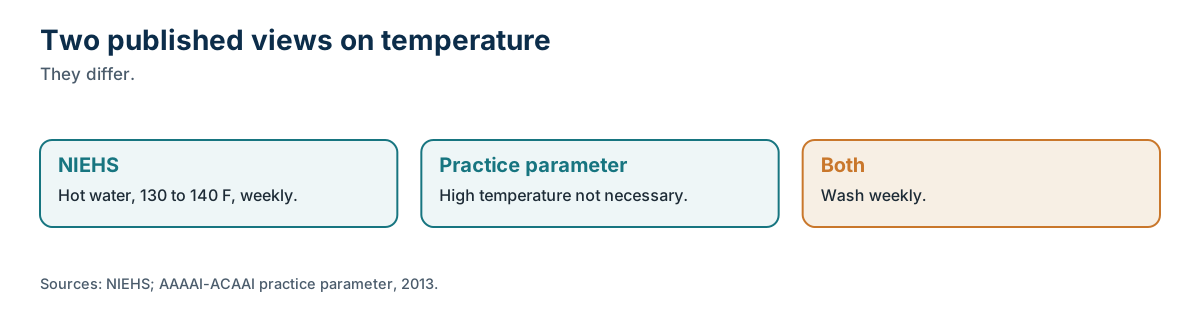
You can follow either. Both say weekly. Follow each item's care label on temperature.
The dryer
The practice parameter summarizes dryer studies too: "All mites seeded into blankets were killed when the blankets were dried in a clothes dryer for 10 minutes," and 99 percent of mites naturally present in used duvets were killed after an hour in a dryer. For items that can't be washed, NIEHS adds: "Non-washable bedding can be frozen overnight."
Detergent and bleach
Detergent choice matters less than people think. The practice parameter says "There is no indication that particular detergents vary in their ability to extract mite allergen," based on a test of 11 detergents that all extracted the mite allergen from dust samples in cold water. It also summarizes a laundry study in which warm water removed most allergen from household items with or without detergent, and adding bleach raised removal further. Bleach isn't suitable for many fabrics, so follow the care label; the main point is that ordinary washing does most of the work.
Pillows
Pillows sit between the two categories. Many are washable, some aren't, and both the practice parameter and NIEHS recommend encasing them. NIEHS also suggests replacing "wool or feathered bedding products with synthetic materials." If your pillows can go in the machine, they belong in the weekly or periodic wash according to their labels; if not, an encasing is the main option.
Where washing stops
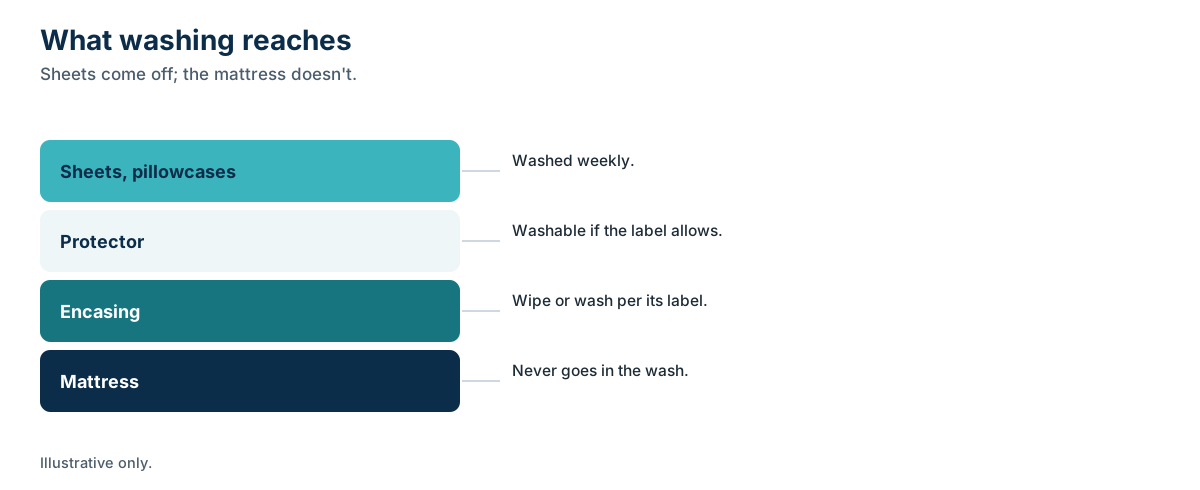
Everything above happens to fabric that comes off the bed. The mattress stays where it is. The parameter's reminder that "Mattresses, box springs, and pillows are major sources of mites and mite allergens" is the reason weekly washing isn't the whole answer.
It's also why the parameter pairs washing with encasings. Even with encasings on, it notes, "the blankets, sheets, and pillowcases remain a potential source of exposure." Each measure covers what the other can't: the encasing seals the mattress, and washing deals with the layers above it.
Protectors and encasings
A protector or encasing is the one part of the mattress system you can wash. The practice parameter favors woven encasings partly for that reason, and advises against nonwoven covers because "they trap mite allergens and are not washable, leading to allergen accumulation." Follow the encasing's own label for washing. Can sanitation replace an encasement? covers what to look for.
Hub 3's advice on waterproof protectors for accidents applies here too: a spare means the bed is never bare on wash day.
Professional laundering
One study is relevant to how thoroughly bedding is washed. In the Vojta study, beds were encased and the non-encased bedding was laundered weekly, either professionally or at home. Both gave "Significant decreases in bed house dust mite allergen concentration and load," and professionally laundered beds ended up with significantly less allergen load than home-laundered ones. The abstract doesn't explain why.
What reaches the mattress
Three things act on the mattress itself. An encasing contains what's inside it. Vacuuming removes allergen-carrying dust from the surface; the Wu study found daily mattress vacuuming lowered total mite allergen over eight weeks. And heat kills mites it reaches, as covered in does steam kill dust mites in mattresses?.
Laundry and a visit reach different layers of the bed. On the mattress itself, we inspect its materials, which decides steam output and pass speed, and then dry-vapor steam the surface and the seams, tufts, ridges and edges where dust and shed skin flakes collect, the parts a laundry routine never reaches. The visit is billed at the standard price; severe or biohazard contamination is quoted as a custom surcharge before we start. Organic cleaning methods are our default. Your care label and warranty terms govern whether steam suits your bed, so check your warranty before booking.
We call it cleaning, in the CDC's sense; Hub 2 explains the CDC's cleaning and sanitizing terms. We make no health claims.
A sensible weekly rhythm
Based on the sources above:
- Strip the bed and wash sheets, pillowcases and blankets weekly.
- Dry them fully; a dryer adds heat if the labels allow it.
- While the bed is bare, vacuum the mattress or encasing slowly with a filtered machine.
- Wash the protector or encasing on its own label's schedule.
- Remake the bed only once everything is dry.
Why "clean" means different things
A washed sheet is clean in an everyday sense, and probably close to mite-free after a wash and dry. A mattress isn't made clean by a sheet change, whatever it looks like. When we talk about cleaning a mattress, we mean acting on its fabric and folds directly, and we still don't claim it ends up mite-free. NIEHS's line applies: "No matter how clean a home is, dust mites cannot be completely eliminated."
Where to read next
The dust mite guide covers washing alongside the steam, vacuuming and encasing research, and this hub lists every article. What lives in mattress dust explains what builds up under the sheets, and why dust mite control needs more than one step shows where washing fits.
What we don't know
- Why professionally laundered beds in the Vojta study held less allergen than home-laundered ones. The abstract doesn't say.
- How quickly allergen from the mattress transfers back into clean sheets without an encasing.
- Whether weekly washing alone changes allergen in the mattress below. We found no study that measured it.
Changelog
- 3 October 2026: First published. Sources accessed on this date.
Sources
- Environmental assessment and exposure control of dust mites: a practice parameter (Portnoy et al., Ann Allergy Asthma Immunol, 2013) · AAAAI and ACAAI
- Dust Mites and Cockroaches (accessed 2026-10-03) · National Institute of Environmental Health Sciences (NIH)
- Effects of physical interventions on house dust mite allergen levels in carpet, bed, and upholstery dust in low-income, urban homes (Vojta et al., Environ Health Perspect, 2001) · PubMed Central
- Daily vacuuming of mattresses significantly reduces house dust mite allergens, bacterial endotoxin, and fungal beta-glucan (Wu et al., J Asthma, 2012) · PubMed
- Control of exposure to mite allergen and allergen-impermeable bed covers for adults with asthma (Woodcock et al., N Engl J Med, 2003) · PubMed
- Magnum XP-Vac product page (maker's claims, accessed 2026-10-02) · Vapor Clean
- Cleaning and disinfecting your school (definitions) · CDC
Last reviewed October 3, 2026. Manufacturer specifications and care instructions change; check the current version for your exact model. This page is general information, not medical advice. How we source and check pages: editorial standards.