
Short answer
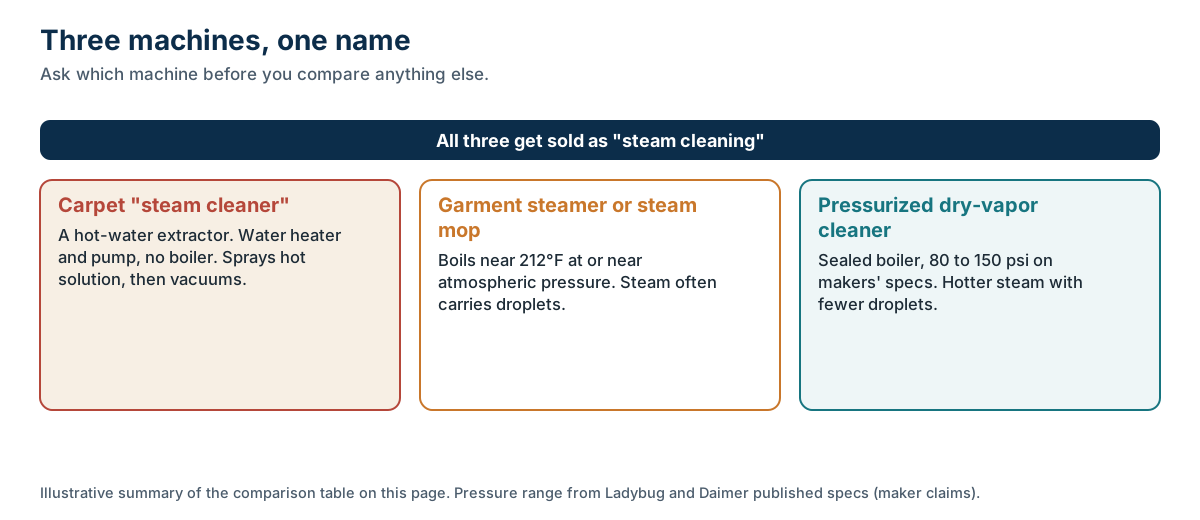
Not necessarily. 'Steam cleaner' is a loose label used for at least three different kinds of machine: carpet extractors that spray hot water and make no steam, unpressurized or low-pressure steamers such as garment steamers and steam mops, and pressurized dry-vapor steam cleaners. Only the last is built to deliver hot, low-moisture vapor. Check whether a machine has a pressurized boiler and what pressure and temperature it lists.
Key terms used on this page
- Dry-vapor steam:
- Steam made in a sealed, pressurized boiler and released through a hose and nozzle as hot vapor with a low liquid-water content. In the vendor specifications we reviewed, professional units are rated from 80 psi (Ladybug 2350) to 150 psi (Daimer), with stated boiler temperatures from about 345°F (Optima) to 360°F (Daimer); these are maker claims. Daimer describes its steam as about 5% water or less and Vapor Clean claims 'just 5-6% moisture'; that is a vendor claim, not an independent standard.
- Hot-water extraction (HWE):
- The carpet industry's most common professional method. The Carpet and Rug Institute defines an extractor as equipment that uses pressure, water or cleaning solution, and suction to remove soil. It is often marketed as 'steam cleaning' even though it sprays hot water rather than steam.
- Saturated steam:
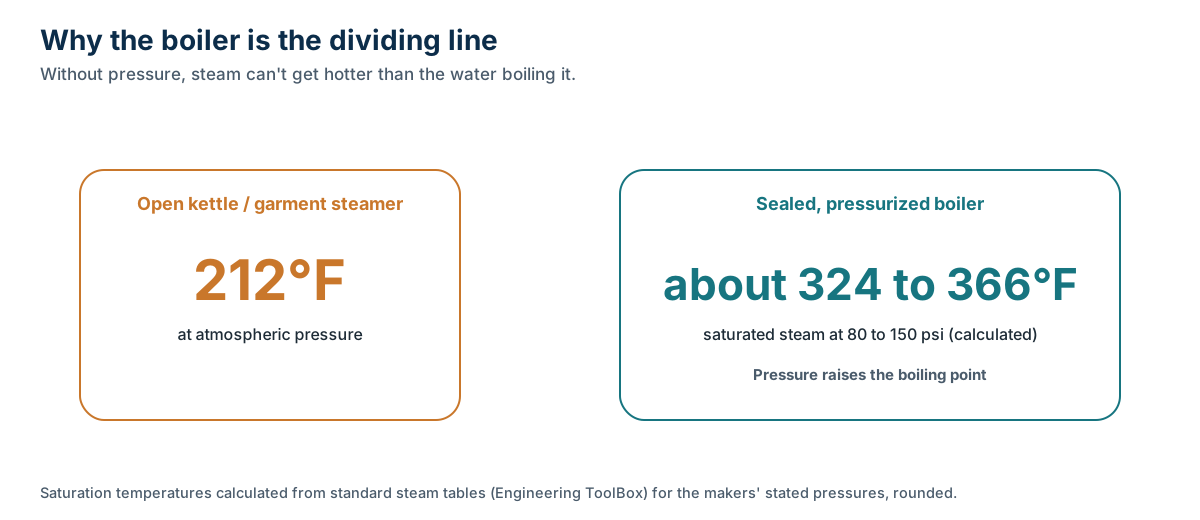
- Steam at the boiling point for its pressure: 212°F (100°C) at atmospheric pressure, about 324°F (162°C) at 80 psi gauge and about 352°F (178°C) at 123 psi gauge. Most portable vapor-steam boilers make saturated steam.
- Superheated steam:
- Steam heated above the boiling point for its pressure, so it holds no liquid water until it cools. True superheating needs heat added after the boiler. Cleaning-equipment marketing often uses the word loosely for any high-temperature steam.
- Wet steam:
- Steam that carries a noticeable amount of liquid water droplets, often from a cooling hose, spitting nozzle or condensate that wasn't purged. Wet steam puts more water on a surface and carries less heat per kilogram.
- Steam quality (dryness fraction):
- The share of a steam mixture's mass that is vapor rather than suspended water droplets. Steam with a quality of 0.95 is 95% vapor and 5% liquid water by mass. This is the engineering idea behind the '5% moisture' claims in vapor-steam marketing.
Not necessarily. "Steam cleaner" is a loose label that gets used for at least three different kinds of machine: carpet extractors that spray hot water and make no steam at all, unpressurized or low-pressure steamers such as garment steamers and steam mops, and pressurized dry-vapor steam cleaners. Only the last kind is built to deliver hot, low-moisture vapor. The quickest way to tell them apart is to check whether the machine has a pressurized boiler and what operating pressure and temperature it lists.
For a mattress, the difference is not cosmetic: a garment steamer, a carpet "steam cleaner" and a pressurized vapor boiler put very different amounts of water into a bed. Below is a field guide to telling them apart from the spec sheet. The flagship guide compares the cleaning methods themselves, and the Cleaning Methods hub defines saturated and superheated steam.
Three machines, one name
| Machine often sold as a "steam cleaner" | Does it make steam? | Pressurized boiler? | Published temperature | What comes out of the tool | Designed for |
|---|---|---|---|---|---|
| Carpet "steam cleaner" (hot-water extractor) | No | No; it has a water heater and pump | Water up to about 250°F on one professional truckmount (Sapphire 370ss) | Hot water and solution, then suction | Carpet and upholstery |
| Garment steamer, steam mop, low-pressure home steamer | Yes | Usually unpressurized or low-pressure | Near 212°F at atmospheric pressure | Steam that is often wet, with droplets | Wrinkles, floors, light household tasks |
| Pressurized dry-vapor steam cleaner | Yes | Yes: 80 psi (Ladybug) to 150 psi (Daimer), maker claims | 356°F (Vapor Clean) to 360°F (Daimer) stated boiler temperature, maker claims | Hot vapor with a small share of droplets | Detail cleaning of hard surfaces and fabrics |
The first row is the biggest source of confusion. Extractors are routinely advertised as steam cleaning, but they make no steam. Daimer, a vapor-steam manufacturer, calls the carpet "steam cleaner" name a misnomer. The Carpet and Rug Institute describes the method accurately as extraction using pressure, water/cleaning solution, and suction.
Why the boiler is the dividing line
Water at sea level boils at 212°F, and steam made at that pressure can't be hotter than that unless something extra heats it. A pressurized boiler changes that. As pressure rises, so does the boiling point, which is why sealed boilers make much hotter steam. For saturated steam, the relationship is fixed and published in standard steam tables: about 324°F at 80 psi, about 330°F at 87 psi, about 352°F at 123 psi.
That's why you can check a dry-vapor spec sheet against physics:
- Ladybug 2350: 80 psi peak pressure, with a listed tip temperature of 260°F (no boiler figure published).
- Vapor Clean Magnum XP (with vac): 145 psi (10 bar) and a 356°F boiler temperature, maker claims.
- Optima Steamer: 8.5 bar (about 123 psi) with a boiler around 175°C (about 347°F).
The boiler figures sit at or just below saturated steam at those pressures, and even Ladybug's tip figure, measured after the steam has cooled, is well above 212°F. An unpressurized steamer can't reach any of them.
Hotter steam is also drier steam, up to a point
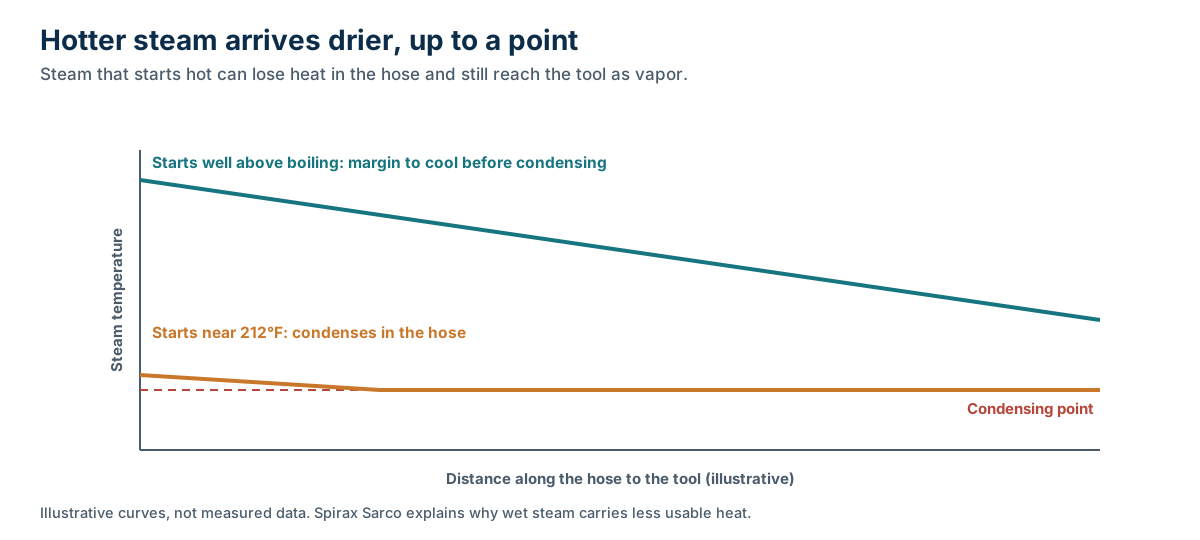
Wet steam carries more liquid droplets. Steam that leaves the boiler hot and travels through an insulated hose arrives at the tool with fewer droplets than steam that starts near 212°F and cools along the way. Engineers express this as steam quality; Spirax Sarco explains that wet steam also carries less usable heat per kilogram.
Vapor-steam makers claim their output is about 5% liquid water. That's a vendor claim we haven't seen independently tested, and it describes the steam, not the mattress. See is dry-vapor steam actually "dry"?
What each machine would actually do to a mattress
The same mattress would come out differently depending on which "steam cleaner" was used.
A carpet extractor sprays hot water and solution through the ticking and vacuums back what it can reach. Water that gets past the ticking into the comfort layers is beyond the wand. Detergent that isn't rinsed stays in the fabric. The mattress is cleaned by flushing, and its drying time depends on how much water stayed behind.
A garment steamer or steam mop produces steam near 212°F that often carries droplets. Because the steam is relatively cool and wet, it delivers less heat per pass and leaves more liquid on the surface, and holding it in one place to "work harder" adds still more. It isn't designed to pair with a vacuum, so loosened soil isn't removed.
A pressurized dry-vapor cleaner delivers hotter steam with fewer droplets, so it can heat the surface quickly while leaving mostly condensate. It still adds some water, it still needs to keep moving, and it still has to be followed by vacuuming to remove what it loosens. Its advantage is control, not magic.
Put simply, the three machines differ in how much water they add, how much heat they deliver, and whether anything is taken away. Those are the three variables the flagship comparison uses for every method.
Marketing words to read carefully
- "Superheated." In engineering, superheated steam has been heated above its saturation temperature by an extra heater. If a machine's published temperature matches saturated steam at its published pressure, it's making saturated steam. Ask whether it has a superheater.
- "Dry steam." We haven't found a regulation or standard that defines it. It usually refers to steam quality.
- "Chemical-free sanitizing." Steam itself is just water. Whether it sanitizes a given surface depends on temperature at the surface, time and the material. See can you sanitize a mattress without soaking it?
- "EPA registered" or an EPA number on the box. For steamers, that number usually identifies the factory that made the device, not a test result. The EPA's own consumer guide to pesticide devices is explicit that the establishment number doesn't mean the agency reviewed the device for safety or efficacy, so treat it as a registration detail rather than proof of disinfection.
Questions to ask about any "steam" mattress cleaning
- Is the machine a hot-water extractor or a steam boiler?
- If it's a steamer, what operating pressure and boiler temperature does it list?
- Does it have a moisture setting, and how is it set for mattresses?
- How is condensate in the hose purged before work starts?
- What does the mattress manufacturer say about steam?
That last question matters. Tempur UK says "Do not steam-clean or dry-clean the TEMPUR Material." It also warns "There is a high risk that soaking with water or other cleaning fluids will cause irreversible damage" and "It will also invalidate your guarantee." Tempur-Pedic US cautions that "Due to the temperature-sensitivity of the TEMPUR-material, adding high heat can hinder its ability to react to your body temperature and conform to your body shape." Purple is more specific: its guide describes setting a steam cleaner to 250°F for innerspring and hybrid mattresses, then says not to steam clean memory foam, latex or adjustable mattresses "since the heat and water could damage its materials," and not to steam clean a Purple mattress. It warns separately that a carpet cleaner could overly saturate memory foam. Neither text distinguishes one kind of steam machine from another, so the distinction on this page doesn't change what those makers advise: no steam. Sleep Sanitation does clean Tempur-Pedic and Purple mattresses with a low-moisture dry-vapor system (Vapor Clean's product page claims "just 5-6% moisture," a maker claim, not a measurement of our equipment) in quick, repeated passes. That is our own choice and reasoning, not an exemption from either manufacturer; the full reasoning is in what happens when water penetrates memory foam. Following the label is the safe default, and if you're concerned about your warranty, check your manufacturer's terms.
Where Sleep Sanitation fits
We use an Italian-made Vapor Clean dry-vapor system, a pressurized boiler rather than an extractor or garment steamer, together with a heated UV-C mattress vacuum. Why we chose it is explained in dry-vapor steam vs carpet extraction for mattresses; what a visit includes is on pricing.
What we don't know
- Consumer steamer specifications. Many household steamers don't publish operating pressure or temperature, so we can't give a reliable range for them.
- Independent steam-quality testing. We haven't found third-party measurements of steam quality for any brand mentioned here.
- How makers test. Manufacturers that restrict steam don't publish the tests behind their instructions, such as which machines, temperatures or moisture levels they evaluated.
Sources
- Steam cleaners vs carpet shampooers · Daimer Industries
- Steam cleaner FAQ · Daimer Industries
- CRI 205 Residential Carpet Cleaning Standard · Carpet and Rug Institute
- Saturated steam properties · Engineering ToolBox
- What is steam? (steam tables and dryness fraction) · Spirax Sarco
- Ladybug 2350 specifications · Advanced Vapor Technologies (Ladybug)
- Magnum XP (with vac) product page · Vapor Clean
- Optima Steamer model comparison chart · Steamericas
- Pesticide devices: a guide for consumers · US EPA
- Sapphire 370ss truckmount specifications · Hi-Pressure Cleaning Systems
- Caring for your TEMPUR mattress · Tempur UK
- How to clean a mattress · Purple
Last reviewed October 2, 2026. Manufacturer specifications and care instructions change; check the current version for your exact model. This page is general information, not medical advice. How we source and check pages: editorial standards.