
Short answer
No. Detergent helps water lift oily soil, but it isn't required to clean a mattress, and whatever isn't rinsed out stays in the fabric, where it can attract soil. Dry-vapor steam works with heat and vacuuming works with airflow, so neither needs detergent. Chemistry is most useful as a targeted spot treatment for specific stains, used sparingly. Tempur's surface-wiping guidance, for example, calls for clean water free from chemicals and detergents.
Key terms used on this page
- Detergent residue:
- Cleaning chemistry left behind in the fabric after cleaning. The Carpet and Rug Institute says residue from over-concentrated solution contributes to rapid re-soiling, which is why extraction cleaners are told to rinse.
- Shampooing:
- Cleaning with a foaming detergent worked into the fabric by brush, bonnet or rotary machine, then left to dry or extracted. The Carpet and Rug Institute does not recommend the rotary method for residential carpet and warns that residue from over-concentrated solution speeds re-soiling.
- Hot-water extraction (HWE):
- The carpet industry's most common professional method. The Carpet and Rug Institute defines an extractor as equipment that uses pressure, water or cleaning solution, and suction to remove soil. It is often marketed as 'steam cleaning' even though it sprays hot water rather than steam.
- Dry-vapor steam:
- Steam made in a sealed, pressurized boiler and released through a hose and nozzle as hot vapor with a low liquid-water content. In the vendor specifications we reviewed, professional units are rated from 80 psi (Ladybug 2350) to 150 psi (Daimer), with stated boiler temperatures from about 345°F (Optima) to 360°F (Daimer); these are maker claims. Daimer describes its steam as about 5% water or less and Vapor Clean claims 'just 5-6% moisture'; that is a vendor claim, not an independent standard.
- Wicking:
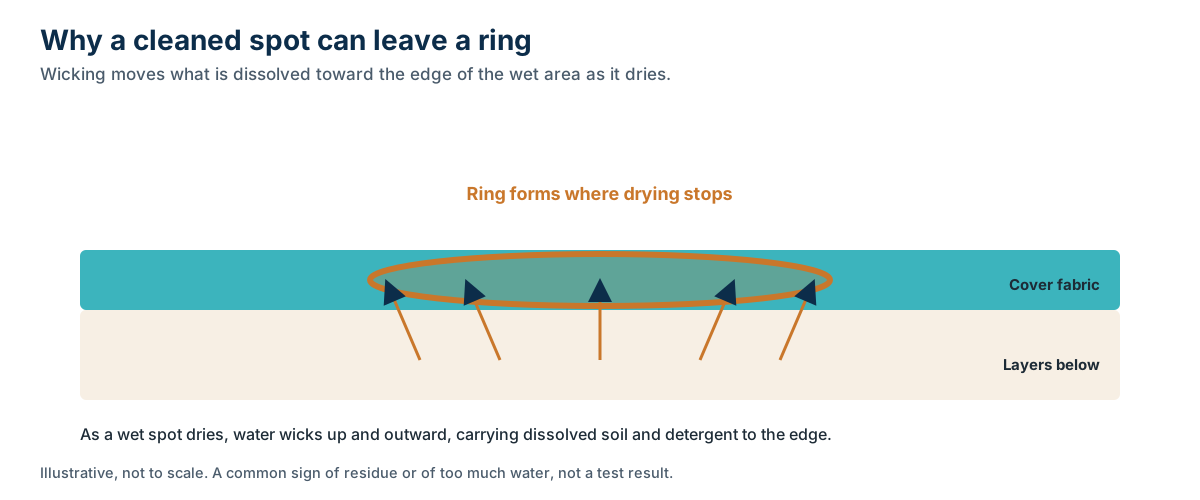
- Moisture moving through a material as it dries, carrying dissolved soil or stain with it. When the moisture evaporates at the surface, the stain can reappear on a fabric that looked clean.
- Memory foam (viscoelastic foam):
- An open-cell, slow-recovery polyurethane foam that softens with body heat and conforms to pressure. Because its cells are open, liquid can travel into it, and because it is dense and insulating, it is slow to dry.
No. Professional mattress cleaning doesn't have to use detergent. Detergent helps water lift oily soil, but it isn't required to clean a mattress, and whatever isn't rinsed out stays in the fabric, where it can attract new soil. Dry-vapor steam works with heat and vacuuming works with airflow, so neither needs detergent. Chemistry is most useful as a targeted spot treatment for specific stains, used sparingly. Some manufacturers go further: Tempur's care guidance for wiping the mattress surface calls for clean water only, free from chemicals and detergents.
Detergent is so standard in carpet cleaning that it's easy to assume a mattress needs it too. Below: what surfactants actually do, what the Carpet and Rug Institute says about residue, what mattress makers say about cleaners, and the narrow cases where a spot product is worth it. For how detergent-free methods compare with wet ones, see the flagship comparison, part of the Cleaning Methods hub.
What detergent does
Water on its own doesn't wet oily soil well. Detergents lower water's surface tension and help it surround and lift oils, so they can be rinsed or extracted away. That's why detergent is central to hot-water extraction and shampooing, where the job is to dissolve soil into water and remove the water.
If you're hoping soap will help with dust mites, the evidence says not much. In a laundry study, McDonald and Tovey (1992) tested washing with and without detergents and found that adding them didn't raise mite kill at lower water temperatures; heat was the deciding factor. For rugs, the AAAAI/ACAAI practice parameter reports the same pattern: wet cleaning or shampooing took allergen out but left the mites alive. So detergent is a soil-removal tool, not a mite treatment.
What detergent leaves behind
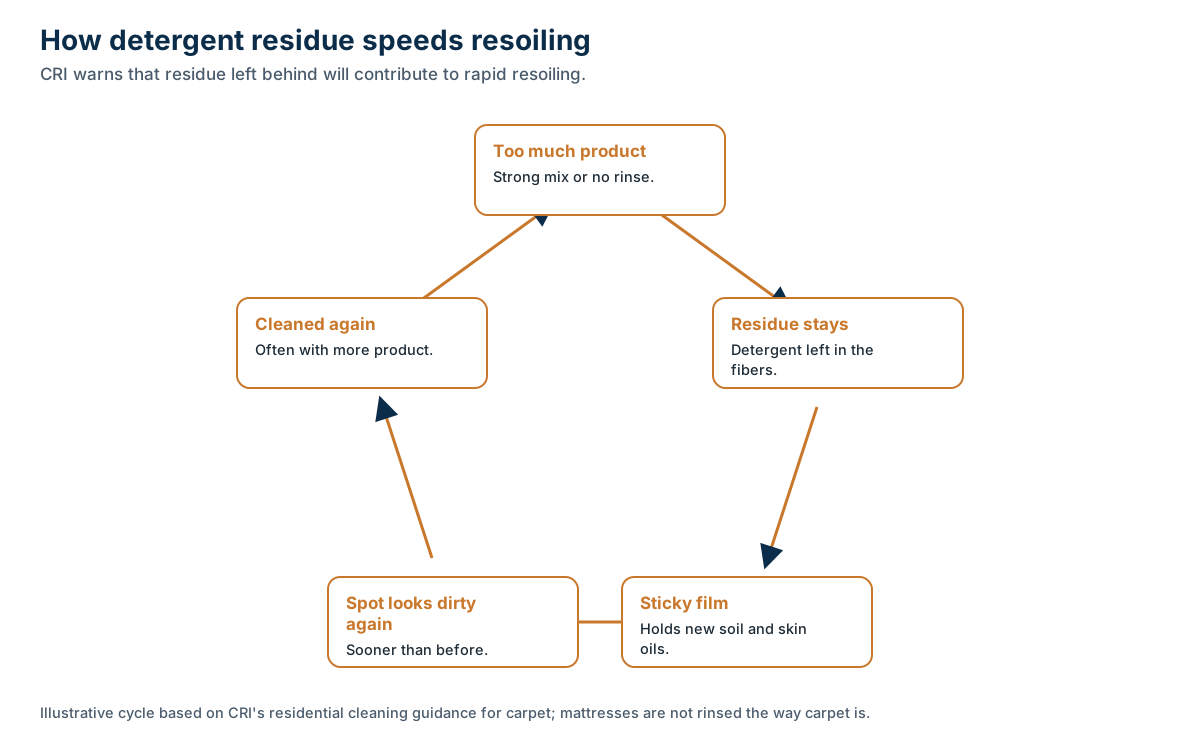
The issue with detergent isn't using it; it's what stays. Detergent residue is any cleaning chemistry left in the fabric after cleaning.
- The Carpet and Rug Institute's residential standard warns that over-concentrated cleaning solution leaves residue that "will contribute to rapid resoiling," and recommends a clear-water rinse after in-tank solution.
- Daimer makes the same point about shampoo: residue can attach to fibers and attract more dust and dirt.
- Casper warns that foam in the mattress core will soak up water and detergent.
On carpet, the fix is rinsing. On a mattress, rinsing means adding more water to a material that's hard to dry. Residue that does stay can also travel with moisture toward the surface as the fabric dries, the wicking effect, which is one reason stains can reappear.
What manufacturers say about chemistry
| Brand | Guidance on detergents and cleaners | Source |
|---|---|---|
| Tempur (UK) | For the mattress surface after the cover is removed (Supreme model): clean water on a well-wrung cloth, "free from chemicals and detergents, and no wetter than a baby wipe"; never soak the material | Tempur UK Supreme care, Tempur UK |
| Tempur-Pedic (US) | Wash removable covers in cold water with mild detergent; never wash the TEMPUR material itself | Tempur-Pedic |
| Purple | Spot-clean with a mild detergent or enzyme cleaner; lightly spray foam rather than soaking it | Purple |
| Casper | Water and mild detergent on affected areas; don't saturate | Casper |
| Saatva | Dab stains rather than drench them | Saatva |
The pattern: where brands allow chemistry at all, it's mild, sparing and local. None describes saturating a mattress with cleaning solution.
Signs a mattress is holding detergent residue
You can't see residue directly, but it tends to show itself in a few ways after a wet cleaning:
- A cleaned spot gets dirty again quickly. That fits the CRI's warning that residue contributes to rapid resoiling: the sticky film holds new soil.
- A ring or halo around a cleaned area. As the fabric dries, moisture moves toward the edges and the surface, carrying dissolved soil and chemistry with it (wicking).
- A stiff, tacky or slightly crunchy feel to the ticking once it dries, where surfactant has dried in the fibers.
- A fragrance that lingers for days. Scent is added chemistry; a mattress that smells strongly of product still holds some of it.
None of these is a lab test, and some have other causes, but together they are a reasonable prompt to skip more detergent and use a low-moisture method next time.
Methods that don't need detergent
- Dry-vapor steam loosens soil with heat. It adds only water, and only a small amount, so there's nothing to rinse. The loosened soil has to be vacuumed or wiped away.
- HEPA vacuuming removes loose particles and allergen by airflow alone.
- Airing and sunlight don't clean, but they help a mattress dry and reduce odor. Purple suggests ventilating a mattress after cleaning.
See what is dry-vapor steam cleaning? and HEPA vacuuming vs steam vs extraction for detail on each.
When chemistry does help
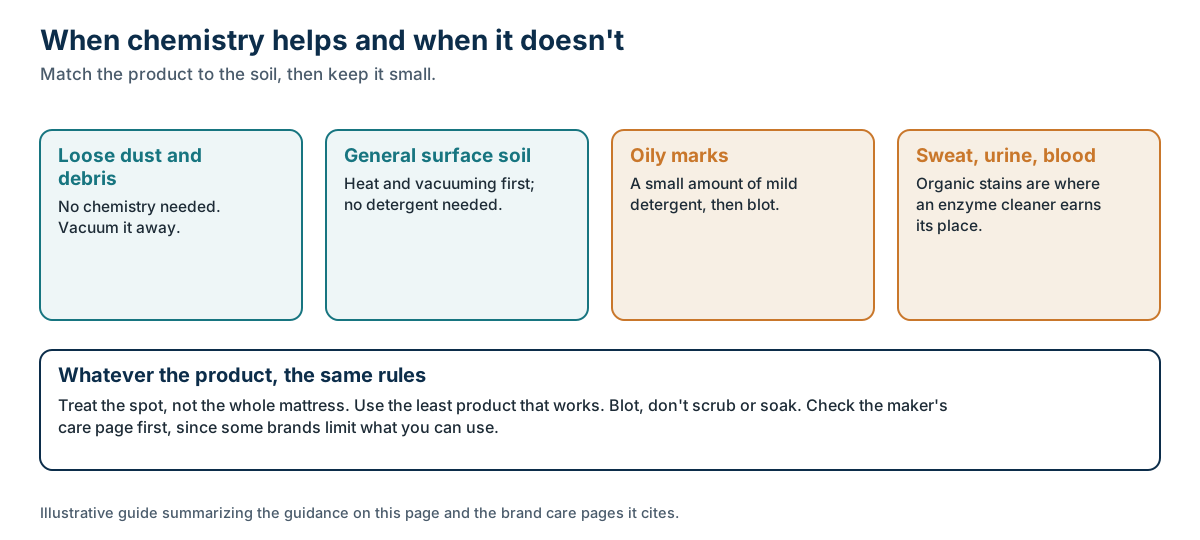
Some soils don't respond well to heat and vacuuming alone:
- Organic stains such as sweat, urine, blood or vomit, where enzyme products are designed to break down the specific material. Purple lists enzyme cleaners among its spot-cleaning options.
- Oily or greasy marks, where a small amount of mild detergent helps.
- Odor sources, where the cause is organic material deep in the fabric.
In each case, the principles are the same: the right product for the specific soil, the least amount that works, applied to the spot rather than the whole mattress, and blotted rather than soaked. Sleep Sanitation offers an enzyme treatment as an add-on for this reason; our page comparing enzyme treatment and dry vapor steam explains when each fits.
Why "chemical-free" isn't automatically better
It's tempting to treat "no chemicals" as the goal in itself. It isn't. The goal is a clean mattress with as little left behind as possible. Heat and vacuuming handle loose soil, dust and allergen-carrying particles well, but a stain whose cause is still in the fabric, such as dried body oil or an old organic spill, may not lift with heat alone. In that case a small amount of the right product, applied to the spot and blotted, is a better outcome than repeated steam passes that add moisture and heat in one place. "Chemical-free" is a reasonable default for the whole mattress. It shouldn't be a rule that leaves a fixable stain in place.
A note on fragrances and sprays
Scent is not cleanliness. Sprays used to make a mattress smell fresh add liquid and chemistry without removing anything. Sleep Number's care guidance is direct about it: do not spray air freshener on the mattress, because sprays can soak the fabric and cause shrinking or stains. If a mattress smells, the cause is usually organic material or moisture, and that's what needs treating.
Questions to ask about products
- What product will you use, and on what part of the mattress?
- Is it rinsed out or left in?
- How much liquid does it add?
- Is it compatible with my mattress's care instructions?
- Is it needed at all for my mattress, or is it a default step?
How Sleep Sanitation approaches it
Our core treatment uses no whole-mattress detergent: dry-vapor steam, then a heated UV-C mattress vacuum, with a spot product only when a specific stain calls for it. Our process shows where that step fits, and rates are on the pricing page. For the broader low-moisture picture, read can you sanitize a mattress without soaking it?
What we don't know
- Residue levels in mattresses. We haven't found published measurements of detergent residue left in mattresses after any cleaning method.
- Re-soiling on mattresses. CRI's re-soiling warning is about carpet. We haven't found mattress-specific studies.
- Long-term effects on foam. We haven't found published data on how repeated detergent exposure affects mattress foams.
Sources
- CRI 205 Residential Carpet Cleaning Standard · Carpet and Rug Institute
- Steam cleaners vs carpet shampooers · Daimer Industries
- McDonald & Tovey (1992), washing temperature and dust mites · Journal of Allergy and Clinical Immunology
- How to clean a mattress · Purple
- How to clean your mattress · Casper
- Caring for your TEMPUR mattress · Tempur UK
- Caring for your TEMPUR Supreme mattress · Tempur UK
- Product care · Tempur-Pedic
- How to get any stain out of a mattress · Saatva
- Dust mite practice parameter (Portnoy et al., 2013) · AAAAI-ACAAI
- Cleaning your mattress · Sleep Number
Last reviewed October 2, 2026. Manufacturer specifications and care instructions change; check the current version for your exact model. This page is general information, not medical advice. How we source and check pages: editorial standards.