
Short answer
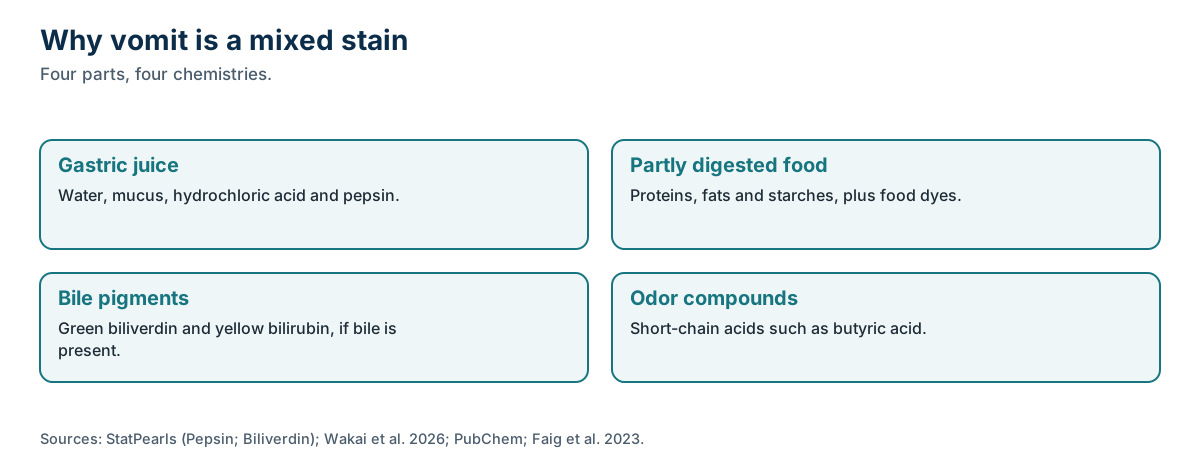
Vomit is several stains at once. It carries gastric juice with hydrochloric acid and pepsin, partly digested proteins and fats, bile pigments that can tint it green or yellow, and odor compounds such as butyric acid. Extension guides treat it as a protein stain: cool water and enzymes, never heat. On a mattress, the liquid soaks in fast, so the odor often outlasts the stain. Severe or biohazard jobs are quoted before we start.
Key terms used on this page
- Gastric juice:
- The stomach's digestive fluid. StatPearls lists water, mucus, hydrochloric acid, pepsin and intrinsic factor as its parts, which is why vomit is acidic and protein-rich.
- Bile pigments:
- Colored breakdown products of heme. Biliverdin is green and is reduced to yellow bilirubin, which is why vomit containing bile can leave yellow or green tints.
- Butyric acid:
- A short-chain fatty acid with what PubChem records as an unpleasant, rancid odor. Faig and colleagues, who used it as a pathogen-related odor cue, note it is commonly produced by bacteria in vomit and rancid foods.
- Protein stain:
- A stain whose main ingredient is protein, such as blood, vomit, feces, mucus or egg. Extension guides treat it with cold water first because heat makes the protein coagulate between the fibers.
- Protease:
- An enzyme that cuts proteins at their peptide bonds. In cleaners it targets blood, vomit and other protein soil, and because wool is protein, Kentucky Extension warns against enzyme presoaks on wool and silk.
Vomit is hard on a mattress because it's several stains at once. It carries gastric juice with hydrochloric acid and the enzyme pepsin, partly digested proteins and fats, bile pigments that can tint it green or yellow, and odor compounds such as butyric acid. Extension guides treat it as a protein stain, with cool water and enzymes and never heat. On a mattress, the liquid soaks in fast, so the odor often outlasts the visible stain.
General information about stain chemistry, not medical advice. If someone is unwell, ask a doctor.
What's in vomit, chemically?
Start with the stomach. StatPearls' chapter on pepsin lists the parts of gastric juice: "water, mucus, hydrochloric acid, pepsin, and intrinsic factor." Pepsin is the stomach's main protein-digesting enzyme, and the stomach chapter describes the organ as built to let food be acted on "by proteolytic enzymes and acidic solutions." So vomit arrives acidic and already partly broken down.
Then add the food: proteins, fats, starches, and any dyes or drinks. Bile can be part of it too. That's the source of the colors covered below. Finally, there's smell, which comes from small volatile molecules that travel through the air long after the liquid has soaked in.
| Part | Stain family it behaves like | Source |
|---|---|---|
| Gastric juice (acid, mucus, pepsin) | Protein, acidic | StatPearls, Pepsin |
| Partly digested food | Protein, oil and starch | UKY protein family |
| Bile pigments | Pigment, like a dye | StatPearls, Biliverdin |
| Odor compounds | Not a stain; a smell | PubChem, butyric acid |
Where do the colors come from?
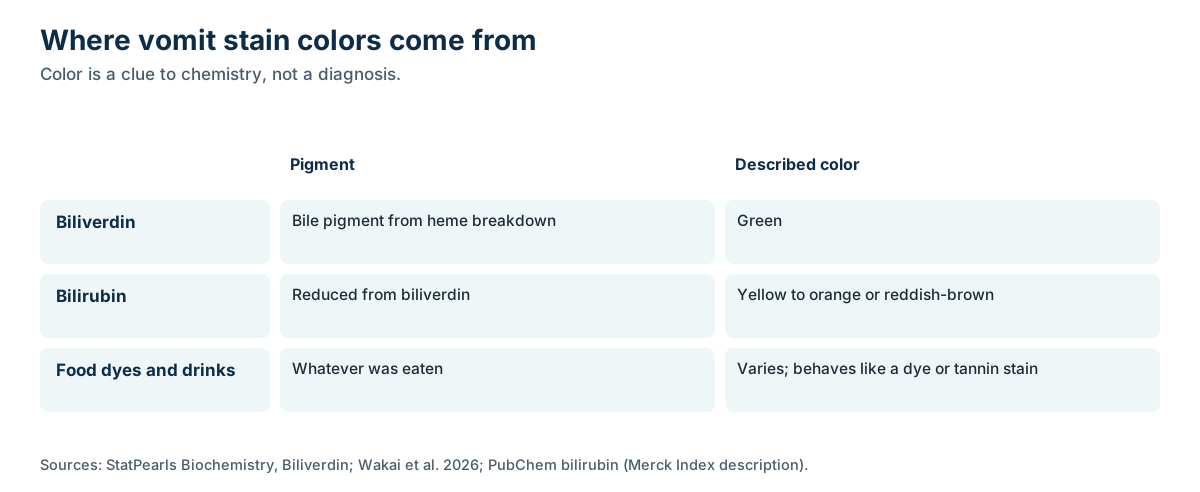
Bile pigments are breakdown products of heme, the iron-carrying part of hemoglobin. StatPearls' biliverdin chapter explains that heme is broken down into biliverdin, which is "quickly broken down to bilirubin." Wakai and colleagues describe biliverdin as "a green pigment" reduced to bilirubin, "a yellow pigment." PubChem's bilirubin record gives its physical description as a light orange to reddish-brown solid.
On fabric, these pigments act like dyes, which is why a vomit stain can leave a yellow or greenish shadow after the protein has been lifted. Food colors behave the same way, and a red drink in the mix can leave a stain that's really a tannin or dye stain.
Why does the smell linger?
Part of it is short-chain fatty acids. PubChem's butyric acid record describes an "Unpleasant, rancid odor." In an odor study, Faig and colleagues explain why they chose it: butyric acid "is commonly produced by bacteria contained in vomit and rancid foods." Researchers use it precisely because people find it repellent.
In a mattress, odor molecules don't stay at the surface. The liquid wicks into quilting and foam, and as it dries, the volatile compounds keep escaping from below. Hub 3 describes the same pattern for urine in why urine odor comes back after drying, and Hub 6 helps you tell whether an odor sits in the cover or the foam. Covering the smell with fragrance doesn't remove its source.
What do extension guides say to do?
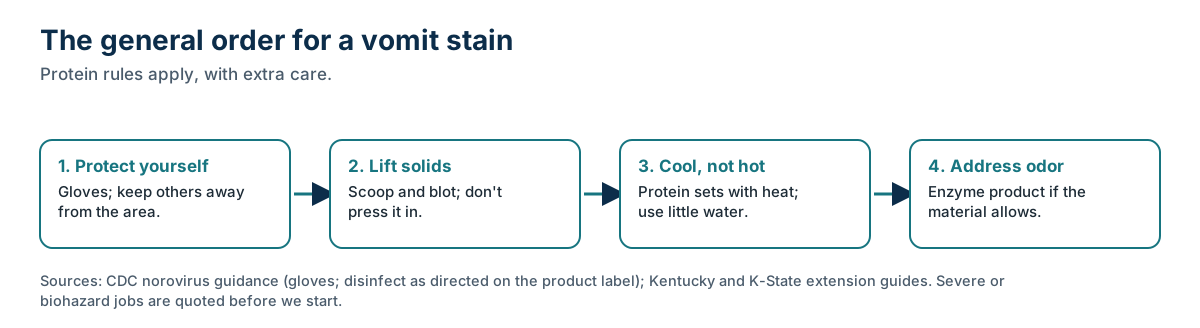
They put vomit with blood. Kentucky Extension lists vomit in its protein family, and Iowa State's AnswerLine includes it in its protein stains with the instruction "Use COLD water! Never use hot water first since it will make the stain more difficult to remove or may set the stain." K-State suggests pretreating or soaking vomit "in a product containing enzymes." Texas A&M AgriLife adds that blood and vomit "are set by alcohol," so rubbing alcohol is out too.
On a mattress, the order matters more than the product. Lift solids first, with a scoop or a dull edge, without pressing them in. Blot. Use cool water a little at a time. Then consider an enzyme product on materials that allow it; the enzyme article explains why a protease targets the protein and a lipase the fat. Wool is the exception, because enzymes that digest protein can digest wool. Let the area dry, unmade until dry to the touch, without heat.
What if there's food dye or a drink in it?
Then a pigment stain can be left after the protein and odor are handled. Kentucky Extension puts cherry, blueberry and mustard in a separate dye family, with the note "Detergent wash and bleach (as safe for fabric)," and lists fruit juice, soft drinks and tomato juice among its tannin stains. A red sports drink or juice in vomit can leave exactly that kind of mark.
Order matters with mixed stains. The protein part comes first, with cool water and, where the material allows, an enzyme product, because heat or the wrong chemical can set it. The pigment comes second. Alkalies such as ammonia can set tannin stains, according to Texas A&M AgriLife, so they're a poor choice for the color as well. If a shadow remains, the peroxide article covers the spot test that has to come before any oxidizer, and the coffee, wine and tea article explains how plant pigments behave.
| Part of the stain | First move | Avoid | Source |
|---|---|---|---|
| Protein (food, mucus, pepsin) | Cool water; enzyme product if the material allows | Heat; alcohol | UKY; Texas A&M |
| Odor compounds | Remove the source; let it dry fully | Fragrance cover-ups | PubChem |
| Dye or drink color | Mild detergent; spot-tested oxidizer | Ammonia on tannin stains | UKY; Texas A&M |
What if illness may be involved?
Then it's partly a health question, and health questions belong with health authorities. CDC's norovirus guidance notes that norovirus can be found in vomit, and after someone vomits it advises wearing gloves, wiping up with paper towels, and disinfecting the area "as directed on the product label." Disinfecting is a different step from cleaning, as Hub 2's entry on the CDC's cleaning and sanitizing terms explains. A disinfectant made for hard surfaces may not suit mattress fabric or foam; Kentucky warns that chlorine bleach shouldn't be used on wool, spandex or polyurethane foam. Read both labels before you choose.
Does stomach acid harm mattress materials?
We found no study on vomit and mattress fabrics, so we won't claim one. What the textile sources do say is that acids and alkalis affect fibers differently: the Woolwise scouring notes warn that "too much alkali can damage wool," and strong acid is what laboratories use to break down cotton's cellulose, as in Pandi and colleagues' acid hydrolysis work. The pH article covers what the sources say. The practical answer doesn't change: blot promptly, use cool water, and don't leave a large wet patch.
Sleep Sanitation's view
This section is our view. Vomit is a body-fluid job, so on this site we stay with general chemistry and don't publish a step-by-step process. Each bed gets assessed, and severe or biohazard jobs are quoted before we start. Enzyme treatment for organic odor is part of our default approach, but we can't promise a stain or odor will clear completely, and we make no disinfection claim. That's our own reasoning, not a manufacturer exemption. Your care label and warranty terms govern, so check your warranty terms before you book. See the pricing page or schedule a visit; the stain chemistry hub covers related stains.
What we don't know
- How stomach acid at the strength found in vomit affects common ticking fibers and dyes. We found no study.
- How deep odor compounds travel in foam compared with the visible stain.
- Which disinfectant products, if any, suit each mattress material. That depends on product labels and maker instructions.
Changelog
- 5 October 2026: First published. Sources accessed on this date.
Sources
- Physiology, Pepsin (Heda, Toro and Tombazzi, StatPearls) · PubMed / NCBI Bookshelf
- Physiology, Stomach (Hsu, Safadi and Lui, StatPearls) · PubMed / NCBI Bookshelf
- Biochemistry, Biliverdin (McDonnell and Mohiuddin, StatPearls) · PubMed / NCBI Bookshelf
- Heme oxygenase-1 and malaria pathogenesis (Wakai et al., Frontiers in Immunology, 2026) · PubMed Central
- Bilirubin, compound summary (physical description) · PubChem, US National Library of Medicine
- Butyric acid, compound summary (odor) · PubChem, US National Library of Medicine
- Resting parasympathetic activity is associated with malodor-induced change in perceived foreignness of speakers (Faig et al., Brain and Behavior, 2023) · PubMed Central
- Stain Removal for Washable Fabrics (FCS2-840) · University of Kentucky Cooperative Extension
- Stain Removal (accessed 2026-10-05) · K-State Research and Extension, Greenwood County
- Holiday Stains (AnswerLine, 13 Dec 2022) · Iowa State University Extension and Outreach
- Removing Stains From Washable Fabric (2025) · Texas A&M AgriLife Extension
- How to Prevent Norovirus (13 January 2025, accessed 2026-10-05) · CDC
- Aqueous Scouring and Detergents (Wool 482/582 lecture notes) · Australian Wool Education Trust / University of New England (Woolwise)
- Synthesis of cellulose nanocrystals (CNCs) from cotton using ultrasound-assisted acid hydrolysis (Pandi et al., Ultrasonics Sonochemistry, 2021) · PubMed Central
- Cleaning and disinfecting your school (definitions) · CDC
Last reviewed October 5, 2026. Manufacturer specifications and care instructions change; check the current version for your exact model. This page is general information, not medical advice. How we source and check pages: editorial standards.